

Hair Transplant Failures: Why They Happen and How to Avoid Them?


Written by HairMD Content Team | Medically Reviewed by Dr. Dhanraj Chavan On January 15, 2026


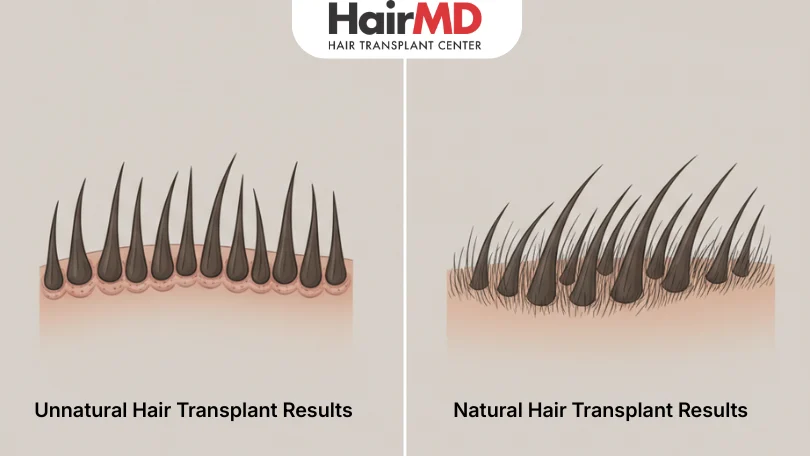
Hair transplant surgery promises permanent hair restoration, yet a 2021 ISHRS study found that 43% of patients were dissatisfied with their results. The good news? Modern techniques achieve 90-95% success rates when performed correctly. Hair transplants fail due to surgeon inexperience, poor candidate selection, inadequate post-operative care, unrealistic expectations, and improper surgical technique.
Understanding what causes failure empowers you to make informed decisions. This guide reveals the seven main reasons transplants fail, how to spot red flags before committing, and what makes a successful outcome in Pune’s competitive hair restoration market.
What’s covered in the article?
- Key Takeaways
- What Does a “Failed” Hair Transplant Actually Mean?
- The 7 Main Reasons Hair Transplants Fail
- How to Avoid Hair Transplant Failure in Pune?
- Can a Failed Hair Transplant Be Fixed?
- Why Experience and Specialization Matter: The HairMD India Advantage
- Frequently Asked Questions
- Conclusion
Key Takeaways
- Professional clinics have <2% failure rates while unprofessional ones see up to 30% – choosing the right surgeon makes all the difference
- Patient factors cause 44% of complications according to a 2024 study – only 44% of patients follow prescribed medication protocols
- Unrealistic expectations drive dissatisfaction more than actual medical failure – understanding achievable results prevents disappointment
- Pune offers world-class expertise like Dr. Sachin Pawar at HairMD India with 20+ years experience and 2,500+ successful FUE surgeries
- Red flags are identifiable – learn warning signs before investing ₹60,000-₹4,00,000 in your procedure
What Does a “Failed” Hair Transplant Actually Mean?
Not all disappointment equals medical failure. Understanding the difference helps set appropriate expectations.
Medical Failure vs Patient Dissatisfaction
Medical failure occurs when transplanted follicles don’t survive – defined as less than 80% graft survival rate. You’ll see sparse, patchy coverage or areas where hair simply doesn’t grow despite proper healing time.
Patient dissatisfaction is different. Results may be technically successful, but don’t meet what you hoped for. This accounts for most of that 43% dissatisfaction rate.
The distinction matters because one stems from surgical problems, the other from communication gaps during consultation.
Common Signs of a Failed Hair Transplant
Watch for these red flags after your 12-month healing period:
Poor density where the scalp remains visible through transplanted hair. An unnatural hairline that’s too straight, planted at wrong angles, or resembles “corn rows.” Excessive scarring in the donor area that’s visible even with short hair. Prolonged inflammation or redness beyond normal healing timelines. Patchy growth where some grafts thrived but others failed completely.
Here’s what many patients misunderstand: shock loss at 2-3 months is normal, not failure. Transplanted hair falls out temporarily before permanent regrowth begins at 3-4 months. Learn more about shock loss after hair transplant to avoid panic during normal healing.
The 7 Main Reasons Hair Transplants Fail
Based on analysis of thousands of cases and ISHRS research data, these factors cause most failures.
1. Inexperienced or Unqualified Surgeons
Hair transplantation doesn’t require special board certification in many regions, allowing inexperienced practitioners to operate. This is the number one cause of poor outcomes.
What goes wrong: improper follicle extraction damages grafts, incorrect planting angles create unnatural appearance, rough handling reduces survival rates. Research from Bernstein Medical confirms surgeon expertise is the single biggest determinant of success.
In Pune, verify credentials carefully. Look for MBBS, MS Surgery qualifications, and specialized hair transplant training. Dr. Sachin Pawar at HairMD India combines MBBS and MS Surgery credentials with 20+ years of exclusive hair transplant practice and 2,500+ successful FUE procedures since 2016.
2. Poor Donor Candidate Selection
Not everyone should get a hair transplant. Ethical surgeons refuse unsuitable candidates even when they’re willing to pay.
Warning signs include insufficient donor hair supply, unstable ongoing hair loss, underlying autoimmune conditions, and unrealistic expectations for severe baldness (Norwood Scale 7 with minimal donor area). Profit-focused clinics ignore these contraindications.
Good surgeons say “no” when appropriate. They recommend stabilizing hair loss first or suggest alternative treatments. Check if you’re suitable with this guide on what makes you a good candidate for hair transplant surgery.
3. Improper Graft Handling and Storage
Once extracted, follicles are extremely vulnerable. They must be stored at specific temperatures (4-6 degree clecius) in proper holding solutions.
Excessive air exposure, wrong storage temperatures, or rough handling by untrained assistants can reduce survival rates by 20-30%. Studies on graft handling protocols show team training matters as much as surgeon skill.
This is why choosing clinics based solely on surgeon credentials isn’t enough. The entire surgical team needs proper training and experience.
4. Unrealistic Expectations and Poor Communication
Here’s the hard truth: you cannot recreate your 18-year-old hairline at age 45. You cannot achieve pre-loss density if you started with thick hair and now have extensive baldness.
The ISHRS 43% dissatisfaction rate stems largely from expectation mismatches. Social media and celebrity transformations create false benchmarks. Younger patients especially expect impossible results.
One patient expected to go from Norwood 6 to teenage density in one session – physically impossible given donor limitations. Another understood his age-appropriate hairline design and donor constraints – he left thrilled with realistic, natural results.
Transparent pre-op consultation prevents this disappointment. Read this patient’s honest account of why over-expectations made his hair transplant feel like a waste.
5. Neglecting Post-Operative Care
A shocking 2024 study found only 44% of hair transplant patients follow prescribed medication protocols. This patient’s non-compliance causes nearly half of all complications.
The first 10-15 days are critical. Common mistakes include touching or scratching grafts, physical trauma, sleeping in wrong positions that dislodge follicles, and not shampooing as per given instructions. Some other factors that can cause an issue is heavy exercising leading to perspiration and long distance bike riding etc.
Medication compliance matters long-term. Finasteride and Minoxidil don’t just aid transplant recovery – they prevent ongoing natural hair loss from undermining your results. Learn why you need Minoxidil and Finasteride after hair transplant.
6. Underlying Health Conditions
Certain medical conditions dramatically increase failure risk. Auto-immune disorders like Lichen Planopilaris (LPP) or Alopecia Areata can cause graft rejection. Vascular conditions including diabetes or smoking-related circulation problems reduce blood flow to grafts.
Blood disorders affecting coagulation, or medications like blood thinners, create complications during and after surgery. Bernstein Medical’s research on medical contraindications documents how pre-existing conditions impact outcomes.
Thorough pre-operative medical screening catches these issues. Ethical surgeons delay or refuse surgery until conditions are controlled.
7. Choosing Based on Price Alone
Medical tourism advertising promises hair transplants for ₹15-20 per graft. Experienced Pune surgeons charge ₹40-50 per graft. There’s a reason.
Rock-bottom pricing means corners cut somewhere: inexperienced surgeons, not having a proper OT setup as mandated by the government, untrained assistants, poor sterilization, rushed procedures, inadequate follow-up care, or outdated techniques.
Your surgeon’s time, sterile operating environment, trained team, quality instruments, and proper post-op care cost money. Cosmedica’s analysis on cost versus quality shows professional clinics have <2% failure rates while budget operations reach 30%.
Pune offers excellent value – world-class expertise at reasonable rates. But prices significantly below market indicate problems. Understand realistic pricing with this guide to average hair transplant costs in India.
How to Avoid Hair Transplant Failure in Pune?
Now that you understand what goes wrong, here’s your prevention strategy.
Research Surgeon Credentials Thoroughly
Verify essential qualifications: MBBS, MS or MCh in surgery, and specialized hair transplant training. Ask about experience – how many years in practice and how many procedures performed annually.
Specialization matters enormously. A surgeon who does occasional transplants between other cosmetic procedures lacks the depth of someone exclusively focused on hair restoration. Dr. Sachin Pawar has focused exclusively on hair transplants since 2016, performing 2,500+ FUE surgeries.
Check medical council registration, review before-and-after galleries, and read patient testimonials. Don’t hesitate requesting credentials and references. Prepare questions using this guide on what to ask your hair transplant surgeon.
Insist on Thorough Consultation
Proper consultation takes 45-60 minutes minimum. It should include comprehensive scalp analysis with donor density assessment, detailed medical history review including conditions and medications, realistic outcome discussion with visual aids or simulations, and transparent graft count calculation.
Red flag: consultations under 20 minutes or high-pressure sales tactics. You should leave understanding exactly what’s achievable, what’s not, and why.
HairMD India’s consultation process includes computer analysis, scalp examination, discussion of family hair loss patterns, and honest assessment of whether you’re a suitable candidate – including saying “no” when appropriate.
Verify Clinic Infrastructure and Protocols
Visit the facility before committing. Check for operating theater cleanliness and sterile protocols, modern equipment including quality FUE punches and microscopes, trained surgical team not just random assistants, and clear emergency protocols if complications arise.
Pune has multiple hair transplant clinics, but standards vary widely. GetFUE’s facility requirements outline what proper infrastructure looks like.
HairMD India maintains consistent protocols across 6 Pune locations, ensuring the same high standards regardless of which center you visit.
Set Realistic Goals Together
Your hairline design should match your age, face shape, scientific measurements and donor supply. You cannot expect 18-year-old density at 45. You cannot cover Norwood 6 baldness to full density in one session.
Discuss density limitations honestly. Understand the 10-12 month timeline for full results. A minimum of 6-8 months is needed for seeing viable results. Need a proper plan for managing ongoing hair loss if you’re young or family history suggests continued thinning.
The best surgeons tell you what’s NOT achievable. This honesty prevents that 43% dissatisfaction rate. Understand realistic expectations through advanced FAQs about hair transplant.
Commit to Post-Op Protocol 100%
Success requires following every instruction precisely. The first 48 hours are critical, and the next 5 days are also very important – avoid touching grafts, sleep at the correct angle, skip strenuous activity. Weeks 1-2 require activity restrictions, proper sleep position, and gentle hygiene only.
3 weeks after surgery brings shock loss (it’s normal!) and medication schedules should be maintained religiously. Months 6-12 involve patience as hair grows slowly, plus follow-up appointments to track progress.
Pune‘s humid monsoon climate requires extra care during healing. Your surgeon should provide climate-specific instructions. Wimpole Clinic’s post-operative care guide emphasizes that patient compliance determines outcomes as much as surgical skill.

Can a Failed Hair Transplant Be Fixed?
Repair is possible but in some cases it is challenging. Options include removing poorly placed grafts and replanting them correctly, strategic additional grafts to fill patchy areas, camouflage techniques like adding density in front of an unnatural hairline, and scar revision for visible donor area damage.
Why repair is harder than getting it right initially: your donor supply is finite – you can’t keep harvesting indefinitely. Scar tissue makes new graft placement difficult. Multiple sessions may be needed. Repair often costs more than the initial procedure. The emotional toll of disappointment, lost time, and diminished trust compounds the problem.
One patient came to HairMD after a cheap transplant left him with “corn row” grafts and depleted donor area. Dr. Sachin Pawar managed partial repair over two sessions, but full correction wasn’t possible due to limited remaining donor hair. Had he chosen experienced care initially, one excellent session would have sufficed.
Learn more facts versus myths about hair transplants in this comprehensive guide.
Why Experience and Specialization Matter: The HairMD India Advantage?
Dr. Sachin Pawar brings 20+ years of dedicated hair restoration experience with 2,500+ successful FUE procedures. His MBBS and MS Surgery credentials combine with exclusive focus on hair transplants since 2016 – this isn’t a side practice between other cosmetic work.
HairMD’s patient-first approach means comprehensive evaluation with honest assessment of suitability, transparent communication about realistic expectations from day one, modern infrastructure maintained across 6 Pune locations, and complete care protocol from initial consultation through 12-month follow-up.
Success rates speak clearly: 95%+ graft survival with proper patient care, natural-looking results matched to facial features and age, minimal complications due to strict surgical protocols, and patient satisfaction based on realistic expectations set upfront.
Choosing local Pune expertise matters beyond just surgical skill. You get accessible follow-up care throughout the critical first year, surgeon understanding of regional climate factors affecting healing, and continuity of care without international travel complications.
Understanding your suitability starts with proper evaluation. Learn more about whether hair transplant is right for you.
Frequently Asked Questions
What is the success rate of hair transplants in Pune?
Professional clinics in Pune achieve 90-95% graft survival rates using modern FUE techniques. At HairMD India, with Dr. Sachin Pawar’s expertise, patients consistently see 95%+ success when following post-operative care instructions.
Success depends on three factors: surgeon skill and experience, patient health and suitability, and strict adherence to aftercare protocols.
How do I know if my hair transplant has failed?
Signs of failure include poor density after 12 months where scalp remains visible, unnatural hairline appearance with wrong angles or “planted” look, excessive scarring in donor or recipient areas, or patchy growth patterns.
However, distinguish between failure and normal healing. Shock loss at 2-3 months is expected and temporary.
If concerned after 12 months, schedule an evaluation with an experienced surgeon like Dr. Sachin Pawar for professional assessment.
Can I get a second hair transplant if the first one failed?
Yes, repair procedures are possible but challenging. Success depends on remaining donor hair supply, extent of scar tissue from the first procedure, and identifying why the initial transplant failed to avoid repeating mistakes.
Thorough evaluation is essential before attempting repair. Depleted donor areas may limit what’s achievable.
HairMD India offers second-opinion consultations to assess revision feasibility honestly. Sometimes the best advice is accepting what’s possible versus pursuing diminishing returns.
How much does a hair transplant cost in Pune?
Quality hair transplants in Pune range from ₹60,000 to ₹4,00,000 depending on grafts needed and clinic standards. At HairMD India, costs are transparent – typically ₹40-50 per graft for experienced surgeon care with proper protocols.
Beware prices significantly below market rate. They indicate corners cut somewhere – inexperienced surgeons, rushed procedures, or inadequate follow-up.
Learn more about realistic pricing in this complete cost breakdown for hair transplants in India.
What questions should I ask before choosing a surgeon?
Ask about qualifications including MBBS, MS/MCh, and specialized training. Verify experience through years in practice and number of procedures performed annually. Understand which technique they use – FUE, FUT, or DHI – and why they recommend it for you.
Request graft survival rate statistics and before-and-after photo galleries. Clarify post-operative support protocol and availability for complications.
Don’t hesitate requesting credentials, patient references, and medical council verification. Use this comprehensive question guide for your consultation.
Is shock loss after hair transplant a sign of failure?
No! Shock loss is completely normal and expected. Transplanted hair falls out 2-4 weeks after surgery as follicles temporarily lose blood supply during relocation.
This is temporary. New permanent hair grows from those follicles starting at 3-4 months and continues through 12 months.
Only permanent lack of regrowth after 12 months indicates actual failure. Learn the complete timeline in this guide to shock loss after hair transplant.
Why is Dr. Sachin Pawar recommended for hair transplants in Pune?
Dr. Sachin Pawar combines 20+ years of experience with 2,500+ successful FUE surgeries. His exclusive focus on hair transplants since 2016, combined with MBBS and MS Surgery credentials, ensures specialized expertise rather than occasional cosmetic work.
HairMD India’s patient-first approach prioritizes honest assessment over profit. They refuse unsuitable candidates and set realistic expectations upfront.
The 95%+ success rate and natural-looking results speak to proper technique, ethical practice, and comprehensive care protocols.
Can smoking or drinking affect hair transplant success?
Yes, significantly. Smoking reduces blood flow to the graft, impairing graft survival rates and slowing healing. Nicotine constriction can reduce success rates by 20-30%.
Alcohol interferes with prescribed medications and increases bleeding risk during and after surgery.
Most surgeons require stopping smoking 2 weeks before and 2 weeks after surgery minimum. Some refuse to operate on active smokers due to elevated failure risk.
What is the difference between FUE and FUT techniques?
FUE (Follicular Unit Extraction) removes individual grafts using tiny punches (hollow punch – 0.8mm or 1 mm), leaving minimal dot scars scattered across the donor area. FUT removes a strip of scalp, leaving a linear scar across the back of the head.
FUE offers faster healing, no linear scar, ability to wear very short hairstyles, and less post-operative discomfort. It’s become the modern standard for these reasons.
HairMD India specializes in advanced FUE techniques for optimal cosmetic outcomes. Learn more in this detailed comparison of FUE, FUT, and DHI methods.
How long does it take to see final hair transplant results?
Initial growth appears at 3-4 months as new hair emerges from transplanted follicles. You’ll see approximately 60% density by 6 months and full results at 10-12 months.
Some patients experience continued subtle improvement up to 18 months as hair thickens and matures.
Patience is critical throughout this timeline. The natural hair growth cycle cannot be rushed, regardless of technique or surgeon skill.
DO YOU KNOW?
Nearly 250 Patients Visit HairMD
Everyday For Various Hair Concerns
(15+ Years Of Expertise. 4157+ Successful Hair Transplant)
Meet Our Dermatologists

Conclusion
As of 2026, hair transplant technology continues advancing, but the fundamentals remain unchanged. Failures happen, but they’re largely preventable with informed decisions. Choose surgeon experience and credentials over discounted pricing. Verify qualifications thoroughly including specialized training, not just basic medical degrees. Set realistic expectations based on your age, donor supply, and hair loss pattern. Commit 100% to post-operative care including medication protocols for 12+ months.
Pune offers world-class hair restoration expertise. Dr. Sachin Pawar at HairMD India brings 20+ years of exclusive focus, 2,500+ successful surgeries, and transparent patient-first approach. You now have the knowledge to make an informed decision and avoid the pitfalls that lead to that 43% dissatisfaction rate.
Ready to ensure your hair transplant success? Schedule a comprehensive consultation with Dr. Sachin Pawar at HairMD India Pune. With two decades of specialized experience and 95%+ success rates, we’ll provide an honest assessment and realistic expectations. Visit HairMD India Contact Page to book your no-obligation evaluation today.
Further Reading
Does Cold Water Really Help Your Hair? Separating Fact From Myth
You’ve heard that rinsing with cold water makes hair shinier and stronger.
What Should I Do About Dandruff and Scalp Issues?
Dandruff, seborrheic dermatitis, scalp psoriasis, and dry scalp, they look similar but need different treatments. HairMD dermatologists explain how to identify each and what actually works.
Does Heat Damage Really Ruin Your Hair? The Science Explained
Yes, heat damage is real, and mostly permanent. HairMD explains exactly how heat ruins hair at the structural level, at what temperatures damage occurs, and how to minimise it without giving up styling.
How to Get Healthier Hair Without Expensive Treatments?
You don’t need expensive salon treatments for healthier hair. HairMD dermatologists explain what actually improves hair health, from diet and scalp care to habits that protect hair from daily damage.
Have thoughts? Please let us know
We are committed not only to treating you, but also educating you.