

What is Lupus Hair Loss?: Connection with Hair Loss


Written by HairMD Content Team | Medically Reviewed by Dr. Dhanraj Chavan On August 30, 2023


What’s covered in the article?
- What is lupus hair loss?
- What are the symptoms of lupus hair loss?
- Conclusion
What is lupus hair loss?
Lupus, commonly called lupus erythematosus, is an autoimmune disease that often crops up as fatigue, joint pain, joint stiffness, and a butterfly-shaped rash on the face. In addition, there are individuals with lupus who experience hair loss.
Hair loss can be a common symptom of lupus, as body-wide inflammation can negatively affect the skin and hair follicles. Oftentimes, people who are diagnosed with systemic lupus (the most common kind) notice that their hair grows back when they start treatment, but that may not always be the case.
Not everyone who has lupus, experiences hair loss. Most people living with this condition notice gradual thinning or breakage along their hairline. Sometimes the hair grows back, and at times it doesn’t. According to research studies, lupus patients whose hair loss persists or returns after abating might show higher levels of disease activity.
According to research findings, there are mainly two kinds of hair loss involved in lupus: scarring and non-scarring. Non-scarring hair loss is the result of inflammation- a pronounced symptom of lupus that is often widespread. Hair loss can occur when this condition develops around the scalp and hair follicles.
Sometimes, lupus also results in discoid sores or lesions. These lesions can take shape anywhere on the body and cause permanent scarring. Lesions that form and leave scars on the scalp often deter hair follicles, resulting in permanent hair loss.
It’s important to note that inflammation caused by lupus doesn’t only affect hair on the scalp, but can also cause loss of eyebrows, beards, and eyelashes.
What are the symptoms of lupus hair loss?
Lupus doesn’t always affect the hair. But when it does, there’s a marked increase in the number of shed hairs. It’s normal to shed up to 100 hairs each day. However, people with lupus can lose more than this depending on the severity of the illness. If you have lupus hair loss, it may show up when washing or brushing your hair.
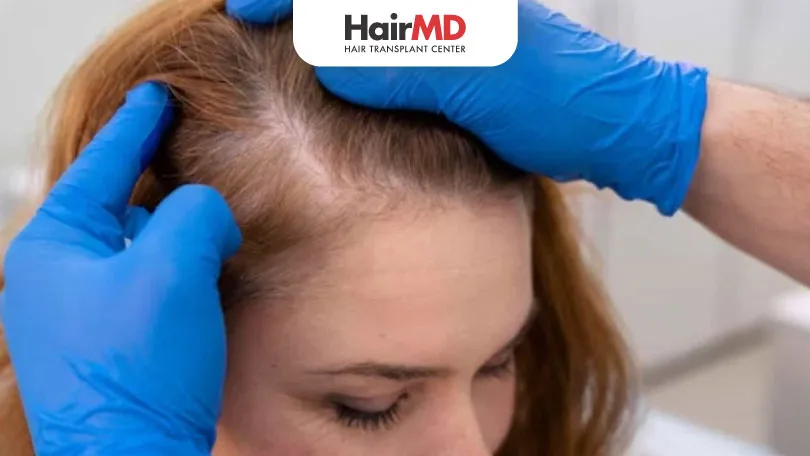
Some people may only have breakage around their hairline or minor thinning, while there are some who may complain losing clumps of hair. Hair loss can be widespread, or limited to a section of the head.
With lupus, the following type of hair loss can be seen
- Diffuse Telogen effluvium – this type of temporary excess hair shedding is commonly seen after any acute disease. It usually reverses once you start taking treatment
- Scarring discoid type of hair loss – When the lupus disease affects the hair follicles, it can show up as scarring and permanent patchy hair loss
- Lupus hair – These are the short damaged fine hair seen along the frontal area in women suffering from Lupus
- It can also be due to the immunosuppressive medicines that are given during the course of lupus.
DO YOU KNOW?
Nearly 250 Patients Visit HairMD
Everyday For Various Hair Concerns
(15+ Years Of Expertise. 4157+ Successful Hair Transplant)
Meet Our Dermatologists





Conclusion
Further Reading
Does Cold Water Really Help Your Hair? Separating Fact From Myth
You’ve heard that rinsing with cold water makes hair shinier and stronger.
What Should I Do About Dandruff and Scalp Issues?
Dandruff, seborrheic dermatitis, scalp psoriasis, and dry scalp, they look similar but need different treatments. HairMD dermatologists explain how to identify each and what actually works.
Does Heat Damage Really Ruin Your Hair? The Science Explained
Yes, heat damage is real, and mostly permanent. HairMD explains exactly how heat ruins hair at the structural level, at what temperatures damage occurs, and how to minimise it without giving up styling.
How to Get Healthier Hair Without Expensive Treatments?
You don’t need expensive salon treatments for healthier hair. HairMD dermatologists explain what actually improves hair health, from diet and scalp care to habits that protect hair from daily damage.
Have thoughts? Please let us know
We are committed not only to treating you, but also educating you.