

Is Hair Transplant Safe and Effective for Kothrud Residents?
Written by HairMD Content Team | Medically Reviewed by Dr. Dhanraj Chavan
Updated on February 13, 2026
Hair loss can be frustrating, especially when it begins to affect confidence and daily interactions. For residents of Kothrud considering a hair transplant, the most common questions are about safety, recovery, and realistic results.
This article explains what to expect from a modern hair transplant procedure, focusing on safety standards and post-treatment recovery—without replacing a full medical consultation.
What’s covered in the article?
- Is Hair Transplant a Safe Procedure Today?
- What the Hair Transplant Procedure Involves?
- Recovery Timeline: What Kothrud Patients Should Expect?
- Who Is an Ideal Candidate?
- Frequently Asked Questions
- What Kothrud Residents Should Review Next?
Is Hair Transplant a Safe Procedure Today?
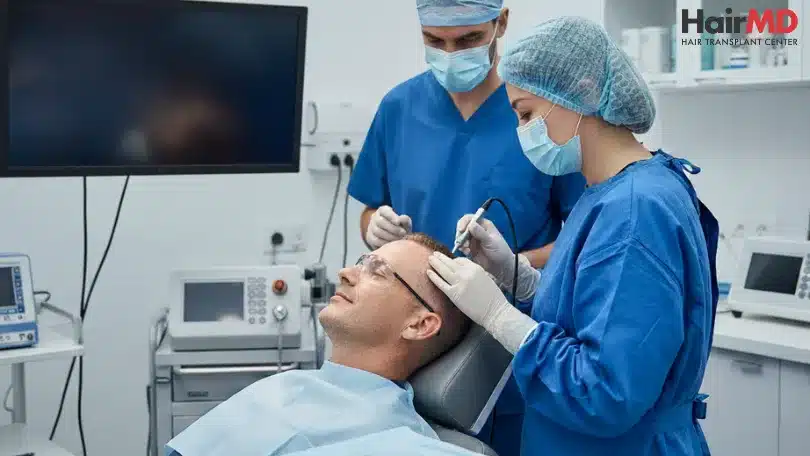
Modern hair transplant techniques, especially FUE (Follicular Unit Extraction), are considered safe when performed by qualified medical professionals. The procedure is minimally invasive, performed under local anaesthesia, and does not involve major surgical risks.
For patients from Kothrud, safety depends on:
- Proper patient evaluation
- Hygiene and sterilisation standards
- Experience of the medical team
- Correct post-procedure care
A consultation is essential to determine whether hair transplant is suitable for your hair loss pattern.
What the Hair Transplant Procedure Involves?
A hair transplant typically involves:
- Careful assessment of donor and recipient areas
- Extraction of healthy hair follicles
- Precision placement in thinning or bald areas
The procedure is performed in stages and usually completed within a day, depending on graft requirements.
Recovery Timeline: What Kothrud Patients Should Expect?
Recovery is gradual and predictable:
- First few days: Mild redness and swelling
- 1–2 weeks: Scabs shed naturally
- 3–4 months: New hair growth begins
- 6–12 months: Visible improvement in density
Patients are advised to follow post-care instructions closely to support healthy regrowth.
Who Is an Ideal Candidate?
Hair transplant may be suitable if:
- Hair loss is stable
- Adequate donor hair is available
- Expectations are realistic
Those with early-stage thinning may benefit from non-surgical options before considering transplantation.
Frequently Asked Questions
How long does it take to see hair transplant results?
Most patients notice early growth around 3–4 months, with visible improvement by 6–8 months. Results continue to mature up to 12 months.
Is PRP or GFC enough, or do I need a transplant?
PRP and GFC can help early or moderate thinning but cannot replace lost follicles in advanced baldness. Many patients benefit from a combined approach.
Can I return to work quickly after a hair transplant?
Many people return to desk work within a few days. Strenuous activity should be avoided for at least a week.
What is the most common mistake after a transplant?
Rushing recovery – scratching the scalp, heavy exercise, or ignoring aftercare instructions – can affect comfort and healing.
What Kothrud Residents Should Review Next?
If you are researching hair transplant safety in Kothrud, the most useful next step is to understand whether surgery is appropriate for your current stage of hair loss, how recovery fits your routine, and whether supportive treatments should be considered first.
In some cases, transplant planning makes sense immediately. In others, early-stage treatments such as PRP or mesotherapy may be discussed first to stabilize shedding and improve long-term planning.
To continue your research, review the Kothrud area page, compare early-stage treatment articles from the same area, or explore the main hair transplant treatment page for a broader clinical overview.
For readers still comparing early-stage options before considering surgery, this guide to PRP therapy benefits in Kothrud explains when PRP may be used to support thinning hair before transplant planning.
Medical Disclaimer:
This article is intended for educational purposes. Hair loss treatments and outcomes vary by individual, and a consultation is required to determine suitability.
For a broader understanding of hair loss treatments and options available across different areas, you can explore hair restoration services in Pune.