

PRP After a Hair Transplant: When to Start, Why It Helps, and What to Expect?


Written by HairMD Content Team | Medically Reviewed by Dr. Dhanraj Chavan On July 18, 2026


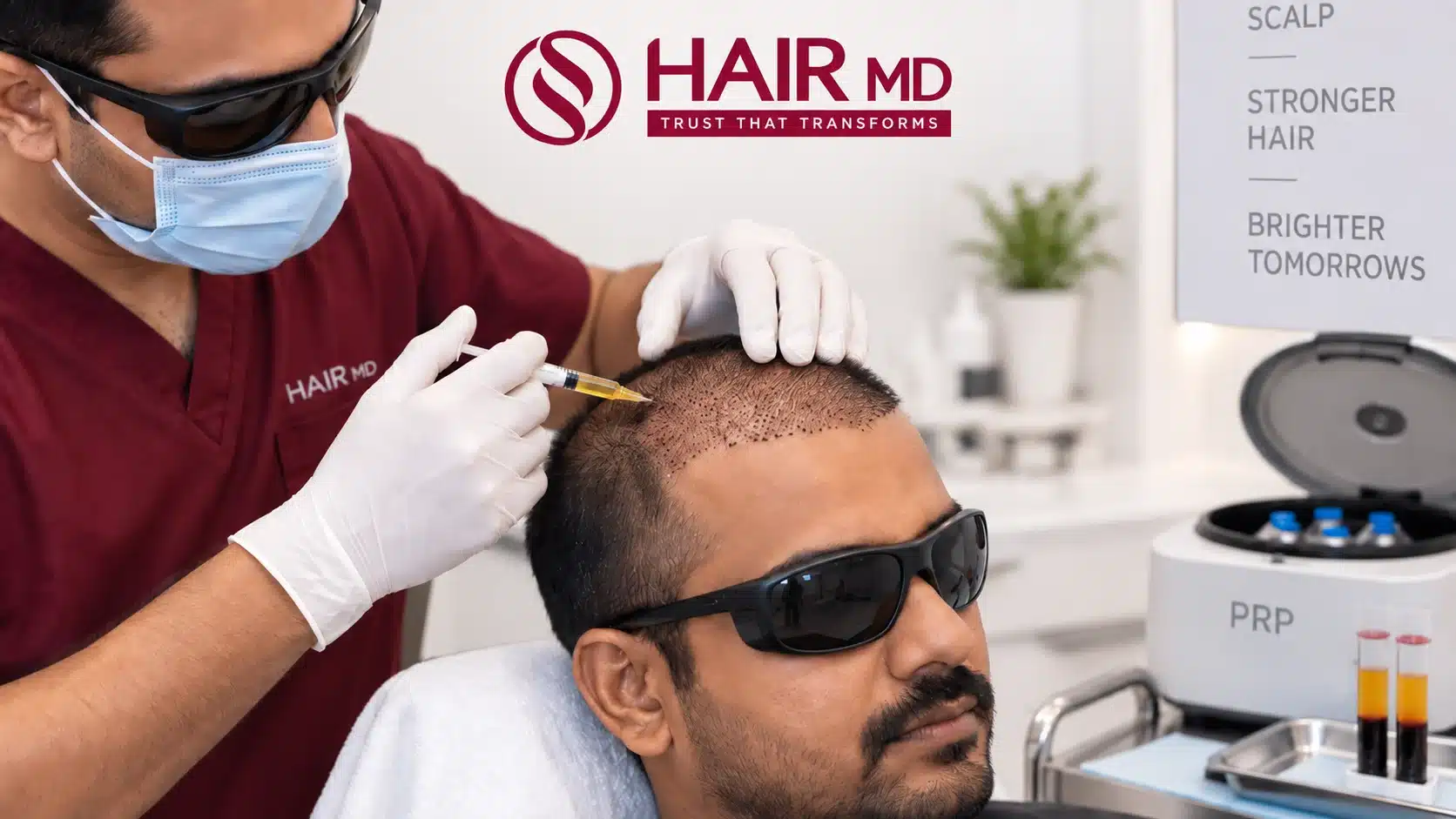
Most patients want to know two things: when to start PRP after their procedure, and whether it is worth it. This guide answers both, and explains how Dr. Dhanraj Chavan and the surgical team plan PRP around a transplant at HairMD India.
What’s covered in the article?
- Key Takeaways
- Key Attributes of PRP After a Hair Transplant
- Why Use PRP After a Hair Transplant?
- When to Start PRP After a Transplant?
- How Many PRP Sessions You Need?
- What to Expect at a PRP Session ?
- Is PRP After a Transplant Safe?
- Who Benefits Most from PRP After a Transplant?
- As Verified By
- Frequently Asked Questions
- Conclusion
Key Takeaways
- PRP after a transplant uses your own blood platelets to support graft survival, healing, and existing hair.
- The first PRP session is done on the day of surgery, before graft implantation, as the first step of the procedure.
- The next sessions follow at about 45 days and 2 months, with further maintenance only as clinically indicated.
- PRP supports both the new grafts and the surrounding non-transplanted hair.
- Each session is well tolerated, takes 30 to 45 minutes, and has no downtime.
- Results build gradually, alongside the transplant’s own 12 to 15 month growth timeline.
- PRP is an add-on to a transplant, not a replacement for one.
Key Attributes of PRP After a Hair Transplant
| Attribute | Detail |
|---|---|
| What it is | Platelet-rich plasma from your own blood, injected into the scalp |
| Purpose after a transplant | Protect grafts, speed healing, strengthen existing hair |
| Usual start time | Day of surgery, before graft implantation |
| Typical course | 3 sessions: day of surgery, about 45 days, then about 2 months later |
| Maintenance | As clinically indicated, usually every 4 to 6 months |
| Session time | 30 to 45 minutes |
| Downtime | None, return to routine the same day |
| Pain | Minimal, local numbing used if needed |
| Reviewing doctor | Dr. Dhanraj Chavan, MBBS, MD Dermatology |
Why Use PRP After a Hair Transplant?
A hair transplant relocates healthy follicles, but the first few months decide how well those grafts settle and grow. PRP is used to improve that early window. Platelets carry growth factors that support tissue repair, so concentrating them and injecting them into the scalp gives the healing area extra help. These growth factors, including platelet-derived and vascular endothelial growth factors, encourage new blood vessel formation and cell repair, which is exactly what a freshly grafted scalp needs.
There are three reasons a surgeon adds PRP to a transplant plan. The first is graft support, since a healthier, better-supplied scalp environment helps the transplanted follicles establish a blood supply and move through the shedding phase into growth. The second is faster healing of the treated area, which many patients notice as reduced redness, less crusting, and quicker overall comfort in the first weeks.
The third reason is the existing hair. A transplant only moves follicles into thinning zones, and it does nothing for the native hair around them, which may still be weakening. PRP stimulates those surrounding follicles, which protects the overall result.
This matters because native hair that keeps thinning after surgery can create a patchy or uneven look, even when the grafts themselves grow well. HairMD India often pairs PRP with a transplant for this reason, as covered on the PRP therapy page.
When to Start PRP After a Transplant?
Timing is the most common question, and at HairMD India the answer is clear: PRP begins on the day of the hair transplant. The first session is performed as the first step of the procedure, with platelet-rich plasma from your own blood injected into the scalp before graft implantation to improve the biological environment for healing.
The second session is scheduled about 45 days after surgery, once the grafts have settled, to support graft maturation, aid recovery, and strengthen the surrounding native hair. A third session usually follows about two months later. Placing platelets where healing is actively happening is the logic behind starting on the day of surgery.
After these initial sessions, further PRP is advised only as clinically indicated, based on your pattern of hair loss, scalp condition, and clinical response, and the exact schedule is set by the treating doctor. At HairMD India, this is planned alongside the FUE hair transplant recovery schedule so PRP fits the wider recovery timeline rather than interrupting it.
How Many PRP Sessions You Need?
To recap so far: PRP after a transplant is a supportive add-on that protects grafts, speeds healing, and strengthens native hair, and it begins on the day of surgery. The next question is how many sessions it takes to make a difference.
A standard course is three planned sessions: the first on the day of surgery, the second about 45 days later, and the third about two months after that. This early phase builds the growth-factor support over the months when the grafts are establishing and the native hair is most vulnerable. Most patients complete it alongside the early growth phase of their transplant.
After these initial sessions, further maintenance PRP is advised only as clinically indicated, usually around every 4 to 6 months depending on your growth and density. This keeps supporting the non-transplanted hair, which continues to age even after a successful transplant. The precise schedule is tailored to your hair-loss pattern and how your scalp responds, and it is set by the treating doctor.
Consistency across the initial sessions matters more than any single session, because the growth-factor support works cumulatively over the months of early graft growth. Missing sessions or spacing them too far apart weakens that effect, so the plan is set at a rhythm you can realistically keep.
What to Expect at a PRP Session ?
A PRP session is straightforward. A small sample of your blood is drawn and spun in a centrifuge to separate and concentrate the platelets. That concentrated plasma is then injected into the scalp across the treated and thinning areas. The whole visit takes 30 to 45 minutes.
The procedure is well tolerated. A numbing option is available. There is no downtime, so you can return to your work day straight after.
Results are gradual and build alongside the transplant’s own timeline. Reduced shedding of native hair often comes first, followed by improved thickness over the following months. Full transplant results settle at 12 to 15 months, and PRP works quietly in the background across that period. You can see documented hair transplant results and PRP patient reviews from HairMD India patients.

Is PRP After a Transplant Safe?
PRP has a strong safety profile because it uses your own blood, so there is no risk of allergic reaction or rejection from a foreign substance. The plasma is drawn, concentrated, and re-injected in the same sitting, which keeps the process simple and self-contained.
Who Benefits Most from PRP After a Transplant?
PRP after a transplant helps most patients, but it is especially valuable for those whose native hair is still thinning. Men with ongoing male pattern hair loss around the transplanted area gain the most, because protecting that surrounding hair keeps the result looking full and natural.
It is also useful for patients who want to give their grafts every advantage in the early months. For those who prefer an alternative regenerative option, HairMD India also offers GFC growth-factor therapy, and the right choice is decided at consultation based on your goals.
PRP is not a substitute for the transplant, and it cannot regrow hair on fully bald areas with no follicles. Its role is supportive, and it works best as one part of a complete plan built around a hair transplant.
As Verified By
- The International Society of Hair Restoration Surgery recognises platelet-rich plasma as an adjunct therapy used alongside surgical hair restoration.
- A clinical study of PRP for androgenetic alopecia documents increased hair density and reduced shedding after a course of treatment.
- A review of PRP and its growth factors in hair restoration explains how concentrated platelets support follicle activity and healing.
- Further evidence on PRP as an adjunct in hair transplantation supports its use for graft support and improved outcomes.
- The American Academy of Dermatology confirms that hair loss is progressive and that ongoing treatment protects results over time.
Frequently Asked Questions
Is PRP necessary after a hair transplant?
PRP is not strictly necessary, because a well-performed transplant grows without it, but it is a valuable add-on for most patients. It supports graft healing and strengthens the surrounding native hair that a transplant does not treat. Whether it is worth it for you depends on your hair-loss pattern, which the treating doctor assesses before advising a plan.
When should I start PRP after my transplant?
At HairMD India, PRP begins on the day of the hair transplant. The first session is done as the first step, before graft implantation, and the second is scheduled about 45 days after surgery, with a third about two months later. The exact schedule is set by the treating doctor, based on how your scalp is healing and your pattern of hair loss.
How many PRP sessions do I need after a transplant?
A standard course is three planned sessions: the first on the day of surgery, the second about 45 days later, and the third about two months after that. After these initial sessions, further maintenance PRP is advised only as clinically indicated, usually around every 4 to 6 months depending on growth and density. The precise schedule is tailored to your hair-loss pattern and set by the treating doctor.
Does PRP improve graft survival after a transplant?
PRP supports the healing environment that grafts depend on in their first months, and clinical evidence links it to better hair density and reduced shedding. It works by delivering concentrated growth factors that aid tissue repair and follicle activity. It is best seen as support that improves the conditions for growth rather than a guarantee for any single graft.
Is PRP after a transplant painful?
PRP therapy is generally well tolerated. Most patients experience only mild pain during the injections, which is brief and tolerable. Topical or local anaesthesia may be used if required. Each session takes 30 to 45 minutes. There is no downtime, and most patients can return to work and their normal daily activities immediately after the procedure.
Can PRP replace a hair transplant?
No, PRP cannot replace a hair transplant. PRP stimulates existing but weakened follicles, while a transplant relocates healthy follicles into areas that have already gone bald. PRP cannot create new hair where there are no follicles left, so on fully bald areas only a transplant restores hair, with PRP used to support the result.
DO YOU KNOW?
Nearly 250 Patients Visit HairMD
Everyday For Various Hair Concerns
(15+ Years Of Expertise. 4157+ Successful Hair Transplant)
Meet Our Dermatologists

Conclusion
PRP after a hair transplant is a supportive, no-risk add-on that protects new grafts, speeds early healing, and strengthens the native hair around them. It begins on the day of surgery, runs across three planned sessions (day of surgery, about 45 days, then about two months later), and continues as maintenance only when clinically indicated. It is not a replacement for the transplant, but it helps the grafts settle and helps the transplant look its best over the full 12 to 15 month growth timeline.
If you are planning a transplant or have recently had one, an assessment with Dr. Dhanraj Chavan and the HairMD team can confirm whether PRP fits your plan and when to begin. Book a consultation at HairMD India, Pune. All internal links verified.
Further Reading
Hair Transplant Cost in Pune for 2026
Find affordable 2026 hair transplant costs in Pune with expert results by Dr. Dhanaraj Chavan. Transparent pricing and flexible payments.
Beard Hair Transplant: Can Beard Hair Be Used for Hair Transplant? | HairMD
Yes, beard hair can be used for hair transplant but only in specific cases. HairMD dermatologists explain when it’s used, how many grafts it yields, its advantages and limitations.
PRP vs Minoxidil for Hair Loss: Which Works?
PRP vs minoxidil for hair loss – how each works, results, cost, and which suits you, plus whether to combine them, from HairMD Pune.
FUE Hair Transplant Procedure: What Happens on Surgery Day
A step-by-step guide to the FUE hair transplant procedure at HairMD Pune – from local anaesthesia and graft extraction to implantation and day-1 recovery.
Have thoughts? Please let us know
We are committed not only to treating you, but also educating you.