

Hair Transplant Recovery Timeline: What to Expect Week by Week?


Written by HairMD Content Team | Medically Reviewed by Dr. Dhanraj Chavan On June 11, 2026


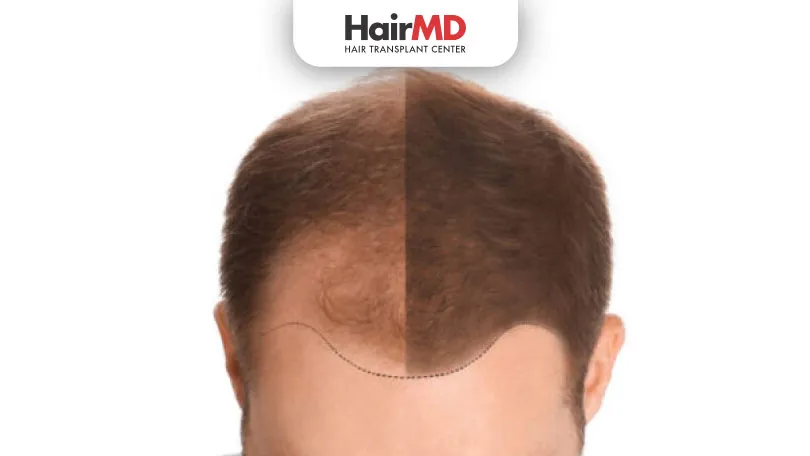
Hair transplant recovery is a phased healing process that progresses from immediate post-op care through shock loss to full graft maturation – with final results visible between 12 and 18 months after the procedure.
Most patients expect their new hair to appear within weeks. The reality is different, and understanding each phase prevents unnecessary anxiety. This guide walks through every stage of recovery – day by day, week by week, month by month – so you know exactly what is normal and when to contact your surgeon.
What’s covered in the article?
- Days 1-3: Immediate Post-Op Phase
- Week 1: The Graft Protection Window
- Weeks 2-4: The Shock Loss Phase
- Months 1-3: The Dormant Phase
- Months 6-18: Full Results
- What Affects Your Recovery Timeline?
- Frequently Asked Questions
- Ready to Start Your Recovery with Confidence?
Days 1-3: Immediate Post-Op Phase
The first 72 hours are the most critical for graft survival. Your scalp will have small scabs forming around each extraction and implantation site. This is normal. Do not pick, scratch, or rub these scabs under any circumstances.
What to expect:
- Mild swelling of the forehead and around the eyes – peaks on Day 2-3, then subsides
- Redness and tenderness at both the donor area (back of scalp) and recipient area
- Slight bleeding or oozing on Day 1 – this is normal and stops on its own
- Numbness in the donor area, lasting a few days to a few weeks
Care instructions for Days 1-3:
- Sleep with your head elevated at 45 degrees to reduce swelling
- Avoid direct water pressure on the scalp – use the misting bottle technique provided
- Take prescribed antibiotics and anti-inflammatory medication as directed
- Do not touch the grafts directly with your fingers
At HairMD, patients receive a written post-op protocol from Dr. Sachin Pawar on the day of surgery. Follow it exactly. These first three days determine graft survival.
Week 1: The Graft Protection Window
The grafts are not yet permanently anchored during the first week. They are sitting in their new position but have not yet developed a blood supply. This is the period of highest vulnerability.
What is happening under the scalp: Each implanted follicle is beginning to form new connections with surrounding tissue. The process of neovascularisation – where the graft develops its own blood supply – starts around Day 4-5 and continues through Day 10.
Key milestone: Day 10. After ten days, the grafts are considered permanently placed and cannot be dislodged by normal activity. Until Day 10, avoid:
- Bending forward (raises scalp blood pressure)
- Any strenuous physical activity
- Direct sunlight on the scalp
- Swimming, saunas, or steam rooms
By the end of Week 1, scabs will begin to loosen and fall off naturally. Do not force them. Gentle washing with a mild sulphate-free shampoo (as instructed by your surgeon) can begin from Day 3-4 at HairMD. Normal shampooing typically resumes from Day 14 onward.
Weeks 2-4: The Shock Loss Phase
Between two and six weeks after a hair transplant, most patients experience shock loss – a temporary shedding of the transplanted hair shafts. Shock loss is a normal biological response to the trauma of transplantation. It does not mean the procedure has failed.
What shock loss looks like: The hair shafts that were transplanted begin to fall out, leaving the scalp looking similar to – or sometimes thinner than – before the procedure. This is alarming to patients who are not prepared for it. The follicle root, however, remains intact beneath the scalp.
Entity-attribute fact: Shock loss has an average onset of 2-6 weeks post-surgery. Duration is typically 6-12 weeks. Regrowth from the surviving follicle begins between 3 and 4 months after surgery.
In some patients, shock loss also affects native (non-transplanted) hair near the recipient zone. This is temporary. The follicles are not destroyed – they enter a resting phase (telogen) before re-entering the growth cycle.
If you are unsure whether what you are seeing is normal shock loss or a complication, contact HairMD. A brief consultation with Dr. Sachin Pawar can rule out infection or graft failure before anxiety sets in.
Months 1-3: The Dormant Phase
After shock loss, the transplanted follicles enter a dormant resting phase. The scalp may look sparse or largely unchanged during this period. This is the hardest phase psychologically – but it is also the most important phase for follicle recovery.
Nothing visible is happening on the surface. Beneath the skin, the follicles are re-establishing their vascular connections and preparing to re-enter the anagen (active growth) phase.
What patients typically report at Month 1-3:
- Scalp looks thin or similar to pre-procedure
- Some residual redness or pinkness in the recipient area
- Itching as healing continues – this is a sign of nerve regeneration, not a problem
- Fine, soft “peach fuzz” hairs may begin appearing toward the end of Month 3
Do not judge results at this stage. Many patients contact clinics at the two-month mark worried that nothing has grown. Nothing should have grown yet. This phase is normal and necessary.
Months 3-6: First Signs of New Growth
Around 3-4 months, the transplanted follicles begin re-entering the growth phase. New hairs emerge – initially fine, thin, and sometimes lighter in colour than your existing hair. This is temporary. The hair shaft thickens progressively as the follicle matures.
What to expect at Month 3-6:
- Visible new hair growth beginning across the recipient area
- Approximately 20-30% of final density visible by Month 4
- Approximately 40-50% of final density visible by Month 6
- Hair texture may feel different initially – it normalises over time
- Hairline begins to take visible shape
This is the phase where most patients experience genuine confidence in the outcome. The change is visible but not yet at full density. Continue avoiding direct harsh sunlight and wear SPF 50+ on the scalp if outdoors.
PRP therapy, where recommended by your surgeon, is typically scheduled during Months 3-6 to accelerate follicle activation and improve density outcomes. Learn more about PRP after hair transplant at HairMD.
Months 6-18: Full Results
By Month 6, approximately 50% of the final result is visible. From Month 6 to Month 12, density continues to increase steadily as more follicles complete their growth cycle.
Timeline at a glance:
| Milestone | Typical Timeframe |
|---|---|
| Grafts permanently anchored | Day 10 |
| Shock loss onset | Weeks 2-6 |
| Shock loss complete | Weeks 8-12 |
| First new growth visible | Month 3-4 |
| 50% final density | Month 6 |
| 80% final density | Month 9-10 |
| Full results (final assessment) | Month 12-18 |
At HairMD, patients with FUE procedures performed by Dr. Sachin Pawar achieve a graft survival rate of 95-98%, with full results assessed at the 12-month follow-up appointment. Some patients with coarser or denser hair types see continued improvement through Month 18.
After Month 18, the result is stable. Transplanted follicles are resistant to DHT (the hormone responsible for pattern baldness) and do not fall out with age. Native hair in adjacent areas may continue to thin over time – this is why some patients return for a second procedure years later to cover new areas of progression.
For a complete picture of what your hair will look like at each stage, see our hair transplant results and before/after gallery.
What Affects Your Recovery Timeline?
Recovery speed and result quality are not identical for every patient. Several factors influence how quickly you progress through each phase:
- Graft count: Higher graft procedures (3,000+ grafts) involve more scalp trauma and may have a slightly longer recovery in the first two weeks
- Age: Younger patients typically have faster healing due to higher cell turnover rates
- Scalp health: A healthy, well-vascularised scalp supports faster graft integration
- Adherence to aftercare: Patients who follow post-op instructions consistently show better early graft survival
- Nutritional status: Protein intake, biotin levels, and iron levels all affect hair shaft growth velocity during Months 3-6
- Hormonal factors: Patients with active hormonal hair loss (PCOS, thyroid conditions) may require medical management alongside the transplant for optimal results
If you are on medications such as minoxidil or finasteride, your surgeon will advise whether to continue or pause them during the recovery period. Read our detailed aftercare guide for a full list of dos and don’ts at each recovery stage.
Frequently Asked Questions
How long does full hair transplant recovery take?
Full recovery – meaning the final assessed result – takes 12 to 18 months after an FUE hair transplant. Physical healing of the scalp (scabs, swelling, redness) is complete within 2-3 weeks. Shock loss occurs between Weeks 2-6. New growth becomes visible from Month 3-4. Most patients see 80%+ of their final density by Month 9-10, with the complete result assessed at the 12-18 month follow-up at HairMD.
Is it normal for transplanted hair to fall out after surgery?
Yes. It’s very normal for transplanted hair to fall out after surgery. This is part of normal “shedding” or shock loss. The shedding of transplanted hair shafts between Weeks 2 and 6 – is a normal and expected phase of FUE recovery.
The hair shaft falls out but the follicle root remains intact beneath the scalp. The follicles then enter a resting phase before growing new hairs later. New growth from the surviving follicle begins between Month 3 and Month 4. Shock loss does not indicate a failed transplant.
When can I wash my hair normally after a hair transplant?
Gentle misting and dabbing of the scalp begins from Day 3-4 post-surgery at HairMD. On the 5th day after surgery the head can be washed – by following the proper instructions from the doctors – gentle washing only.
A soft lathering technique with mild shampoo is introduced from Day 14. Normal shampooing – with gentle scrubbing – is typically cleared at the Day 30 check-up, once scabs have fully resolved and the skin has healed. Your surgeon will confirm the exact timeline based on your healing progress.
When can I return to work after a hair transplant?
Patients in desk jobs can typically return to work after 3-7 days, once initial swelling has resolved. Physical or outdoor jobs requiring sun exposure or exertion may require 2-3 weeks off. Exercise and gym activity is restricted for 3-4 weeks.
At your Day 10 check-up, Dr. Sachin Pawar will confirm what activities are safe to resume based on your recovery. Around 25 days to 1 month you can usually resume intense exercise, swimming, and physically demanding jobs after your surgeon clears you.
What does shock loss look like and how long does it last?
Shock loss appears as progressive thinning of the transplanted area – the newly placed hairs begin falling out, sometimes making the recipient area look thin or bare. It typically begins between Weeks 2 and 4 after surgery, peaks around Week 4-6, and resolves by Week 8-12.
The follicles then enter dormancy before re-entering growth. New hair from those follicles becomes visible from Month 3-4. If you are unsure whether your shedding pattern is normal, book a follow-up at HairMD for a clinical assessment.
Ready to Start Your Recovery with Confidence?
Understanding your recovery timeline before surgery makes the entire process easier. If you are considering an FUE hair transplant in Pune – or are in recovery and have questions about your progress – book a consultation with Dr. Sachin Pawar at HairMD.
Book a consultation at HairMD India
HairMD India | Pune Station | Pimple Saudagar | Kharadi | Prabhat Road | Baner | NIBM
Open Monday, Wednesday-Sunday: 10:30 AM – 7:30 PM | Tuesday: Closed
DO YOU KNOW?
Nearly 250 Patients Visit HairMD
Everyday For Various Hair Concerns
(15+ Years Of Expertise. 4157+ Successful Hair Transplant)
Meet Our Dermatologists


Further Reading
Beard Hair Transplant: Can Beard Hair Be Used for Hair Transplant? | HairMD
Yes, beard hair can be used for hair transplant but only in specific cases. HairMD dermatologists explain when it’s used, how many grafts it yields, its advantages and limitations.
PRP vs Minoxidil for Hair Loss: Which Works?
PRP vs minoxidil for hair loss – how each works, results, cost, and which suits you, plus whether to combine them, from HairMD Pune.
Benefits of PRP after Hair Transplantation
Discover the benefits of PRP therapy after hair transplantation for enhanced growth and recovery!
FUE Hair Transplant Procedure: What Happens on Surgery Day
A step-by-step guide to the FUE hair transplant procedure at HairMD Pune – from local anaesthesia and graft extraction to implantation and day-1 recovery.
Have thoughts? Please let us know
We are committed not only to treating you, but also educating you.