

Can Thin Hair Actually Get Thick Again? A Dermatologist’s Honest Assessment


Written by HairMD Content Team | Medically Reviewed by Dr. Dhanraj Chavan On June 23, 2026


Medical Disclaimer: This article is for informational purposes only. Consult a qualified dermatologist for personalised medical advice.
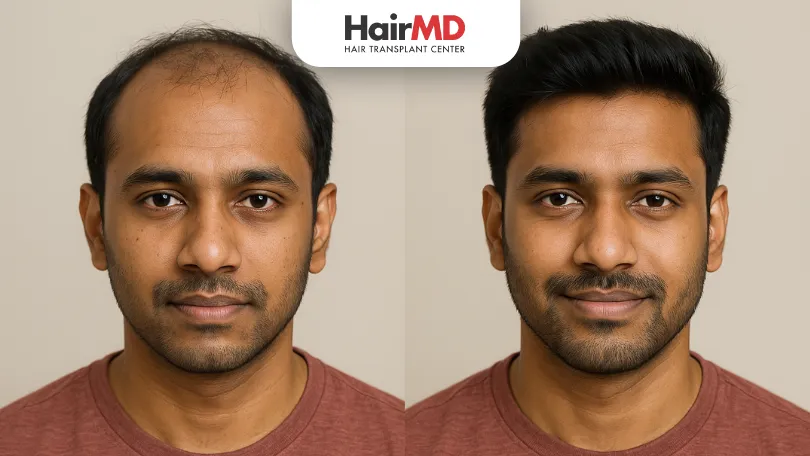
Thinning hair isn’t the end of your journey – it’s the start of stronger hair with the right care.
Yes, thin hair can often become thick again, provided the hair follicles are still active. When thinning is caught early and the underlying cause is treated, significant improvement in hair density is possible. Once a follicle is permanently damaged, new hair will not regrow from it, which is why early action matters.
What’s covered in the article?
- The Critical Distinction: Fine Texture vs Thinning from Hair Loss
- What Causes Hair to Become Thin?
- Is It Possible for Thin Hair to Become Thick Again?
- Effective Solutions to Thicken Thin Hair
- Conclusion
The Critical Distinction: Fine Texture vs Thinning from Hair Loss
Fine hair texture refers: to the diameter of individual hair strands. Some people are born with genetically fine, thin hair shafts. The follicle density is normal , you have the correct number of follicles, they simply produce thinner-diameter strands. This type cannot be significantly changed. You can improve the appearance through styling and volumising products, but the fundamental strand diameter is genetically fixed.
Thinning from hair loss: refers to reduced hair density , fewer visible hairs per square centimetre of scalp than you used to have, due to follicle miniaturisation or excess shedding. This type can often be improved with the right treatment.
How to tell which type you have: Compare the top of your head now versus 2–3 years ago in photographs. If your parting has visibly widened, or scalp is visible where it was not before, you have thinning from hair loss. If density has always been the same and hair has never been different, you likely have naturally fine texture.
What Causes Hair to Become Thin?
Understanding why hair loses its density is the first step towards addressing the issue. Hair thinning can result from several interrelated factors:
1. Genetics
The most common cause worldwide, androgenic alopecia — also called male or female pattern hair loss — affects roughly 50% of men by age 50 and up to 40% of women by menopause. It is hereditary and caused by sensitivity of hair follicles to dihydrotestosterone (DHT), a derivative of testosterone. Over time, follicles shrink (a process called miniaturisation) and produce progressively finer, shorter strands. Early intervention can slow or halt this significantly.
2. Hormonal Imbalances
Hormones play a central role in hair health. Conditions like polycystic ovary syndrome (PCOS) or thyroid disorders can disrupt the balance of hormones in the body, contributing to thinning hair. Postpartum hair loss and menopause are also common triggers.
3. Poor Nutrition
Hair is made of keratin, a protein, and its growth depends on an adequate supply of iron, biotin, zinc, vitamin D, and omega-3 fatty acids. Iron deficiency anaemia is a particularly common and frequently overlooked cause of diffuse thinning, especially in women. A simple blood panel can identify most nutritional gaps within days.
4. Stress and telogen effluvium
Significant physical or emotional stress — surgery, illness, bereavement, or even rapid weight loss — can push large numbers of hair follicles into the shedding phase simultaneously. This is called telogen effluvium. It typically appears 2–3 months after the triggering event and, while alarming, is usually self-limiting. Most patients see natural regrowth within 6–9 months once the stressor is resolved.
5. Styling Damage
It is important to distinguish between shaft damage (caused by heat tools, bleaching, and chemical treatments — usually reversible) and follicle damage from traction. Tight hairstyles such as braids, weaves, and high ponytails worn repeatedly over years can cause traction alopecia — permanent scarring of the follicle if not addressed early. If you notice thinning at the hairline or temples, styling habits are worth examining immediately.
Is It Possible for Thin Hair to Become Thick Again?
| Follicle state | What this means | Can hair regrow? |
|---|---|---|
| Active / healthy | Follicle is producing hair, but strands are thinner than before | Yes — with the right treatment, full thickness is often achievable |
| Dormant / miniaturised | Follicle is shrinking but still present | Yes — targeted treatments can reactivate dormant follicles |
| Permanently scarred / dead | Follicle has been replaced by fibrous tissue | No — hair transplant is the only option at this stage |
When should you act? If you have been noticing thinning for less than 2 years, your chances of meaningful regrowth are significantly higher. Do not wait to see if it resolves on its own — especially with pattern hair loss, where every month of delay means more follicle miniaturisation.
Effective Solutions to Thicken Thin Hair
Thankfully, advancements in hair care and medical science have made it possible to combat thinning hair. Below are some of the most effective approaches:
1. Medical Treatments
Medical interventions focus on stimulating the hair follicles and restoring healthy growth. Effective options include:
- Minoxidil: A topical treatment that increases blood flow to the hair follicles, encouraging growth and preventing further thinning.
- Platelet-Rich Plasma (PRP) Therapy: This treatment involves injecting platelet-rich plasma from your own blood into the scalp to promote follicle activity.
- Microneedling: Tiny needles create micro-injuries in the scalp, which boosts collagen production and improves follicle function.
If you’re seeking the best hair thickening treatments, a visit to HairMD Clinic Pune could provide you with tailored solutions based on your specific needs.
2. Diet & Nutrition
A nutrient-rich diet is fundamental to hair health. Incorporate the following into your diet:
- Protein: Hair is composed of keratin, a type of protein. Ensure adequate intake to support its structure.
- Biotin: Known to strengthen hair and nails, biotin is essential for optimal hair growth.
- Iron: An iron deficiency can contribute to hair thinning, so include iron-rich foods like spinach and lentils.
3. Hair Care Practices
Practicing healthy hair care habits can go a long way in maintaining thickness:
- Use gentle, sulphate-free shampoos to avoid stripping the scalp of natural oils.
- Limit the use of heat styling tools, which can weaken hair strands.
- Regularly oil your hair using lightweight, nourishing oils tailored for your hair type.
4. Lifestyle Changes
Your overall lifestyle has a significant impact on your hair’s condition. Consider the following changes to maintain or restore hair density:
- Stress Management: Activities like meditation or yoga can reduce stress-induced hair thinning.
- Adequate Sleep: A well-rested body is better equipped to support healthy hair growth cycles.
Struggling with hair or scalp issues? Book a trusted specialist now and get personalized solutions for healthier, stronger hair!!
If you notice persistent thinning despite efforts to manage it, it’s essential to seek professional help. Signs you should visit a hair specialist in Pune include:
- Visible patches of baldness
- Sudden hair shedding that doesn’t slow down
- Pain, itching, or redness on the scalp accompanying hair loss
- Hair thinning related to other medical conditions like PCOS or thyroid disorders
A dermatologist for hair thinning can diagnose the specific cause, suggest appropriate treatments, and offer personalised advice.
Who Can Expect Hair to Get Thicker: Conditions With Good Prognosis?
Nutritional Deficiency , Best Prognosis
Hair loss from iron, B12, vitamin D, or zinc deficiency produces thin, weak hair alongside increased shedding. When the deficiency is corrected, follicles recover and produce hair of normal calibre. This group has the best prognosis for genuine density improvement. At HairMD, patients with deficiency-identified and corrected can achieve near-full density return within 12–18 months. Blood tests are the essential first step.
Hormonal Causes (PCOS, Thyroid)
When hormonal disruption drives follicle miniaturisation, treating the underlying condition can halt the process and allow partial recovery. Results vary by duration of the condition and extent of miniaturisation already present.
Stress-Induced or Postpartum Thinning
Temporary thinning from telogen effluvium (stress, illness, postpartum) typically resolves fully with time , follicles are not damaged, only temporarily in the shedding phase. Full density return is expected in most cases within 12–18 months.
Early-Stage Androgenetic Alopecia
In the early stages of genetic pattern hair loss, recently miniaturised follicles that still produce some hair can be partially recovered. Minoxidil works by enlarging miniaturised follicles and extending the growth phase. PRP stimulates growth factors that can partially reverse early miniaturisation. Starting treatment early gives significantly better results.
Who Has Limited Improvement Potential
Advanced androgenetic alopecia: When follicles have been miniaturising for years and now produce only fine vellus hairs (the near-invisible hairs on thinning scalp), they have passed the recovery threshold for medical treatment. Medical treatment can slow further miniaturisation of remaining follicles. FUE hair transplant is the appropriate option to restore density , relocating healthy follicles from the back and sides of the scalp.
Scarring alopecia: Rare conditions (lichen planopilaris, discoid lupus) permanently scar follicles. Scarred follicles cannot produce hair. Treatment focuses on stopping the active scarring, not recovering lost follicles.
Age-related strand diameter changes: Hair strands naturally become thinner in diameter with age , a universal gradual process. Can be slowed, not reversed.
Treatments That Actually Improve Hair Density at HairMD
Minoxidil 5% topical: The most studied treatment for density improvement. Enlarges miniaturised follicles back toward normal size and extends the growth phase , producing both more hair and slightly thicker strands. Requires 4–6 months minimum to assess response. Must be continued , stopping reverses gains within 3–6 months.
PRP (Platelet-Rich Plasma): Growth factors from the patient’s own blood stimulate follicle cells and have shown partial reversal of early-stage miniaturisation in clinical trials. HairMD recommends 3 sessions at 4–6 week intervals, then maintenance every 6 months. Best combined with minoxidil.
GFC (Growth Factor Concentrate): Advanced form of PRP with higher growth factor concentration. For patients with limited response to standard PRP.
Nutritional correction: If deficiencies are driving thinning, correcting them is the most powerful intervention , more impactful than topical treatments in these specific cases.
DO YOU KNOW?
Nearly 250 Patients Visit HairMD
Everyday For Various Hair Concerns
(15+ Years Of Expertise. 4157+ Successful Hair Transplant)
Meet Our Dermatologists




Conclusion
Thinning hair doesn’t have to be a permanent issue. By identifying the root cause and adopting a multi-faceted approach—ranging from medical treatments to improving daily hair care—you can work towards achieving visible hair density improvement. For expert guidance and treatment, consider booking a consultation with a specialist at HairMD Clinic Pune and explore the best hair thickening treatments available.
Take action today and give your hair the care it deserves. With informed steps, a full, healthy head of hair could be well within reach!
Further Reading
How to Prevent Hair Loss: The Ultimate Guide
Explore the ultimate guide to preventing hair loss and maintaining healthy, strong hair.
PRP Pre & Post Care Protocol | HairMD Pune
PRP for alopecia areata – what the research says about regrowth, how it compares to other options, and when it may help, from HairMD Pune.
PRP for Alopecia Areata: What Research Says
PRP for alopecia areata – what the research says about regrowth, how it compares to other options, and when it may help, from HairMD Pune.
Do Dermatologists Recommend Inositol and Choline for Hair Loss?
Discover the potential of inositol and choline for hair loss. Learn how these nutrients may benefit follicle health & prevent thinning.
Have thoughts? Please let us know
We are committed not only to treating you, but also educating you.