



Written by HairMD Content Team | Medically Reviewed by Dr. Dhanraj Chavan On March 18, 2026


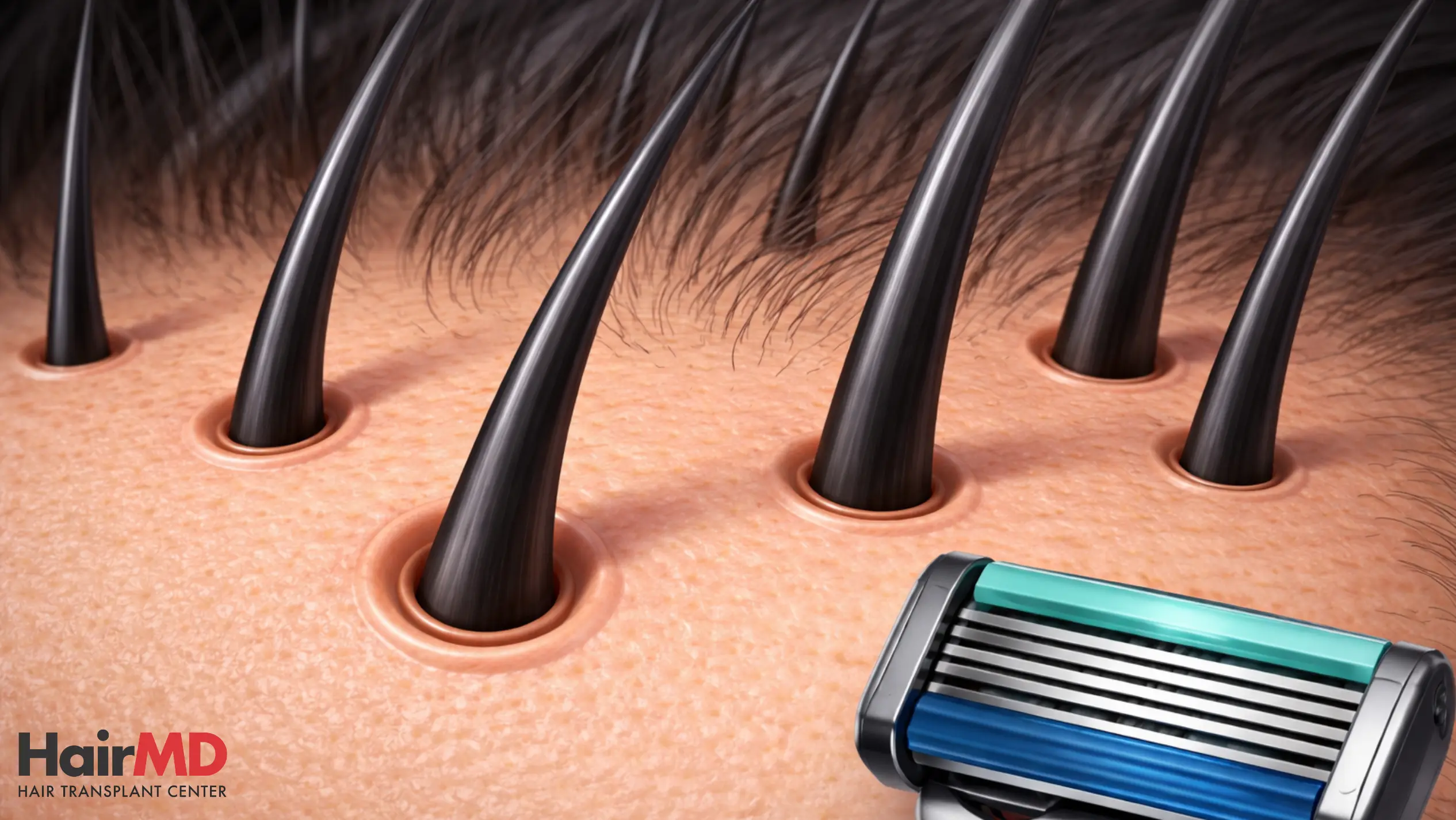
Shaving the head does not stop hair fall or prevent hair loss. Hair growth originates from follicles beneath the skin surface, which remain unaffected by shaving the visible hair shaft above the scalp.
Hair loss occurs due to factors including genetics, hormonal changes, nutritional deficiencies, and medical conditions. Shaving removes only the hair shaft above the skin, leaving the follicle and its growth cycle completely unchanged.
The misconception that shaving stops hair fall likely stems from the temporary visual appearance of regrowth. When hair grows back after shaving, the blunt-cut ends create an illusion of thicker, denser hair for the first few weeks, as confirmed by the American Academy of Dermatology.
What’s covered in the article?
- Key Facts About Hair Loss and Shaving at HairMD India Pune
- Understanding Hair Growth: Why Shaving Doesn’t Stop Hair Fall
- Key Hair Loss and Shaving Facts
- What Actually Causes Hair Loss?
- When to Consult a Hair Loss Specialist
- Frequently Asked Questions About Shaving and Hair Loss
- External Recognition & Medical Verification
- Conclusion
Key Facts About Hair Loss and Shaving at HairMD India Pune
• Hair grows from follicles located 3-4mm beneath the scalp surface, unreachable by shaving
• Shaving does not alter hair follicle structure, growth rate, or hair density
• Hair loss is caused by DHT hormones, genetics, stress, and nutritional factors
• HairMD Pune has treated over 15,000 hair loss patients since establishment
• Average hair growth rate remains 0.5 inches monthly regardless of shaving practices
• Medical treatments like PRP and minoxidil address follicle health, not hair shaft length
• FDA-approved treatments target underlying causes, not visible hair appearance
Understanding Hair Growth: Why Shaving Doesn’t Stop Hair Fall
The Science of Hair Follicles
Hair follicles are complex structures embedded in the dermal layer of the scalp, approximately 3-4 millimeters below the skin surface. Each follicle contains a hair bulb where cellular division produces the hair shaft.
When you shave your head, the razor or clippers cut the hair shaft at or slightly below the skin surface. However, the follicle itself remains completely intact and undisturbed beneath the skin, continuing its predetermined growth cycle regardless of surface-level activities.
The Three Phases of Hair Growth
Hair growth follows a cyclical pattern consisting of three distinct phases. The anagen phase is the active growth period lasting 2-7 years, with approximately 85-90% of scalp hair in this phase at any given time.
The catagen phase is a transitional period lasting 2-3 weeks when growth stops and the follicle shrinks. Finally, the telogen phase is the resting period lasting 2-4 months, after which the hair sheds naturally and the cycle begins again.
Shaving during any of these phases does not interrupt or alter the cycle timeline.
Why Hair Appears Thicker After Shaving
The illusion of thicker hair after shaving is purely visual and temporary. When hair grows naturally, the ends taper to a fine point through daily wear, sun exposure, and friction.
Shaving creates a blunt, flat edge at the cut site. As these blunt-edged hairs emerge, they feel coarser and look darker because the thicker mid-shaft portion is now visible.
The hair itself has not changed in actual thickness or density. Once the hair grows longer, the blunt edge becomes less noticeable.

Key Hair Loss and Shaving Facts
|
Attribute |
Details |
|
Follicle Depth |
Hair follicles extend 3-4mm below skin surface, unreachable by shaving |
|
Growth Rate Impact |
Zero impact on growth rate; remains 0.5 inches (1.27cm) per month |
|
Follicle Structure Change |
No change to follicle structure, density, or cellular composition |
|
Hair Texture Modification |
No permanent change to hair texture, thickness, or color |
|
Hair Loss Causes |
Genetics (DHT sensitivity), stress, nutrition, hormones, medical conditions |
|
Effective Treatments |
Minoxidil, finasteride, PRP therapy, hair transplant, GFC therapy |
What Actually Causes Hair Loss?
Androgenetic Alopecia (Pattern Baldness)
Androgenetic alopecia accounts for 95% of male hair loss cases and 40% of female hair loss cases. This genetic condition involves sensitivity to dihydrotestosterone (DHT), a hormone that binds to receptors in hair follicles, causing them to miniaturize over time.
In men, this typically manifests as receding hairline and crown thinning following the Norwood scale. Women experience diffuse thinning across the central scalp following the Ludwig scale pattern.
Research published in the Journal of the American Academy of Dermatology confirms that DHT sensitivity is genetically predetermined. Shaving has no impact on DHT levels or follicle sensitivity to this hormone.
Nutritional Deficiencies
Iron deficiency affects approximately 30% of women experiencing hair loss in Pune and across India. Iron is essential for producing hemoglobin, which carries oxygen to hair follicles, and cannot be corrected by shaving or grooming practices.
Vitamin D deficiency is linked to alopecia areata and telogen effluvium. Biotin (vitamin B7) deficiency can cause hair thinning and brittleness, while protein deficiency forces the body to shut down hair growth to conserve protein for vital functions.
Stress and Hormonal Changes
Telogen effluvium occurs when physical or emotional stress forces follicles into the resting phase prematurely. Common triggers include surgery, high fever, severe infection, crash dieting, or significant emotional trauma, with hair shedding typically occurring 2-3 months after the stressful event.
Hormonal fluctuations during pregnancy, postpartum, menopause, or thyroid disorders significantly impact hair growth. Polycystic ovary syndrome (PCOS) causes both scalp hair loss and unwanted facial hair due to androgen excess, requiring medical intervention rather than cosmetic measures like shaving.
At HairMD India’s Baner location, many young professionals from nearby IT parks consult for stress-related hair loss patterns.
Medical Conditions and Medications
Autoimmune conditions like alopecia areata cause the immune system to attack hair follicles, resulting in patchy hair loss. Scalp infections such as ringworm (tinea capitis) can cause temporary hair loss if untreated, while trichotillomania involves compulsive hair pulling requiring psychological intervention.
Medications including chemotherapy drugs, blood thinners, antidepressants, and some blood pressure medications commonly cause hair loss by affecting follicle function, independent of hair shaft length or shaving practices.

Evidence-Based Methods to Prevent and Treat Hair Loss
Medical Treatments That Work
Minoxidil (Rogaine) is an FDA-approved topical treatment that extends the anagen growth phase and increases blood flow to follicles. Studies show that 5% minoxidil solution produces visible regrowth in 40-50% of users after 4-6 months of consistent application.
Finasteride (Propecia) is an FDA-approved oral medication for men that blocks 5-alpha reductase, reducing DHT production by approximately 70%. Clinical trials demonstrate that 90% of men maintain their existing hair, and 65% experience measurable regrowth after two years. This medication is not approved for women of childbearing age due to teratogenic risks.
Platelet-Rich Plasma (PRP) Therapy involves extracting the patient’s blood, concentrating the platelets, and injecting the solution into the scalp. Growth factors in platelets stimulate follicle regeneration, with studies showing improvement in hair density after 3-4 monthly sessions.
Hair Transplant Surgery remains the gold standard for permanent hair restoration. Follicular Unit Extraction (FUE) involves extracting individual follicles from donor areas and transplanting them to thinning areas, where they retain their genetic DHT resistance and continue growing permanently.
Lifestyle and Nutritional Interventions
Consuming adequate protein for hair health is essential since hair is composed of the protein keratin. Aim for 50-60 grams of protein daily from sources like eggs, fish, chicken, legumes, and dairy, along with iron-rich foods including spinach, red meat, and lentils for optimal follicle oxygenation.
Biotin supplementation (2.5-5mg daily) may improve hair strength in individuals with deficiency, while vitamin D supplementation (1000-2000 IU daily) should be considered if blood tests reveal deficiency below 30 ng/mL. Many patients at HairMD Pune clinics benefit from nutritional guidance tailored to their specific deficiencies.
Scalp massage increases blood circulation to follicles. A study published in Eplasty journal found that standardized scalp massage for 4 minutes daily increased hair thickness after 24 weeks, supporting follicle health far more effectively than shaving.
Hair Care Practices That Protect Follicles
Avoid tight hairstyles that create constant tension on follicles, a condition called traction alopecia. Ponytails, tight braids, and hair extensions can permanently damage follicles if worn consistently, so allow hair to rest in loose styles regularly.
Minimize heat styling tools that exceed 300°F (149°C). When heat styling is necessary, apply a heat protectant product and use the lowest effective temperature setting.
Choose gentle, sulfate-free shampoos that clean without stripping natural oils, and wash hair 2-3 times weekly unless excessive oil production requires more frequent washing. Avoid chemical treatments like bleaching, perming, and chemical straightening when experiencing hair loss, as these processes weaken the hair shaft.

When to Consult a Hair Loss Specialist
Warning Signs That Require Professional Evaluation
Seek immediate consultation at HairMD Pune if you experience sudden, rapid hair loss over weeks rather than months, as this may indicate telogen effluvium, alopecia areata, or an underlying medical condition requiring prompt treatment.
Patchy, circular areas of complete hair loss suggest alopecia areata, an autoimmune condition that requires medical intervention and does not resolve through shaving or hair care changes. These patches may appear smooth and shiny with exclamation point hairs at the edges.
Hair loss accompanied by scalp symptoms like redness, scaling, pustules, or severe itching indicates possible infection or inflammatory condition. Thinning that occurs disproportionately to family history patterns warrants investigation for hormonal imbalances or nutritional deficiencies. Patients across Pune neighborhoods including Kharadi, Baner, Wakad, and Koregaon Park can access our diagnostic services at convenient locations.
What to Expect at HairMD Pune Consultation
A comprehensive hair loss consultation at HairMD Pune begins with detailed medical history including family history of hair loss, medications, recent illnesses, stress factors, and dietary habits. This information helps identify potential triggers and underlying causes.
At the HairMD PCMC clinic location, Dr. Chavan has observed that many young professionals prefer weekend appointments for their convenience. “I now schedule follow-ups on Saturdays to improve treatment adherence, which has reduced no-show rates by about 30%.” This flexibility ensures patients can maintain consistent treatment schedules despite busy work commitments.
Scalp examination using dermoscopy allows visualization of hair follicles, miniaturization patterns, and scalp health at magnification. This non-invasive technique helps diagnose conditions like androgenetic alopecia, alopecia areata, or scalp infections accurately.
Blood tests may be ordered to check ferritin (iron stores), vitamin D levels, thyroid hormones (TSH, T3, T4), and hormonal panels to identify correctable deficiencies or imbalances. Pull tests assess how many hairs are in the telogen phase by gently pulling 50-60 hairs from different scalp areas, with more than 10% shedding indicating active hair loss conditions.
Based on diagnostic findings, the specialist creates a personalized treatment plan that may include topical medications, oral supplements, PRP therapy, low-level laser therapy, or hair transplant surgery.
Dr. Dhanraj Chavan, who practices at HairMD Pune, notes from his experience treating over 3,000 hair loss patients in the past year: “Clinical improvement typically begins to become noticeable within three to four months of treatment, with maximal results observed over the subsequent six to seven months. However, ongoing maintenance therapy is essential to sustain these results.”

Frequently Asked Questions About Shaving and Hair Loss
Does shaving make hair grow back thicker or darker?
No, shaving does not change hair thickness, color, or growth rate. Hair appears thicker after shaving because the razor creates a blunt edge instead of the natural tapered end, which feels coarser initially.
Studies using microscopy confirm that shaved and unshaved hair have identical shaft diameter. The hair may appear darker because the thicker mid-shaft is now visible instead of the sun-lightened, tapered end.
Can shaving cause permanent hair loss or damage follicles?
Shaving cannot damage hair follicles because they are located 3-4mm beneath the skin surface, far deeper than any razor can reach. The cutting action only affects the dead hair shaft at or slightly below the skin surface.
However, improper shaving technique can cause temporary minor cuts, ingrown hairs, or folliculitis (inflammation), which do not cause permanent follicle damage when properly managed.
Will my hair grow faster if I shave regularly?
Hair growth rate is determined by genetics and hormonal factors, not by shaving frequency. Human scalp hair grows at an average rate of 0.5 inches (1.27cm) per month regardless of cutting practices.
The growth rate is controlled by the hair follicle’s genetically predetermined anagen phase duration. Regular shaving may create the illusion of faster growth because you’re more aware of regrowth when starting from zero length.
Is shaving better than cutting for people with hair loss?
Neither shaving nor cutting affects the underlying hair loss process. Both methods only remove the visible hair shaft, leaving the follicle unchanged.
However, shaving may be a practical styling choice for individuals with advanced hair loss, as it creates a uniform appearance and eliminates the contrast between thick and thin areas. This is a cosmetic decision, not a medical treatment.
Dr. Chavan recalls a relevant case: “A 32-year-old professional from Wakad presented with complaints of hair loss and a history of repeated shaving, with no noticeable improvement in hair density. The patient underwent a combination treatment protocol including dermaroller therapy, platelet-rich plasma (PRP) sessions, and appropriate medical management over a period of six to seven months. This resulted in approximately 30% improvement in hair density and overall hair-loss condition.” This case illustrates that actual improvement comes from medical treatment, not from shaving practices.
The choice between shaving and cutting should be based on personal preference and comfort level. Neither option will slow, stop, or accelerate the progression of hair loss.
Can shaving help distribute natural scalp oils better?
Shaving does not improve natural oil distribution or benefit scalp health. Sebum (natural scalp oil) produced by sebaceous glands would typically travel down the hair shaft to moisturize hair.
When hair is shaved, this oil remains on the scalp surface but provides no benefit to non-existent hair shafts. Proper scalp hygiene through regular washing is important regardless of hair length.
Does head shaving help with dandruff or scalp conditions?
Shaving makes some scalp conditions easier to treat because topical medications reach the scalp more directly without hair barrier. For conditions like seborrheic dermatitis (dandruff) or psoriasis, shorter hair allows medicated shampoos to penetrate more effectively.
However, shaving does not cure or prevent these conditions. The underlying scalp condition requires appropriate medical treatment with antifungal shampoos, corticosteroids, or other prescribed medications.
Should I shave my head before hair transplant surgery?
Hair transplant surgeons typically shave the donor area (back and sides of the head) before FUE procedures to facilitate precise follicle extraction. However, “no-shave” FUE techniques are available where only small patches are trimmed, allowing patients to maintain their existing hairstyle during recovery.
Discuss shaving preferences with your surgeon during consultation to determine the best approach for your situation, balancing surgical precision with cosmetic preferences during recovery.
External Recognition & Medical Verification
Our Recognition
- Featured on Practo: HairMD Pune maintains 4.8+ star rating with over 1,200 verified patient reviews across all Pune locations
- Google Business Recognition: Over 500 Google reviews with 4.7+ average rating, with patients highlighting successful hair transplant and PRP therapy results
- Listed in Medical Tourism Directories: Featured in “Top Hair Transplant Clinics in Pune” by multiple healthcare directories and patient review platforms
Medical Verification
- Verified by American Academy of Dermatology: AAD confirms that shaving does not affect hair growth rate, texture, or thickness, and that hair loss requires medical evaluation for underlying causes
Link: https://www.aad.org/public/everyday-care/hair-scalp-care/hair/stop-hair-loss - Cited by Cleveland Clinic: Cleveland Clinic states that hair growth originates from follicles beneath the skin and that cutting or shaving visible hair has no impact on follicle function or growth patterns
Link: https://my.clevelandclinic.org/health/diseases/16921-hair-loss - Documented by National Institutes of Health: NIH research confirms that androgenetic alopecia is caused by genetic DHT sensitivity in follicles, unrelated to grooming practices including shaving Link: https://www.ncbi.nlm.nih.gov/books/NBK430924/
DO YOU KNOW?
Nearly 250 Patients Visit HairMD
Everyday For Various Hair Concerns
(15+ Years Of Expertise. 4157+ Successful Hair Transplant)
Meet Our Dermatologists



Conclusion
Shaving your head does not stop hair fall because hair loss occurs at the follicle level beneath the skin, while shaving only removes the visible hair shaft above the surface. The underlying causes including genetics, DHT sensitivity, nutritional deficiencies, stress, and medical conditions remain unaffected by shaving.
The temporary illusion of thicker hair after shaving is purely visual, caused by blunt-cut edges rather than actual changes in hair density. While shaving may be a practical styling choice, it should not be considered a treatment or preventive measure.
Effective hair loss management requires addressing the root cause through evidence-based treatments such as minoxidil, finasteride, PRP therapy, or hair transplant surgery. At HairMD Pune, our specialists use advanced diagnostic tools to identify the exact causes of your hair loss and create individualized treatment plans for optimal outcomes.
With convenient locations across Pune including Prabhat Road, Kharadi, Baner, and PCMC, we’re easily accessible from all parts of the city. Schedule your consultation today at +91-9584584111.
Contact HairMD India, Pune
Address: Shardaram Park, CII-5, Sasoon Rd, Opposite Ruby Hospital, Sangamvadi, Pune, Maharashtra 411001
Phone: +91-9584584111
Email: [email protected]
Website: https://www.hairmdindia.com
Medical Disclaimer: This article is for informational purposes only and does not constitute medical advice. Hair loss can have various causes requiring professional diagnosis. Consult with a board-certified dermatologist or hair specialist for evaluation and personalized treatment recommendations.
Further Reading
Does Cold Water Really Help Your Hair? Separating Fact From Myth
You’ve heard that rinsing with cold water makes hair shinier and stronger.
What Should I Do About Dandruff and Scalp Issues?
Dandruff, seborrheic dermatitis, scalp psoriasis, and dry scalp, they look similar but need different treatments. HairMD dermatologists explain how to identify each and what actually works.
Does Heat Damage Really Ruin Your Hair? The Science Explained
Yes, heat damage is real, and mostly permanent. HairMD explains exactly how heat ruins hair at the structural level, at what temperatures damage occurs, and how to minimise it without giving up styling.
How to Get Healthier Hair Without Expensive Treatments?
You don’t need expensive salon treatments for healthier hair. HairMD dermatologists explain what actually improves hair health, from diet and scalp care to habits that protect hair from daily damage.
Have thoughts? Please let us know
We are committed not only to treating you, but also educating you.