



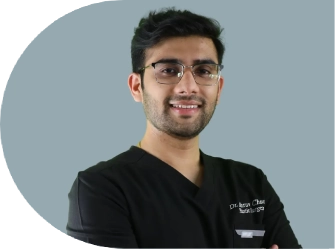
Written by HairMD Content Team | Medically Reviewed by Dr. Dhanraj Chavan On February 26, 2026


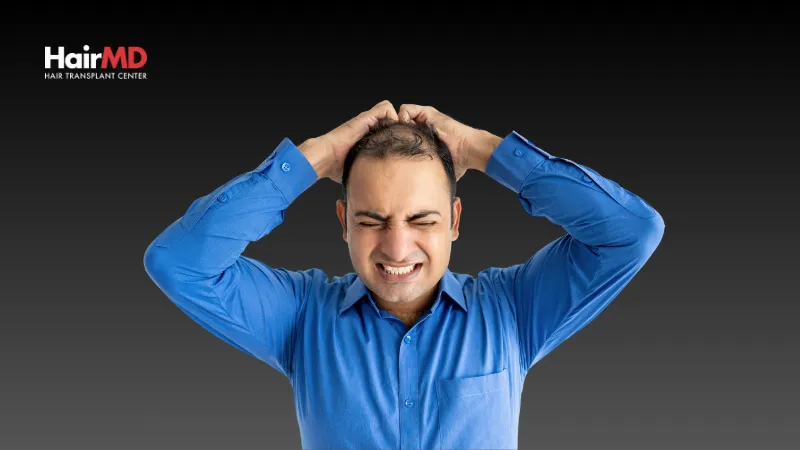
Nothing is more disheartening for a patient than investing their hopes, time, and money into a hair transplant, only to be left with unnatural and disappointing results.
At our HairMD clinics in Pune and Pimpri Chinchwad, a significant portion of my work involves correcting procedures that have gone wrong elsewhere.
As a hair transplant surgeon with over 17 years of experience in this field, I can tell you that while fixing a bad hair transplant is a complex and delicate process, it is almost always possible to achieve a significant, natural-looking improvement.& in most of the cases the donor is almost depleted.
This guide for 2026 is designed to help you understand why transplants fail and how a revision surgery can restore not only your hairline but also your confidence.
What’s covered in the article?
- Quick Summary
- How Can You Tell if a Hair Transplant Has Failed?
- Why Do Hair Transplants Fail? The Core Reasons
- The Detailed Process: How We Approach a Revision Surgery
- Specialised Techniques for Hair Transplant Repair
- The Importance of Intra-Operative Care: The Difference is in the Details
- Setting Realistic Expectations for Your Revision Transplant
- What is the Cost of Revision Hair Transplant in Pune?
- How Do We Repair Failed Hair Transplant at HairMD?
- Why Choose HairMD to Correct a Failed Transplant?
- Frequently Asked Questions
Quick Summary
- Why Transplants Fail?: The most common reasons for a failed transplant are surgeon inexperience, procedures performed by unqualified technicians, poor planning, and a lack of artistic skill, leading to unnatural hairlines or low graft survival.
- Is a Bad Transplant Fixable? Yes. A skilled surgeon can correct issues like pluggy hairlines, wrong hair direction, and poor density through a specialised procedure known as revision or repair surgery.
- The Process is Different: Repair surgery is more complex than a primary transplant. It often involves removing old, poorly placed grafts, dealing with scar tissue, and carefully managing errors to improve the donor area.
- Key to Success: The success of a repair procedure depends entirely on the surgeon’s expertise in revision techniques, their artistic vision, and meticulous intra-operative care.
- Expectation is Crucial: The goal of a revision is dramatic improvement and a natural appearance, not necessarily the density of a virgin-scalp procedure.
How Can You Tell if a Hair Transplant Has Failed?
A failed hair transplant isn’t always about a complete lack of growth.
Often, the failure is aesthetic. Here are the common signs I look for when a patient visits me for a revision consultation:
- An Unnatural Hairline: This is the most common issue. It might look like a “doll’s hair” or “corn-row” pattern, where multi-hair grafts were placed in straight, harsh lines. A natural hairline is soft, irregular, and starts with fine, single hairs.
- Low Growth or Poor Density: You may see less than 50% growth from the implanted grafts after 12 months. This often points to poor graft handling or placement.
- Incorrect Hair Angles: The transplanted hair grows out at an unnatural, perpendicular angle instead of lying flat, creating a jarring look.
- Visible Scarring: Both in the recipient area (pitting or bumps) and the donor area (a “moth-eaten” look from over-harvesting).
- Damaged Donor Area: An exhausted or patchy donor area that prevents any future procedures.
Why Do Hair Transplants Fail? The Core Reasons
In my extensive experience, failures almost always trace back to human error and a lack of expertise, not a problem with the patient’s body.
- The Rise of “Technician-Only” Clinics: The single biggest cause of bad transplants today is the “bait-and-switch” model. A doctor consults, but an unqualified technician performs the critical surgical steps. They lack the anatomical knowledge and artistic skill to create a natural result.They almost scrape the donor area.
- Lack of Surgical Planning: The surgeon did not properly assess the patient’s grade of baldness, scalp characteristics, or plan for future hair loss. They focused on “filling a gap” today, not managing a patient’s hair for life.
- Poor Graft Handling: Hair follicles are living organs. If they are left out of the body for too long, are not kept in a proper holding solution (like a HypoThermosol solution at 4 degree C), or are handled roughly during placement, they will not survive.
- Inexperienced Surgeon: The procedure was performed by a doctor who lacks specialised training and certification in hair restoration surgery, like from the ISHRS (International Society of Hair Restoration Surgery).
- Graft Harvesting & Handling Issues: Proper harvesting and handling of grafts is crucial for a successful outcome. If the grafts are harvested haphazardly or using improper techniques, such as excessive force or outdated methods, it can damage the follicles and reduce survival rates. Additionally, using non-sterile or inappropriate tools during the process can compromise graft quality.
- Non-Standardised Equipment: The use of non-standardised or outdated equipment during the procedure can lead to suboptimal results. High-quality and advanced tools are necessary to ensure precision and reduce the risk of graft damage or improper placement. Clinics that cut corners by using lower-grade equipment may put the patient’s results at risk.
- Incomplete Health Assessment: A thorough health assessment of the patient, including scalp laxity, donor area health, and overall medical conditions, is essential before proceeding with hair restoration surgery.
To have successful and natural-looking hair restoration, we always encourage our patients to thoroughly research and consult with certified hair specialists who is actively working in hair transplant surgeries before undergoing the procedure.
If you’re considering a hair transplant and want to ensure the best possible outcome, contact us today for a consultation with one of our experienced consultation.
The Detailed Process: How We Approach a Revision Surgery?
Correcting a failed transplant is not as simple as adding more grafts. It’s a meticulous, often multi-stage, process.
- Step 1: Deep-Dive Consultation: Our first meeting is the most critical. I use a digital trichoscope to analyse your scalp, assessing the quality of existing grafts, the degree of scarring, and crucially, the health of your remaining donor area. We talk about what can be realistically achieved.
- Step 2: Graft Removal (Excision): If the primary issue is a pluggy, unnatural hairline, the first surgical step is often to remove these bad grafts. Using micro-punches (typically 0.7-0.9mm), we carefully extract the misplaced follicular units.
- Step 3: Graft Recycling: These extracted grafts are not wasted. Our skilled technicians immediately place them under high-magnification microscopes and dissect them into single-hair units. These can be reused to create a new, softer hairline.
- Step 4: The Repair Transplant: This may happen in the same session or months later, depending on the extent of the repair needed. Here, we execute a new FUE transplant with an artistic focus, creating a natural transition zone and adding density behind it.
- Step 5: Healing and Recovery: Post-surgery, the scalp is given time to heal. Patients are provided with detailed aftercare instructions to ensure optimal recovery and the best results. This includes guidance on washing, avoiding strenuous activities, and recognising signs of infection or complications.
- Step 6: Monitoring and Follow-Up: Regular follow-up appointments are essential to track progress and address any concerns. During these check-ins, the regrowth of the transplanted hair is monitored, and further recommendations are made for maintaining a natural and aesthetic appearance.
Specialised Techniques for Hair Transplant Repair
Repair surgery requires a different toolkit and mindset compared to a primary procedure.
Graft Excision and Re-implantation
This is the cornerstone of correcting a “doll’s hair” look. It involves carefully removing the offending grafts and then re-implanting them correctly. It is a highly precise and time-consuming task that only an experienced surgeon should perform.
Camouflaging Techniques
In some cases where the old grafts are not excessively large but are just poorly positioned, we can use camouflaging. This involves creating a new, soft, irregular micro-hairline in front of the old one. By placing 500-800 fine, single-hair grafts, we can effectively “hide” the harsh line behind it, creating the illusion of a natural transition.
Body Hair Transplant (BHT)
A common tragedy of a bad transplant is a depleted or “moth-eaten” donor area on the scalp. When the scalp donor is exhausted, I turn to secondary donor sources. Beard hair is my preferred choice for repair work. It is robust, and its thickness is excellent for adding density behind the newly created soft hairline.
The Importance of Intra-Operative Care: The Difference is in the Details
The survival of each precious graft is paramount in a revision surgery where donor supply is limited. This is why intra-operative care is non-negotiable.
- Punch Size: We use the smallest possible punches that match your hair calibre (often between 0.8mm and 0.9mm) to minimise trauma and scarring.
- Graft Hydration and Chilling: From the moment a graft is extracted, it is kept in a chilled storage solution maintained at $2-8^\circ\text{C}$. This drastically reduces the metabolic rate of the follicle and boosts its survival chances.
- Minimal “Out-of-Body” Time: We ensure grafts are re-implanted as quickly as possible. The longer a graft is outside the body, the lower its survival rate.
What to Realistically Expect from Your Revision Hair Transplant?
It’s crucial to approach revision surgery with realistic expectations. While my team and I are dedicated to achieving the best possible outcome, it’s important to understand the unique challenges of a repair procedure.
The Goal is Significant Improvement, Not Perfection: The primary objective of a revision transplant is to correct the previous work, creating a result that is natural-looking and restores your confidence. We aim for a dramatic improvement that you can be proud of.
Why It’s Different from a First-Time Transplant: A scalp that has undergone previous surgery has unique characteristics, such as scar tissue and a depleted donor area. These factors can affect the final outcome. Therefore, it’s unrealistic to expect the exact same density or result as a primary transplant on an untouched scalp.
Factors Influencing Your Final Result:
- Donor Hair Availability: The most significant limiting factor is the number of healthy, viable grafts remaining in your donor area. Our ability to create density is directly tied to this supply.
- Existing Scar Tissue: Scar tissue from the previous procedure can have a less robust blood supply, which may impact the survival rate of newly implanted grafts.
- Extent of the Previous Damage: The complexity of the repair will depend on the specific issues we need to correct, whether it’s a poor hairline design, unnatural graft placement, or visible scarring.
My commitment is to be completely transparent with you. During our consultation, we will thoroughly assess your individual situation and create a surgical plan that maximizes the potential of your available donor hair. We will work meticulously to create the most aesthetically pleasing and natural result possible within these parameters.
Cost of Revision Hair Transplant in Pune
Revision hair transplants are more complex than primary procedures, requiring advanced skills and time.
Costs typically range from Rs. 50-100 per graft, depending on factors like the number of grafts to be corrected or added and whether Body Hair Transplant is needed.
Choosing an experienced surgeon is crucial to avoid further complications or irreversible damage.
Quality matters more than price—investing in expertise ensures better results and long-term satisfaction.
How Do We Repair Failed Hair Transplant at HairMD?
At HairMD, revision and repair surgery is carried out with unmatched precision and clinical rigour—there are no shortcuts, and every micro-step matters. Here’s exactly how we manage failed hair transplants, and why our step-by-step process delivers superior outcomes.
1. Comprehensive Assessment & Planning
Every revision surgery at HairMD begins with a thorough digital trichoscopic analysis. We assess:
- Previous graft patterns and density
- Degree and location of scarring
- Donor area strength (scalp and beard)
- Recipient site vascularity
I personally conduct each assessment, mapping every problematic graft and identifying usable donor reserves.
This foundational analysis means you get a tailored, realistic repair plan with clear expectations.
2. Selecting the Right Punch—Minimising Trauma, Maximising Survival
Punch selection is critical in revision cases. For graft excision, we use micro-punches (0.7-0.85 mm) and select the type—sharp, blunt, or hybrid—based on your graft calibre, scar tissue, and the density of the area.
The right punch minimises trauma to the skin and native follicles, reducing scarring and maximising the percentage of viable excised grafts.
3. Precise Graft Excision & Maximising Salvage
With high-magnification loupes and micro-punches, we carefully remove pluggy, misangled, or multi-hair grafts.
Each excised graft is handled delicately and immediately passed to our technicians, who dissect them under a stereo-microscope.
Salvageable follicles are separated into single and double follicular units—this maximises the usable graft count for the new hairline or areas needing density.
4. Meticulous Recipient Site Creation—It’s All in the Angle
One reason for “doll’s hair” or “corn-row” failures is incorrect graft angle. At HairMD Clinic, I create each recipient site myself, ensuring:
- Angle: Natural anterior hairlines are created at acute angles (30-45 degrees to the scalp), not perpendicular, so transplanted hair lies flat, blending into native hair and mimicking natural emergence.
- Direction: Hair direction follows natural swirl patterns and local hair orientation.
- Density Distribution: Single-hair grafts are irregularly placed at the front for a feathery look, with doubles and triples blended further behind for natural volume.
This artistry prevents unnatural lines and ensures a seamless transition zone.
5. Chilling, Hydration, and Immediate Implantation of Grafts
Excised and new donor grafts are stored at 2–8°C in specialised storage solution (such as HypoThermosol) throughout surgery.
Minimal “out-of-body” time is our protocol—grafts are implanted rapidly, preserving viability and vitality.
6. Stepwise Repair (Staged if Needed)
Sometimes, repair must be split into two or more sessions to allow your scalp to heal and donor supply to recover.
At every stage, we check progress, manage expectations, and, crucially, protect your donor reserves for a lifetime of natural hair.
7. Post-Op Care & Monitoring—Long-Term Success
You will receive a detailed aftercare plan, including wound care, medication, and periodic trichoscopic check-ups—onsite or virtual. Our process is designed for maximum patient safety and sustainable, natural growth.
Book your personalised consultation today to discuss your needs and explore the best options tailored just for you.
Our expert team is here to guide you every step of the way, ensuring natural results and a lifetime of healthy hair. Contact us now to begin your hair restoration journey!
Ready to take the first step towards correcting your hair transplant?
Book a private consultation at HairMD in Pune or Pimpri Chinchwad. Let’s discuss your case and build a strategy to achieve the natural result you always wanted.
Frequently Asked Questions
Q: Can a hair transplant be done a second or third time?
A: Yes, provided you have sufficient donor grafts remaining in your scalp or on your body (like the beard). A thorough donor assessment is the first step in planning any subsequent procedure.
Q: How long do I have to wait to fix a bad hair transplant?
A: You should wait at least 12 months after your initial procedure. This allows for the final results to become fully visible and for your scalp to heal completely before undergoing another surgery.
Q: Is revision surgery more painful?
A: No. Like a primary transplant, the procedure is performed under local anaesthesia, so you will not feel any pain. The post-operative recovery is also very similar.
Q: How much does a hair transplant cost?
A: The cost of a hair transplant varies depending on factors such as the extent of hair loss, the technique used, and the clinic’s location. It is recommended to schedule a consultation to receive a personalised quote based on your specific needs.
Q: Are the results of a hair transplant permanent?
A: Yes, hair transplants are considered a permanent solution for hair loss. The transplanted hair is taken from areas resistant to hair loss, ensuring it continues to grow naturally over time.
Q: How soon can I go back to work after a hair transplant?
A: Most patients return to work within 2-5 days after the procedure. However, this may vary depending on the nature of your job and individual recovery progress.
Q: Will a hair transplant look natural?
A: When performed by a skilled surgeon, a hair transplant can look completely natural. Advanced techniques and careful planning ensure the transplanted hair mimics your natural hairline and growth pattern.
DO YOU KNOW?
Nearly 250 Patients Visit HairMD
Everyday For Various Hair Concerns
(15+ Years Of Expertise. 4157+ Successful Hair Transplant)
Meet Our Dermatologists

Why Choose HairMD to Correct a Failed Transplant?
At HairMD, we see revision surgery as a sub-specialty that demands the highest level of surgical and artistic expertise.
- A Surgeon-Centric Approach: As an ISHRS-certified surgeon, I am personally involved in every critical step of your procedure, from the initial plan to the final placement of each graft.
- Experience in Complex Repairs: With 17+ years of practice, I have successfully corrected hundreds of failed transplants, addressing everything from pluggy hairlines to depleted donor areas.
- Ethical and Transparent Practice: We will provide an honest assessment of your situation and a clear, realistic surgical plan. Our goal is to solve your problem, not to sell a procedure.
Living with a bad hair transplant can be emotionally taxing. But you do not have to live with it forever.
Further Reading
Does Cold Water Really Help Your Hair? Separating Fact From Myth
You’ve heard that rinsing with cold water makes hair shinier and stronger.
What Should I Do About Dandruff and Scalp Issues?
Dandruff, seborrheic dermatitis, scalp psoriasis, and dry scalp, they look similar but need different treatments. HairMD dermatologists explain how to identify each and what actually works.
Does Heat Damage Really Ruin Your Hair? The Science Explained
Yes, heat damage is real, and mostly permanent. HairMD explains exactly how heat ruins hair at the structural level, at what temperatures damage occurs, and how to minimise it without giving up styling.
How to Get Healthier Hair Without Expensive Treatments?
You don’t need expensive salon treatments for healthier hair. HairMD dermatologists explain what actually improves hair health, from diet and scalp care to habits that protect hair from daily damage.
Have thoughts? Please let us know
We are committed not only to treating you, but also educating you.