



Written by HairMD Content Team | Medically Reviewed by Dr. Dhanraj Chavan On June 07, 2023


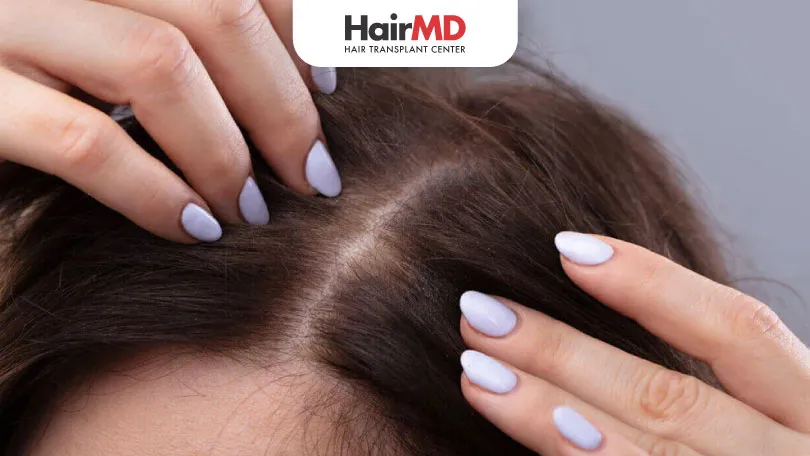
For women, the hair is their crowning glory and a symbol of their style and personality. Crown hair thinning causes embarrassment, and low self-esteem and leaves women with limited options of hairstyles.
A female with hair thinning in front or on the crown has to look for ways to mask the balding regions on her scalp, or better yet, take treatment for female hair thinning. Here we look at the causes of hair thinning and baldness in females and find how to stop female hair thinning at the crown.
What’s covered in the article?
- What Causes Women’s Hair to Thin?
- Treatment for Female Hair Thinning at the Crown
- Conclusion
What Causes Women’s Hair to Thin?
- One of the common causes of hair loss in women is a family history of baldness, a hereditary condition that occurs with growing age. In females, it is characterized by thinning of the hair on the crown.
- Hair thinning in females may be caused by certain medications or radiation therapy.
- Fluctuations in hormonal levels that occur after pregnancy, during menopause, or due to thyroid conditions, can lead to female hair thinning on the crown.
- Scalp infections, hair-pulling disorder, and certain other medical conditions are among the other common causes of hair thinning and baldness in females.
- A stressful event can cause temporary hair loss in women, leading to thinning of hair on the crown.
- Nutritional deficiencies can result in hair thinning on the crown in females.
- Exposing the hair to excessive heat through hair treatments like blow-drying, ironing and curling or styling in which the hair is tied too tightly or pulled, can cause hair loss, leading to hair thinning on the crown and front, in women.
Treatment for Female Hair Thinning at the Crown
- Minoxidil is an FDA-approved medication to treat female-pattern hair loss.
- Anti-androgen medicines can help treat hair loss in females, especially women who have PCOS.
- Females with iron deficiency can benefit from iron supplements. Increasing the intake of iron promotes hair growth.
- Female hair loss caused by vitamin deficiencies can be treated using vitamin supplements.
- Platelet-rich plasma (PRP) therapy is an effective treatment for female hair thinning at the crown. In this medical procedure, growth factors are injected in that area to induce the growth of the hair follicle.

- Laser therapy is among the best treatments for female hair thinning and hair loss. In this procedure, a low-level laser device is used to stimulate hair growth.
- Hair transplant is another very effective female hair loss treatment, wherein hair follicles from regions with good hair growth are extracted and transplanted into the balding regions on the scalp.
- Home remedies like a scalp massage, hair masks with ingredients like aloe vera, onion juice, or lemon, can promote hair growth, and thus work as a way to treat female hair thinning.
DO YOU KNOW?
Nearly 250 Patients Visit HairMD
Everyday For Various Hair Concerns
(20+ Years Of Expertise. 4157+ Successful Hair Transplant at HairMD)
Meet Our Dermatologists




Conclusion
Further Reading
Dermapen Scalp Microneedling Results in Pune
Real HairMD Pune patient results from Dermapen scalp microneedling for hair – what to expect, sessions, and before and after outcomes.
Fotona & LLLT Laser Hair Cost in Pune 2026
Fotona and LLLT laser hair treatment cost in Pune 2026 – per-session pricing, packages, and what affects the cost at HairMD Pune.
How to Prevent Hair Loss: The Ultimate Guide
Explore the ultimate guide to preventing hair loss and maintaining healthy, strong hair.
PRP Pre & Post Care Protocol | HairMD Pune
PRP for alopecia areata – what the research says about regrowth, how it compares to other options, and when it may help, from HairMD Pune.
Have thoughts? Please let us know
We are committed not only to treating you, but also educating you.