

PRP for Alopecia Areata: What the Research Says?


Written by HairMD Content Team | Medically Reviewed by Dr. Dhanraj Chavan On September 30, 2026


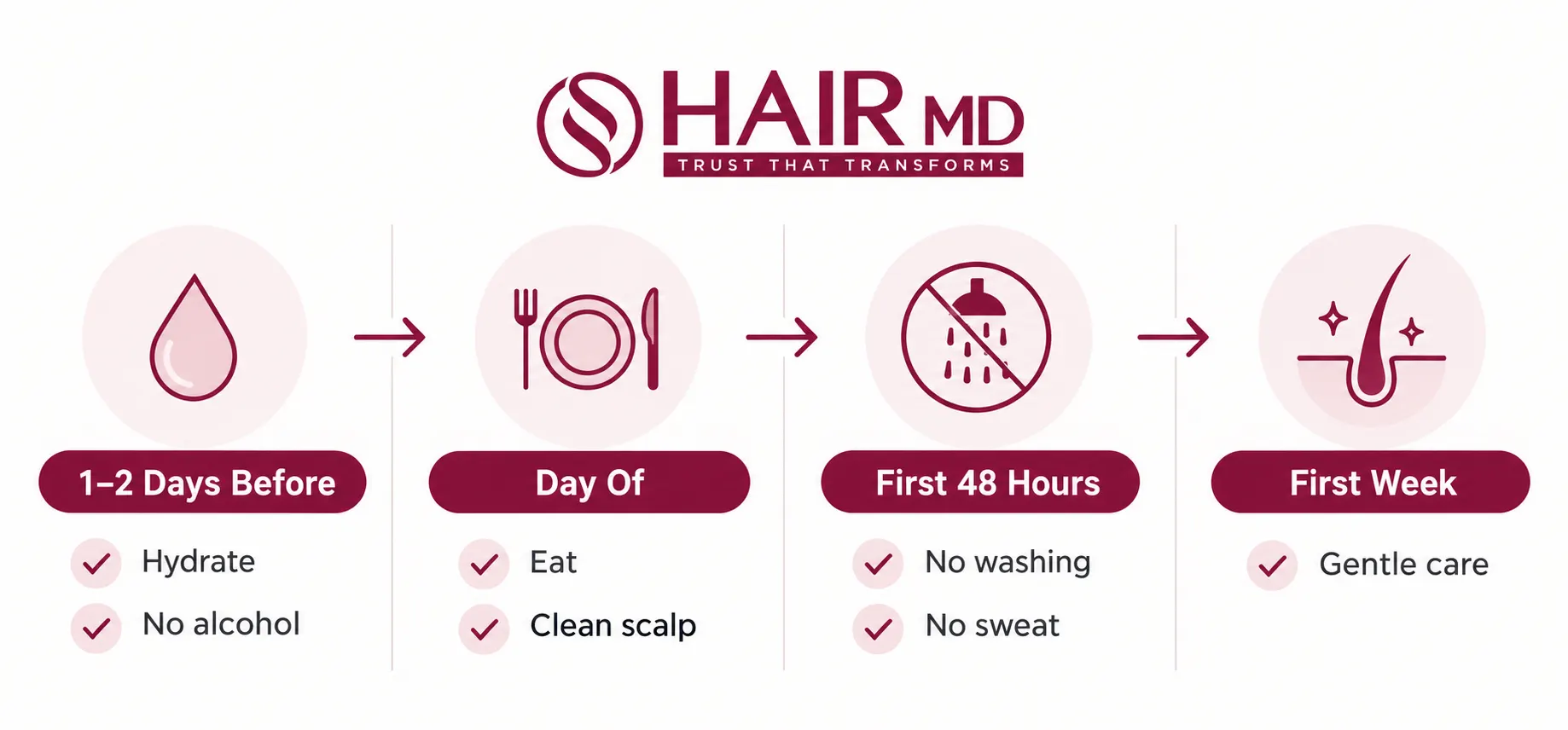
PRP pre and post care is the set of simple steps you take before and after a platelet-rich plasma session to protect the hair post treatment and help it work. PRP uses a concentrate of your own blood platelets to stimulate hair follicles, so the way you prepare your body and look after your scalp genuinely affects the outcome.
Good care will not guarantee regrowth, but poor preparation or aftercare can blunt the results and raise the small risks. This guide sets out the practical protocol Dr. Dhanraj Chavan recommends his patients at HairMD India in Pune.
Key Takeaways
- PRP works with your own platelets, so preparation and aftercare directly affect how well it performs.
- Before a session, stay hydrated, eat well, and avoid alcohol, smoking, and blood thinners as your doctor advises.
- On the day, come with a clean scalp, no styling product, and eat beforehand.
- For the first 48 hours, avoid washing too soon, heavy sweating, sun, steam, saunas, and swimming.
- Avoid anti-inflammatory painkillers around your session unless your doctor says otherwise, as they may reduce the effect.
- Mild redness, tenderness, and brief shedding are normal; spreading redness, pus, or fever are not.
- PRP is a course, so following the protocol at every session gives the best chance of results.
What’s covered in the article?
- Key Takeaways
- Key Facts About PRP Pre and Post Care
- Why Pre and Post Care Matters?
- Before Your PRP Session
- The Day of Your Session
- After Your PRP Session: The First 48 Hours
- The First Week and Beyond
- What Is Normal and When to Call?
- Common Mistakes That Reduce PRP Results
- The HairMD India Approach
- As Verified By
- Conclusion
- Frequently Asked Questions
Key Facts About PRP Pre and Post Care
| Attribute | Detail |
|---|---|
| Goal of pre-care | Prepare healthy platelets and reduce bleeding and bruising |
| Goal of post-care | Protect the treated scalp and support the healing response |
| Avoid before and after | Alcohol, smoking, and anti-inflammatory painkillers where advised |
| Scalp washing | Delay after treatment for the time your clinic specifies |
| Exercise | Pause strenuous, sweaty exercise for about 24 to 48 hours |
| Normal after-effects | Mild redness, tenderness, tightness, small bruises, brief shedding |
| Course structure | Usually 3 to 6 sessions, then occasional maintenance |
| Reviewed by | Dr. Dhanraj Chavan, MD Dermatology, HairMD India Pune |
Why Pre and Post Care Matters?
PRP is different from a cream or a tablet, because the active ingredient is your own blood and the treatment relies on a healing response in the scalp. That means your general health on the day, and how you treat the area afterwards, both feed into the result. Well-prepared platelets and a calm, protected scalp give the follicles the best environment to respond.
It also lowers the small risks that come with any injection. Sensible preparation reduces bleeding and bruising, and careful aftercare reduces the chance of irritation or infection. None of this is complicated, but skipping it can waste part of the benefit you have paid for. For the bigger picture on what PRP can and cannot do, see our guide to the benefits of PRP for hair loss.
Before Your PRP Session
Good preparation starts a day or two ahead, not on the morning of treatment. The aim is to arrive well hydrated, well rested, and free of anything that thins the blood or dampens the healing response. Always tell the clinic about your medicines and health conditions first, so the plan can be adjusted for you, and check whether PRP suits your type of hair loss using our candidacy guide.
- Drink plenty of water in the day before and on the morning of your session, as good hydration makes the blood draw easier.
- Eat a normal meal before you come, so you are less likely to feel faint.
- Avoid alcohol for about 24 to 48 hours beforehand, since it thins the blood and worsens bruising.
- Avoid smoking, which reduces blood flow and can slow healing.
- Ask your doctor before your session about blood thinners, aspirin, and anti-inflammatory painkillers, and about supplements like fish oil and vitamin E.
- Come with clean hair and a product-free scalp, with no gel, oil, or spray.
- Reschedule if you have an active scalp infection, a fever, or a flare of any skin condition on the scalp.
The Day of Your Session
On the day, the goal is simply to arrive calm, fed, and ready. Have a proper meal and keep drinking water, because a well-hydrated body gives a cleaner blood sample and a more comfortable session. Leave your scalp clean and free of any styling products, as these can interfere with cleaning the treatment area.
It also helps to plan a quiet rest of the day. PRP itself is quick and needs no general anaesthesia, but your scalp will be a little tender afterwards, so it is wise not to schedule anything strenuous. Wearing a loose top that does not need pulling over your head can make the trip home more comfortable.
After Your PRP Session: The First 48 Hours
The first two days are when aftercare matters most, because the tiny injection channels need time to settle. The single most useful habit is to leave the scalp alone and keep it cool, dry, and undisturbed. Follow the specific timing your clinic gives you, as protocols vary slightly between clinics.
- Do not wash your hair too soon; wait for the time your clinic specifies, which is often the rest of the day.
- Avoid touching, scratching, or massaging the treated scalp.
- Skip strenuous or sweaty exercise for about 24 to 48 hours, as sweat can irritate the area.
- Stay out of saunas, steam rooms, swimming pools, and direct strong sun.
- Avoid alcohol and smoking for a day or two, as both slow healing.
- Avoid ice packs and anti-inflammatory painkillers unless your doctor recommends them, because mild inflammation is part of how PRP works.
- If you need pain relief, ask your clinic which option is safe to use.
The First Week and Beyond
After a day or two normal life resumes, but a few sensible limits protect the result over the first week. Be gentle with your hair, use a mild shampoo, and hold off on anything harsh. Your clinic will tell you when to restart routine treatments, and you can read how PRP fits alongside them in our overview of using minoxidil with a dermaroller.
- Avoid hair colouring, chemical treatments, and heat styling for about a week.
- Restart minoxidil or other topical treatments only when your clinic advises.
- Protect your scalp from strong sun, using a hat rather than heavy product.
- Keep eating well and sleeping properly, as recovery is part of the result.
Consistency across the whole course is what really drives PRP results, so keep to your session schedule. Understanding the PRP results timeline month by month helps set realistic expectations, and our success rate guide explains what steady care can and cannot achieve.
What Is Normal and When to Call?
Some after-effects are expected and harmless, and knowing them in advance saves worry. Mild redness, tenderness, a tight feeling, small bruises at injection points, and even a short burst of extra shedding in the first weeks are all normal. These usually settle within hours to a few days, and the early shedding is often the hair cycle resetting rather than a problem.
A few signs are not normal and deserve a prompt call to the clinic. Spreading redness, pus or discharge, a fever, or pain that worsens instead of easing over a couple of days should be checked quickly. These events are rare with good technique and aftercare, but acting early keeps them minor. Our PRP question and answer guide covers more of the common concerns patients raise.

Common Mistakes That Reduce PRP Results
A few avoidable slip-ups are behind most disappointing PRP experiences. The most common is stopping the course too early, before the follicles have had time to respond, and then concluding that PRP does not work. Another is treating aftercare as optional, then washing, sweating on, or sun-exposing the scalp too soon. Reaching for an anti-inflammatory painkiller out of habit is also easy to do, even though it can quietly reduce the effect.
Skipping an honest conversation about expectations is the last common mistake. PRP supports hair you still have rather than regrowing fully bald areas, so going in expecting a transplant-level change leads to frustration even when the treatment is working. Setting realistic goals with your doctor, and then following the protocol at every visit, is what makes the results feel worth it.
The HairMD India Approach
At HairMD India, the pre and post care protocol is tailored to each patient rather than handed out as a generic sheet. Dr. Dhanraj Chavan reviews your health, medicines, and hair loss pattern first, then gives instructions matched to your situation and confirms which treatments to pause or continue. This personal step is part of what keeps PRP both safe and effective.
Care is delivered across HairMD India’s Pune locations, including Pune Station, Baner, Kharadi, Prabhat Road, Pimple Saudagar, and NIBM, so follow-up through a full course stays convenient. If you are still deciding, our guides to PRP pricing and the wider picture of hair loss causes and treatments can help you plan.
As Verified By
The guidance here aligns with a systematic review of PRP for alopecia, reviews of PRP in androgenetic alopecia and its effect on pattern hair loss, a 2025 consensus on contraindications to PRP injections, and a patient overview of PRP for hair loss.
Conclusion
PRP pre and post care is simple, but it is not optional if you want the best from your sessions. Prepare by hydrating, eating well, and avoiding alcohol, smoking, and blood thinners as advised; recover by protecting the scalp, skipping heavy sweat and sun, and avoiding anti-inflammatory painkillers around the treatment. Follow the protocol at every session, because consistency is what turns PRP into visible results.
Dr. Dhanraj Chavan and the team at HairMD India will give you a plan matched to your needs. Book a consultation with HairMD India in Pune to get started.
Frequently Asked Questions
What should I avoid before a PRP session?
Before PRP, avoid alcohol for about a day or two, avoid smoking, and ask your doctor about pausing blood thinners, aspirin, anti-inflammatory painkillers, and supplements like fish oil and vitamin E. These can thin the blood, worsen bruising, or dampen the healing response PRP relies on. Come well hydrated, having eaten, with a clean and product-free scalp.
How long after PRP can I wash my hair?
Most clinics ask you to delay washing your hair for the time they specify, which is often the rest of the treatment day. This gives the tiny injection points time to settle and lowers the chance of irritation. When you do wash, use a mild shampoo and be gentle, and always follow the specific timing your own clinic gives you.
Can I exercise after PRP?
It is best to avoid strenuous, sweaty exercise for about 24 to 48 hours after PRP, because sweat can irritate the freshly treated scalp. Light walking is usually fine, but heavy workouts, saunas, and swimming should wait. Your scalp will feel a little tender at first, so easing back into exercise after a day or two is the safer approach.
Why should I avoid painkillers after PRP?
Anti-inflammatory painkillers such as ibuprofen can reduce the mild inflammation that PRP uses to trigger healing, so many clinics advise avoiding them around your session. The same goes for ice packs in the first day or so. If you are uncomfortable, ask your clinic which pain relief is safe, rather than reaching for an anti-inflammatory on your own.
Is some shedding normal after PRP?
Yes, a short increase in shedding during the first few weeks after starting PRP is common and usually harmless. It often reflects the hair cycle resetting as weaker hairs make way for stronger regrowth, rather than the treatment failing. It settles within a month or two, so it helps to expect it and not to be alarmed if it happens.
How many PRP sessions will I need?
Most people need a course of about three to six sessions spaced a few weeks apart, followed by occasional maintenance. The exact number depends on your hair loss and how you respond, which your doctor will assess. Following the pre and post care protocol at every session matters, because consistent care across the whole course is what gives the best results.
DO YOU KNOW?
Nearly 250 Patients Visit HairMD
Everyday For Various Hair Concerns
(15+ Years Of Expertise. 4157+ Successful Hair Transplant)
Meet Our Dermatologists

Further Reading
PRP for Alopecia Areata: What Research Says
PRP for alopecia areata – what the research says about regrowth, how it compares to other options, and when it may help, from HairMD Pune.
Hair Transplant Cost in Pune for 2026
Find affordable 2026 hair transplant costs in Pune with expert results by Dr. Dhanaraj Chavan. Transparent pricing and flexible payments.
Beard Hair Transplant: Can Beard Hair Be Used for Hair Transplant? | HairMD
Yes, beard hair can be used for hair transplant but only in specific cases. HairMD dermatologists explain when it’s used, how many grafts it yields, its advantages and limitations.
PRP vs Minoxidil for Hair Loss: Which Works?
PRP vs minoxidil for hair loss – how each works, results, cost, and which suits you, plus whether to combine them, from HairMD Pune.
Have thoughts? Please let us know
We are committed not only to treating you, but also educating you.