

Is PRP Therapy Right for You? Complete Candidacy Guide for Hair Loss in Pune


Written by HairMD Content Team | Medically Reviewed by Dr. Dhanraj Chavan On March 21, 2026


PRP therapy works well for a specific group of hair loss patients – and produces little to no result for others. The difference is not about how much you want it to work. It comes down to the stage of your hair loss, what is causing it, and a few medical factors your doctor will check before starting treatment.
This guide lays out exactly who is suitable for PRP therapy, who is not, and who falls into the grey zone where a clinical evaluation will give you a clearer answer. If you are considering PRP for hair loss in Pune, read this before booking a consultation.
What’s covered in the article?
- Key Takeaways
- What Makes Someone a Good PRP Candidate?
- The YES List – Who is Likely Suitable for PRP?
- The NO list – Who Should Not Have PRP?
- The MAYBE List – Cases that Need Evaluation
- PRP Candidacy for Men vs. Women – Key Differences
- What Happens at a PRP Candidacy Assessment at HairMD India?
- Quick Self-assessment – Am I a Good PRP Candidate?
- Frequently Asked Questions
- Is PRP Right for You?
Key Takeaways
- PRP produces the strongest results in early-to-mid stage hair loss – Norwood II to IV in men, Ludwig I to II in women
- Certain medical conditions (platelet disorders, anticoagulant therapy, active scalp infections) make PRP unsafe or ineffective
- The MAYBE category is large – many borderline cases turn out to be good candidates after a proper evaluation
- Starting PRP when hair follicles are still active consistently produces better outcomes than waiting until loss is advanced
What Makes Someone a Good PRP Candidate?
It comes down to follicle activity, not just hair density
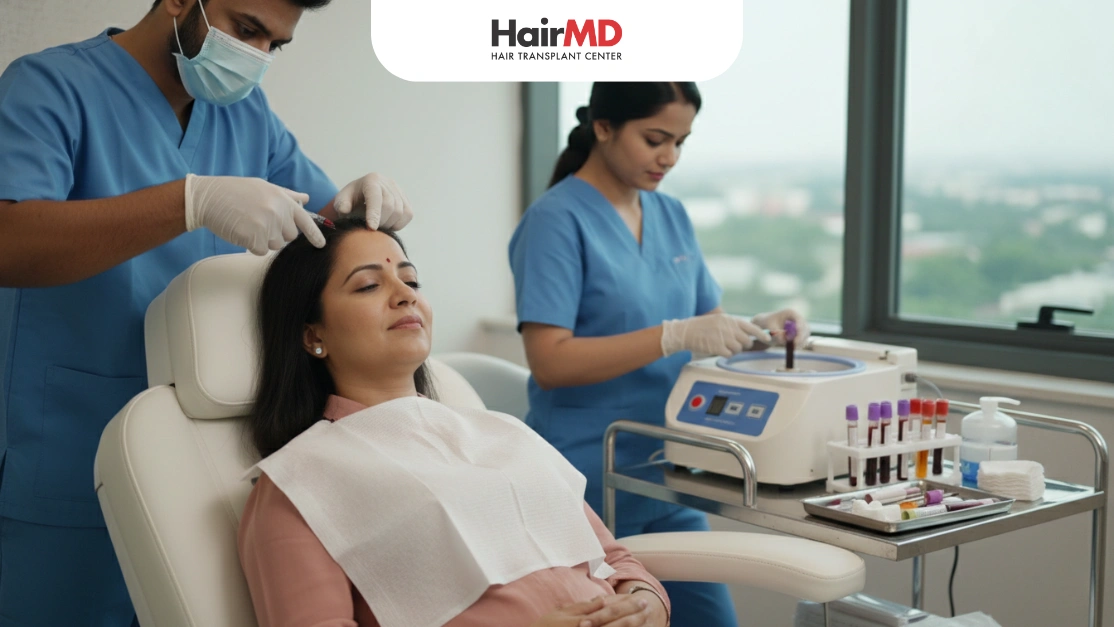
PRP therapy works by injecting concentrated growth factors from your own blood into the scalp. Those growth factors stimulate existing hair follicles to move from the resting phase (telogen) back into the active growth phase (anagen), and they encourage thickening of miniaturised hair shafts.
The critical word there is existing. PRP can only stimulate follicles that are still present and still capable of responding. If a follicle has been dormant for several years and has fully miniaturised, there is nothing for PRP to activate.
Why the stage of loss matters more than the type?
A 35-year-old with moderate thinning and a 55-year-old with near-total crown baldness may both describe their condition as “hair loss.” But their PRP candidacy is completely different. The 35-year-old likely has a large pool of miniaturised but responsive follicles. The 55-year-old may have very few follicles left to stimulate.
This is why dermatologists grade hair loss before recommending PRP. The Norwood-Hamilton scale (used for men) and the Ludwig scale (used for women) provide a standardised way to assess how far loss has progressed.
According to the Indian Association of Dermatologists, Venereologists and Leprologists (IADVL) consensus recommendations, patients with Grade II to V Norwood-Hamilton classification are the ideal candidates for PRP. Starting treatment while follicles are still active is the single biggest factor in determining how well PRP will work.

The YES List – Who is Likely Suitable for PRP
The following profiles represent the strongest candidates for PRP therapy at HairMD India. These are general indicators – your doctor will confirm suitability at your consultation.
Men: Norwood II, III, and IV Early and mid-stage androgenetic alopecia with a receding hairline, thinning crown, or diffuse reduction in density. A randomised placebo-controlled trial published in PMC showed significant increases in hair density and hair count in men at Norwood II-IV after three PRP sessions. Active follicles across the affected area are the key prerequisite.
Women: Ludwig I and II Diffuse thinning across the crown with a widening parting line, but no large areas of complete baldness. Female pattern loss tends to be less advanced at the follicle level than male pattern loss at comparable visual stages, making it often more responsive to PRP.
Both sexes with alopecia areata (patchy loss) PRP show benefit as an adjunct for alopecia areata, particularly in cases not responding to conventional steroid treatment. A prospective study published in PMC found that all 20 chronic alopecia areata patients who had not responded to conventional therapy for two years showed successful treatment with PRP. For more on this condition, see HairMD India’s alopecia areata condition page.
Additional YES indicators:
- Age generally under 50 (follicle responsiveness declines with age, though older patients are not automatically excluded)
- Normal platelet count confirmed by blood work
- No active scalp infections or inflammatory conditions at time of treatment
- Hair loss that is recent or still progressing (indicates follicles are alive and reactive)
- No blood-thinning medication or platelet-disrupting drugs in the preceding period
The NO list – Who Should Not Have PRP?
To recap where we are so far: PRP therapy at HairMD India Pune works by activating existing scalp follicles using your own platelet growth factors. The key deciding factors are follicle activity, stage of hair loss, and platelet health. The sections below cover the specific conditions that rule out PRP and the large grey zone where a consultation will give you a clearer picture.
The following are generally accepted medical contraindications for PRP therapy. This is not an exhaustive list, and your doctor will review your individual medical history.
Norwood V, VI, and VII (advanced baldness)
At these stages, affected scalp areas have little to no active follicle activity. A 2024 systematic review in the Journal of Cosmetic Dermatology confirmed that studies including Grades IV-VI patients showed no statistically significant improvement with PRP. Hair transplant surgery is the appropriate option at this stage.
Platelet disorders and thrombocytopenia
PRP relies on growth factors released by platelets. A low platelet count or platelet dysfunction means weaker or no clinical response, and the treatment may not be safe to perform.
Anticoagulant therapy (blood thinners)
Patients on anticoagulant medications have altered platelet function. This affects the quality of the plasma concentrate and increases bleeding risk at injection sites.
Active scalp infections or inflammatory skin conditions in flare
Active bacterial or fungal infections, or conditions like psoriasis and seborrhoeic dermatitis in active flare, must be treated and resolved before PRP begins.
Uncompensated diabetes, sepsis, or systemic infection
These affect healing, immune response, and platelet function in ways that make PRP unsafe or ineffective. Uncompensated diabetes in particular affects wound healing at injection sites.
Cancer or bone marrow conditions
Active malignancy or bone marrow disorders are medical contraindications. Treatment of the underlying condition takes priority.
These are general clinical contraindications. Whether any applies to your situation is a clinical judgement your doctor will make after reviewing your full medical history.
The MAYBE List – Cases that Need Evaluation
Many patients fall into a grey zone where the answer is not a straight yes or no. A trichoscopy assessment and blood work usually resolve these cases quickly.
Norwood V (borderline)
Some Norwood V patients still have enough follicle activity in the thinning areas to respond to PRP, particularly if the loss is relatively recent. The only way to assess this is trichoscopy, which can visualise follicle miniaturisation directly. This is worth evaluating before concluding that PRP is not an option.
Women with PCOS-related hair loss
PCOS-driven hair loss has a hormonal root cause. PRP can reduce shedding and improve density, but if the underlying hormonal imbalance is not addressed, results will be limited and short-lived. The typical approach is to stabilise hormonal levels first, then use PRP as part of a combination protocol. See HairMD’s guide on PCOS and hair loss for more on this.
Patients currently on finasteride or minoxidil
Combination protocols using PRP alongside finasteride or minoxidil are well-documented and often produce better results than either treatment alone. The key is timing – your doctor will advise on whether to continue, pause, or sequence your existing treatment alongside PRP.
Smokers
Smoking affects platelet function and reduces growth factor activity in PRP. Patients who smoke are not automatically excluded, but realistic expectations need to be set. Reducing or stopping smoking before beginning PRP is often recommended.
Patients over 50
Age is not an absolute contraindication. Follicle responsiveness to growth factors does decline with age, but many patients over 50 with early-to-mid stage loss see meaningful benefit from PRP. Expectations are managed at consultation based on trichoscopy findings.
What a clinical evaluation at HairMD India involves?
If you fall in the MAYBE category, a consultation at HairMD India Pune typically includes trichoscopy (scalp analysis under magnification to assess follicle density and miniaturisation), blood tests covering platelet count, ferritin, thyroid function, and hormone levels, and a formal Norwood or Ludwig grading.
The outcome is a specific recommendation: proceed with PRP, defer to address an underlying issue first, or explore an alternative treatment.
PRP Candidacy for Men vs. Women – Key Differences
How candidacy is assessed differently by sex?
Men are assessed on the Norwood-Hamilton scale. PRP is most effective at Norwood II, III, and IV. By Norwood V, results become variable. At Norwood VI and VII, hair transplant is the primary option.
Women are assessed on the Ludwig scale. Women with Ludwig I and II are strong candidates. Because female pattern loss is diffuse rather than concentrated in defined zones, PRP’s overall density improvement can be more noticeable for women than men at comparable stages.
The IADVL clinical consensus on PRP for androgenetic alopecia recommends Norwood Grade II to V as the ideal subset for PRP, with Grade II to III showing the strongest results in both sexes.
Why hormonal stability matters in women?
Female hair loss frequently has a hormonal root cause – PCOS, thyroid imbalance, post-partum shifts, or perimenopausal changes. PRP does not address these directly. If an active hormonal imbalance is driving the loss, PRP results will be reduced and shorter-lived.
The standard approach is to stabilise the hormonal trigger first, then use PRP as part of the protocol. HairMD India’s female hair loss page covers the full treatment pathway for women.
What Happens at a PRP Candidacy Assessment at HairMD India?
Booking a consultation does not commit you to treatment. The assessment exists to determine whether PRP is appropriate for your specific case.
Trichoscopy
The scalp is examined under magnification. This allows your doctor to visualise follicle density, the ratio of terminal to vellus hairs, and the degree of miniaturisation in thinning areas. This is the most important piece of clinical information for determining PRP candidacy – it tells the doctor directly whether active follicles are present.
The International Society of Hair Restoration Surgery (ISHRS) notes that patients with thinning rather than complete baldness are better candidates, and trichoscopy is the clinical tool that confirms which category you fall in.
Blood tests:
A standard panel checks platelet count, serum ferritin (iron stores), thyroid function (T3, T4, TSH),Vitamin B12, Vitamin D and relevant hormonal markers for women. Results that fall outside normal ranges are addressed before treatment begins.
Norwood or Ludwig grading:
Your hair loss is formally staged using the appropriate scale. This determines whether PRP is the right starting point, or whether a different treatment or combination approach is more appropriate.
Medication review:
Your current medications are reviewed for contraindications. If you are on blood thinners, or had NSAIDs in the 48 hours before a planned session, your doctor will advise on timing.
The outcome:
You leave with a specific recommendation: proceed with PRP, defer while an underlying issue (hormonal, nutritional, or otherwise) is addressed, or consider an alternative such as mesotherapy or FUE hair transplant. You can also read patient reviews for PRP at HairMD to understand how others have experienced the process.
Quick Self-assessment – Am I a Good PRP Candidate?
This is not a medical diagnosis. Use it as a starting point to understand where you might stand before speaking to a doctor.
Answer yes or no to each question:
- Is your hair loss at an early or mid stage – visible thinning or a receding hairline, but not large areas of complete baldness?
- Are you under 50 years of age?
- Has your hair loss started or worsened in the last one to two years (recent and active, not decades-old)?
- Do you NOT have any bleeding disorders, platelet conditions, or blood-thinning medication?
- Is your hair loss diffuse (general thinning) or a receding hairline, rather than complete bald patches across most of the scalp?
Reading your answers:
- 4-5 YES answers: You fit the general profile for a good PRP candidate. A consultation at HairMD India Pune will confirm this with a trichoscopy assessment and blood work.
- 2-3 YES answers: You fall in the grey zone. A consultation will identify whether any of the NO factors can be addressed first to make PRP viable, or whether an alternative treatment is more appropriate.
- 0-1 YES answers: PRP may not be your best starting option. A consultation is still worth having – your doctor may recommend a different treatment path, or identify that one specific issue is ruling you out and discuss whether it can be addressed.
Book a consultation at HairMD India Pune to get a clinical answer rather than a self-assessment one.
Frequently Asked Questions
What Norwood grade is suitable for PRP?
The IADVL (Indian Association of Dermatologists) and multiple clinical studies identify Norwood Grade II to V as the suitable range for PRP therapy. Grade II to IV produces the most consistent results, as active follicles are present across the thinning areas.
Grade V outcomes are variable and depend on trichoscopy findings at individual consultation. Grades VI and VII generally have insufficient follicle activity for PRP to produce a meaningful response, and hair transplant surgery is typically recommended instead.
Norwood grading is assessed visually and with trichoscopy at your HairMD India consultation. Understanding your male hair loss stage is an important first step before evaluating any treatment.
Can women get PRP for hair loss?
Yes. Women with Ludwig Stage I and II female pattern hair loss are good candidates for PRP. Diffuse thinning across the crown with a widening parting line responds well to PRP therapy in many cases.
Because female pattern loss tends to be distributed across the scalp rather than concentrated in defined zones, PRP’s overall density improvement can be more noticeable for women than for men at comparable stages.
Women with hormonal causes of hair loss (PCOS, thyroid imbalance, post-partum shedding) should have those conditions assessed and stabilised before starting PRP. HairMD India’s dedicated female hair loss page covers the full assessment pathway.
Is PRP suitable if I have diabetes?
Uncompensated (uncontrolled) diabetes is a contraindication for PRP. Poorly controlled blood sugar affects platelet function and wound healing in ways that reduce the effectiveness and safety of PRP injections.
If your diabetes is well-managed and stable, your doctor will assess suitability on a case-by-case basis, taking your HbA1c levels and overall health status into account. Disclose your diabetes diagnosis and current control status at your consultation.
Can I have PRP while taking finasteride?
In many cases, yes – combining PRP with finasteride is an established protocol that can produce better results than either treatment alone. The combination addresses hair loss from two different mechanisms: finasteride reduces DHT levels systemically, while PRP stimulates follicle activity locally.
Your doctor will review your current finasteride regimen and advise on the appropriate sequencing. The PRP therapy Q&A guide on the HairMD blog covers combination therapy questions in more detail.
How many PRP sessions will I need if I am a good candidate?
The standard protocol recommended by IADVL is three to five sessions spaced approximately one month apart, followed by maintenance sessions every three to six months. The initial course takes three to four months. Some patients require more sessions depending on their response, the stage of loss, and whether PRP is being used as a standalone treatment or combined with other therapies. Your doctor will set a specific session plan at your consultation based on your trichoscopy findings.
You can review PRP therapy costs and results to understand what to budget for a full course.
What if PRP is not right for me – what are my options?
Several alternatives are available depending on why PRP is not suitable. If your hair loss is advanced (Norwood VI-VII), FUE hair transplant is the recommended surgical option. If PRP is unsuitable due to platelet concerns but hair loss is early-to-mid stage, mesotherapy delivers nutrients and growth factors directly to the scalp without relying on your own platelet concentration.
Low Level Laser Light Therapy (LLLT) is a non-injection option that stimulates follicle activity through photobiomodulation. Your doctor will map out which alternative – or combination of alternatives – fits your case at consultation.
How do I know if my hair loss is at an early or advanced stage?
Broadly: if you have significant thinning but still have hair across most of the scalp, your loss is likely early-to-mid stage. If you have large areas where the scalp is clearly visible with little to no hair present, you may be at a more advanced stage.
Self-assessment is imprecise – trichoscopy at a clinical consultation gives a definitive answer by measuring follicle density directly. The understanding what is PRP treatment article on the HairMD blog covers the basics of how the treatment works if you want more background before your appointment.
DO YOU KNOW?
Nearly 250 Patients Visit HairMD
Everyday For Various Hair Concerns
(15+ Years Of Expertise. 4157+ Successful Hair Transplant)
Meet Our Dermatologists


Is PRP Right for You?
The strongest PRP candidates are patients with active follicles and early-to-mid stage hair loss who do not have medical contraindications. For those patients, PRP is a well-evidenced, low-risk, non-surgical treatment that can slow progression, improve density, and in many cases partially reverse miniaturisation.
If you are not sure where you fall, that is exactly what the consultation is designed to resolve. A trichoscopy takes minutes and gives your doctor a direct view of what your follicles are doing – no guesswork involved.
Book a consultation at HairMD India Pune and find out whether PRP is right for your specific case.
Further Reading
PRP for Alopecia Areata: What Research Says
PRP for alopecia areata – what the research says about regrowth, how it compares to other options, and when it may help, from HairMD Pune.
Do Dermatologists Recommend Inositol and Choline for Hair Loss?
Discover the potential of inositol and choline for hair loss. Learn how these nutrients may benefit follicle health & prevent thinning.
Finding the Right Doctor for Hair Loss Solutions
Searching for What Kind of Doctor Treats Hair Loss? Learn how dermatologists at Hairmd diagnose the cause & offer proven treatments for hair thinning.
Stop Hair Thinning: Best Practices for Hair Loss Control
Discover effective tips to stop hair fall and boost hair growth with simple lifestyle changes, proper hair care routines, and proven treatments. Boost hair health with HairMD.
Have thoughts? Please let us know
We are committed not only to treating you, but also educating you.