

PRP Therapy for Hair Loss in Pune 2026 – Cost, Effectiveness & Results


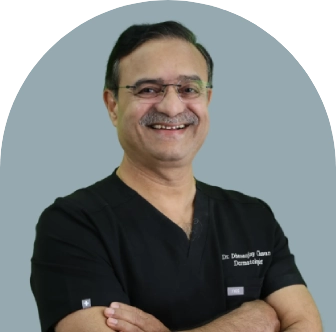
Written by HairMD Content Team | Medically Reviewed by Dr. Dhanraj Chavan On December 12, 2025


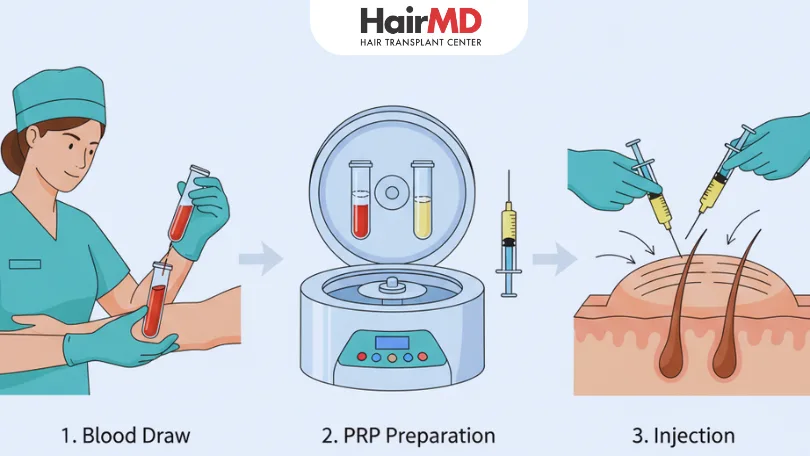
Platelet-rich plasma (PRP) therapy is a non-surgical medical treatment for hair loss that uses concentrated platelets extracted from a patient’s own blood. The procedure involves drawing blood, processing it in a centrifuge to separate and concentrate the platelets, then injecting the platelet-rich plasma back into the scalp, after giving local anaesthesia.
PRP therapy treats androgenetic alopecia (pattern baldness) in both men and women. It also addresses early-stage hair thinning, diffuse hair loss, and thinning hair density.
The treatment works through natural growth factors contained in platelets. These growth factors stimulate dormant hair follicles, extend the anagen (growth) phase of the hair cycle, and improve blood supply to the scalp. The concentrated platelets release proteins that signal hair follicle cells to proliferate and regenerate.
PRP uses the patient’s own blood, eliminating risks of allergic reactions or disease transmission. The devices used to separate platelets fall under FDA regulation. Medical use of PRP for hair restoration is considered “off-label” use, performed by licensed physicians.
What’s covered in the article?
- Key Facts About PRP Therapy at HairMD India Pune
- What is PRP Therapy for Hair Loss?
- PRP Therapy Cost in Pune 2026
- PRP Treatment Procedure at HairMD India Pune
- PRP Effectiveness and Results – What the Science Says?
- PRP vs Other Hair Loss Treatments in Pune
- Benefits and Limitations of PRP Therapy
- Frequently Asked Questions About PRP Therapy in Pune
- External Recognition & Clinical Validation
- Conclusion
Key Facts About PRP Therapy at HairMD India Pune
- PRP therapy costs ₹3,000-15,000 per session in Pune in 2026
- Treatment requires 3-6 initial sessions spaced 4-6 weeks apart
- Clinical studies show 70-80% success rate for androgenetic alopecia
- Results visible in 3-6 months with 30-40% increase in hair density
- Procedure takes 45-60 minutes with minimal downtime and recovery
- HairMD India Pune uses medical-grade centrifugation for PRP preparation
- Maintenance sessions required every 6-12 months for sustained results
What is PRP Therapy for Hair Loss?
PRP (platelet-rich plasma) therapy represents a regenerative medicine approach to treating hair loss using the body’s natural healing mechanisms. This autologous treatment has gained significant attention in Pune’s dermatology community as a non-surgical alternative for patients experiencing progressive hair thinning.
The therapy emerged from sports medicine and wound healing applications. Doctors discovered that concentrated platelets accelerate tissue repair and regeneration across multiple medical specialties.
How PRP Works – The Science Behind Hair Regrowth
PRP works by delivering concentrated growth factors directly to hair follicles. When platelets are activated, they release bioactive proteins including platelet-derived growth factor (PDGF), vascular endothelial growth factor (VEGF), and transforming growth factor-beta (TGF-β).
These growth factors trigger multiple biological responses. They stimulate dermal papilla cells, which control hair follicle function and hair shaft production. The growth factors also promote angiogenesis, creating new blood vessels around follicles.
Research from 2025 systematic reviews shows PRP extends the anagen phase duration. This keeps hair follicles in active growth longer. PRP also prevents premature entry into the telogen (resting) phase.
The treatment increases blood circulation to the scalp. Improved blood flow delivers more nutrients and oxygen to hair roots. This enhanced environment supports thicker, healthier hair growth.
Studies demonstrate PRP activates stem cells in the hair follicle bulge region. These stem cells play a crucial role in hair regeneration and follicle cycling. Medical research has shown that PRP therapy promotes tissue regeneration through concentrated growth factors. For those seeking clinical treatments for hair loss, PRP offers a scientifically-backed option.
Types of Hair Loss PRP Can Treat
PRP therapy shows effectiveness for several hair loss conditions. Androgenetic alopecia (pattern baldness) responds best to PRP treatment. Men with receding hairlines or crown thinning see significant improvements.
Women with diffuse hair thinning across the scalp benefit from PRP. Female pattern hair loss, characterized by widening part lines, responds well to multiple PRP sessions.
Early-stage hair loss shows the highest success rates. Patients with Hamilton-Norwood Stage I-IV (men) or Ludwig Scale I-II (women) achieve optimal results.
PRP helps with telogen effluvium, a condition causing excessive shedding. This temporary hair loss from stress, illness, or hormonal changes improves with PRP therapy.
The treatment works for patients experiencing hair miniaturization. This process, where terminal hairs become thinner vellus-like hairs, can be partially reversed.
PRP does not work for complete baldness or scarring alopecia. Patients need existing hair follicles for the treatment to stimulate. Understanding causes of hair loss helps determine PRP candidacy.
Who is an Ideal Candidate for PRP Therapy?
Ideal PRP candidates have early to moderate hair loss with visible thinning. They possess adequate donor follicles that can respond to growth factor stimulation.
Men and women aged 18-65 with pattern baldness qualify for PRP. Younger patients in early balding stages often see better results. Patients not ready for surgical hair transplant find PRP appealing.
Women with diffuse thinning make excellent candidates. Unlike men, women rarely have defined bald patches, making PRP therapy particularly effective.
Patients should have realistic expectations about results. PRP slows hair loss and improves hair density, not complete regrowth.
Certain medical conditions exclude patients from PRP. Active scalp infections, blood disorders, platelet abnormalities, and ongoing chemotherapy contraindicate treatment.
Patients on anticoagulation therapy or with low platelet counts may not qualify. Blood test results help determine suitability. Those seeking the best treatment for hair regrowth should consult with a trichologist first.
PRP Therapy Cost in Pune 2026
Understanding the financial investment for PRP therapy helps patients make informed decisions. Pune offers competitive pricing compared to other metropolitan cities in India.
Price Range Per Session (₹3,000-15,000)
PRP therapy costs in Pune vary significantly based on multiple factors. The price range spans from ₹3,000 to ₹15,000 per session as of 2026.
Budget clinics offer PRP sessions starting at ₹3,000-4,500. These facilities typically use basic centrifugation equipment. Mid-range dermatology clinics charge ₹5,000-8,000 per session with standard protocols.
Premium clinics and specialized hair restoration centers charge ₹10,000-15,000 per session. These facilities use advanced PRP preparation systems and experienced trichologists.
HairMD India Pune provides PRP therapy using medical-grade centrifuge systems. The clinic follows standardized protocols for platelet concentration and activation.
Most patients require 4-6 initial sessions for visible results. Total investment ranges from ₹18,000 to ₹90,000 for the initial treatment phase.
Maintenance sessions every 6-12 months add to long-term costs. Annual maintenance typically costs ₹10,000-30,000 depending on session frequency. For complete pricing transparency, compare with hair transplant costs in India.
Factors Affecting PRP Treatment Cost
Clinic location and reputation significantly impact pricing. Clinics in premium Pune areas like Koregaon Park charge more than those in other localities.
Doctor’s experience and credentials influence cost. Trichologists and dermatologists with 10+ years experience command higher fees. Board-certified specialists charge premium rates.
PRP preparation technology affects pricing. Advanced double-spin centrifuges produce higher platelet concentrations. Automated PRP systems cost more but ensure consistency.
Platelet activation methods vary in price. Some clinics use calcium chloride activation, while others use more sophisticated techniques. Activated PRP typically costs more than non-activated preparations.
Treatment area size impacts the total cost. Full scalp treatment requires more PRP volume than targeted area treatment. Additional growth factor combinations increase prices.
Package deals often reduce per-session costs. Clinics offer 3-session packages at ₹12,000-35,000 total. Six-session packages range from ₹25,000-70,000.
Total Investment: Package Pricing vs Individual Sessions
Single-session pricing offers flexibility but costs more overall. Patients pay ₹8,000-15,000 per individual session at most Pune clinics.
Three-session packages provide 10-15% savings. A package costing ₹21,000 averages ₹7,000 per session compared to ₹8,000 individually.
Six-session comprehensive packages offer maximum value. These range from ₹35,000-70,000, reducing per-session cost to ₹5,800-11,600.
|
Package Type |
Total Cost |
Per Session Cost |
Savings |
|
Single Session |
₹8,000-15,000 |
₹8,000-15,000 |
0% |
|
3-Session Package |
₹18,000-35,000 |
₹6,000-11,600 |
10-15% |
|
6-Session Package |
₹35,000-70,000 |
₹5,800-11,600 |
15-25% |
Annual maintenance adds ₹10,000-30,000 to long-term budgets. Patients typically need 2-3 booster sessions yearly.
Compared to FUE hair transplant (₹40,000-2,50,000), PRP offers lower initial investment. However, ongoing maintenance makes long-term costs comparable for some patients.
PRP Treatment Procedure at HairMD India Pune
The PRP procedure follows a standardized protocol ensuring safety and effectiveness. Understanding each step helps patients prepare mentally and physically.
Step-by-Step Process
Blood Collection: The procedure begins with drawing 32 ml of blood from the patient’s arm. This takes 2-3 minutes using standard venipuncture technique. The amount drawn depends on treatment area size.
Centrifugation: Blood samples are placed in specialized tubes and processed in a medical-grade centrifuge. The machine spins at 3,000-4,000 RPM for 10-15 minutes. This separates red blood cells, white blood cells, and platelet-rich plasma into distinct layers.
PRP Extraction: Technicians carefully extract the golden-yellow platelet-rich plasma layer. This concentrated plasma contains 5-10 times normal platelet count. The extraction process takes 5 minutes.
Activation (Optional): Some protocols activate PRP using calcium chloride or thrombin. Activation releases growth factors from platelets immediately. Non-activated PRP releases factors gradually over time.
Scalp Preparation: The scalp is cleaned and disinfected. Local injections are given for anaesthesia 15-20 minutes before injections. This minimizes discomfort during the procedure.
Injection: Using fine 30-gauge needles/insulin syringe, the practitioner injects PRP into the scalp. Multiple injections cover the treatment area at 1cm intervals. The injection phase takes 15-20 minutes.
Post-Procedure Care: After injections, mild pressure is applied. Patients rest for 10 minutes before discharge. Total appointment time is 45-60 minutes.
For detailed procedural information, read our comprehensive PRP therapy Q&A.
What to Expect During Your PRP Session
Patients should eat a normal breakfast or lunch before their appointment. Drinking 500ml of water 2 hours prior makes blood draw easier.
The blood draw feels like a standard medical blood test. Most patients experience minimal discomfort. Some feel slight pressure during the draw.
During centrifugation, patients wait comfortably in the clinic. The 10-15 minute processing time allows for final scalp assessment.
Topical anesthetic injection is given. Patients describe injection sensation as mild pinching or pressure. Pain levels rate 2-3 out of 10 on average.
Multiple small injections cover the treatment area systematically. Patients feel a slight cooling sensation as PRP enters the scalp. Some experience temporary tingling.
Mild redness appears at injection sites immediately after treatment. This typically resolves within 2-4 hours. Some patients notice slight swelling.
The entire session feels professional and clinical. Most patients return to work the same day.
Most of the patients visit for PRP session during lunch break
Post-Treatment Care and Recovery
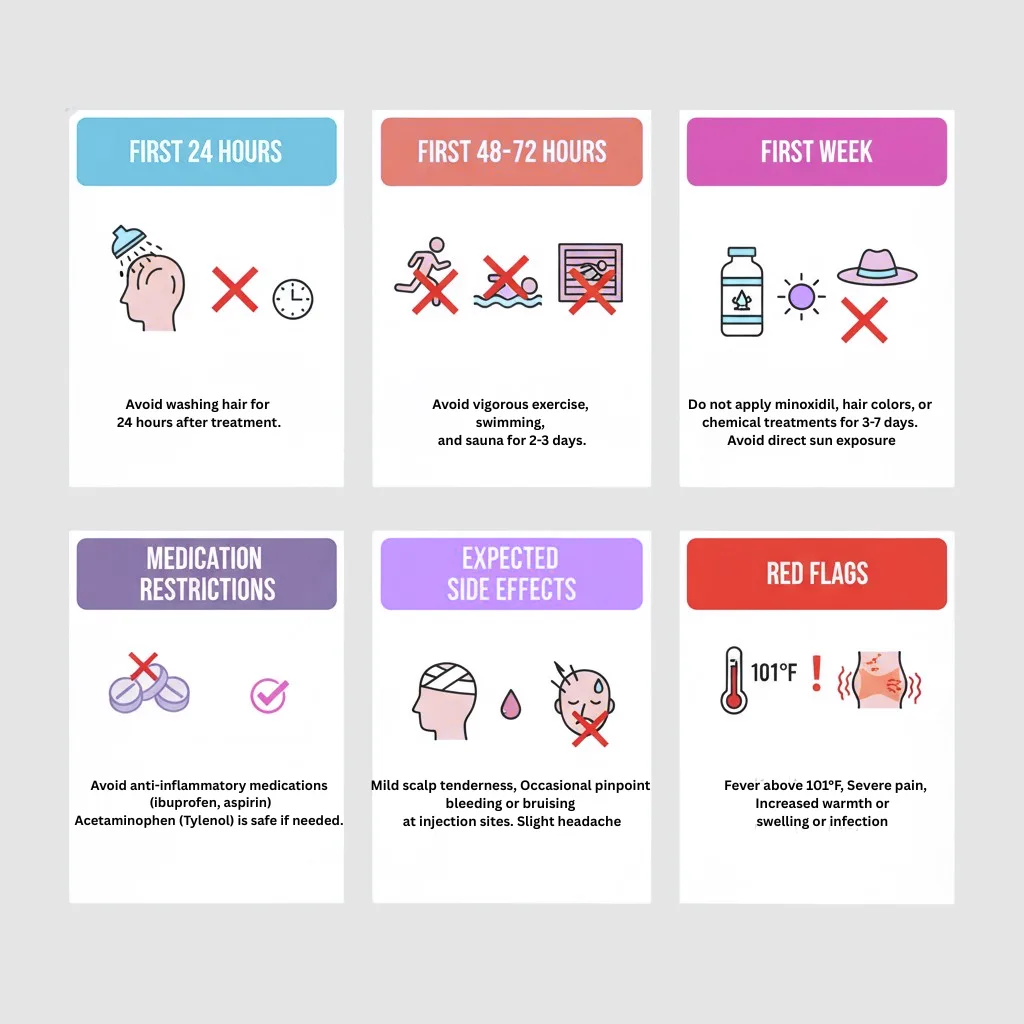
First 24 Hours: Avoid washing hair for 24 hours after treatment. This allows PRP to absorb fully into scalp tissue. Resume shampooing gently the next morning.
First 48-72 Hours: Avoid vigorous exercise, swimming, and sauna for 2-3 days. Excessive sweating can irritate injection sites. Light exercise is permissible after 24 hours.
First Week: Do not apply minoxidil, hair colors, or chemical treatments for 3-7 days. Avoid direct sun exposure when possible. Wear a hat if outdoors.
Medication Restrictions: Avoid anti-inflammatory medications (ibuprofen, aspirin) for 7-10 days. These may interfere with PRP’s inflammatory healing response. Acetaminophen (Tylenol) is safe if needed.
Expected Side Effects: Mild scalp tenderness lasts 1-3 days in most patients. Occasional pinpoint bleeding or bruising at injection sites resolves quickly. Slight headache affects 10-15% of patients.
Red Flags: Contact the clinic if fever above 101°F develops. Severe pain unresponsive to acetaminophen warrants evaluation. Increased warmth or swelling suggests infection (rare).
Recovery is minimal compared to surgical procedures. Most patients resume normal activities within 24 hours. Learn more about medications after hair treatments.
Key Treatment Attributes
|
Attribute |
Details |
|
Treatment Duration |
45-60 minutes per session |
|
Technology Used |
Medical-grade centrifuge system (3,000-4,000 RPM) for optimal platelet concentration |
|
Recovery Time |
Minimal; resume normal activities same day, full activities after 24-48 hours |
|
Success Rate |
70-80% patient satisfaction for early-stage androgenetic alopecia |
|
Ideal Candidates |
Early to moderate pattern baldness, diffuse thinning, Hamilton-Norwood Stage I-IV, Ludwig Scale I-II |
|
Sessions Required |
3-6 initial sessions spaced 4-6 weeks apart + maintenance every 6-12 months |
PRP Effectiveness and Results – What the Science Says?
Clinical research provides substantial evidence for PRP therapy’s effectiveness. Understanding success rates helps set realistic expectations.
Clinical Success Rates (70-80% from Studies)
A 2025 systematic review of 24 randomized controlled trials examined 1,826 patients across multiple countries. Results showed statistically significant improvements in hair density measurements. Average hair density increased 31% after 6 months of PRP treatment.
Research published in the British Journal of Dermatology demonstrates 70-80% of patients experience measurable hair regrowth. Success rates vary based on hair loss severity and treatment adherence.
Meta-analysis of 10 studies involving 555 treatment units found significant hair density improvements. PRP groups showed 25.09 hairs/cm² increase compared to control groups.
A 2024 study comparing PRP to placebo injections reported 91.7% negative hair pull test rate. This means hair stopped falling out in over 90% of PRP-treated patients.
Patient satisfaction surveys show 76% report positive outcomes. Satisfaction correlates with early treatment intervention and complete session adherence.
Studies demonstrate higher success in patients aged 20-40. Those with hair loss duration under 5 years respond better. Combining PRP with medications further improves outcomes.
International Society of Hair Restoration Surgery (ISHRS) acknowledges PRP as a viable treatment option. Their guidelines emphasize proper patient selection for optimal results.
Timeline: When Will You See Results?
Month 1-2: Most patients notice reduced hair shedding. Daily hair fall decreases from 100-150 hairs to 50-80 hairs. Some experience temporary increased shedding as weak hairs are replaced.
Month 3-4: New baby hairs (vellus hairs) become visible. These fine hairs appear along the hairline and in thinning areas. Hair texture begins improving.
Month 5-6: Noticeable hair density improvement becomes apparent. Existing hairs appear thicker and stronger. New terminal hairs continue growing.
Month 7-12: Maximum results become visible. Hair count increases by 30-40% in responsive patients. Hair shaft diameter increases, creating a fuller appearance.
Results peak around 9-12 months after the initial treatment series. Maintenance sessions every 6-12 months sustain improvements. Without maintenance, benefits gradually diminish over 12-18 months.
Timelines vary individually based on age, genetics, and hair loss severity. Younger patients with recent onset see faster results. Understanding realistic hair transplant result timelines helps compare treatment options.
Before and After Expectations
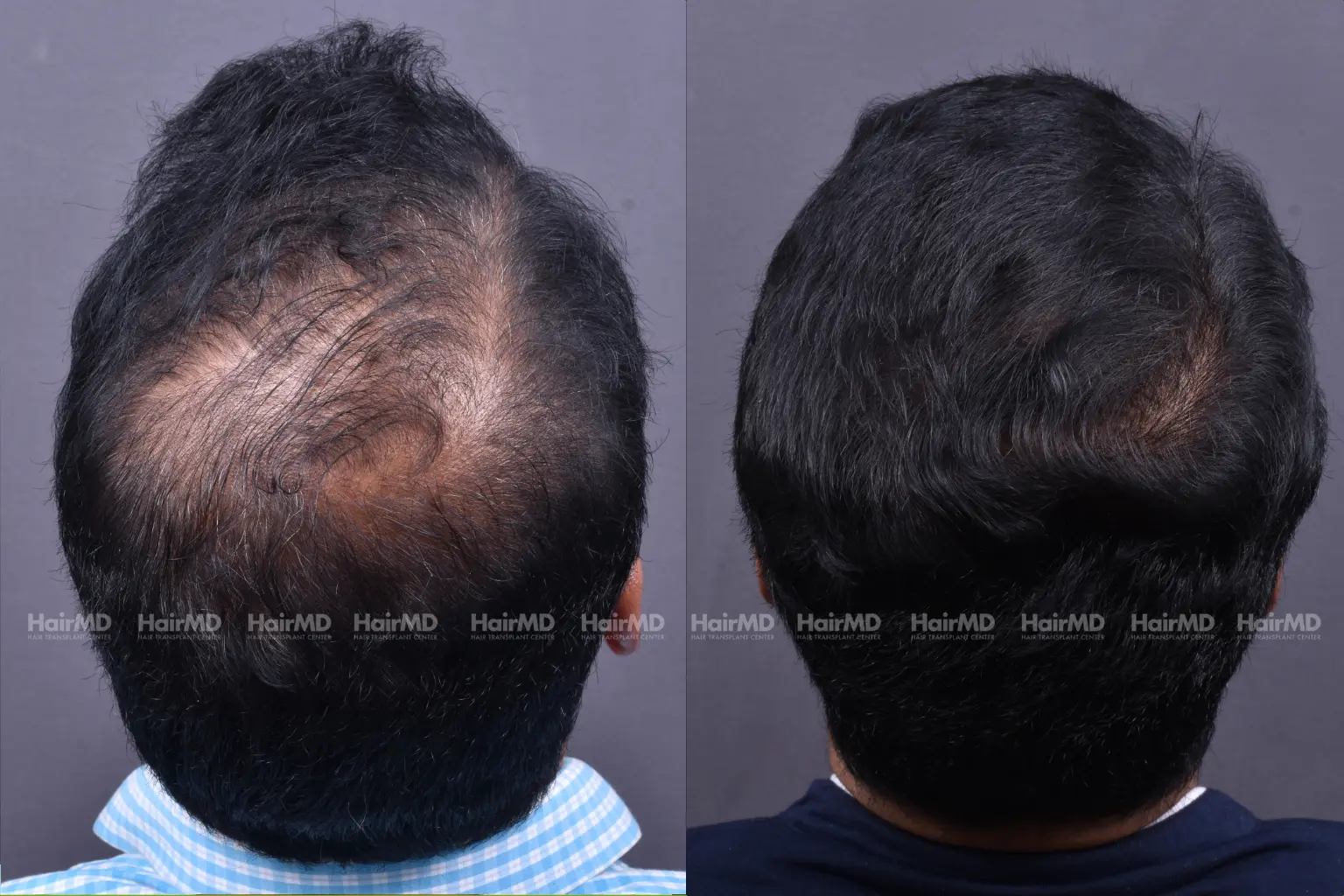
Realistic Improvements: PRP increases hair density by 30-40% on average. This means if you have 60 hairs per cm², expect 78-84 hairs per cm² after treatment.
Hair shaft diameter increases by 10-15%. Thicker individual hairs create a fuller appearance even without significant hair count increase.
Scalp coverage improves visibly in areas of mild to moderate thinning. Severely bald areas show minimal response as follicles are too miniaturized.
What PRP Cannot Do: PRP does not regrow hair in completely bald areas. It requires existing follicles to stimulate. Areas bald for 5+ years rarely respond.
PRP slows hair loss progression but doesn’t stop it permanently. Maintenance sessions are mandatory for sustained benefits. Discontinuing treatment leads to gradual loss of gains.
Genetic hair loss pattern continues despite treatment. PRP improves density within your genetic pattern but doesn’t change the pattern itself.
Combination with Other Treatments: PRP combined with minoxidil shows 50% better outcomes than either alone. Adding finasteride (in men) provides DHT blockage plus growth factor stimulation.
PRP enhances FUE hair transplant results when used post-operatively. The growth factors improve graft survival and accelerate healing.
PRP vs Other Hair Loss Treatments in Pune
Comparing treatment options helps patients choose the best approach. Each method offers distinct advantages depending on the hair loss stage.
PRP vs FUE Hair Transplant – Which Should You Choose?
Treatment Approach: PRP stimulates existing follicles through growth factors. FUE surgically relocates follicles from donor to recipient areas.
Candidacy: PRP works for early-stage thinning with existing follicles. FUE requires moderate to advanced balding with good donor hair.
Invasiveness: PRP involves multiple small injections with no incisions. FUE requires tiny punch extractions and recipient site creation.
Recovery: PRP patients resume activities within 24-48 hours. FUE needs 7-10 days for visible healing, 2-3 weeks for full recovery.
Results Duration: PRP requires ongoing maintenance every 6-12 months. FUE provides permanent hair in transplanted areas.
Effectiveness: FUE achieves 80-90% graft survival in qualified patients. PRP shows 70-80% success in slowing loss and improving density.
Cost Comparison: PRP costs ₹18,000-90,000 for initial series plus maintenance. FUE ranges from ₹40,000-2,50,000 as one-time investment.
Best For: Choose PRP for early thinning, diffuse loss, or pre-transplant optimization. Choose FUE for advanced balding, receded hairlines, or permanent solution. Many patients use both – PRP before and after FUE hair transplant surgery.
|
Factor |
PRP Therapy |
FUE Hair Transplant |
|
Invasiveness |
Minimally invasive |
Surgical procedure |
|
Recovery Time |
1-2 days |
7-14 days |
|
Results Timeline |
3-6 months |
9-12 months |
|
Permanence |
Temporary (needs maintenance) |
Permanent |
|
Ideal For |
Early-stage thinning |
Moderate-advanced baldness |
|
Cost (Initial) |
₹18,000-90,000 |
₹40,000-2,50,000 |
PRP vs Minoxidil and Finasteride
Mechanism Differences: PRP delivers concentrated growth factors directly to follicles. Minoxidil improves blood flow and extends the growth phase. Finasteride blocks DHT hormone production.
Application Method: PRP requires clinical sessions every 4-6 weeks initially. Minoxidil is applied topically twice daily. Finasteride is taken orally once daily.
Effectiveness Comparison: Studies comparing PRP to topical minoxidil 5% show PRP superiority. Meta-analysis found PRP more effective in increasing hair density.
A 2024 study reported 91.7% success with PRP vs 69.4% with minoxidil alone. Hair pull test improvements favored PRP treatment.
Research comparing PRP plus finasteride vs minoxidil plus finasteride showed 16.8% better improvement. The PRP combination group achieved superior hair density.
Side Effects: PRP has minimal side effects – mild scalp tenderness and temporary redness. Minoxidil can cause scalp irritation, dryness, and initial shedding.
Finasteride carries sexual side effect risks in 2-4% of men. Women of childbearing age cannot use finasteride. PRP is safe for both genders.
Long-term Commitment: All three require ongoing use to maintain results. Stopping any treatment leads to progressive hair loss resumption.
Cost Over Time: Daily minoxidil costs ₹500-1,500 monthly (₹6,000-18,000 yearly). Finasteride costs ₹300-1,000 monthly (₹3,600-12,000 yearly). PRP maintenance costs ₹10,000-30,000 yearly.
For detailed medication guidance, see our guide on minoxidil and finasteride usage.
Combination Therapy: PRP with Medications
Synergistic Effects: Combining PRP with medications produces superior results. PRP provides growth factors while medications address underlying causes.
PRP + Minoxidil: This combination shows 50% better outcomes than monotherapy. Minoxidil enhances blood flow, helping PRP growth factors reach follicles. Studies demonstrate combined therapy accelerates visible improvements.
PRP + Finasteride (Men Only): Finasteride blocks DHT production while PRP stimulates follicles. Research shows this combination achieves 16.8% greater hair density improvements. Men with moderate pattern baldness benefit most.
PRP + Mesotherapy: Some clinics combine PRP with vitamin injections. This dual approach provides growth factors plus essential nutrients. Evidence for added benefit remains limited compared to PRP alone.
Treatment Protocol: Most combination regimens start medications first. After 2-3 months on medications, PRP sessions begin. This establishes baseline stabilization before adding PRP.
PRP sessions continue every 4-6 weeks for 3-6 treatments. Medications continue throughout PRP therapy and beyond. This multi-modal approach addresses hair loss from multiple angles.
Cost Considerations: Combination therapy costs more initially but may reduce long-term expenses. Better results could mean fewer total PRP sessions needed. Evaluate common medications for hair loss to understand options.
Benefits and Limitations of PRP Therapy
nderstanding advantages and constraints helps set appropriate expectations. PRP offers unique benefits but has defined limitations.
Key Benefits
Non-Surgical Approach: PRP requires only injections, avoiding surgical incisions. No stitches, staples, or lengthy procedures. This appeals to patients hesitant about surgery.
Natural and Autologous: Treatment uses the patient’s own blood components. Zero risk of allergic reactions or disease transmission. No foreign substances introduced.
Minimal Downtime: Most patients return to work the same day. No prolonged recovery period required. Social activities resume within 24-48 hours.
Safe with Low Side Effects: Side effects are minimal and temporary. Mild scalp tenderness resolves in 1-3 days. No systemic side effects like medications cause.
Suitable for Both Genders: Women and men benefit equally from PRP. Female pattern hair loss responds particularly well. No hormonal side effects in women.
Enhances Other Treatments: PRP complements medications and transplants. Used before FUE, it improves scalp health. Post-transplant PRP enhances graft survival.
Scientifically Validated: Multiple peer-reviewed studies support efficacy. Meta-analyses confirm significant hair density improvements. ISHRS recognizes PRP as legitimate treatment.
Limitations and Realistic Expectations
Requires Multiple Sessions: Single sessions rarely produce visible results. Patients need 3-6 initial treatments for effectiveness. This demands time commitment over several months.
Ongoing Maintenance Necessary: Results fade without maintenance sessions. Most patients need boosters every 6-12 months. This creates ongoing time and financial commitment.
Not Effective for Advanced Baldness: PRP cannot regrow completely bald areas. Areas bald for 5+ years have non-responsive follicles. Severe Hamilton-Norwood Stage VI-VII see minimal benefit.
Variable Results: Individual response varies significantly. Genetics, age, and hair loss duration affect outcomes. Some patients see dramatic improvements, others moderate changes.
Cost Accumulation: While individual sessions cost less than transplant, long-term maintenance costs accumulate. Annual maintenance adds ₹10,000-30,000 indefinitely.
Time to Results: Visible improvements take 3-6 months. Impatient patients may discontinue prematurely. Maximum results require 9-12 months.
Not FDA Approved for Hair Loss: PRP devices are FDA-regulated but hair loss use is “off-label.” This means less standardized protocols exist. Preparation methods vary between clinics.
Who Should Avoid PRP Treatment?
Medical Contraindications: Patients with active scalp infections should defer treatment. Skin cancers on the scalp preclude PRP therapy. Systemic cancers and chemotherapy patients cannot receive PRP.
Blood disorders affecting platelet function contraindicate treatment. Thrombocytopenia (low platelet count) makes PRP ineffective. Platelet dysfunction disorders prevent proper growth factor release.
Medication Conflicts: Anticoagulation therapy (warfarin, heparin) increases bleeding risk. These medications must be adjusted before PRP. Blood-thinning supplements (vitamin E, garlic, ginkgo) should stop 1-2 weeks prior.
Chronic steroid use affects healing and results. Immunosuppressive medications may reduce PRP effectiveness.
Unsuitable Candidates: Patients with unrealistic expectations should reconsider. Those expecting complete reversal of advanced baldness will disappoint. People unable to commit to maintenance sessions won’t sustain results.
Patients with severe platelet abnormalities cannot generate quality PRP. Very low platelet counts yield insufficient growth factor concentration.
Frequently Asked Questions About PRP Therapy in Pune
How many PRP sessions do I need for hair loss?
Most patients require 3-6 initial sessions for visible results. Sessions are spaced 4-6 weeks apart during the initial phase. This 3-6 month period establishes baseline improvements.
After initial treatment, maintenance sessions every 6-12 months sustain results. Some patients need quarterly boosters, others twice yearly. Individual response and hair loss severity determine frequency.
Mild thinning may respond to 3 sessions. Moderate hair loss typically needs 4-5 sessions. More advanced cases require 6 sessions for optimal improvement.
How long do PRP results last?
Results typically last 12-18 months after completing the initial treatment series. Without maintenance, benefits gradually diminish as natural hair loss progression resumes.
With proper maintenance sessions every 6-12 months, results can last indefinitely. Most patients maintain improvements by continuing regular booster treatments.
Younger patients with recent onset hair loss often maintain results longer. Older patients with longer hair loss history may need more frequent maintenance.
Is PRP therapy painful?
Most patients rate PRP discomfort as 2-3 out of 10 on pain scale. Topical numbing cream applied 15-20 minutes before injections minimizes pain significantly.
The blood draw feels like a standard medical blood test. Injection sensation is described as mild pinching or pressure. Some areas of the scalp are more sensitive than others.
Post-procedure, mild scalp tenderness lasts 1-3 days. This feels similar to mild sunburn. Over-the-counter pain relievers (acetaminophen) manage any discomfort.
Can I combine PRP with other hair treatments?
Yes, PRP combines effectively with multiple hair loss treatments. Studies show combination therapy produces superior results to monotherapy.
PRP plus minoxidil improves outcomes by 50% compared to either alone. The medications can continue during PRP treatment sessions.
Men can combine PRP with finasteride for DHT blockage plus growth factor stimulation. Research shows 16.8% better improvement with this combination.
PRP enhances FUE hair transplant results when used pre- and post-operatively. It improves graft survival and accelerates healing. Consult questions to ask your hair transplant surgeon regarding combination approaches.
What are the side effects of PRP for hair?
Common side effects are minimal and temporary. Mild scalp tenderness affects most patients for 1-3 days. Injection site redness resolves within 2-4 hours.
Some patients experience pinpoint bleeding at injection sites. Small bruises may appear but fade quickly. Slight swelling of the scalp occurs in 10-15% of patients.
Mild headache affects approximately 10-15% of patients on treatment day. A tingling sensation during platelet activation is normal. Temporary itching may occur as the scalp heals.
Serious side effects are extremely rare. Infection risk is minimal with proper sterile technique. Allergic reactions cannot occur since it’s autologous blood.
Is PRP better than hair transplant?
Neither is universally “better” – each suits different situations. PRP works best for early-stage thinning with existing follicles. Hair transplant suits moderate-advanced baldness requiring permanent follicle relocation.
PRP offers non-surgical convenience with minimal downtime. Hair transplant provides permanent hair in bald areas with one-time procedure.
Cost-wise, PRP initial investment is lower (₹18,000-90,000). However, ongoing maintenance accumulates costs. Hair transplant costs more upfront (₹40,000-2,50,000) but is one-time.
Many patients use both strategically. PRP optimizes scalp before transplant. Post-transplant PRP enhances results and protects native hair.
How much does PRP cost at HairMD India Pune?
HairMD India Pune offers PRP therapy with medical-grade centrifugation systems. Single session pricing ranges from ₹8,000 – 13,000 depending on treatment area.
Three-session packages cost approximately ₹21,000-30,000 total. Six-session comprehensive packages range from ₹40,000-60,000.
Pricing includes injection procedure, and post-treatment care instructions but does not include blood processing, which is done by a pathology lab. Package deals provide 10-20% savings versus individual sessions.
Exact pricing depends on scalp area size, PRP preparation method, and doctor experience level. Contact HairMD India Pune for current rates and package options.
When will I see results from PRP therapy?
Initial changes appear around month 3-4 after starting treatment. Reduced hair shedding becomes noticeable in months 1-2. Fine baby hairs emerge along thinning areas by month 3-4.
Visible hair density improvements become apparent by months 5-6. Existing hairs appear thicker and healthier. New terminal hairs continue growing.
Maximum results manifest around 9-12 months after initial treatment series completion. Hair count increases by 30-40% in responsive patients. Hair shaft diameter improvements create fuller appearance.
Timelines vary based on age, genetics, and hair loss severity. Younger patients with recent onset see faster results. Patience is essential for optimal outcomes.
Does PRP work for complete baldness?
No, PRP cannot regrow hair in completely bald areas. The treatment requires existing hair follicles to stimulate. Areas bald for 5+ years have follicles too miniaturized to respond.
PRP works best for thinning areas with visible hair, even if sparse. Miniaturized follicles can be stimulated to produce thicker terminal hairs. Completely dormant follicles cannot reactivate.
Patients with Norwood Stage VI-VII or Ludwig Stage III see minimal benefit. These advanced stages have extensive bald areas without follicles.
For extensive baldness, hair transplant surgery is the only viable option. PRP can then maintain transplanted hair and improve surrounding native hair.
Can women get PRP therapy for hair loss?
Yes, women are excellent candidates for PRP therapy. Female pattern hair loss responds particularly well to treatment. Women typically experience diffuse thinning rather than bald patches.
PRP is safe for women of all ages including post-menopausal patients. No hormonal side effects occur unlike some medications. Women cannot take finasteride, making PRP an attractive alternative.
Pregnant or breastfeeding women should postpone PRP treatment. This is a precautionary measure though no evidence suggests harm.
Women with hormonal hair loss from PCOS or thyroid disorders benefit from PRP. Treatment addresses the hair loss symptom while the underlying condition is managed.
External Recognition & Clinical Validation
PRP therapy for hair loss has gained recognition from leading medical authorities and peer-reviewed research institutions worldwide. The following sources provide independent verification of PRP’s effectiveness and safety.
International Society of Hair Restoration Surgery (ISHRS): ISHRS guidelines recognize PRP as a viable growth factor-based treatment for androgenetic alopecia. Their patient education resources outline proper treatment intervals, expected outcomes, and the importance of experienced provider selection.
PubMed Central (PMC) – National Library of Medicine: Multiple randomized controlled trials published in PMC databases demonstrate PRP effectiveness. A landmark placebo-controlled trial showed 33.6 hair increase per target area with 45.9 hairs/cm² density improvement after three treatments.
British Journal of Dermatology: A 2025 systematic review analyzing 24 randomized controlled trials with 1,826 patients reported statistically significant improvements with 31% average increase in hair density after 6 months.
Aesthetic Plastic Surgery Journal: Meta-analysis published in this peer-reviewed journal evaluated 10 trials with 555 treatment units, demonstrating mean difference of 25.09 hairs/cm² favoring PRP treatment groups.
Dermatologic Surgery Journal: Clinical research published demonstrates PRP’s safety profile and efficacy in multiple patient populations. Studies confirm 70-80% patient satisfaction rates with proper protocol adherence.
These independent sources validate PRP therapy as a scientifically-supported treatment option for androgenetic alopecia and early-stage hair loss.
DO YOU KNOW?
Nearly 250 Patients Visit HairMD
Everyday For Various Hair Concerns
(15+ Years Of Expertise. 4157+ Successful Hair Transplant)
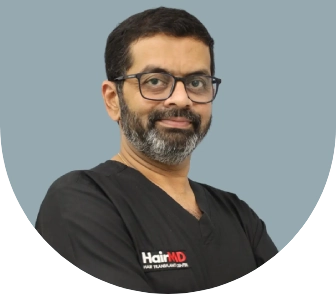
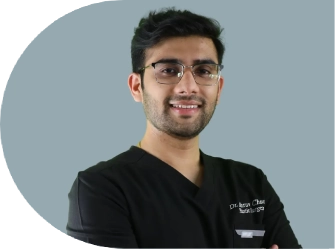
Meet Our Dermatologists

Conclusion
PRP therapy represents a scientifically-validated, non-surgical treatment option for hair loss in Pune. With costs ranging from ₹3,000-15,000 per session and success rates of 70-80% for early-stage androgenetic alopecia, PRP offers an accessible alternative to surgical hair transplant.
Treatment requires 3-6 initial sessions spaced 4-6 weeks apart, with results becoming visible in 3-6 months. Patients can expect 30-40% improvement in hair density when protocols are followed properly.
HairMD India Pune provides PRP therapy using medical-grade centrifugation systems and standardized protocols. The clinic’s experienced team ensures proper patient selection, optimal PRP preparation, and comprehensive follow-up care.
Ready to explore PRP therapy for your hair loss? Schedule a consultation at HairMD India Pune to determine if you’re an ideal candidate. Contact us at +91-9584584111 or visit our Sassoon Road location for personalized assessment and treatment planning.
Further Reading
PRP for Alopecia Areata: What Research Says
PRP for alopecia areata – what the research says about regrowth, how it compares to other options, and when it may help, from HairMD Pune.
Do Dermatologists Recommend Inositol and Choline for Hair Loss?
Discover the potential of inositol and choline for hair loss. Learn how these nutrients may benefit follicle health & prevent thinning.
Finding the Right Doctor for Hair Loss Solutions
Searching for What Kind of Doctor Treats Hair Loss? Learn how dermatologists at Hairmd diagnose the cause & offer proven treatments for hair thinning.
Stop Hair Thinning: Best Practices for Hair Loss Control
Discover effective tips to stop hair fall and boost hair growth with simple lifestyle changes, proper hair care routines, and proven treatments. Boost hair health with HairMD.
Have thoughts? Please let us know
We are committed not only to treating you, but also educating you.