

FUE Hair Transplant: Complete Guide to Procedure, Cost, Recovery and Results


Written by HairMD Content Team | Medically Reviewed by Dr. Dhanraj Chavan On September 15, 2026


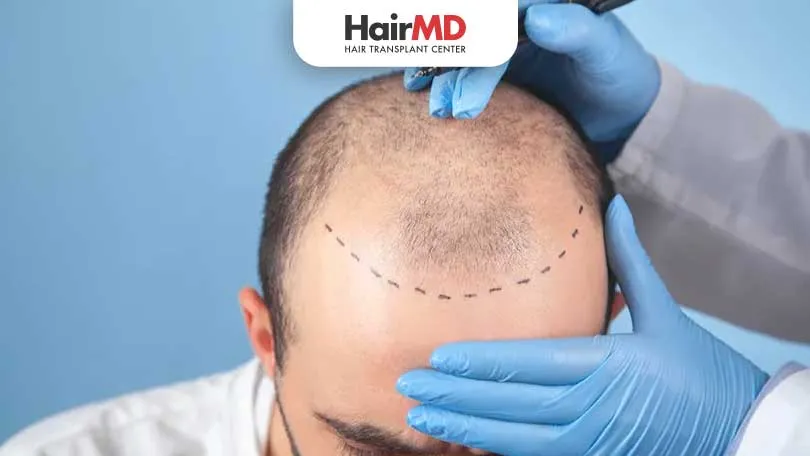
Hair transplants are the most desirable treatment to get rid of the balding and hair thinning problems. This treatment gives you natural-looking hair as your hair follicles are extracted from the permanent hair zone area or donor area and then transplanted to the affected site of the scalp. This site is medically termed the recipient area.
FUE (Follicular Unit Extraction) is the gold-standard technique for permanent hair restoration. Individual hair follicles are extracted one by one from the DHT-resistant donor zone at the back and sides of the scalp, then implanted into balding or thinning areas. The procedure leaves no linear scar, has a recovery of 7 to 10 days for most patients, and produces permanent, natural-looking results. Transplanted hair starts growing at 3 to 4 months; full density is visible by 12 to 18 months. In India, FUE costs between Rs. 50,000 and Rs. 2,50,000 depending on the number of grafts, clinic expertise, and instruments used.
Summary
- FUE extracts individual follicular units (1 to 4 hairs each) using a 0.8 to 1 mm punch, leaving only tiny circular dots, not a linear scar
- Transplanted hair is taken from the DHT-resistant zone and remains permanently resistant to the hormone that causes pattern baldness
- The number of grafts needed ranges from 1,000 to 5,000 depending on your Norwood scale grade; a proper assessment by trichoscopy determines the exact count
- Shock loss (temporary shedding of transplanted and native hair) occurs in weeks 2 to 6 and resolves completely; new growth begins at month 3
- FUE combined with PRP or GFC therapy improves graft survival rates and speeds recovery
- Not everyone is a candidate for FUE; donor density, grade of baldness, and overall health determine suitability
What’s covered in the article?
- What Is FUE Hair Transplant?
- FUE vs FUT: Which Is Better?
- How Many Grafts Do I Need? The Norwood Scale Guide?
- HAIR TRANSPLANT PROCEDURE – STEP-BY-STEP
- Understanding Shock Loss After FUE
- FUE Recovery: What to Expect After Surgery
- FUE + PRP and GFC: Why Combination Produces Better Results?
- Cost of FUE Hair Transplant in Pune
- FUE Results: Realistic Expectations
- Is FUE Hair Transplant Painful?
- Why HairMD for FUE Hair Transplant in Pune?
- FUE vs Other Hair Loss Treatments: When Is Surgery the Right Choice?
- Frequently Asked Questions
- Conclusion
What Is FUE Hair Transplant?
FUE, or Follicular Unit Extraction, is a minimally invasive surgical procedure that permanently restores hair to bald or thinning areas by relocating your own DHT-resistant follicles. It is the evolution of the older FUT (strip) method and is now the preferred technique at specialist clinics worldwide.
The core principle rests on a biological fact called donor dominance. The hair follicles at the back and sides of the scalp (the occipital and parietal regions) contain androgen receptors that are genetically resistant to DHT, the hormone responsible for pattern hair loss. When these follicles are extracted and transplanted to a balding area, they carry their DHT resistance with them. They continue to behave as if they are still in the donor zone, growing permanently in their new location.
This is what makes FUE results permanent. The transplanted hair is not borrowed and returned. It is permanently relocated and will grow for life, even as the surrounding native hair may continue to thin without treatment.
Dr. Sachin Pawar, Hair Transplant Surgeon at HairMD, explains:
“The most important thing patients must understand is that the result of an FUE transplant is only as good as the quality of the planning before the procedure. Knowing how many grafts are available in the donor zone, how many are needed at the recipient site, and how to distribute them for a natural hairline — that requires more time and expertise than the surgery itself. At HairMD, we spend as much time planning the transplant as performing it.”
FUE vs FUT: Which Is Better?
Both FUE and FUT (Follicular Unit Transplantation, also called the strip method) move the same DHT-resistant follicles. The difference is in how they are extracted. Understanding this helps you make the right choice for your situation.
|
Feature |
FUE |
FUT (Strip) |
|
Extraction method |
Individual follicles extracted one by one using a punch |
Strip of scalp skin cut from donor area; follicles dissected from strip |
|
Scarring |
Tiny circular dots (0.8 to 1mm), invisible when hair is 1 cm or longer |
Linear scar across the back of the scalp; visible if hair is very short |
|
Recovery time |
7 to 10 days; can return to desk work in 2 to 3 days |
10 to 14 days; suture removal at day 10 to 14 |
|
Pain post-procedure |
Minimal; mild tenderness in donor area for 3 to 5 days |
Moderate; the linear incision site causes more post-operative discomfort |
|
Graft count per session |
1,000 to 3,000 grafts in a single day session |
2,000 to 5,000 grafts possible in one session (strip size dependent) |
|
Suitable for very large sessions |
Multiple sessions needed for NW6-7 |
One large session can cover NW5-7 |
|
Body hair donor use |
Yes; beard, chest, and leg hair can supplement scalp grafts |
No; body hair cannot be used with FUT |
|
Ideal for |
Most patients, especially those wanting to keep hair short |
Patients needing maximum grafts in fewest sessions |
|
HairMD recommendation |
First-line for most patients |
Reserved for high-volume cases needing maximum grafts |
The verdict: FUE is the superior choice for most patients based on no linear scar, faster recovery, and the option to use body hair as supplemental donor material. FUT remains relevant for patients needing very large graft counts in a single session or those who already have a linear donor area that suits strip extraction.
How Many Grafts Do I Need? The Norwood Scale Guide
One of the most common questions before an FUE transplant is the graft count. The answer depends on your Norwood-Hamilton grade (for men) or Ludwig grade (for women), the density you want to achieve, and the quality of your donor hair.
|
NW7 |
Extensive loss, thin donor strip |
5,000+ (supplemented with beard grafts) |
2 to 3 |
These are estimates. The exact count is determined by the size of your recipient area measured in cm², your desired density (typically 30 to 45 grafts/cm² for natural appearance), and available donor yield measured through trichoscopy.
A skilled surgeon does not simply cover the bald area. They design the hairline to suit your facial structure, distribute grafts with correct angulation (15 to 45 degrees depending on zone), and conserve the donor area to allow future sessions if your loss progresses.
HAIR TRANSPLANT PROCEDURE – STEP-BY-STEP
Understanding what happens on the day of your procedure removes anxiety and helps you prepare. Here is what an FUE session at HairMD looks like in clinical detail.
STEP 1: PRE-OPERATIVE CONSULTATION & HAIRLINE DESIGN
The surgeon assesses the hair-loss pattern, donor area, scalp condition, facial proportions, and long-term hair-loss pattern. The new hairline is carefully designed and approved before surgery.
STEP 2: SCALP PREPARATION
The donor and recipient areas are prepared according to the planned procedure. The scalp is cleaned with an antiseptic solution, and the patient is positioned comfortably.
STEP 3: LOCAL ANAESTHESIA
Local anaesthesia is administered to the donor and recipient areas. Once the scalp is numb, the surgical procedure can be performed with minimal discomfort.
STEP 4: RECIPIENT SITE CREATION
Dr. Sachin Pawar creates the recipient sites according to the planned hairline, density, angle, direction, spacing, and the patient’s natural hair-growth pattern.
STEP 5: GRAFT EXTRACTION
Individual follicular units are carefully extracted from the donor area using the planned FUE extraction technique. Each graft is handled carefully to minimise trauma during extraction.
STEP 6: GRAFT SORTING & PREPARATION
The extracted grafts are examined and carefully sorted according to the number of hairs in each follicular unit—single, double, triple, or multi-hair grafts. Grafts are prepared for implantation while maintaining careful handling throughout the process.
STEP 7: GRAFT IMPLANTATION
The prepared grafts are carefully implanted into the recipient sites according to the planned distribution and direction.
At HairMD, graft implantation is performed by *Senior Hair Transplant Technicians under the continuous/direct supervision of Dr. Sachin Pawar*.
STEP 8: FINAL INSPECTION & DRESSING
After graft implantation, the transplanted and donor areas are carefully inspected. The surgeon and team check graft placement, overall distribution, and the condition of the treated a
Understanding Shock Loss After FUE
Shock loss is one of the most misunderstood parts of the FUE recovery. Many patients are alarmed when their transplanted hair falls out at weeks 3 to 4 and conclude the procedure has failed. It has not.
Here is the mechanism: When a follicular unit is extracted and reimplanted, it undergoes a period of physiological stress. The follicle enters a protective resting phase (telogen) while it re-establishes its blood supply in the new location. The hair shaft attached to the follicle is shed. The follicle itself remains alive in the dermis. New hair begins to grow from the same follicle at approximately month 3, and this new growth is permanent.
Shock loss can also affect some native hairs adjacent to the transplanted zone. This is called recipient area shock loss. It is also temporary and resolves as the scalp heals, typically within 3 to 4 months.
The critical distinction: if hair loss occurs within the first 6 weeks post-FUE, it is almost always shock loss and not a sign that the procedure failed. If there is no new growth by month 5 to 6, that warrants a clinical review with your surgeon.
Dr. Dhanraj Chavan, Dermatologist at HairMD: “Every patient who comes back at week four saying their hair is falling out after the transplant needs reassurance, not alarm. Shock loss is the follicle’s way of resetting. We explain this during the consultation, but when patients actually experience it, it still feels unsettling. Our follow-up protocol is designed specifically to support patients through this phase, because continuity of care during recovery is what separates a good outcome from a great one.”
FUE Recovery: Week-by-Week Timeline
|
Timeframe |
What to Expect |
What to Do / Avoid |
|
Day 1 to 3 |
Minimal Swelling in forehead (peaks day 2 to 3), tenderness in donor area, scabbing begins at recipient site |
Sleep with Supine postion for 2 days; use prescribed spray every 1 hours; avoid bending forward |
|
Day 5 |
Swelling resolves; scabs begin to form crust on transplanted area; donor area pinpoint marks visible but healing |
Begin gentle washing with prescribed shampoo from day 4 (as directed); avoid direct shower pressure on recipient zone |
|
Day 8 to 14 |
Scabs naturally fall off; transplanted hair appears to have grown slightly but this is the scab shedding |
Do not pick or scratch scabs; avoid pools, gyms, and direct sun; wear a loose hat outdoors if needed |
|
Week 3 to 4 |
Shock loss phase: transplanted hairs fall out as follicles enter a resting phase before new growth (this is normal and expected) |
Continue minoxidil if prescribed; do not panic — this shedding is not permanent; follow-up with your surgeon |
|
Month 2 to 3 |
Donor area fully healed; recipient scalp looks similar to before the transplant (shock loss phase) |
Resume normal hair washing, Regular work, Gym etc; continue prescribed medications |
|
Month 3 to 4 |
First signs of new growth appear: fine, thin hair begins to emerge from implanted follicles |
Maintain PRP or GFC sessions if part of your protocol to support early growth |
|
Month 6 |
Approximately 50 to 60% of transplanted hair has grown; coverage becomes visible and noticeable |
Photograph and compare with pre-surgery images; share at follow-up |
|
Month 9 to 12 |
80 to 90% of final result visible; hair thickens and darkens progressively |
Final photographs at 12 months for clinical comparison |
|
Month 12 to 18 |
Full maturation: hair reaches its final thickness, colour, and density |
Assess whether a second session is needed for additional density; discuss long-term maintenance with your dermatologist |
FUE + PRP and GFC: Why Combination Produces Better Results?
A standalone FUE transplant relies entirely on the body’s natural healing process to vascularise the grafts, establish blood supply, and initiate new growth. Adding PRP Therapy or GFC Therapy to the FUE protocol significantly improves outcomes through three mechanisms:
- Graft survival improvement: PRP or GFC is injected into the recipient area at the time of implantation. The concentrated growth factors (PDGF, VEGF, IGF-1, EGF) directly accelerate neovascularisation (new blood vessel formation) around each implanted graft. This reduces the out-of-body vulnerability window and improves graft take rate.
- Faster shock loss recovery: Post-operative PRP or GFC sessions (at month 1 and month 3) stimulate follicular stem cells in both the transplanted and shocked native hairs. Clinical studies show that PRP combined with FUE reduces the duration of shock loss and produces earlier onset of new growth (by 4 to 6 weeks).
- Native hair strengthening: Most FUE candidates still have miniaturising native hair in the recipient and surrounding zones. PRP and GFC slow the miniaturisation of these follicles, protecting the non-transplanted hair that contributes to overall density.
At HairMD, the combination protocol is our standard recommendation for HT, PT patients
Learn About GFC Hair Therapy at HairMD
Cost of FUE Hair Transplant in Pune
The cost of FUE in India is significantly lower than in Western countries (which typically range from USD 4,000 to USD 15,000) while maintaining comparable quality at established specialist clinics. However, within India there is substantial variation in quality that cost alone does not reveal.
Factors that determine FUE cost:
Graft count is the primary driver. Most clinics price on a per-graft basis. A 2,000-graft session at Rs. 30 to 50 per graft costs Rs. 60,000 to Rs. 1,00,000. A 4,000-graft session will cost proportionally more. Always ask for a total cost quote based on your assessed graft count, not a per-graft rate without a count.
Surgeon expertise directly impacts the result. An FUE transplant is a surgical procedure requiring thousands of precise micro-incisions and implantations over 6 to 8 hours. The surgeon’s training, volume of procedures performed per year, and outcome data are the most important factors in result quality. At HairMD, all FUE procedures are performed by surgeons with specific hair transplant training.
Instruments used affect graft survival. Single-use sharp punches (as used at HairMD) minimise transection rates compared to reused or blunter instruments. The difference in graft survival between a sharp and blunt punch can be 10 to 20%, which directly impacts density of the final result.
Clinic infrastructure including sterile operation theatre setup, anaesthesia protocols, and post-operative care determines safety standards.
Combination protocols (PRP, GFC, or exosome sessions post-transplant) are priced separately from the surgery itself but are part of the total investment in your result.
At HairMD Pune, we provide a transparent cost breakdown after assessment, including the recommended graft count based on trichoscopy, so you understand exactly what you are paying for before committing.
FUE Results: Realistic Expectations
FUE hair transplants produce permanent results but understanding what “permanent” and “natural-looking” mean in clinical terms prevents disappointment.
What FUE can achieve:
Restoration of density in bald or thinning zones using your own hair, with results that look and feel completely natural. Transplanted hair can be cut, coloured, washed, and styled exactly like native hair. The hairline design, when done well, is indistinguishable from a natural hairline. The result is genuinely permanent because DHT-resistant follicles remain resistant regardless of where they are placed.
What FUE cannot achieve:
FUE cannot replace more hair than your donor zone contains. If you have lost 10,000 follicles but your donor zone has 5,000 available, you will achieve 5,000 follicles of coverage, not full restoration. In advanced NW6 or NW7 cases, a realistic conversation about coverage percentage rather than full density is essential before surgery. Additionally, FUE treats existing bald areas. It does not prevent future hair loss in non-transplanted areas. Medical treatment (finasteride, minoxidil, PRP) must continue post-transplant to protect remaining native hair.
Is FUE Hair Transplant Painful?
Pain during FUE is minimal because the procedure is performed entirely under local anaesthesia. The only discomfort most patients describe is the initial anaesthetic injections, which cause a brief stinging sensation lasting 5 to 10 seconds per injection point. After the scalp is numb (approximately 15 minutes after injection), no pain is felt during extraction or implantation. Even Post Surgery.
Post-operative: mild tenderness and tightness in the donor area for 3 to 5 days. Prescribed Medicine manages this comfortably.
Why HairMD for FUE Hair Transplant in Pune?
HairMD has 6 centres across Pune, including Kharadi, Prabhat Road, Baner, and Pimple Saudagar. Pune Station & NIBM Our surgical team has performed 4,157+ successful hair transplants across 15+ years of clinical practice.but operation perform Prabhat Road Clinic
What sets HairMD apart:
U.S.-manufactured single-use precision punches for every patient, delivering the lowest transection rates possible. Trichoscopy-based pre-operative assessment that determines the exact graft count and donor density before any surgical commitment. A dedicated follow-up protocol at day 5th 15th, 1 month, 2 month, and month 2 to monitor your recovery and results. Combination protocols including PRP or GFC for patients who want to maximise graft survival and speed recovery. A team of full-time dermatologists who manage both pre-operative hair loss treatment and post-operative native hair maintenance, not just the surgery in isolation.
Our doctors:
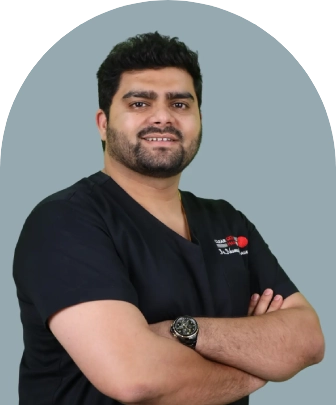
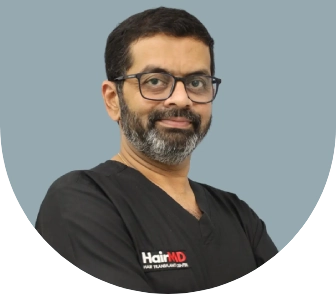
Dr. Sachin Pawar, Hair Transplant Surgeon, leads our FUE surgical team with specific advanced training in hairline design and mega-session FUE.
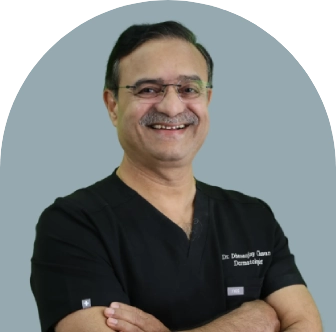
Dr. Dhananjay Chavan, Founder and Dermatologist, oversees patient assessment, candidacy evaluation, and long-term hair loss management for every transplant patient.
Dr. Dhanraj Chavan, Dermatologist, manages medical hair loss conditions and post-transplant native hair protection protocols.
250+ patients visit HairMD every day for hair concerns. For the majority of our surgical patients, the relationship begins with a medical hair loss consultation long before surgery is considered, because getting the diagnosis and timing right is the foundation of a good result.
FUE vs Other Hair Loss Treatments: When Is Surgery the Right Choice?
FUE is the most effective treatment for established baldness, but it is not the first-line treatment for all hair loss. Understanding where FUE sits in the treatment hierarchy prevents both premature surgery and unnecessary delays.
|
Hair Loss Stage |
First-Line Treatment |
When to Consider FUE |
|
Early male hair loss (NW1-2) |
Finasteride + minoxidil + PRP |
When medical treatment plateaus and density is still unsatisfactory after 12 months |
|
Moderate baldness (NW3-4) |
Medical treatment + GFC to slow progression |
FUE recommended when loss has stabilised; excellent candidate profile |
|
Advanced baldness (NW5-7) |
FUE is the primary restoration option; medical treatment continues post-surgery |
Surgery is appropriate if donor density is adequate; combination with beard grafts may be needed |
|
Female hair loss (Ludwig I-II) |
Minoxidil + hormonal evaluation + Mesotherapy |
FUE in selected women with stable, patterned loss and sufficient donor density |
|
Alopecia areata |
Intralesional steroid injections + immunomodulation |
FUE is contraindicated until condition is in remission for 2+ years |
|
Post-transplant density maintenance |
Exosome Hair Therapy + PRP for native hair |
Second FUE session if more density is needed after 12-month result assessment |
Frequently Asked Questions
What is the difference between FUE and FUT hair transplant?
FUE extracts individual follicular units one by one using a circular punch (0.8 to 1mm), leaving only tiny circular dot scars that are invisible when hair is even 1 cm long. FUT (strip method) cuts a strip of scalp skin from the donor area and dissects follicles from it, leaving a linear scar across the back of the scalp. FUE allows you to wear your hair very short without any visible scar. FUT can yield more grafts per session in some cases. Most patients at HairMD choose FUE.
How long does an FUE hair transplant last?
FUE results are permanent. The transplanted follicles are taken from the DHT-resistant zone and carry that genetic resistance to their new location. They will not fall out due to androgenetic alopecia. However, the surrounding native (non-transplanted) hair continues to be susceptible to DHT and may thin over time without medical treatment. This is why post-transplant medical management (finasteride, minoxidil, PRP) is important for maintaining overall density alongside the transplanted hair.
When will I see results after FUE hair transplant?
The first signs of new growth typically appear at months 3 to 4. By month 6, approximately 50 to 60% of the final result is visible. Full density and maturation of the transplanted hair is reached at 12 to 18 months. Patience is essential: the timeline cannot be accelerated significantly, though combination with PRP or GFC at HairMD supports faster initial growth.
Is FUE hair transplant safe?
Yes. FUE is a low-risk, minimally invasive procedure when performed by a trained surgeon in a proper clinical setting. Side effects are temporary and include swelling (resolves in 3 to 5 days), small scabs at the recipient site (fall off by day 10 to 14), and shock loss (temporary, resolves by month 4 to 6). Serious complications such as infection or graft failure are rare and are associated with inadequate sterile technique or poor post-operative care. At HairMD, all FUE procedures are performed in sterile operation theatre conditions with full post-operative protocols.
How many grafts do I need for full coverage?
This depends entirely on your Norwood grade (baldness extent) and the size of your recipient area.The only accurate way to determine your specific graft count is a trichoscopy-based assessment of your donor density and recipient area size. An estimate without a proper clinical assessment is not reliable.
Can women get FUE hair transplant?
Yes, selected women with patterned hair loss and adequate donor density are suitable candidates for FUE. Women with diffuse hair loss across the entire scalp, including the donor zone, are generally not suitable because the donor area itself is thinning. Female candidacy requires a thorough hormonal evaluation and trichoscopy assessment. At HairMD, Senior Dermatologist leads female hair loss consultations to determine whether medical treatment or surgical restoration is the appropriate path.
DO YOU KNOW?
Nearly 250 Patients Visit HairMD
Everyday For Various Hair Concerns
(20+ Years Of Expertise. 4157+ Successful Hair Transplant at HairMD)
Meet Our Dermatologists

Conclusion
FUE hair transplant is the most advanced, minimally invasive, and permanently effective method for restoring hair to bald or thinning areas. The procedure works because it relocates DHT-resistant follicles that maintain their genetic properties regardless of where they are placed. Results are permanent, natural-looking, and indistinguishable from native hair.
The quality of your result depends on three things equally: the skill of the surgical team, the precision of the pre-operative planning, and the quality of post-operative care. At HairMD Pune, our team applies all three through 15+ years of specialist experience and 4,157+ successful transplants.
If you are considering FUE, the most important first step is an honest assessment, not a booking. Schedule a consultation with our team and understand your exact graft count, candidacy, realistic outcome, and total investment before making any decision.
Further Reading
Does Heat Damage Really Ruin Your Hair? The Science Explained
Yes, heat damage is real, and mostly permanent. HairMD explains exactly how heat ruins hair at the structural level, at what temperatures damage occurs, and how to minimise it without giving up styling.
How to Get Healthier Hair Without Expensive Treatments?
You don’t need expensive salon treatments for healthier hair. HairMD dermatologists explain what actually improves hair health, from diet and scalp care to habits that protect hair from daily damage.
PRP Safety: Side Effects & Who Should Avoid It
PRP hair treatment safety – common side effects, who should avoid PRP, and how HairMD Pune keeps the procedure safe for suitable patients.
PRP Safety: Side Effects & Who Should Avoid It
PRP hair treatment safety – common side effects, who should avoid PRP, and how HairMD Pune keeps the procedure safe for suitable patients.
Have thoughts? Please let us know
We are committed not only to treating you, but also educating you.