

Hair Transplant Consultation Checklist: Questions Every Patient Should Ask


Written by HairMD Content Team | Medically Reviewed by Dr. Dhanraj Chavan On January 22, 2026


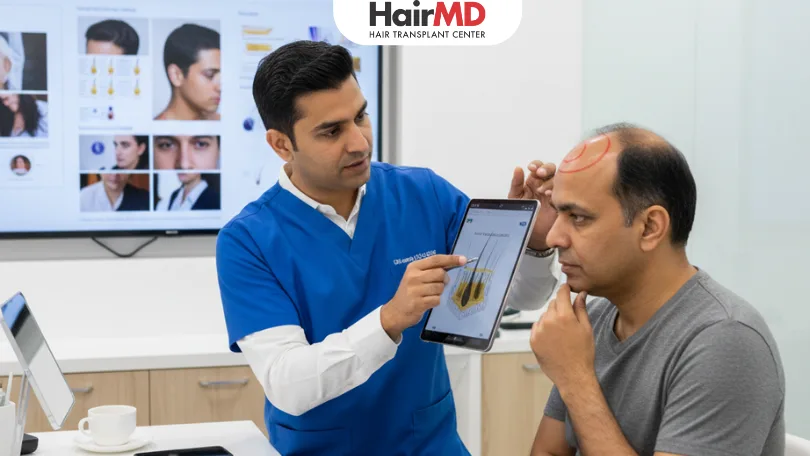
Your hair transplant consultation determines whether you’ll wake up with natural-looking results or regret your decision for years. This single meeting can mean the difference between a successful transformation and becoming another statistic in the 5-10% of cases requiring corrective surgery.
At HairMD India in Pune, Dr. Sachin Pawar has conducted over 2,500 consultations in his 20-year career. He’s seen patients who asked the right questions walk away confident, and those who didn’t end up in his office seeking repair work from failed procedures elsewhere.
This checklist gives you the essential questions to ask during your consultation. You’ll learn how to verify credentials, spot red flags, understand costs, and ensure your surgeon has your best interests at heart – not just their bottom line.
What’s covered in the article?
- Key Takeaways
- Why Your Hair Transplant Consultation Is Your Most Important Step?
- Essential Questions About Your Surgeon’s Qualifications
- Critical Questions About Who Performs Your Procedure
- Questions About the Recommended Technique and Approach
- Essential Questions About Results and Expectations
- Critical Questions About Cost and Transparency
- Questions About Facility, Safety, and Standards
- Questions About Recovery and Aftercare
- What Makes HairMD India’s Consultation Different?
- Red Flags That Should Make You Walk Away
- Frequently Asked Questions
- Conclusion
Key Takeaways
- How to verify your surgeon’s qualifications and experience: Ask about board certification, years performing hair transplants specifically, and membership in bodies like ISHRS. A qualified surgeon welcomes these questions.
- Essential questions about who actually performs your procedure: Many clinics have surgeons consult but technicians operate. You need clarity on who extracts grafts, creates recipient sites, and designs your hairline.
- What to ask about costs, grafts, and realistic expectations: Get detailed breakdowns beyond per-graft pricing. Understand what’s included, what results to expect, and whether you’ll need multiple sessions.
- Red flags that signal you should walk away: High-pressure sales, vague answers about qualifications, promises of unlimited grafts, and inability to meet the actual surgeon are dealbreakers.
- How HairMD India’s consultation protects patients: Every patient meets Dr. Sachin Pawar directly for comprehensive evaluation. No sales pressure, transparent pricing at Rs 45-50 per graft, and honest candidacy assessment – even if that means recommending against surgery.
Why Your Hair Transplant Consultation Is Your Most Important Step?
The Consultation Sets the Foundation for Success
Your consultation isn’t just a meet-and-greet. It’s a comprehensive medical evaluation that determines your eligibility, sets realistic expectations, and creates a surgical roadmap. According to medical guidelines for hair restoration, proper patient selection and planning are critical success factors.
Studies published by the International Society of Hair Restoration Surgery show that inadequate planning causes 60-70% of patient dissatisfaction. The surgeon who spends 15 minutes with you will produce different results than one who invests an hour understanding your goals.
Think of it like building a house. You wouldn’t let a contractor start pouring concrete without detailed blueprints. Your hair transplant works the same way – the consultation creates those blueprints.
What Happens During a Typical Consultation?
A thorough consultation at HairMD India follows a structured process. Dr. Sachin Pawar begins with your medical history, reviewing medications, previous surgeries, and any conditions affecting hair growth. This helps determine if you’re a good candidate for hair transplant surgery.
Next comes the scalp examination. He assesses your hair density, texture, and color – all factors that influence how many grafts you’ll need. The donor area on the back of your head receives special attention since that’s where healthy follicles come from.
Dr. Pawar then shows you before-after results organized by age groups (20-30 years, 40-60 years) and graft counts (2-3K grafts, 4-5K grafts, 6K grafts). This helps you see realistic outcomes for patients similar to you in both age and extent of hair loss. Rather than generic photos, you’ll see comprehensive results across different patient categories.
If you’re curious about the actual procedure, HairMD India offers something unique – live surgery viewing. Dr. Pawar can show you live surgeries in progress and discuss various technical points. This transparency helps you understand exactly what happens during the procedure.
Hairline design happens during the consultation, not on surgery day. Dr. Pawar discusses what looks natural for your age, facial structure, and remaining hair pattern. You’ll see examples and provide input.
Finally, he calculates graft requirements and provides transparent cost estimates. At HairMD India in Pune, pricing is straightforward: Rs 45-50 per graft with no hidden fees.
Red Flags to Watch During Consultations
Walk away immediately if the clinic employs high-pressure sales tactics. “Today only” discounts or aggressive pushes to schedule surgery indicate a commercial operation, not a medical practice.
Meeting only with sales consultants instead of the actual surgeon is another major warning sign. If the person across from you can’t answer technical questions or keeps deferring to “the doctor,” you’re not getting proper evaluation.
Vague or evasive answers about qualifications, technique, or who performs the surgery suggest something to hide. Legitimate surgeons provide direct, detailed responses.
Unrealistic promises like “perfect hairline” or “unlimited grafts” defy medical reality. Every procedure carries variables, and your donor area has limits. Honest surgeons acknowledge this. Learn more about how to avoid a bad hair transplant by recognizing warning signs early.
Essential Questions About Your Surgeon’s Qualifications
“What Are Your Qualifications and How Many Years of Experience Do You Have?”
This question separates qualified surgeons from opportunists. You need to know their medical degree, surgical training, and specific hair restoration experience.
Dr. Sachin Pawar holds MBBS and MS Surgery degrees. But more importantly, he’s focused exclusively on hair restoration since 2016 – that specialization matters more than general surgical experience.
Look for board certification in dermatology or plastic surgery. Membership in professional organizations like the International Society of Hair Restoration Surgery (ISHRS) demonstrates commitment to continuing education and ethical standards. The American Society of Plastic Surgeons also provides guidelines for evaluating surgeon credentials.
Don’t accept vague answers like “many years of experience.” Get specific numbers. A surgeon performing 50 hair transplants over 15 years isn’t the same as one doing 500 annually.
“How Many Hair Transplant Procedures Have You Performed?”
Numbers matter in hair restoration surgery. The learning curve is steep, and results improve dramatically with experience.
At HairMD India, Dr. Sachin Pawar has performed over 2,500 FUE hair transplant surgeries. This volume means he’s encountered virtually every complication, hair type, and baldness pattern.
When asking this question, specify hair transplants – not general cosmetic procedures. Some clinics inflate numbers by counting all surgeries, but hair restoration requires specialized skills.
Request to see before-and-after photos of actual patients. The clinic should have hundreds of cases documented with multiple angles and various baldness stages.
“Are You a Member of Professional Bodies Like ISHRS?”
Professional affiliations indicate a surgeon stays current with evolving techniques. The International Society of Hair Restoration Surgery requires members to meet education and ethical standards.
ISHRS membership means your surgeon attends conferences, publishes research, and follows best practice guidelines. It’s not a guarantee of skill, but it shows commitment to the field.
Ask about other memberships too. Organizations like the American Board of Hair Restoration Surgery and national dermatology boards provide additional credibility.
Surgeons who aren’t affiliated with any professional bodies should raise questions. Why aren’t they participating in their professional community?
“Can I Speak with Previous Patients?”
Transparent clinics connect prospective patients with those who’ve undergone surgery. This gives you unfiltered feedback about the experience, recovery, and results.
At HairMD India, we maintain relationships with satisfied patients willing to share their experiences. These conversations provide insights no brochure can match.
When speaking with previous patients, ask about pain levels, recovery timeline, and whether results met expectations. Find out if there were any surprises or additional costs.
Be wary if the clinic refuses patient referrals or only offers scripted testimonials. Real patient connections demonstrate confidence in results.
Critical Questions About Who Performs Your Procedure
“Will You Be Performing the Entire Procedure, or Will Assistants Be Involved?”
This is perhaps the most important question you’ll ask. Many clinics have the surgeon consult, then delegate actual surgery to technicians or assistants.
In some countries, unlicensed technicians use handheld devices to extract grafts while the surgeon supervises multiple rooms. This assembly-line approach compromises results and safety.
At HairMD India in Pune, Dr. Sachin Pawar performs all critical steps personally. He extracts each graft, creates recipient sites, and designs your hairline. Assistants may help with preparation, but surgical work stays with the surgeon.
Get this commitment in writing if possible. If the surgeon hedges or says “my team handles that,” consider it a red flag.
“Who Will Extract the Grafts and Create the Recipient Sites?”
These two steps determine your final results more than any other part of the procedure. Graft extraction requires precision to avoid damaging follicles. Recipient site creation affects angle, direction, and density.
Some clinics train technicians to handle extraction using motorized punches. While this speeds up the process, it increases trauma to follicles and reduces survival rates.
Recipient site creation is pure artistry. The surgeon must consider hair direction, natural whorl patterns, and appropriate density. This can’t be delegated to assistants who lack the years of experience needed.
Dr. Sachin Pawar’s approach at HairMD India involves personal handling of both extraction and implantation. This direct involvement ensures graft quality and artistic hairline design.
“Will I Meet the Surgeon Performing My Procedure Today?”
You should consult with the person who will operate on you. Sales consultants can’t assess your candidacy or answer technical questions adequately.
Red flag answers include “you’ll meet the doctor on surgery day” or “our team works together.” You need face-to-face time with your surgeon during consultation, not just during the procedure.
At HairMD India, every consultation happens directly with Dr. Sachin Pawar. This ensures continuity of care and builds the trust necessary for such a personal procedure.
Ask the consultant’s role clearly. If they’re not the operating surgeon, insist on meeting with whoever will hold the scalpel.
Questions About the Recommended Technique and Approach
“Which Technique Do You Recommend – FUE, FUT, or DHI – and Why?”
Different techniques suit different situations. FUE (Follicular Unit Extraction) removes individual grafts without a linear scar. FUT (Follicular Unit Transplantation) removes a strip of scalp, leaving a line scar. DHI (Direct Hair Implantation) uses a special pen for placement.
Your surgeon should explain why they recommend a specific approach for your case. Factors include your hair characteristics, extent of baldness, and lifestyle considerations. Learn more about the differences between FUE, FUT, and DHI methods.
Dr. Sachin Pawar specializes in FUE at HairMD India because it offers several advantages for most Pune patients. Recovery is faster, scarring is minimal, and you can wear short hairstyles without visible donor area evidence.
Be suspicious if the clinic only offers one technique regardless of patient needs. A skilled surgeon tailors the approach to individual circumstances.
“How Many Grafts Do I Need and How Did You Calculate This?”
Graft calculation involves mathematical precision and artistic judgment. The surgeon must consider the area to cover, desired density, and donor supply available.
Most surgeons aim for 35-40 grafts per square centimeter to achieve natural-looking density. The Norwood Scale helps assess baldness severity, with Class 3 typically requiring 1,000-2,000 grafts and Class 6 needing 3,000-4,000+. Understanding the complete FUE hair transplant procedure helps you evaluate graft calculations.
Dr. Sachin Pawar explains his methodology during consultation. He measures the bald area, assesses your donor density, and calculates requirements based on your specific goals.
Ask to see the math. Understanding the calculation helps you evaluate whether recommendations are appropriate or inflated to increase costs.
“What Donor Area Assessment Have You Conducted?”
Your donor area is a finite resource. Over-harvesting causes permanent thinning in the back and sides of your scalp – a problem impossible to fix.
A proper donor assessment examines hair density, graft quality, and scalp laxity. The surgeon should document donor capacity and plan conservatively in case you need future procedures.
This is especially critical for younger patients. Your hair loss may progress, requiring additional grafts years later. A surgeon who harvests aggressively now leaves you with limited options later.
At HairMD India, Dr. Sachin Pawar conducts thorough donor evaluations. He photographs the area, calculates available grafts, and discusses long-term planning even if you only want one procedure now.
“Will You Design My Hairline, and Can I See Examples?”
Hairline design separates amateur from expert results. A hairline too low looks fake. Too high makes you appear older. Too straight resembles a hedge.
Your surgeon should show examples of hairlines they’ve created for patients with similar features. Natural hairlines have subtle irregularities, age-appropriate recession, and complement facial structure.
Dr. Sachin Pawar designs hairlines based on the golden ratio and your individual features. He considers your age – a 25-year-old shouldn’t have the same hairline as a 45-year-old.
Bring photos of hairlines you like to the consultation. This helps communicate your aesthetic preferences and ensures you’re aligned with your surgeon’s vision.
Essential Questions About Results and Expectations
“What Results Can I Realistically Expect?”
Hair transplants don’t restore your teenage hairline or create movie-star density. Understanding realistic outcomes prevents disappointment.
Most patients see 60-80% of transplanted hair survive and grow permanently. Factors like smoking, poor scalp health, and unrealistic graft numbers reduce success rates.
We show the patient results along with the change that have occurred right from Month 1 to month 6 to 12 months.
Timelines matter too. You won’t see final results for 12-15 months. Initial growth starts around 3-4 months, with full maturation taking over a year. Learn more about understanding hair transplant results timeline.
Dr. Sachin Pawar shows before-and-after photos of patients with similar baldness patterns. This gives you concrete examples rather than abstract promises.
“What Is the Graft Survival Rate You Achieve?”
Graft survival depends on extraction technique, handling, and implantation skill. Industry standards range from 85-96%, but many clinics achieve far less.
Ask how the surgeon preserves grafts between extraction and implantation. Temperature-controlled solutions, minimal handling time, and proper hydration affect survival.
At HairMD India, we use advanced storage techniques and minimize graft time outside the body. Dr. Sachin Pawar’s careful extraction preserves the follicle bulb, increasing survival likelihood.
After graft extraction we plant these grafts within 3 hours, during which time they are stored in specialised chiller machines with a 6-8 degree celsius temperature. At HariMD we routinely achieve a graft survival rate of 99%.
“Will I Need Multiple Sessions?”
Honesty about future procedures separates ethical surgeons from salespeople. Many patients need 2-3 sessions to achieve desired density or coverage.
Factors requiring multiple sessions include extensive baldness, poor donor supply, or natural hair loss progression. Your surgeon should discuss these possibilities upfront.
Dr. Sachin Pawar evaluates long-term needs during consultation. If you’re a Norwood Class 5 with aggressive hair loss patterns, he’ll explain that one session may not be enough.
Financial planning matters too. If multiple sessions are likely, you need to budget accordingly rather than being surprised later.
“Can I See Before-and-After Photos of Similar Cases?”
Generic before-after galleries don’t help much. You need to see patients who started with baldness similar to yours.
Request photos from multiple angles – front, top, and donor area. Lighting and hair styling can hide subpar results in carefully curated shots.
At HairMD India, Dr. Sachin Pawar maintains extensive documentation categorized by baldness stage and hair characteristics. Curly hair behaves differently than straight hair, so seeing relevant examples matters.
Ask about the photos’ authenticity. Are these actual patients, or stock images? Can you verify they came from this clinic?
If you verify that the patient is from our clinic, you are welcome to call them about their transplant experience and discuss their surgical details, if they are comfortable. We welcome feedback from all our patients and our hair transplant reviews speak volumes about how satisfied our patients are.
Critical Questions About Cost and Transparency
“What Is the Total Cost Breakdown?”
Per-graft pricing tells only part of the story. You need a complete breakdown of all costs associated with your procedure.
In Pune, FUE hair transplant pricing typically ranges from Rs 40-80 per graft depending on the clinic and surgeon experience. At HairMD India, Dr. Sachin Pawar’s rates are Rs 45-50 per graft – competitive for his level of expertise. For detailed hair transplant cost breakdown in Pune, including factors affecting pricing, see our comprehensive guide.
For a 2,000-graft procedure, your total cost would be Rs 90,000-1,00,000. This should include pre-operative consultations, the surgery itself, and initial follow-ups.
Ask what’s not included. Pre-op blood tests, medications, PRP sessions, and future touch-ups may cost extra. Get these figures upfront to avoid surprises.
“Are There Payment Plans or Financing Options?”
Hair transplants represent significant investment. Many clinics offer payment flexibility to make procedures more accessible.
HairMD India provides EMI options through healthcare financing partners. This allows you to spread costs over several months rather than paying everything upfront.
Some clinics offer cash discounts, typically 5-10% off if you pay in full before the procedure. Ask if this applies to your case.
Be cautious of financing that seems too good to be true. High-interest rates or hidden fees can inflate your actual cost significantly.
“What Does Your Quote Include?”
A comprehensive quote should itemize all services. This prevents misunderstandings about what you’re paying for.
Essential inclusions are pre-operative consultations, all anesthesia, the transplant procedure itself, post-operative medications, and follow-up appointments for at least 12 months.
At HairMD India, our quotes include Dr. Sachin Pawar’s surgical fee, nursing support, graft preservation solutions, and standard follow-ups. Optional add-ons like PRP therapy are quoted separately.
Get your quote in writing. Verbal estimates can change, creating disputes about what was promised.
“What Happens If Results Don’t Meet Expectations?”
This uncomfortable question reveals a lot about the clinic’s integrity. How do they handle complications or dissatisfaction?
Some clinics offer revision policies within certain timeframes. Others charge full price for corrective work. Understand these terms before committing.
At HairMD India, Dr. Sachin Pawar discusses realistic expectations thoroughly during consultation. While we can’t guarantee specific numbers of hairs, we commit to addressing legitimate concerns during the healing process.
Ask about the clinic’s complaint resolution process. A defensive response or refusal to discuss this topic signals potential problems.
Questions About Facility, Safety, and Standards
“Is Your Facility Accredited?”
Accreditation demonstrates adherence to safety and quality standards. In India, look for state medical board licensing and registration.
The clinic should meet basic requirements: sterile operating environment, proper waste disposal, emergency equipment, and trained support staff.
HairMD India operates from a facility designed specifically for hair restoration procedures. Our Pune location meets all state healthcare regulations and undergoes regular inspections.
Don’t be shy about asking to tour the surgical area. Reputable clinics welcome this transparency.
“What Safety Protocols Do You Follow?”
Infection control, sterilization procedures, and emergency preparedness protect you during surgery. Your surgeon should explain their protocols clearly.
All surgical instruments must be sterilized between patients. Disposable items like needles and syringes should never be reused. Operating room air filtration prevents airborne contamination. Healthcare facilities should follow WHO surgical safety guidelines for patient protection.
Ask about emergency procedures. What happens if you have an allergic reaction or medical complication during surgery?
At HairMD India, we follow stringent sterilization protocols and maintain emergency medical equipment on-site. Dr. Sachin Pawar’s surgical experience includes managing rare complications should they arise.
“What Anesthesia Will Be Used and Who Administers It?”
Hair transplants typically use local anesthesia to numb the scalp. Some clinics offer mild sedation for patient comfort.
Your surgeon will administer local anesthesia. Technicians or assistants shouldn’t handle this critical step.
Dr. Sachin Pawar personally administers local anesthesia at HairMD India. He uses fine needles and modern techniques to minimize discomfort during injection.
Ask about pain management during and after the procedure. You should know what to expect and how pain will be controlled.
Questions About Recovery and Aftercare
“What Is the Recovery Timeline?”
Understanding recovery helps you plan time off work and adjust expectations about healing milestones.
Post surgery 2 days are mandatory rest. Days 1-3 involve swelling and tenderness. From day 3 onward, patients can do general work. You’ll wear bandages and need to sleep with your head elevated.
Most patients can return to desk work by day 5-7.
Weeks 1-2 see crusting and scabbing around transplanted grafts. These fall off naturally – don’t pick at them. Light exercise is okay, but avoid heavy workouts. Understanding potential side effects of hair transplant helps you recognize normal healing versus complications.
Heavy exercise, bike riding, swimming etc should be avoided for 1 month minimum.
Months 1-3 bring the “ugly duckling” phase. Transplanted hairs shed (shock loss), which is normal. New growth starts around month 3-4.
Dr. Sachin Pawar provides detailed recovery timelines during consultation. He explains Pune’s climate considerations – humidity affects healing, so monsoon season may require extra precautions.
“What Aftercare Support Do You Provide?”
Post-operative care significantly affects your results. The clinic should offer guidance throughout the 12-15 month growth period.
At HairMD India, we schedule follow-ups at 1 week, 1 month, 3 months, 6 months, and 12 months. These check healing progress, address concerns, and document growth.
Ask if the clinic offers 24/7 emergency support. Complications rarely occur, but having access to your surgeon’s team provides peace of mind.
Find out how they handle questions during recovery. Email support? Phone consultations? Office visits?
“What Post-Procedure Medications Will I Need?”
Most hair transplants require antibiotics to prevent infection, pain medication for discomfort, and often medications to support hair growth.
Finasteride or Minoxidil are commonly prescribed to protect non-transplanted hair and improve transplant success. Understanding post-transplant medications and their purposes helps you follow protocols properly. These medications involve ongoing costs.
Dr. Sachin Pawar discusses medication requirements during consultation. He explains benefits, side effects, and costs so you can budget appropriately.
Ask if medication costs are included in your quote or billed separately. This varies by clinic and can add significant expense.
What Makes HairMD India’s Consultation Different?
Dr. Sachin Pawar’s Personal Consultation Approach
Every patient meets Dr. Sachin Pawar directly – no sales consultants or intermediaries. This ensures you receive expert medical evaluation from someone with over 2,500 procedures under his belt.
He brings 20 years of surgical experience, with exclusive focus on hair restoration since 2016. His MBBS and MS Surgery qualifications combine with specialized training in FUE techniques.
The consultation process at HairMD India typically lasts 45-60 minutes. Dr. Pawar examines your scalp, discusses your medical history, and explains technical details in plain language.
You’ll leave understanding your candidacy, realistic outcomes, and complete costs. If hair transplant isn’t right for you, he’ll say so – even though it costs the clinic a potential patient.
Transparent Cost Structure at HairMD India
We believe in straightforward pricing without hidden fees. The per-graft rate is Rs 45-50, competitive in Pune while reflecting Dr. Sachin Pawar’s expertise.
Your quote includes the surgeon’s fee, all surgical supplies, nursing support, and standard follow-ups. Optional services like PRP therapy or extended aftercare are quoted separately.
No pressure tactics. No “today only” discounts. No inflated graft counts to pad bills. Just honest medical advice and fair pricing.
Payment flexibility through EMI options makes quality hair restoration accessible. We work with financing partners to structure plans fitting your budget.
Comprehensive Evaluation Process
Dr. Sachin Pawar’s hair transplant evaluation covers five key areas:
- Medical history review to identify contraindications,
- Scalp health assessment examining inflammation or conditions affecting growth
- Donor area analysis calculating available grafts,
- Hairline design customized to your features, and
- Realistic goal setting based on your specific case.
He uses photography to document your current state and create reference points for tracking progress. Measurements of bald areas inform accurate graft calculations.
You’ll see before-after results organized by both age groups and graft counts—not just generic photos. Whether you’re 25 or 55, whether you need 2,000 or 6,000 grafts, you’ll see patients similar to you. This categorized approach provides realistic expectations based on your specific situation.
HairMD India also offers live surgery viewing if you’re interested. You can watch an actual procedure in progress while Dr. Pawar explains each step. This level of transparency is rare in the industry and demonstrates complete confidence in surgical techniques.
The process emphasizes education. Dr. Pawar wants you to make informed decisions, not rushed commitments based on sales pitches.
Red Flags That Should Make You Walk Away
Unlimited grafts promises defy biology. Your donor area has finite capacity – typically 4,000-5,000 grafts maximum over a lifetime. Clinics claiming unlimited supply are lying.
High-pressure “today only” discounts signal commercial operations, not medical practices. Legitimate surgeons give you time to consider such significant decisions.
Can’t meet the actual surgeon? That’s a dealbreaker. Consultations with sales staff instead of operating doctors indicate assembly-line approaches where profit trumps patient care.
Vague answers about qualifications, how many procedures performed, or who does what during surgery suggest something to hide. Ethical surgeons provide direct, detailed responses.
No before-after photos available, or only generic stock images, means the clinic lacks documented results. Every experienced surgeon should have hundreds of real patient cases.
Significantly below-market pricing often indicates inexperienced surgeons, unlicensed technicians, or cut corners on safety. Quality hair transplants have baseline costs – beware of bargains.
No clear aftercare plan leaves you unsupported during the critical recovery period. Proper clinics schedule regular follow-ups and provide 24/7 access for concerns.
Unwillingness to answer questions or defensiveness about probing inquiries reveals insecurity. Confident surgeons welcome informed patients asking thorough questions.
Technicians performing procedures instead of surgeons is common in unethical clinics. The person consulting should be the person operating – accept nothing less.

Frequently Asked Questions
How long should a hair transplant consultation last?
A thorough consultation should last at least 30-45 minutes, though more complex cases may require an hour or more. This allows time for comprehensive scalp examination, medical history review, and detailed discussion of techniques and expectations.
At HairMD India, Dr. Sachin Pawar typically spends 45-60 minutes with each patient. He believes rushed consultations lead to misunderstandings and unrealistic expectations.
If a clinic pushes you through in 10-15 minutes, that’s a red flag. Proper evaluation can’t happen that quickly.
Should I bring anything to my consultation?
Bring a list of current medications, including supplements and topical treatments you’ve tried for hair loss. This helps your surgeon identify potential contraindications or interactions.
Photos of hairstyles or hairlines you like provide helpful reference points. Bring images showing you at younger ages with fuller hair if available.
A list of questions ensures you don’t forget important topics during the consultation. Consider bringing a family member for emotional support and to help remember information.
At HairMD India, we provide consultation forms beforehand so you can prepare medical history details in advance.
Can I get a quote without an in-person visit?
Many clinics offer preliminary quotes based on photos, but these are estimates only. Accurate graft counts require physical examination of your scalp.
Dr. Sachin Pawar can provide ballpark figures based on photographs of your hair from multiple angles. However, final pricing requires in-person evaluation at HairMD India in Pune.
Virtual consultations became more common during COVID-19 and can help with initial screening. But don’t commit to surgery without meeting your surgeon face-to-face.
Is the consultation fee applied toward the procedure cost?
Policies vary by clinic. Some charge consultation fees that credit toward surgery if you proceed. Others offer free initial consultations.
At HairMD India, we provide complimentary initial consultations with Dr. Sachin Pawar. We believe education and evaluation shouldn’t have barriers.
Ask about this policy when scheduling. Knowing whether you’ll pay for the consultation helps you budget appropriately.
What if I’m not a good candidate for hair transplant?
Honest surgeons tell you when transplant isn’t appropriate. Conditions like active scalp infections, unrealistic expectations, or insufficient donor hair may disqualify you.
Dr Scahin Pawar examines the patients for 3-4 months to observe the recipient area and discuss various points to confirm the possibility of hair transplant. He sometimes recommends medical treatments like Minoxidil or PRP therapy instead of surgery and turns away patients when transplant won’t achieve satisfactory results.
Alternative treatments include medication, low-level laser therapy, or addressing underlying medical conditions causing hair loss. Your surgeon should discuss these options.
How soon after consultation can I schedule surgery?
Most clinics require 1-2 weeks minimum between consultation and surgery. This gives you time to consider the decision, complete pre-operative tests, and prepare.
At HairMD India, we encourage patients to take at least a week to think things over. Hair transplant is permanent – rushed decisions often lead to regrets.
Scheduling depends on the surgeon’s availability too. Dr. Sachin Pawar’s calendar books 2-4 weeks out typically, ensuring adequate preparation time.
Should I get multiple consultations from different surgeons?
Second opinions are always valid in medicine. Consulting 2-3 surgeons helps you compare approaches, pricing, and comfort level.
Different surgeons may recommend different techniques or graft counts. Understanding the reasoning behind each recommendation helps you make informed choices.
At HairMD India, we encourage patients to explore options. Dr. Sachin Pawar’s confident in his expertise and welcomes comparison shopping.
If there are any dermatological conditions affecting the transplant process, for eg: Alopecia, Eczema, Psoriasis etc, then consult other dermatologists to get expert opinion.
Just beware of “consultation shopping” paralysis. After 3-4 opinions, you have enough information to decide.
What tests are needed before hair transplant surgery?
Basic pre-operative tests include complete blood count (CBC), blood sugar levels, HIV and Hepatitis B/C screening, and blood clotting tests. Other tests like ECG, Chest Xray (PA View, Physician fitness and also needed before proceeding.
These cost approximately Rs 1,000-2,000 total at diagnostic labs in Pune. They ensure you’re healthy enough for surgery and identify potential complications.
Dr. Sachin Pawar provides test requisitions during consultation. You can complete these at any accredited lab before your scheduled surgery date.
Some clinics include testing costs in their quotes; others bill separately. Ask about this during consultation.
Can I bring photos of hairlines I like to the consultation?
Absolutely. Photos help communicate aesthetic preferences and ensure you and your surgeon share the same vision.
Bring examples of natural-looking hairlines from people with similar features to yours. Unrealistic examples (celebrity photos with different hair types) are less helpful.
Dr. Sachin Pawar at HairMD India welcomes visual references. He explains what’s achievable given your specific hair characteristics and donor supply.
Keep expectations grounded. You can’t transplant someone else’s hairline onto your head – design must suit your individual features.
What’s the difference between a consultation with a surgeon vs a consultant?
A surgeon has a medical degree and surgical training. They can evaluate candidacy, perform procedures, and handle complications. Consultants are often sales staff trained in basic terminology.
Consultants cannot make medical assessments. They collect information and relay it to surgeons who you may not meet until surgery day.
At HairMD India, every consultation happens with Dr. Sachin Pawar directly. His 20 years of experience and MBBS/MS Surgery credentials ensure you receive expert evaluation.
Another aspect at HairMD you should know is that the associate doctors who consult with the patients have been with Dr. Sachin Pawar since 10+ years, so they know the process quite well and hence their consultation is accurate.
Never proceed with a clinic where you can’t meet your actual operating surgeon during consultation. This non-negotiable requirement protects your safety and results.
DO YOU KNOW?
Nearly 250 Patients Visit HairMD
Everyday For Various Hair Concerns
(15+ Years Of Expertise. 4157+ Successful Hair Transplant)
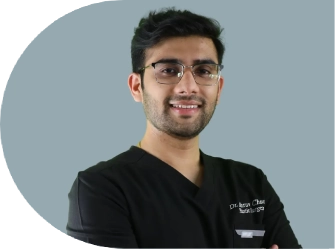
Meet Our Dermatologists

Conclusion
Your hair transplant consultation is where success begins – or where warning signs emerge that should send you running. The questions in this checklist protect you from predatory clinics, unrealistic expectations, and botched procedures requiring expensive repairs.
Ask about qualifications directly. Demand clarity on who performs each surgical step. Get detailed cost breakdowns with everything itemized. Request before-after photos matching your baldness pattern. And trust your instincts when something feels off.
At HairMD India in Pune, Dr. Sachin Pawar welcomes every question on this list and many more. His 2,500+ procedures, transparent Rs 45-50 per graft pricing, and commitment to honest medical advice set a standard other clinics should follow.
Schedule your consultation today at HairMD India. No sales pressure, no hidden fees, just expert evaluation and realistic guidance. Call +91-9584584111 or visit https://www.hairmdindia.com/contact-us to book your appointment.
Your hair restoration journey deserves to start with the right conversation. Make sure you’re having it with the right surgeon.
Further Reading
Does Cold Water Really Help Your Hair? Separating Fact From Myth
You’ve heard that rinsing with cold water makes hair shinier and stronger.
What Should I Do About Dandruff and Scalp Issues?
Dandruff, seborrheic dermatitis, scalp psoriasis, and dry scalp, they look similar but need different treatments. HairMD dermatologists explain how to identify each and what actually works.
Does Heat Damage Really Ruin Your Hair? The Science Explained
Yes, heat damage is real, and mostly permanent. HairMD explains exactly how heat ruins hair at the structural level, at what temperatures damage occurs, and how to minimise it without giving up styling.
How to Get Healthier Hair Without Expensive Treatments?
You don’t need expensive salon treatments for healthier hair. HairMD dermatologists explain what actually improves hair health, from diet and scalp care to habits that protect hair from daily damage.
Have thoughts? Please let us know
We are committed not only to treating you, but also educating you.