

How to Prevent Hair Loss: A Dermatologist’s Guide to What Actually Works?


Written by HairMD Content Team | Medically Reviewed by Dr. Dhanraj Chavan On September 30, 2026


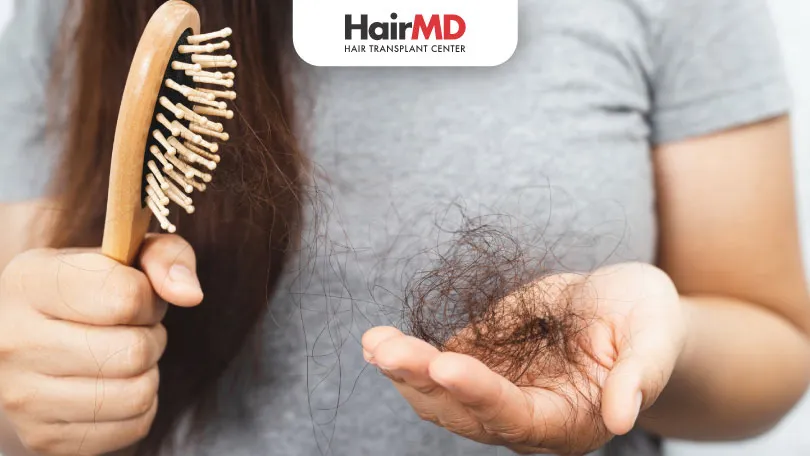
Hair loss is a widespread issue that impacts nearly one-third of people worldwide. It can be triggered by various factors, from short-term causes like stress or pregnancy to more persistent health conditions. While hair loss can feel overwhelming, the good news is there are ways to prevent it and maintain healthy hair.
Whether hair loss can be prevented depends entirely on what is causing it. Telogen effluvium (from stress, illness, nutritional deficiency, or postpartum hormonal shifts) is almost always preventable and reversible. Androgenetic alopecia (genetic pattern hair loss) cannot be prevented in the traditional sense, but its progression can be significantly slowed and delayed with early intervention. Alopecia areata is not preventable. The most effective approach is: identify the type early (before significant follicle miniaturization occurs), address the root cause (nutritional, hormonal, scalp health, or physical damage), and intervene at the follicle level with clinical support if the cause is genetic. Waiting and watching while hair continues to fall is the single most common mistake.
Summary
- Losing up to 100 hairs per day is normal (part of the telogen phase); consistent loss above this threshold, especially with visible thinning, warrants evaluation
- The hair growth cycle has three phases: anagen (active growth, 2 to 7 years), catagen (transition, 2 to 3 weeks), and telogen (resting/shedding, 3 to 4 months). Hair loss occurs when the anagen phase shortens or too many follicles enter telogen simultaneously
- Androgenetic alopecia affects approximately 50% of men by age 50 and 25 to 40% of women by age 50; genetic susceptibility cannot be changed, but progression can be slowed significantly
- Iron deficiency is the most common and most correctable cause of hair loss in Indian women; ferritin below 30 ng/mL consistently impairs hair growth
- DHT (dihydrotestosterone), the hormone that miniaturizes follicles in pattern hair loss, can be partially blocked at the scalp through clinical treatments and evidence-based supplements
- Physical damage from tight hairstyles (traction alopecia) can cause permanent follicle scarring if sustained for years; this is entirely preventable
- The treatment window matters: follicles respond far better to intervention when they are miniaturized (still alive but producing thinner hair) than when they are completely inactive
What’s covered in the article?
- Understanding Why Hair Falls: The Mechanism Behind Every Type?
- What Can and Cannot Be Prevented?
- 7 Early Warning Signs You Should Not Ignore
- Prevention by Root Cause Category
- Preventing Stress-Related Hair Loss (Telogen Effluvium)
- Preventing Physical and Mechanical Hair Loss
- Preventing DHT-Driven Androgenetic Hair Loss
- Preventing Hair Loss in Men: The Early Intervention Window
- Preventing Hair Loss in Women: The Most Commonly Missed Factors
- Scalp Health: The Foundation That Most Hair Loss Guides Skip
- When Home Prevention Is Not Enough: Knowing When to See a Dermatologist?
- HairMD Clinical Prevention and Treatment Options
- Frequently Asked Questions
- Conclusion
Understanding Why Hair Falls: The Mechanism Behind Every Type
Before prevention strategies make sense, you need to understand what is happening at the follicle level.
Each hair follicle operates on an independent cycle with three phases. In the anagen (growth) phase, lasting 2 to 7 years, the follicle actively produces the hair shaft. In the catagen (transition) phase, lasting 2 to 3 weeks, the follicle detaches from its blood supply and the hair shaft anchors at the skin surface. In the telogen (resting) phase, lasting 3 to 4 months, the follicle rests before the next anagen cycle begins. At the end of telogen, the old hair sheds as the new anagen hair pushes it out.
At any given time, approximately 85 to 90% of scalp follicles are in anagen, 1 to 2% in catagen, and 10 to 15% in telogen. Shedding up to 100 hairs per day is normal because 10 to 15% of roughly 100,000 scalp follicles are always in telogen.
Hair loss occurs through one of three mechanisms:
Telogen shift: A systemic stressor (nutritional deficiency, illness, surgery, psychological stress, hormonal change) causes a sudden increase in the number of follicles entering telogen simultaneously. Two to four months after the trigger, hair sheds in large amounts. This is telogen effluvium. It is self-limiting if the trigger is removed.
Follicle miniaturization: DHT shortens the anagen phase progressively over successive hair cycles. Each cycle produces a shorter, finer hair. Eventually the cycle is too short to produce visible hair. This is androgenetic alopecia (AGA). It is progressive but can be slowed.
Follicle destruction: Autoimmune attack (alopecia areata), chronic scalp inflammation, sustained physical tension (traction alopecia), or scarring conditions permanently damage or destroy follicles. Prevention here means avoiding the causative behaviour or treating the immune condition early.
What Is The Hair Growth Process | HairMD Pune | (In HINDI) – Pt 1
What Can and Cannot Be Prevented?
|
Hair Loss Type |
Preventable? |
What Prevention Looks Like |
|
Telogen effluvium (stress, illness, post-surgery) |
Yes, largely |
Address root cause promptly; correct nutritional deficiencies; manage stress; recovery takes 3 to 6 months |
|
Nutritional deficiency hair loss (iron, Vitamin D, zinc, protein) |
Yes, fully |
Correct the deficiency; hair recovers within 3 to 6 months of sustained adequate levels |
|
Postpartum hair loss |
Partially |
Cannot prevent hormonal shift; can minimise with nutrition and early clinical support if severe |
|
Androgenetic alopecia (AGA) |
No (genetic), but slows significantly |
Early minoxidil, finasteride (men), anti-androgen therapy (women), PRP/GFC, DHT-blocking supplements delay progression |
|
Traction alopecia |
Yes, completely |
Stop tight hairstyles; permanent damage occurs only after years of sustained tension |
|
Alopecia areata |
No |
Not preventable; manageable with treatment; early intervention prevents spreading |
|
Scarring alopecias (lichen planopilaris, frontal fibrosing alopecia) |
Not once established |
Early diagnosis and anti-inflammatory treatment prevents expansion |
|
Medication-induced hair loss |
Sometimes |
Identify causative drug with doctor; alternative drug or dosage adjustment often resolves it |
|
Scalp infection hair loss |
Yes |
Treat infection early with appropriate antifungal/antibiotic; follicles recover if treatment is prompt |
7 Early Warning Signs You Should Not Ignore
Most people wait until hair loss is visible in photos or to others before seeking evaluation. By that point, significant follicle miniaturization has already occurred. These signs warrant evaluation before that point:
Wider part line than 6 to 12 months ago, even without obvious thinning. More hair on the pillow, in the shower drain, or on clothing than was normal for you previously. Scalp visible through the crown when hair is in natural light. Hair feels thinner in diameter or texture even if the amount seems the same. Hairline receding at the temples or frontal area (in men). Excessive shedding that began 2 to 4 months after a stressful event, illness, surgery, or significant dietary change. Hair that used to grow long is breaking mid-shaft or growing more slowly.
Any of these, especially more than one, is a signal to see a dermatologist for trichoscopy and blood panel, not to wait and see.
Prevention by Root Cause Category
Preventing and Reversing Nutritional Hair Loss
Nutritional deficiency is the most common and most correctable cause of hair loss in India, particularly in women. The follicle is metabolically demanding and among the first tissues to be rationed when the body faces a nutritional shortfall.
Iron (ferritin): The most clinically significant nutritional factor for hair. Serum ferritin below 30 ng/mL consistently impairs follicle function, even when haemoglobin is normal. Indian women are at high risk due to menstrual blood loss and low dietary iron. Target ferritin above 50 ng/mL for hair health. Iron-rich foods: lentils, spinach, rajma, sesame seeds, jaggery, organ meats. Pair with Vitamin C (lime, amla) to increase absorption.
Protein: Hair is composed primarily of keratin, a fibrous protein. Insufficient dietary protein directly reduces the raw material available for hair shaft production. In crash diets or very low calorie diets, the body deprioritizes hair protein synthesis. Target 1.2 to 1.6 g of protein per kilogram of body weight daily. Sources: dals, paneer, eggs, chicken, Greek yoghurt, legumes.
Vitamin D: Vitamin D receptors are expressed in hair follicles and play a role in regulating the hair cycle. Deficiency is associated with both telogen effluvium and alopecia areata. Target serum 25-OH Vitamin D above 30 ng/mL. Supplementation: 2000 to 4000 IU daily in most deficient adults; adjust based on blood levels.
Zinc: A cofactor in keratin synthesis and a mild 5-alpha-reductase inhibitor. Deficiency causes shedding; excess can also cause hair loss. Target serum zinc 70 to 120 mcg/dL. Sources: pumpkin seeds, sesame, lentils, dairy. Supplement only if deficient.
Biotin (Vitamin B7): Widely marketed for hair loss but only relevant when deficiency is present. True biotin deficiency is rare in people eating a varied diet. If you are taking biotin, note that it interferes with thyroid blood test results; inform your doctor.
B12 and folate: Deficiency causes anemia that reduces oxygen delivery to follicles, impairing anagen phase duration. Common in vegetarians. Supplement if deficient; food sources include dairy, eggs, fortified cereals.
Dr. Dhanraj Chavan, Dermatologist at HairMD: “One of the most frequent presentations I see is women who have been shedding for 6 months and assume it is stress. When we run the blood panel, ferritin is at 8 or 12 ng/mL, Vitamin D is deficient, and protein intake is below 40 grams a day. All three together are a triple trigger for hair loss, and every single one is correctable. The hair recovers, often without any clinical intervention, once the nutritional deficit is addressed. The critical point is not guessing; it is running the tests.”
Psychological and physiological stress triggers hair loss through the HPA (hypothalamic-pituitary-adrenal) axis. Elevated cortisol signals follicles to exit anagen prematurely and enter telogen. The shedding that follows appears 2 to 4 months after the stressor, which is why many patients cannot connect it to a cause: the event that triggered the loss happened months before the shedding began.
Prevention involves three elements:
Identify and remove the stressor where possible. Where not possible (illness, surgery, bereavement), focus on minimising collateral damage through nutrition and sleep.
Maintain nutritional reserves during stressful periods. The body will redirect limited resources away from hair. Keeping iron, protein, and Vitamin D levels optimal during a stressful period significantly reduces the severity of the subsequent shedding.
Treat the scalp and follicles clinically if shedding is severe. Mesotherapy and PRP during or after a significant stressful period reduces telogen shift severity and accelerates recovery.
Preventing Physical and Mechanical Hair Loss
Traction alopecia is entirely preventable and entirely self-inflicted. It results from sustained tension on the hair shaft from tight ponytails, buns, braids, hair extensions, or weaves. The tension is transmitted to the follicle, which responds by entering telogen. Continued tension over months to years causes permanent follicular scarring, particularly at the frontal hairline and temples.
Prevention is simple: avoid hairstyles that create a pulling sensation at the scalp. If you regularly wear your hair in a tight style and notice redness, papules, or hair loss at the hairline, change the style immediately. The damage is still reversible at this stage. Once scarring occurs, it is not.
Heat damage from styling tools above 180°C destroys the disulfide bonds in the hair cortex, causing breakage rather than true follicular loss. The follicle is not damaged; the shaft is. Prevention: use heat tools at the lowest effective temperature (150 to 165°C for most hair types), always use a heat protectant, and limit styling frequency to 2 to 3 times per week at most.
Over-brushing wet hair is the single most common daily cause of unnecessary hair breakage. Wet hair has significantly reduced tensile strength. Detangle gently with a wide-tooth comb, starting from the ends, not the roots.
Preventing DHT-Driven Androgenetic Hair Loss
Androgenetic alopecia (AGA) cannot be prevented if you have the genetic predisposition. The relevant androgen receptor sensitivity in the follicles of the crown and frontal scalp is inherited. What can be done is to slow the miniaturization significantly, delay the point at which hair density becomes noticeably reduced, and in many cases, partially reverse miniaturization in follicles that are still active.
Early intervention is the most powerful lever. A follicle that is miniaturizing (still producing hair, but thinner and shorter) responds much better to treatment than a follicle that has been completely inactive for years. Starting at Norwood Stage II or III in men, or Ludwig Grade I in women, typically yields far better long-term outcomes than starting at Stage V or Grade II.
What slows AGA progression:
Minoxidil (topical or low-dose oral): Opens KATP channels, increases scalp blood flow, prolongs the anagen phase. Works independently of the genetic mechanism. Most effective when started early.
Finasteride (oral, men only): Blocks 5-alpha-reductase type II, reducing scalp DHT by approximately 70%. Slows and in many cases partially reverses miniaturization. Not appropriate for women of childbearing potential.
Anti-androgen therapy in women: Spironolactone, oral contraceptives with anti-androgenic progestins, and topical anti-androgens reduce free androgen activity at the follicle.
DHT-reducing supplements: Saw palmetto (5-alpha-reductase inhibition), pumpkin seed oil (emerging evidence for 5-alpha-reductase inhibition), zinc (competitive 5-alpha-reductase inhibitor). These are adjuncts, not replacements for medical therapy.
Clinical treatments (PRP, GFC, mesotherapy): These do not block DHT but directly stimulate miniaturized follicles with growth factors, extending their anagen phase and increasing shaft diameter. Used alongside DHT-blocking therapy, they produce significantly better outcomes than either approach alone.
Learn About Male Hair Loss Conditions | Learn About Female Hair Loss Conditions
Preventing Hair Loss in Men: The Early Intervention Window
Men with a family history of male pattern baldness (either parent, any grandparent) should begin monitoring their hairline and crown density from their mid-20s. The most effective prevention window for AGA in men is Norwood Stage I to III, before significant density loss has occurred.
Practical steps:
Photograph your hairline and crown under consistent lighting every 6 months. A widening recession or density change across these photos is an early signal.
Start minoxidil 5% topical as soon as progressive recession is suspected. Earlier start = more follicles preserved.
Discuss finasteride with a dermatologist if progression continues despite minoxidil. It is most effective in men under 40, when more follicles are still miniaturizing rather than inactive.
Maintain iron, zinc, and Vitamin D levels. Even in predominantly genetic hair loss, nutritional deficiencies accelerate the process.
Avoid harsh shampoos, tight hairstyles that stress the hairline, and excessive heat styling.
Preventing Hair Loss in Women: The Most Commonly Missed Factors
Women’s hair loss is more diagnostically complex because multiple causes frequently overlap. The most common oversight is treating one factor (usually iron) while a second or third factor continues to drive loss.
The most frequently missed causes in Indian women:
Iron deficiency, often subclinical (ferritin low but haemoglobin normal). Always test ferritin specifically, not just haemoglobin or total iron.
Thyroid dysfunction (both hypothyroid and hyperthyroid cause hair loss; hashimoto’s is particularly common in India). Test TSH, Free T3, Free T4.
PCOS-related androgen excess. Elevated free testosterone and low SHBG cause follicle miniaturization in the Ludwig pattern. Check if hair loss is accompanied by irregular periods, acne, or facial hair growth.
Postpartum hormonal shift. Oestrogen drops after delivery, causing widespread telogen shift at months 3 to 6 postpartum. Manageable with nutritional support and clinical intervention; resolves within 6 to 12 months if addressed.
Perimenopause and menopause. Declining oestrogen accelerates androgen-driven follicle miniaturization. Women over 40 with progressive crown thinning should always have a hormonal panel.
Learn About Female Hair Loss at HairMD | See Female Hair Loss Before and After Results
Scalp Health: The Foundation That Most Hair Loss Guides Skip
A chronically inflamed, infected, or congested scalp is not a neutral environment for hair follicles. Scalp health is a preventable factor that directly affects follicle function.
Seborrhoeic dermatitis and dandruff: Malassezia yeast overgrowth on the scalp drives inflammation in the follicular opening, contributing to reactive telogen effluvium in susceptible individuals. Managed with zinc pyrithione, selenium sulphide, ketoconazole, or piroctone olamine shampoos. Consistent scalp hygiene and pH-balanced products (4.5 to 5.5) maintain the antimicrobial acid mantle.
Scalp congestion from product buildup: Heavy oils, pomades, dry shampoo residue, and silicone buildup occlude follicular openings and create a breeding ground for bacteria and yeast. Regular clarifying washes remove buildup before it becomes chronic.
Scalp pH: The scalp’s natural pH is 4.5 to 5.5. Most budget shampoos have a pH of 6 to 8. Chronic exposure to alkaline products disrupts the acid mantle, promotes Malassezia, and drives low-grade scalp inflammation. Use pH-balanced shampoos.
Scalp massage: 5 minutes of daily gentle scalp massage increases blood flow and dermal papilla stimulation. A 2019 study in ePlasty found measurable increases in hair shaft thickness over 24 weeks with 4 minutes of daily massage. Use fingertips, not nails; oil is not required for the benefit.
When Home Prevention Is Not Enough: Knowing When to See a Dermatologist?
Home-based prevention (nutrition, scalp care, gentle physical handling, stress management) is sufficient for telogen effluvium and early nutritional hair loss. It is not sufficient for:
Progressive androgenetic alopecia beyond Stage I/Grade I. Once DHT-driven miniaturization is underway, it does not self-correct without clinical or pharmacological intervention.
Hair loss that has not responded after 3 months of correcting identified nutritional deficiencies. This suggests either the deficiencies were not the primary driver, or an additional cause is operating simultaneously.
Patchy hair loss, scalp scaling, pustules, or pain at the scalp. These suggest alopecia areata, folliculitis, or scarring alopecia, all requiring specific medical treatment.
Rapid or severe shedding (more than 300 to 400 hairs per day). Severe telogen effluvium that is not self-limiting needs investigation for an ongoing systemic trigger.
Hair loss accompanied by symptoms in other systems (fatigue, weight change, irregular periods, joint pain). These point to systemic conditions that need their own management.
HairMD Clinical Prevention and Treatment Options
Clinical treatments are not just for people who have already lost significant hair. They are also used proactively to support and maintain follicles in people with genetic predisposition or early-stage loss.
|
Situation |
Recommended Treatment at HairMD |
What It Does |
|
Nutritional hair loss (confirmed deficiency) |
Blood panel correction + Mesotherapy |
Provides direct follicle nutrition while systemic levels are being restored |
|
Early AGA (men, Norwood I-II) |
PRP therapy + minoxidil |
Growth factors prolong anagen in miniaturizing follicles; minoxidil maintains blood supply |
|
Early AGA (women, Ludwig I) |
GFC therapy + hormonal management |
Concentrated growth factors support follicles alongside anti-androgen or OCP therapy |
|
Postpartum hair loss (3 to 9 months post-delivery) |
Mesotherapy + nutritional correction |
Supplies follicle nutrients during hormonal recovery; reduces shed severity and duration |
|
Scalp inflammation (seborrhoeic dermatitis with shedding) |
Dermatologist consultation + scalp treatment |
Identifies and removes the inflammatory trigger; may combine medicated scalp therapy |
|
Moderate AGA with significant thinning |
GFC + Exosome therapy + medications |
Advanced follicle regeneration for follicles that have not yet crossed into irreversible inactivity |
|
Advanced AGA where follicles are inactive |
FUE Hair Transplant + PRP |
Restores permanent hair in areas where follicles cannot regenerate; PRP supports transplanted grafts |
|
Traction alopecia (early, inflammation stage) |
Dermatologist consultation + PRP |
Reduces inflammation, supports follicle survival before scarring occurs |
250+ patients visit HairMD daily across 7 Pune centres. 25+ years of experience. 4,157+ successful hair transplants. Our dermatologists use trichoscopy and blood panel review to determine the exact driver of your hair loss and build a prevention or treatment plan matched to your specific situation.
Frequently Asked Questions
How many hairs falling per day is normal?
Losing 50 to 100 hairs per day is within the normal range, as approximately 10 to 15% of scalp follicles are always in the telogen (resting/shedding) phase. Hair counted in the shower drain, on your pillow, or when you brush looks alarming in aggregate but is largely normal. Concern is warranted when the daily loss is consistently above 100 hairs, when the pattern of loss changes (more from a specific zone rather than distributed), or when you can visibly see scalp through your hair that was not visible before. A trichoscopy examination at a dermatology clinic gives a precise picture within 15 minutes.
Can hair loss be prevented if it runs in the family?
Genetic androgenetic alopecia cannot be prevented in the sense of never occurring. The follicle sensitivity to DHT is inherited and present regardless of lifestyle. However, onset can be significantly delayed and progression meaningfully slowed with early intervention. Men with a strong family history who start minoxidil at early Norwood stages and maintain good nutritional status frequently maintain much better density into their 40s and 50s than the family history would suggest. The genetic predisposition sets the ceiling; early intervention raises what is achievable within that ceiling.
Does oiling the hair prevent hair loss?
Hair oiling prevents hair shaft damage (breakage) and may improve scalp microcirculation when massaged in. It does not prevent follicular hair loss driven by DHT, hormonal imbalance, or nutritional deficiency. The beneficial effect is on shaft condition and scalp blood flow, not on the underlying driver of follicle loss. Non-comedogenic oils (jojoba, argan, rosemary at 2%) applied in small quantities and washed out within 1 to 2 hours are the safest approach. Leaving heavy oils (mineral oil, coconut oil in warm humid conditions) on the scalp for extended periods can worsen Malassezia overgrowth.
At what age does hair loss start and when should I start prevention?
Androgenetic alopecia can begin as early as the late teens in men with a strong genetic predisposition, though the 20s and 30s are the most common onset period. In women, onset is typically in the 30s to 40s, with acceleration around perimenopause. Prevention should begin as soon as the earliest signs appear, not at a specific age. For men with family history, being aware and monitoring from the mid-20s is sensible. For women, any progressive change in part width or crown density should prompt evaluation regardless of age.
Does diet affect hair loss?
Diet affects hair loss significantly when nutritional deficiencies are present, and less so when nutritional status is adequate. Iron, protein, Vitamin D, zinc, and B12 are the nutrients with the most consistent clinical evidence for affecting hair growth. A well-nourished person switching to a “hair-healthy” diet will not see dramatic changes because the follicles are already receiving adequate nutrition. A nutritionally depleted person correcting their diet will see meaningful improvement over 3 to 6 months. The clinical threshold matters: ferritin below 30 ng/mL consistently impairs follicle function; above 50 ng/mL consistently supports it.
How long does it take to see results from hair loss prevention?
Results from nutritional correction are visible at 3 to 6 months, as that is the duration of one hair growth cycle from follicle activation to visible hair emergence. Minoxidil shows initial shedding (normal, called telogen release) in the first 4 to 8 weeks, with new growth visible at 3 to 6 months and maximal results at 12 months. PRP and GFC sessions show trichoscopy-measurable improvement from session 3 to 4 (weeks 8 to 12) and clinically visible improvement at 4 to 6 months. Hair biology is slow; impatience at the 6-week mark is premature. Consistency over 12 to 18 months is the correct frame for evaluating prevention or treatment effectiveness.
Choose HairMD For A Permanent Solution
About HairMD-Hair Transplant Centre, India
DO YOU KNOW?
Nearly 250 Patients Visit HairMD
Everyday For Various Hair Concerns
(20+ Years Of Expertise. 4157+ Successful Hair Transplant at HairMD)
Meet Our Dermatologists





Conclusion
Preventing hair loss is not a single action; it is a matched response to whatever is causing the loss. The most important steps are: identify the cause early, do not assume it is just stress or aging without blood work, address the root cause specifically rather than generically, and support the follicles clinically if the cause is genetic or the loss has already progressed.
The 100-hair-per-day normal range is a starting point, not a ceiling. If your shedding has changed, your part has widened, or your density feels different to you, trust that observation and get it evaluated. Early intervention, whether lifestyle, nutritional, pharmacological, or clinical, consistently outperforms late intervention in every category of hair loss.
At HairMD Pune, our team of dermatologists evaluates both the presenting hair loss and its root causes in the same consultation, using trichoscopy, blood work review, and full patient history. We treat patients across all stages, from early prevention consultations to advanced restoration. With 7 centres across Pune and 250+ patients seen daily, you have access to expert evaluation and treatment close to where you are.
Further Reading
Do Dermatologists Recommend Inositol and Choline for Hair Loss?
Discover the potential of inositol and choline for hair loss. Learn how these nutrients may benefit follicle health & prevent thinning.
Finding the Right Doctor for Hair Loss Solutions
Searching for What Kind of Doctor Treats Hair Loss? Learn how dermatologists at Hairmd diagnose the cause & offer proven treatments for hair thinning.
Stop Hair Thinning: Best Practices for Hair Loss Control
Discover effective tips to stop hair fall and boost hair growth with simple lifestyle changes, proper hair care routines, and proven treatments. Boost hair health with HairMD.
How to Treat PCOS Hair Loss ? – A Comprehensive Guide
Discover effective ways on how to treat PCOS hair loss naturally and medically. Get expert-backed advice for managing PCOS-related hair loss.
Have thoughts? Please let us know
We are committed not only to treating you, but also educating you.