

Redensyl vs Minoxidil vs GFC for Hair Loss: Which One Is Right for You?


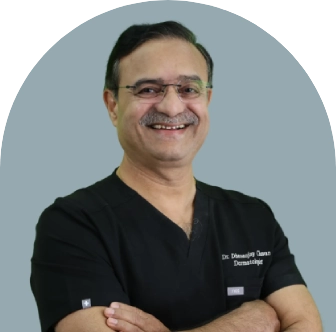
Written by HairMD Content Team | Medically Reviewed by Dr. Dhanraj Chavan On October 21, 2026



Choosing between Redensyl, Minoxidil, and GFC therapy can be confusing when each promises to support hair growth. However, they work differently and have different levels of clinical evidence. Understanding their benefits, limitations, side effects, and suitability can help you make a more informed decision about hair loss treatment.
Minoxidil is the most evidence-backed topical treatment for androgenetic alopecia, supported by decades of clinical trials and international dermatology guidelines. Redensyl is a newer patented compound that targets follicle stem cells and is a reasonable low-risk complement for early cases. GFC (Growth Factor Concentrate) is a clinical injection procedure, not a serum, and is typically used when topicals alone are insufficient or to accelerate follicle recovery. For most people with moderate hair loss, a dermatologist-guided combination is more effective than any single option used alone.
At a Glance
|
Feature |
Redensyl |
Minoxidil |
GFC Therapy |
|
Type |
Topical serum ingredient |
Topical or oral drug |
In-clinic injection |
|
FDA approved |
No |
Yes |
No (autologous therapy) |
|
Evidence base |
1 study (2014, 26 subjects) |
40+ years of RCTs |
Growing clinical evidence |
|
Works for AGA |
Possibly (mild/early) |
Yes |
Yes |
|
Works for TE |
Limited evidence |
Limited benefit |
Yes |
|
Side effects |
Minimal |
Scalp dryness, initial shed |
Mild injection site tenderness |
|
OTC available |
Yes (in serums) |
Yes |
No |
|
Requires dermatologist |
No |
Recommended |
Yes |
|
Monthly cost |
Rs. 500 to 1,200 |
Rs. 400 to 900 |
Rs. 9,000 to 12,000 per session |
Walk into any pharmacy in Pune today and you will find hair serums that list all three ingredients: redensyl, minoxidil, and claims about growth factor complexes. Open a dermatology forum and the debates are endless. Ask a dermatologist, and the answer will depend entirely on your diagnosis.
This article explains what each treatment actually is, how the evidence compares, who each option is genuinely appropriate for, and how dermatologists at HairMD approach combining them for better outcomes.
Not sure which treatment fits your hair loss type? The right choice depends on your diagnosis, not which ingredient is trending. Book a trichoscopy evaluation at HairMD today. Call or find us on Google Maps.
What’s covered in the article?
- What Is Redensyl?
- What Is Minoxidil?
- What Is GFC Therapy?
- Side Effects Comparison
- Who Should Use Which Treatment?
- Can You Combine These Treatments?
- What Dermatologists at HairMD Recommend?
- When You Need More Than a Topical?
- Treatment at HairMD
- Summary
- Frequently Asked Questions
- Conclusion
What Is Redensyl?
Redensyl is a patented hair care compound developed by Givaudan and introduced in 2014. It is not a single ingredient but a complex containing two key molecules:
- DHQG (dihydroquercetin-glucoside): A plant-derived compound that acts on LRIG1-positive stem cells in the outer root sheath of the hair follicle. These cells are involved in activating follicle re-entry into the growth phase.
- EGCG2 (epigallocatechin-gallate-glucoside): An antioxidant derived from green tea that targets dermal papilla cells, which regulate the hair cycle, and reduces follicle inflammation.
What the Research Shows?
Redensyl’s primary clinical evidence comes from a manufacturer-sponsored study involving 26 subjects over 84 days. The study reported a 17% reduction in hair loss and a 9% increase in the proportion of hairs in the anagen (growth) phase compared to a placebo group.
This evidence is preliminary by clinical standards. The sample is small, the study duration is short, and independent large-scale replication is limited. Redensyl is regulated as a cosmetic ingredient, not a drug, in most markets. That does not make it useless, but it means it should be viewed as a complementary cosmetic option rather than a replacement for clinically validated treatments.
What Is The Hair Growth Process | HairMD Pune | (In HINDI) – Pt 1
What Is Minoxidil?
Minoxidil is the most extensively studied topical treatment for androgenetic alopecia. Originally developed as an oral blood pressure medication in the 1970s, it received FDA approval for topical hair loss use in 1988 after patients on the oral version were observed growing hair in unexpected areas.
How It Works?
Minoxidil prolongs the anagen (active growth) phase of the hair cycle and dilates blood vessels around the follicle, improving oxygen and nutrient delivery to follicle cells. It does not block DHT directly, but compensates for follicle miniaturization by stimulating follicle activity at the cellular level.
It is available in 2% and 5% topical solutions and foams, and more recently in low-dose oral form (0.25mg to 2.5mg), which is increasingly used when topical application causes scalp irritation or is impractical.
The evidence base spans hundreds of randomized controlled trials across tens of thousands of patients. Minoxidil is the first-line topical treatment in international dermatology guidelines for androgenetic alopecia.
What Is GFC Therapy?
GFC (Growth Factor Concentrate) is a clinical hair restoration procedure in which a sample of the patient’s own blood is processed to concentrate a specific set of growth factors, which are then injected into the scalp at follicle depth.
It is sometimes described as an advanced form of PRP (Platelet Rich Plasma), but there are meaningful differences. PRP separates plasma and platelets from blood and reintroduces the platelet-rich layer. GFC uses a specialized kit to isolate and concentrate specific growth factors (primarily PDGF, VEGF, EGF, and FGF) at a higher concentration than standard PRP achieves.
GFC vs PRP: Which Is Better for Reducing Hair Fall?
How GFC Works for Hair Loss
The concentrated growth factors, injected at follicle level, signal dermal papilla cells to shift from the resting phase back into the growth phase. They promote new blood vessel formation around the follicle and reduce the inflammatory signaling that accelerates follicle miniaturization in AGA.
GFC is not a one-time procedure. A standard course involves 4 to 6 sessions spaced 4 to 6 weeks apart, followed by maintenance sessions every 3 to 6 months depending on clinical response.
Side Effects Comparison
Redensyl
- Generally well-tolerated with minimal side effects in most users
- Occasional scalp irritation or redness in individuals with sensitive skin
- No systemic side effects at cosmetic concentrations
- Low risk profile is part of its appeal as a complementary option
Minoxidil
- Initial shedding (telogen effluvium) in weeks 2 to 6 — temporary and expected, indicating follicle turnover
- Scalp dryness and irritation, particularly with alcohol-based formulations
- Unwanted facial or body hair growth in women using higher concentrations
- Rare systemic effects with oral formulation (fluid retention, palpitations)
- Must be continued indefinitely; regrowth reverses within 3 to 6 months of stopping
GFC Therapy
- Mild injection site tenderness and swelling for 24 to 48 hours post-procedure
- Very low risk of infection when performed in a sterile clinical setting by a trained practitioner
- No systemic side effects (uses the patient’s own blood)
- Occasional temporary shedding in the weeks following the first session, which resolves
Who Should Use Which Treatment?
Redensyl May Be Appropriate When:
- Hair loss is mild and early, with no confirmed pattern hair loss diagnosis
- You want a low-risk addition to an existing routine
- You cannot tolerate minoxidil due to scalp sensitivity or irritation
- You prefer a cosmetic-level approach as a starting point while monitoring progress
Minoxidil Is More Appropriate When:
- You have confirmed androgenetic alopecia (male or female pattern hair loss)
- Hair loss is progressing and a clinically validated topical intervention is needed
- A dermatologist has recommended it based on trichoscopy findings
- You want the most evidence-supported OTC topical option available
GFC Is More Appropriate When:
- Topical treatments alone have not produced adequate results after 6 to 12 months
- Hair loss is moderate to significant (Norwood Grade 3 to 4 in men, Ludwig Grade 1 to 2 in women)
- You want to accelerate the regrowth phase during recovery from telogen effluvium
- You are in the maintenance phase after a hair transplant
- You are looking for a clinical treatment that works alongside topical therapy
Can You Combine These Treatments?
Yes, and combination approaches are standard in practice:
Minoxidil + GFC: The most widely used clinical combination for androgenetic alopecia at HairMD. Minoxidil maintains follicle activity topically while GFC stimulates growth factor signaling at a deeper level. The two mechanisms complement each other without pharmacological conflict.
Redensyl + Minoxidil: Many commercial serums combine both. There is no known incompatibility. The overall clinical effect is primarily driven by the minoxidil component in terms of evidence.
Redensyl + GFC: Used in some protocols where patients prefer to reduce or avoid minoxidil. Redensyl provides topical support while GFC handles the clinical stimulation at follicle level.
The right combination depends on the type and severity of your hair loss, your response to individual treatments, and your dermatologist’s assessment.
What Dermatologists at HairMD Recommend?
Dr. Dhanraj Chavan, senior dermatologist at HairMD, explains the clinical decision-making process: “When a patient asks me whether they should be using redensyl, minoxidil, or GFC, my first response is always to get a trichoscopy done. Because the answer is completely different for someone with early diffuse shedding versus someone with Grade 2 androgenetic alopecia who has been losing ground for two years. Redensyl is a reasonable low-risk cosmetic addition for early cases. Minoxidil is still the first-line clinical topical for AGA. And GFC is what I reach for when topicals are not enough on their own, or when I need to accelerate regrowth in a patient recovering from telogen effluvium. The mistake I see most often is patients spending money on expensive multi-ingredient serums when they have not been diagnosed yet.”
Using a serum with redensyl, minoxidil, and three other ingredients and still losing hair? A trichoscopy at HairMD shows what is actually happening at follicle level. Clinics in Aundh, Baner, Kothrud, Wakad, Viman Nagar, Hadapsar, and Pimple Saudagar. HairMD today.
When You Need More Than a Topical?
Both redensyl and minoxidil are topical interventions. They work best in early to moderate androgenetic alopecia and can help maintain hair density over time. There are situations where topical-only approaches are insufficient:
- Moderate to advanced AGA with significant follicle miniaturization visible on trichoscopy
- Cases where topicals have been used correctly for 12 months without adequate response
- Hair loss that continues to progress despite consistent minoxidil use
- Post-transplant recovery where follicle stimulation supports graft establishment
In these situations, GFC adds a clinical dimension that topical serums cannot replicate. For very advanced cases where follicles are no longer present in affected zones, a hair transplant evaluation is the appropriate next step.
Treatment at HairMD
At HairMD, the decision between redensyl, minoxidil, and GFC is never made on trend or preference alone. It is based on trichoscopy findings, blood panel results, and the specific type and progression stage of hair loss.
A standard evaluation includes dermoscopic scalp assessment to visualize follicle health and miniaturization, a targeted blood panel to rule out nutritional or hormonal contributors, and a treatment plan that may include a combination of topical and in-clinic options based on what the diagnosis shows
Your Hair Loss Assessment at HairMD
Step 1: Visit any HairMD clinic across Pune — Aundh, Baner, Kothrud, Wakad, Viman Nagar, Hadapsar, or Pimple Saudagar.
Step 2: Get a trichoscopy and targeted blood panel with Dr. Dhanraj Chavan to confirm your hair loss type and stage.
Step 3: Start a treatment plan built on your diagnosis, not on what is trending.
Summary
Redensyl is a low-risk cosmetic ingredient with early-stage supporting evidence, appropriate as a complementary option or for mild cases. Minoxidil is the most evidence-backed topical treatment for androgenetic alopecia and remains the first-line clinical recommendation for pattern hair loss.
GFC therapy is an in-clinic procedure that works at a level topicals cannot reach, appropriate for moderate cases, for accelerating telogen effluvium recovery, or alongside topical treatments for better outcomes. The right approach for any individual is determined by diagnosis, not by which ingredient is most prominent on a serum label at a given time.
Frequently Asked Questions
Is redensyl as effective as minoxidil for hair regrowth?
Redensyl has limited clinical evidence from one small manufacturer-sponsored study, while minoxidil has been studied in hundreds of randomized controlled trials over four decades. For confirmed androgenetic alopecia, minoxidil has a significantly more robust evidence base. Redensyl may be appropriate as an early-stage option or as a complementary addition to an existing routine.
Can I use redensyl and minoxidil together?
Yes. Many commercial hair serums already combine both ingredients. There is no pharmacological incompatibility between them. The clinical evidence weight in such combinations is primarily carried by the minoxidil component. Using both together is a reasonable approach when recommended by a dermatologist.
How many GFC sessions are needed to see results?
A standard GFC course typically involves 4 to 6 sessions spaced 4 to 6 weeks apart. Improvement in shedding is often noticed after the second or third session. Visible regrowth typically becomes apparent after completing the initial course. Maintenance sessions every 3 to 6 months help sustain results.
Is GFC therapy safe? Does it have side effects?
GFC uses the patient’s own blood, which significantly reduces the risk of allergic or immunological reactions. The most common effects are mild tenderness and swelling at injection sites for 24 to 48 hours post-procedure. Serious complications are rare when the procedure is performed in a sterile clinical setting by a trained dermatologist.
Which is more cost-effective: minoxidil or GFC?
Minoxidil has a lower monthly cost (approximately Rs. 400 to 900) compared to GFC sessions (approximately Rs. 3,000 to 8,000 per session). However, GFC is not typically used as a replacement for minoxidil but as a clinical addition when topical-only approaches are insufficient. The cost question depends on what the clinical situation requires, not on a price comparison alone.
Does redensyl work for female hair loss?
Redensyl has not been studied specifically in female pattern hair loss populations. The existing study included subjects with unspecified hair loss across both sexes. For women with confirmed female androgenetic alopecia, minoxidil (2% as a starting point) remains the validated topical option. Redensyl may be used as a complementary addition.
Can GFC replace a hair transplant?
No. GFC stimulates existing follicles and helps maintain density in zones where follicles are weakened but still present. It cannot grow new hair in areas where follicles are permanently absent. For areas of complete follicle loss, a hair transplant evaluation is the appropriate next step. GFC is frequently used after transplant to support graft establishment and recovery.
How do I know which of these is right for me?
The right treatment depends on your hair loss type (androgenetic alopecia vs telogen effluvium vs other), its severity and rate of progression, your nutritional status, and your response to any treatments already tried. A trichoscopy evaluation at HairMD provides this clarity in a single appointment, without guesswork.
About HairMD-Hair Transplant Centre, India
DO YOU KNOW?
Nearly 250 Patients Visit HairMD
Everyday For Various Hair Concerns
(20+ Years Of Expertise. 4157+ Successful Hair Transplant at HairMD)
Meet Our Dermatologists


Conclusion
Redensyl, Minoxidil, and GFC therapy serve different purposes in hair loss management. Redensyl may be a complementary option for early hair thinning, Minoxidil has stronger clinical evidence for androgenetic alopecia, and GFC is an in-clinic treatment that may be considered alongside other therapies. No single option is best for everyone.
The right treatment depends on the cause and severity of hair loss, the condition of your hair follicles, and your response to previous treatments. A dermatologist can assess your scalp, identify the underlying problem, and recommend a suitable treatment plan.
Still experiencing hair fall despite using serums or treatments? Scalp assessment at HairMD Pune to understand your hair loss and discuss suitable treatment options.
Further Reading
How to Prevent Hair Loss: The Ultimate Guide
Explore the ultimate guide to preventing hair loss and maintaining healthy, strong hair.
Do Dermatologists Recommend Inositol and Choline for Hair Loss?
Discover the potential of inositol and choline for hair loss. Learn how these nutrients may benefit follicle health & prevent thinning.
Finding the Right Doctor for Hair Loss Solutions
Searching for What Kind of Doctor Treats Hair Loss? Learn how dermatologists at Hairmd diagnose the cause & offer proven treatments for hair thinning.
Stop Hair Thinning: Best Practices for Hair Loss Control
Discover effective tips to stop hair fall and boost hair growth with simple lifestyle changes, proper hair care routines, and proven treatments. Boost hair health with HairMD.
Have thoughts? Please let us know
We are committed not only to treating you, but also educating you.