

Is Hair Loss One of the Side Effects of Anastrozole?


Written by HairMD Content Team | Medically Reviewed by Dr. Dhanraj Chavan On July 25, 2023


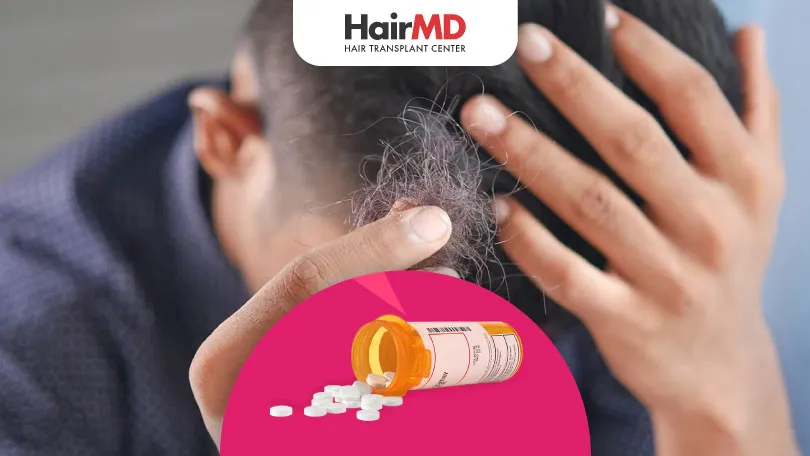
Thus understanding the term becomes very important. We shed 50-100 strands of hair each day as a part of the natural hair growth cycle consisting of three phases- growth, rest and fall. In this cycle, the old hair is replaced by new ones. However, any disturbance in this cycle leads to excessive hair loss. It decreases your self-confidence. Continue with the blog to know the connection between anastrozole and hair loss.
What’s covered in the article?
- What is Anastrozole?
- Does Anastrozole Cause Hair Loss?
- How to Treat Anastrozole and Hair Loss?
- Conclusion
What is Anastrozole?
Anastrozole is a drug that is prescribed to female patients suffering from breast cancer after menopause or the permanent end of the menstrual cycle. The drug reduces the overall levels of estrogen in the body. This leads to hair thinning and alopecia. Let’s move forward to know the truth.
Does Anastrozole Cause Hair Loss?
Yes, anastrozole may indeed lead to hair loss due to its estrogen lowering effects. The treatment, if continued for a year, may lead to thinning of hair followed by hair fall. It is highly unlikely for the treatment to result in complete baldness. Anastrozole is an effective treatment when it comes to treating breast cancer however, it may lead to gradual thinning of hair followed by hair loss. The drug lowers the level of estrogen that is required by the tumours to grow. It decreases the production of estrogen.
How to Treat Anastrozole and Hair Loss?
If you wish to treat loss of hair due to anastrozole drug then pursue the following ways-
- Minoxidil
Apply topical minoxidil solution to your scalp to prevent major hair loss and observe hair growth.
- Vitamin C
Vitamin C helps in hair regrowth and reduces hair loss due to Anastrozole.
- Omega Fatty Acids
Omega 3 and 6 fatty acids help maintain healthy scalp health with the help of antioxidant properties that assists in treating hair loss due to low estrogen levels in the body.
DO YOU KNOW?
Nearly 250 Patients Visit HairMD
Everyday For Various Hair Concerns
(15+ Years Of Expertise. 4157+ Successful Hair Transplant)
Meet Our Dermatologists


Conclusion
Further Reading
What is FUE Hair Transplant? Everything You Need to Know
Discover FUE hair transplant: procedure, pain management, costs, and expert insights from HairMD, Pune. Get the facts in one place
Hair Transplant Cost in Pune for 2026
Find affordable 2026 hair transplant costs in Pune with expert results by Dr. Dhanaraj Chavan. Transparent pricing and flexible payments.
Does Cold Water Really Help Your Hair? Separating Fact From Myth
You’ve heard that rinsing with cold water makes hair shinier and stronger.
What Should I Do About Dandruff and Scalp Issues?
Dandruff, seborrheic dermatitis, scalp psoriasis, and dry scalp, they look similar but need different treatments. HairMD dermatologists explain how to identify each and what actually works.
Have thoughts? Please let us know
We are committed not only to treating you, but also educating you.