

Scalp Eczema vs Psoriasis: Key Differences & Treatments Explained


Written by HairMD Content Team | Medically Reviewed by Dr. Dhanraj Chavan On January 09, 2024


What’s covered in the article?
- Scalp Eczema vs. Psoriasis: Know the Difference
- Conclusion
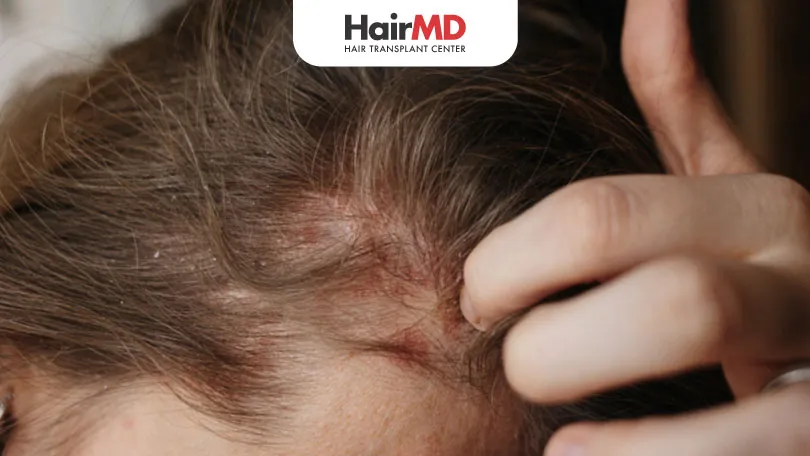
Scalp Eczema vs. Psoriasis: Know the Difference
|
Scalp Eczema |
Psoriasis |
| Scalp eczema is caused by genetic and environmental factors. | Psoriasis is an autoimmune disease, which causes the skin cells to grow fast. |
| Eczema can affect any region of the skin, but more commonly on hands and legs. | Psoriasis mostly affects the scalp region, the elbows, knees, palms, soles and back. |
| Heat exposure causes more sweating, which can lead to a flareup of eczema. | Since UV light from the sun (UVB) helps in slowing down the growth of skin cells and reducing immune activity in patches, exposure to sunlight can help relieve psoriasis. |
| It causes severe itching, and scratching hard may lead to bleeding from the skin. | It causes itching along with a stinging or burning sensation. |
| The skin gets red and inflamed. Rough patches and nail scratch marks may be seen all over the scalp. | Red patches caused by psoriasis have silvery scales and may appear thick and raised. |
| Use of home based remedies and hair dye are the most common causes. Skin irritants like soaps and disinfectants cause or aggravate eczema. Allergens like dust, pollen, dandruff and certain foods can also lead to eczema. | Risk factors such as stress, infections, injury, medications, etc can trigger autoimmunity and psoriasis. |
| Scalp eczema can occur at any age. | Scalp psoriasis commonly occurs in the age group of 15 to 65. |
| Scalp eczema treatment includes topical corticosteroids to reduce inflammation and frequent use of mild shampoos. Certain prescription medicines help relieve moderate to severe itching while medical treatments like light therapy are effective in treating this condition. | Scalp psoriasis treatment includes the use of topical and injectable corticosteroids, salicylic acid based shampoos, as also light therapy and medicines. |
DO YOU KNOW?
Nearly 250 Patients Visit HairMD
Everyday For Various Hair Concerns
(20+ Years Of Expertise. 4157+ Successful Hair Transplant at HairMD)
Meet Our Dermatologists

Conclusion
Further Reading
Is Rosemary Oil Enough for Hair Regrowth? When to Consider Something Stronger
Six months of rosemary oil and still losing hair? HairMD dermatologists explain when rosemary oil works, when it is not enough, and what to try next.
Redensyl vs Minoxidil vs GFC for Hair Loss: Which One Is Right for You?
Redensyl, minoxidil, or GFC therapy for hair loss? HairMD Pune dermatologists explain how each works, who each is for, and how to choose.
Dermapen Scalp Microneedling Results in Pune
Real HairMD Pune patient results from Dermapen scalp microneedling for hair – what to expect, sessions, and before and after outcomes.
Fotona & LLLT Laser Hair Cost in Pune 2026
Fotona and LLLT laser hair treatment cost in Pune 2026 – per-session pricing, packages, and what affects the cost at HairMD Pune.
Have thoughts? Please let us know
We are committed not only to treating you, but also educating you.