

Seborrheic Dermatitis on the Scalp: Why Does It Keep Coming Back?


Written by HairMD Content Team | Medically Reviewed by Dr. Dhanraj Chavan On June 22, 2026


What’s covered in the article?
- What is seborrheic dermatitis?
- How to Tell Which Condition You Have: Seborrheic Dermatitis vs Dandruff vs Scalp Psoriasis?
- Does Seborrheic Dermatitis Cause Hair Loss?
- Seborrheic Dermatitis Symptoms
- Why Does Seborrheic Dermatitis Keep Returning?
- Best Treatment for Seborrheic Dermatitis on Scalp
- Frequently Asked Questions
- Conclusion
What is seborrheic dermatitis?
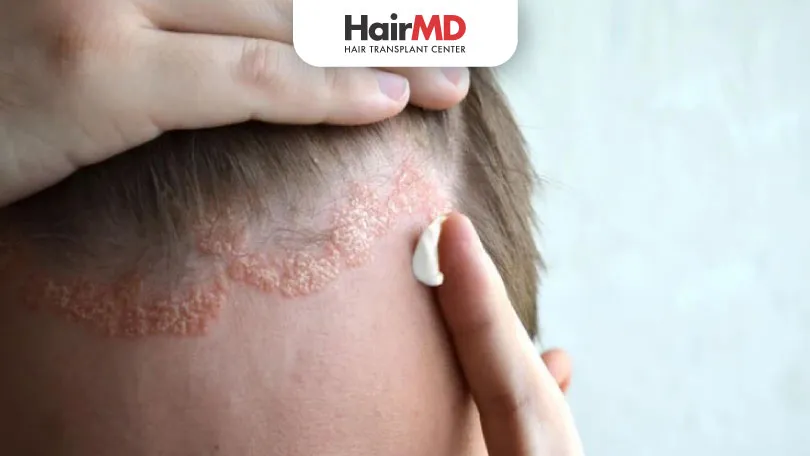
Seborrheic dermatitis is a common chronic skin condition affecting sebaceous (oil-rich) areas , primarily the scalp, but also the face (around the nose and eyebrows), ears, chest, and back. The organism responsible is Malassezia yeast, which is a normal part of every person’s skin microbiome.
The condition develops not because the yeast is present (it always is), but because certain factors , hormonal changes, stress, cold weather, specific medications, immune variations , cause it to proliferate excessively, triggering an inflammatory response. This is why seborrheic dermatitis is managed, not cured. The yeast cannot be permanently eliminated, only controlled.
How to Tell Which Condition You Have: Seborrheic Dermatitis vs Dandruff vs Scalp Psoriasis?
Simple dandruff (Pityriasis capitis): White or grey dry flakes, minimal inflammation, no significant redness. Responds to regular anti-dandruff shampoos. Often seasonal. Manageable long-term with over-the-counter products.
Seborrheic dermatitis: Yellowish-white greasy flakes, visible redness and inflammation at the scalp. Often spreads to the hairline, ears, and face. Does not respond adequately to standard anti-dandruff shampoos. Associated with increased scalp oiliness. Worsens with stress. Requires antifungal treatment.
Scalp psoriasis: Thick, silver-white scale (heavier than seborrheic dermatitis), well-defined red plaques, likely to extend beyond the hairline to the back of the neck. May involve other skin areas. Associated with joint pain in some patients. Requires a completely different treatment approach (corticosteroids + vitamin D analogues). Requires dermatologist diagnosis.
If standard anti-dandruff shampoos are not controlling your flaking after 6–8 weeks of consistent use, or there is significant redness and persistent itching, you likely have seborrheic dermatitis or scalp psoriasis , not simple dandruff. This distinction matters because the treatment is different.
Does Seborrheic Dermatitis Cause Hair Loss?
Seborrheic dermatitis itself does not directly destroy hair follicles. However, severe or long-standing scalp inflammation creates an unhealthy environment for hair growth and can contribute to temporary shedding. Hair typically regrows once scalp inflammation is controlled. If significant hair fall accompanies your scalp condition, see a dermatologist , a complete evaluation may be needed.
Seborrheic Dermatitis Symptoms
The symptoms of seborrheic dermatitis include the following:
- Rashes (the rash is annular in a condition called pelatoid seborrheic dermatitis)
- Dryness of the scalp
- Flaky skin of the scalp and peeling
- Dandruff
- Redness of the scalp skin
- Itching
- Patches of greasy skin are covered with white or yellow scales
Why Seborrheic Dermatitis Keeps Returning?
Recurrence is expected; it is not a treatment failure. The Malassezia yeast remains on the scalp permanently, and certain triggers activate it:
- Stress: Physical or emotional stress affects immunity and scalp oil production. Flares frequently coincide with high-stress periods.
- Cold, dry weather: Winter increases Malassezia activity and reduces the scalp’s barrier function. This is why winter dandruff flares are more severe in October–February.
- Hormonal changes: Elevated androgens (puberty, PCOS, certain medications) increase sebum production, feeding the yeast.
- Heavy oil application to the scalp: Applying coconut, castor, or mustard oil directly to the scalp creates an environment ideal for Malassezia proliferation. This is one of the most common reasons we see patients who feel they are “doing everything right” but are getting worse.
- Reduced washing frequency: Less frequent scalp washing allows oil and yeast accumulation.
HairMD’s Stepwise Treatment Protocol for Seborrheic Dermatitis
Step 1 , Mild to Moderate: Antifungal Shampoo
First-line treatment is a medicated shampoo with antifungal activity. Ketoconazole 2% (Nizoral, Ketomac) is the most evidence-supported option. Important: leave on the scalp for 3–5 minutes before rinsing , immediate rinsing significantly reduces efficacy. Selenium sulfide 2.5% and ciclopirox olamine are alternatives.
Treatment phase: 2–3 times weekly for 4 weeks. Maintenance phase: Once controlled, once every 1–2 weeks to prevent recurrence.
Step 2 , Moderate to Severe: Topical Corticosteroids
If antifungal shampoo alone does not control inflammation, a short course of topical corticosteroid solution or lotion reduces the inflammatory component rapidly. Prescribed for 2–4 weeks only , not long-term , to avoid scalp thinning and rebound flares.
Step 3 , Severe or Widespread: Oral Antifungals
For patients with extensive involvement or those not responding to topical treatment, a short course of oral antifungal medication can break the cycle. Requires dermatologist evaluation and prescription.
Step 4 , Maintenance: Long-Term Control
After clearing the flare: antifungal shampoo once every 1–2 weeks, avoidance of known personal triggers, no heavy oils on the scalp, light non-occlusive scalp serum if scalp moisture is needed.
Frequently Asked Questions
Is seborrheic dermatitis contagious?
No. It is driven by Malassezia yeast that is naturally present on all human scalps. It depends on individual skin factors, not transmission.
What is the best shampoo for seborrheic dermatitis in India?
Ketoconazole 2% shampoo (Nizoral, Ketomac, or similar) left on the scalp for 3–5 minutes is the most evidence-supported option. Regular anti-dandruff shampoos at standard concentrations are often insufficient for seborrheic dermatitis.
Can seborrheic dermatitis be cured permanently?
No. It is a chronic condition that is managed rather than cured, because Malassezia yeast is permanently present on the scalp. With appropriate treatment and maintenance, most patients achieve long-term control with only occasional mild flares.
Should I avoid oiling my scalp if I have seborrheic dermatitis?
Yes. Applying oils directly to the scalp feeds Malassezia and typically worsens the condition. Apply oil only to hair lengths if needed for conditioning, keeping it off the scalp.
DO YOU KNOW?
Nearly 250 Patients Visit HairMD
Everyday For Various Hair Concerns
(15+ Years Of Expertise. 4157+ Successful Hair Transplant)
Meet Our Dermatologists

Conclusion
Seborrheic dermatitis of the scalp can be a challenging condition, but with proper treatment and care, it is manageable. Identifying the right combination of medicated shampoos, topical treatments, and lifestyle adjustments can significantly improve symptoms and reduce flare-ups. Consulting a dermatologist for personalized advice is essential to effectively address the condition and maintain a healthy scalp. If you’re dealing with persistent dandruff or inflammation, don’t hesitate to seek professional help to regain control over your scalp health.
For expert advice on seborrheic dermatitis on scalp treatment, you should consult a dermatologist. He/she will guide you well about the seborrheic dermatitis permanent cure (whether it exists), as well as the causes and symptoms of the condition and how it is different from dandruff.
If you are experiencing any of the symptoms given here, and wish to get your condition diagnosed, or if are already aware of your skin condition and are seeking the most effective seborrheic dermatitis scalp treatment, one of the best places to approach is HairMD. It is a hair transplant centre in Pune with a team of experienced dermatologists.
Here you will get the correct diagnosis and treatment for seborrheic dermatitis and with the able guidance of the doctors here, you will be able to attain healthy hair.
Further Reading
What is FUE Hair Transplant? Everything You Need to Know
Discover FUE hair transplant: procedure, pain management, costs, and expert insights from HairMD, Pune. Get the facts in one place
Hair Transplant Cost in Pune for 2026
Find affordable 2026 hair transplant costs in Pune with expert results by Dr. Dhanaraj Chavan. Transparent pricing and flexible payments.
Does Cold Water Really Help Your Hair? Separating Fact From Myth
You’ve heard that rinsing with cold water makes hair shinier and stronger.
What Should I Do About Dandruff and Scalp Issues?
Dandruff, seborrheic dermatitis, scalp psoriasis, and dry scalp, they look similar but need different treatments. HairMD dermatologists explain how to identify each and what actually works.
Have thoughts? Please let us know
We are committed not only to treating you, but also educating you.