

Sleep Deprivation and Hair Loss: Is There a Link?


Written by HairMD Content Team | Medically Reviewed by Dr. Dhanraj Chavan On March 24, 2026


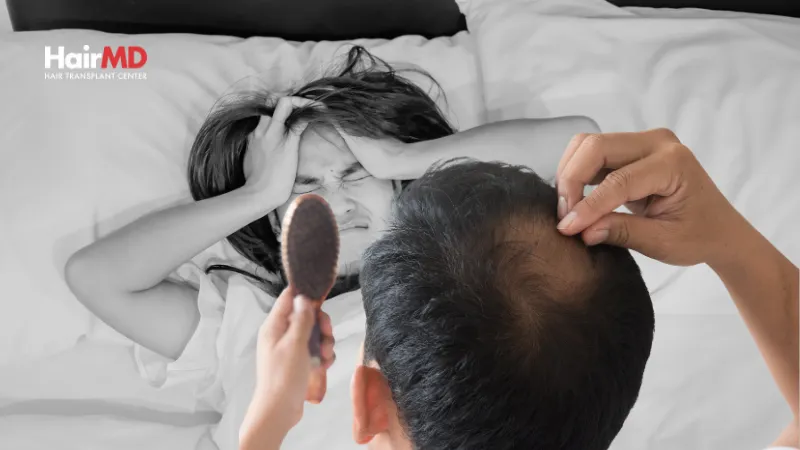
Tossing and turning at night can leave you feeling drained and unfocused, but could it also be affecting your hair? Many people notice increased shedding during periods of high stress and poor sleep, leading them to question the connection.
The link between sleep deprivation and hair loss is a topic of growing interest, as our modern lifestyles often compromise our rest. People search for this information to understand if their sleepless nights are contributing to thinning hair and what they can do about it.
This article explores the intricate relationship between your sleep cycle and hair growth, explains the physiological impact of poor sleep, and details how doctors diagnose and treat this issue.
We will also cover how doctors measure male pattern baldness, as stress-induced shedding can sometimes unmask an underlying genetic condition.
There is a link. Sleep deprivation increases stress hormones like cortisol, which can push hair follicles into a premature resting phase, leading to a type of shedding called telogen effluvium. While this hair loss is usually temporary, chronic poor sleep can disrupt the natural hair growth cycle and potentially worsen conditions like male pattern baldness.
What’s covered in the article?
- Quick Summary
- The Intricate Link Between Your Sleep Cycle and Hair Growth
- Causes and Contributing Factors to Sleep-Related Hair Loss
- Symptoms of Sleep-Related Hair Loss
- How Doctors Diagnose Sleep-Related Hair Loss?
- Finding Sleep-Related Hair Loss Treatment in Pune
- Treatment Options for Sleep-Related Hair Loss
- how to Prevent Hair Loss and Maintain Healthy Hair?
- Expected Results and Recovery Timeline
- Frequently Asked Questions
- Conclusion
Quick Summary
-
- The Connection: How the sleep cycle and hair growth are physiologically linked.
- The Impact: The ways sleep deprivation affects your body and, consequently, your hair.
- The Diagnosis: How doctors identify sleep-related hair loss and differentiate it from other conditions.
- The Solutions: Effective treatments for sleep-related hair loss available from a dermatologist in Pune.
- Preventive Measures: Lifestyle changes to improve sleep and support healthy hair growth.
The Intricate Link Between Your Sleep Cycle and Hair Growth
Your hair, like the rest of your body, follows a clock. The hair growth cycle consists of three main phases: anagen (growth), catagen (transition), and telogen (resting). A healthy sleep cycle is crucial for regulating the hormones that govern this process.
During deep sleep, the body ramps up the production of human growth hormone (HGH) and melatonin, both of which play a vital role in cell regeneration and proliferation—including the cells within your hair follicles.
When you are sleep-deprived, this delicate hormonal balance is disrupted. Your body produces more cortisol, a stress hormone known to have a detrimental effect on hair health. High cortisol levels can prematurely shift hair follicles from the anagen (growth) phase into the telogen (resting) phase.
When a large number of follicles enter the resting phase simultaneously, it results in excessive shedding a few months later. This condition is known as telogen effluvium.
Furthermore, melatonin is not just the “sleep hormone”; it also has potent antioxidant properties that help protect hair follicles from oxidative stress and damage. Disrupted sleep patterns mean lower melatonin levels, leaving your follicles more vulnerable. Therefore, a healthy sleep cycle and hair growth are directly intertwined, making quality rest a non-negotiable component of hair care.
Causes and Contributing Factors to Sleep-Related Hair Loss
While sleep deprivation itself is the primary trigger, several underlying factors can contribute to both poor sleep and the subsequent hair loss. Understanding these can help you address the root cause of the problem.
The Role of Stress
Psychological stress is a major contributor to insomnia and poor sleep quality. Whether it is from work pressure, personal issues, or financial worries, high stress levels keep your nervous system in a state of high alert.
This makes it difficult to fall asleep and stay asleep. The resulting sleep deprivation then further increases cortisol production, creating a vicious cycle where stress causes poor sleep, and poor sleep amplifies the body’s stress response, ultimately impacting your hair.
Unhealthy Lifestyle Habits
Certain lifestyle choices can severely disrupt your sleep patterns.
- Irregular Sleep Schedule: Going to bed and waking up at different times each day confuses your body’s internal clock (circadian rhythm).
- Poor Diet: Consuming caffeine, alcohol, or heavy meals close to bedtime can interfere with sleep.
- Lack of Physical Activity: Regular exercise can improve sleep quality, while a sedentary lifestyle can contribute to sleep problems.
Underlying Medical Conditions
Sometimes, sleep issues and hair loss are symptoms of an underlying medical problem.
- Sleep Apnoea: This condition causes repeated interruptions in breathing during sleep, leading to poor sleep quality and reduced oxygen supply to the body, including hair follicles.
- Hormonal Imbalances: Conditions like thyroid disorders can cause both hair loss and sleep disturbances.
- Nutritional Deficiencies: A lack of essential nutrients like iron, vitamin D, or zinc can disrupt sleep and weaken hair.
Symptoms of Sleep-Related Hair Loss
Unlike the distinct pattern seen in genetic baldness, hair loss caused by sleep deprivation is typically more diffuse. Here are the key signs to look for:
Diffuse Thinning
The most common symptom is a general thinning of hair across the entire scalp, rather than in a specific area like the hairline or crown. You might notice that your ponytail feels thinner or that your scalp is more visible than it used to be.
Increased Shedding
A noticeable increase in the amount of hair you lose each day is a classic sign of telogen effluvium. You may find more hair on your pillowcase, in your shower drain, or on your brush. This shedding usually begins about two to three months after the period of significant stress or sleep deprivation.
Changes in Hair Texture
The hair may appear dull, lifeless, and more prone to breakage. This is because chronic stress and lack of restorative sleep can affect the overall health and strength of the hair shaft.
It is important to note that if you are genetically predisposed to male pattern baldness, a period of intense, stress-induced shedding can sometimes “unmask” or accelerate this underlying condition, making the pattern more obvious.
How Doctors Diagnose Sleep-Related Hair Loss?
If you are experiencing hair loss, a consultation with a dermatologist is the best course of action to get an accurate diagnosis. The process involves differentiating stress-induced telogen effluvium from other conditions like androgenetic alopecia.
Detailed Patient History
The diagnostic process begins with a thorough conversation about your health and lifestyle. Your dermatologist will ask about:
- Your sleep patterns and any recent changes or disturbances.
- Your stress levels and any major life events.
- Your diet, medications, and family history of hair loss.
This information helps the doctor build a picture of potential triggers.
Physical Examination and the Pull Test
The doctor will carefully examine your scalp to assess the pattern of hair loss. To quantify the extent of active shedding, they will likely perform a “pull test.” This involves gently tugging on a small section of about 50-60 hairs. If more than 10% of the hairs (5-6 strands) come out easily, it suggests active telogen effluvium.
Trichoscopy and Differentiating from Pattern Baldness
To get a closer look, the doctor will use a dermatoscope to perform a trichoscopy. This magnified view allows them to see the hair follicles clearly. In telogen effluvium, most hair shafts will be of a uniform thickness. This is different from what is seen in male pattern baldness, where there is significant variation in hair shaft diameter (miniaturisation). This is a key part of how doctors measure male pattern baldness and distinguish it from temporary shedding.
Blood Tests
To rule out other contributing factors, your doctor might recommend blood tests. These can check for nutritional deficiencies (e.g., iron, vitamin D, zinc), hormonal imbalances (e.g., thyroid issues), or signs of inflammation that could be contributing to both poor sleep and hair loss.
Finding Sleep-Related Hair Loss Treatment in Pune
For those in Pune seeking professional help, finding a specialist who understands the complex interplay between lifestyle and hair health is crucial. If you are looking for effective sleep-related hair loss treatment, a consultation with a qualified dermatologist is your first step.
At HairMD Clinic in Pune, you will find a team dedicated to providing comprehensive care. Led by the renowned Dr. Dhanraj Chavan, a leading hair specialist in Pune, the clinic excels in diagnosing and treating all forms of hair loss.
Dr. Chavan and his team understand that hair loss is not just a cosmetic issue but often a sign of an internal imbalance. They use advanced diagnostic tools to pinpoint the exact cause of your hair loss, whether it is stress, sleep deprivation, or an underlying genetic condition.
You can visit HairMD Clinic at their state-of-the-art facility for a personalised consultation.
Address: CTC NO -94/16 F.P NO -38/16, Butte Patil Classic, Prabhat Rd, Deccan Gymkhana, Pune, Maharashtra 411004
Ready to address the root cause of your hair loss? Schedule an appointment with Dr. Dhanraj Chavan at HairMD Clinic to receive an expert diagnosis and a tailored treatment plan.
Treatment Options for Sleep-Related Hair Loss
The primary goal of treatment is to address the underlying cause—poor sleep—and to support the hair’s natural regrowth cycle.
Addressing the Root Cause: Improving Sleep
The most important step is to improve your sleep hygiene. This may involve:
- Establishing a regular sleep-wake schedule.
- Creating a relaxing bedtime routine.
- Optimising your sleep environment (dark, quiet, and cool).
- Managing stress through techniques like meditation, yoga, or cognitive-behavioural therapy for insomnia (CBT-I).
Nutritional Support
Your doctor may recommend supplements to correct any deficiencies identified in your blood work, such as iron, vitamin D, or biotin. A balanced diet rich in protein, vitamins, and minerals is essential to provide the building blocks for new hair growth.
Medical and Advanced Therapies
While the hair lost from telogen effluvium typically grows back once the trigger is removed, certain treatments can help speed up the process and improve hair density.
- Topical Minoxidil: This solution can help stimulate follicles and shorten the telogen phase, encouraging a quicker return to the anagen (growth) phase.
- Platelet-Rich Plasma (PRP) Therapy: PRP therapy involves injecting your scalp with a concentration of your own blood platelets, which are rich in growth factors. This can help rejuvenate follicles and accelerate regrowth. It is a highly effective option offered at leading clinics like HairMD Clinic.
How to Improve Sleep and Protect Your Hair from Shedding?
Preventing sleep-related hair loss revolves around prioritising your rest and managing stress effectively.
- Prioritise Sleep: Aim for 7-9 hours of quality sleep per night. Make it a non-negotiable part of your routine.
- Create a Digital Curfew: Avoid screens (phones, tablets, TVs) for at least an hour before bed. The blue light they emit can suppress melatonin production.
- Mind Your Diet: Avoid caffeine and alcohol in the evening. Opt for a light, healthy snack if you are hungry before bed.
- Exercise Regularly: Physical activity is a powerful stress reducer and sleep aid, but avoid intense workouts close to bedtime.
- Seek Professional Help: If you are struggling with chronic insomnia or anxiety, do not hesitate to speak with a doctor or therapist.
Expected Results and Recovery Timeline
Patience is key when recovering from telogen effluvium. The hair growth cycle is slow, and results are not immediate.
Once you have addressed the underlying sleep issue and reduced your stress levels, the excessive shedding should decrease within a few months. New hair growth will begin, but it will take time to become noticeable.
You can typically expect to see fine, baby hairs appearing along your hairline and part line within 3-6 months. It can take 12-18 months for this new hair to grow to a significant length and for your overall hair density to return to its previous state. Sticking to your treatment plan and maintaining a healthy lifestyle are crucial for achieving the best results.
Don’t let hair loss affect your confidence. Take the first step towards recovery by consulting a specialist today.
Ready to take the first step towards correcting your hair transplant?
Book a private consultation at HairMD in Pune or Pimpri Chinchwad. Let’s discuss your case and build a strategy to achieve the natural result you always wanted.
Frequently Asked Questions
- Is hair loss from sleep deprivation permanent?
No, hair loss caused directly by sleep deprivation (telogen effluvium) is almost always temporary. Once you improve your sleep and manage stress, the excessive shedding stops, and the hair typically grows back within 6-12 months. - How much sleep is needed for healthy hair growth?
Most adults need 7 to 9 hours of quality sleep per night. During this time, the body performs critical regenerative functions, including cell repair and hormone regulation, which are essential for a healthy sleep cycle and hair growth. - Can one bad night of sleep cause hair loss?
No, a single night of poor sleep will not cause your hair to fall out. Hair loss from sleep deprivation is the result of chronic, ongoing sleep issues that lead to sustained high levels of stress hormones in the body. - Can taking melatonin supplements help with hair loss?
While melatonin plays a role in hair growth, simply taking a supplement is not a direct cure for hair loss. It may help improve your sleep, which in turn can reduce stress and support hair health. However, you should always consult a doctor before starting any new supplement.
DO YOU KNOW?
Nearly 250 Patients Visit HairMD
Everyday For Various Hair Concerns
(20+ Years Of Expertise. 4157+ Successful Hair Transplant at HairMD)
Meet Our Dermatologists


Conclusion
The connection between sleep deprivation and hair loss is clear: chronic lack of rest elevates stress hormones, disrupts your natural hair growth cycle, and can lead to significant shedding. While this type of hair loss is usually temporary, it can be distressing and may even exacerbate underlying conditions like genetic baldness. Understanding how doctors measure male pattern baldness and differentiate it from stress-induced shedding is vital for getting the right treatment.
The solution begins with prioritising your sleep and managing stress. By adopting healthy sleep hygiene, maintaining a balanced diet, and seeking professional help when needed, you can restore your body’s internal balance and support a healthy environment for hair to grow. If you are concerned about hair loss, a professional diagnosis is the most important step you can take.
Seek Expert Advice in Pune
Do not let sleep-related hair loss go unaddressed. For a comprehensive evaluation and a personalised treatment plan, contact a trusted Hair specialist. At HairMD Clinic in Pune, Dr. Dhanraj Chavan and his expert team are ready to help you understand the root cause of your hair loss and guide you on the path to recovery.
Schedule your consultation today to take the first step towards healthier hair and better sleep.
Further Reading
Is Rosemary Oil Enough for Hair Regrowth? When to Consider Something Stronger
Six months of rosemary oil and still losing hair? HairMD dermatologists explain when rosemary oil works, when it is not enough, and what to try next.
Redensyl vs Minoxidil vs GFC for Hair Loss: Which One Is Right for You?
Redensyl, minoxidil, or GFC therapy for hair loss? HairMD Pune dermatologists explain how each works, who each is for, and how to choose.
Dermapen Scalp Microneedling Results in Pune
Real HairMD Pune patient results from Dermapen scalp microneedling for hair – what to expect, sessions, and before and after outcomes.
Fotona & LLLT Laser Hair Cost in Pune 2026
Fotona and LLLT laser hair treatment cost in Pune 2026 – per-session pricing, packages, and what affects the cost at HairMD Pune.
Have thoughts? Please let us know
We are committed not only to treating you, but also educating you.