

Hair Transplant in Bavdhan: When It May Be Considered?

Written by HairMD Content Team | Medically Reviewed by Dr. Dhanraj Chavan
Updated on March 07, 2026
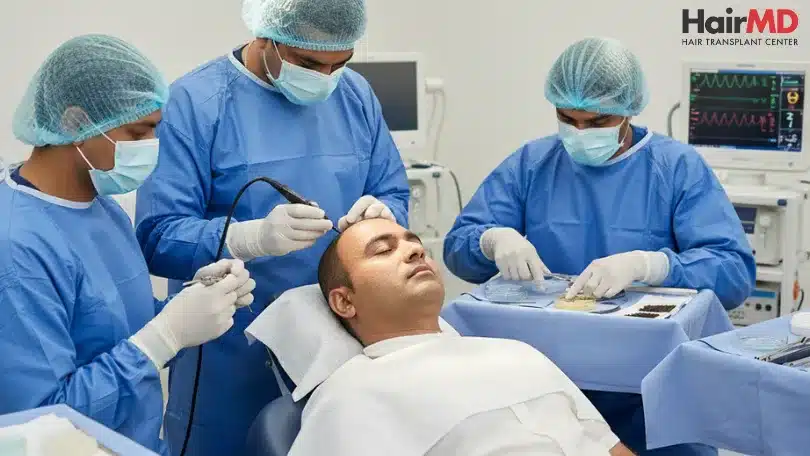
Hair thinning that progresses into visible bald patches often leads individuals to explore long-term restoration options. Residents of Bavdhan particularly working professionals and growing families in this residential zone, increasingly seek structured solutions when hair loss becomes noticeable.
Hair transplant is one such long-term corrective approach.
Understanding when it is appropriate — and what results realistically look like — is essential before making a decision.
What’s covered in the article?
- When Is Hair Transplant Considered?
- How the Procedure Works?
- What Does Recovery Look Like?
- When Should Hair Transplant Be Considered in Bavdhan?
- Frequently Asked Questions
When Is Hair Transplant Considered?
Hair transplant may be evaluated when:
- Receding hairline becomes prominent
- Crown thinning progresses significantly
- Bald patches develop
- Non-surgical treatments no longer provide adequate improvement
It is generally not the first step for mild thinning. Early hair loss is often managed with stabilisation therapies before surgical planning is considered.
How the Procedure Works?
Hair transplant involves:
- Identifying a stable donor area (usually back of scalp)
- Extracting healthy follicles
- Implanting them into thinning regions
The objective is to restore natural density while preserving donor supply for long-term balance.
The procedure is performed under local anesthesia and typically completed in a single session depending on graft count.
What Does Recovery Look Like?
Recovery generally includes:
- Mild swelling or redness for a few days
- Small scabs at implant sites
- Temporary shedding phase
- New growth starting around 3–4 months
- Progressive density improvement over 6–12 months
Most individuals resume routine work within a few days.
When Should Hair Transplant Be Considered in Bavdhan?
Hair transplant procedures are typically considered when hair loss has progressed beyond early thinning and when donor hair availability supports long-term results.
For individuals in Bavdhan, timing depends on factors such as age, hair loss progression, and response to non-surgical treatments. In many cases, less invasive treatments may be explored before considering surgery.
Understanding when a transplant is appropriate—and when it may not be necessary—is an important part of treatment planning.
To continue your research, compare transplant procedures with PRP and GFC therapy options in Bavdhan, or review the main transplant page for a clinical overview.
Frequently Asked Questions
Is hair transplant permanent?
Transplanted follicles are generally resistant to hormonal hair loss.
When will results be visible?
Visible improvement usually begins after 3–4 months.
Is the procedure painful?
Local anesthesia keeps the session comfortable.
Can young individuals undergo transplant?
Timing depends on progression stability and donor availability.
Medical Disclaimer:
This article is intended for educational purposes. Hair loss treatments and outcomes vary by individual, and a consultation is required to determine suitability.
For a broader understanding of hair loss treatments and options available across different areas, you can explore hair restoration services in Pune.