

Hair Transplant Procedures and Recovery in Undri
Written by HairMD Content Team | Medically Reviewed by Dr. Dhanraj Chavan
Updated on March 18, 2026
Hair thinning that progresses into visible bald patches often leads individuals to explore long-term restoration options. Many residents of Undri experiencing progressive hair loss begin researching hair transplant procedures once non-surgical treatments no longer provide sufficient improvement.
Understanding how the procedure works and what recovery involves can help individuals make informed decisions.
What’s covered in the article?
- When Is Hair Transplant Usually Considered?
- How Hair Transplant Procedures Work?
- What Does Recovery Look Like?
- When Hair Transplant May Be Considered in Undri?
- Frequently Asked Questions
When Is Hair Transplant Usually Considered?
Hair transplant may be discussed when:
- Hairline recession becomes clearly visible
- Crown thinning progresses significantly
- Bald patches develop
- Early treatments are no longer effective
In early stages of hair thinning, non-surgical treatments may still help stabilise hair loss. Hair transplant is generally considered when follicle loss has already occurred.
How Hair Transplant Procedures Work?
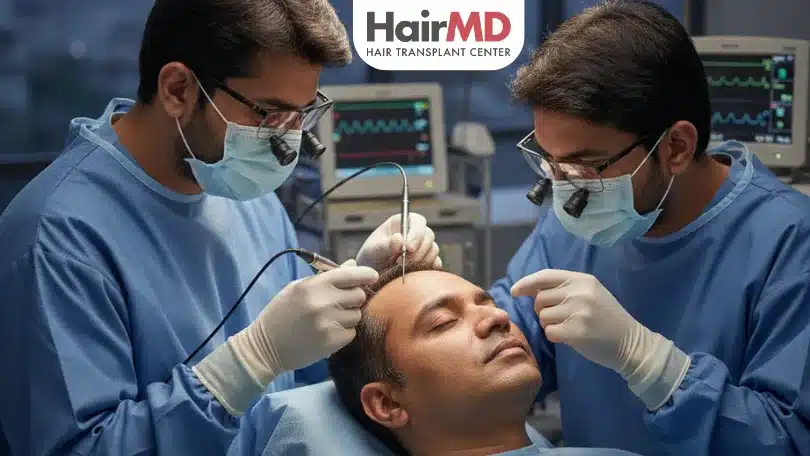
Hair transplant involves redistributing healthy hair follicles from a donor area to thinning or bald regions of the scalp.
The procedure typically includes:
- Identifying a donor area with stable hair density
- Extracting healthy follicles
- Implanting them strategically in thinning areas
The goal is to create natural hairline design and balanced density.
The procedure is performed under local anesthesia and may take several hours depending on graft count.
What Does Recovery Look Like?
Hair transplant recovery usually includes:
- Mild redness or swelling for a few days
- Small scabs around implant sites
- Temporary shedding phase in the first few weeks
- New growth starting around 3–4 months
- Visible density improvement over 6–12 months
Most individuals return to routine desk work within a few days.
When Hair Transplant May Be Considered in Undri?
Hair transplant procedures are generally considered when hair loss has progressed beyond early thinning and when non-surgical treatments may no longer provide sufficient improvement. However, the timing and suitability of a transplant can vary significantly from one individual to another.
For residents in Undri, factors such as the extent of hair loss, stability of the condition, donor area availability, and long-term expectations all play a role in determining whether a transplant may be appropriate.
It is also important to understand that a hair transplant does not prevent future hair loss in untreated areas. Because of this, long-term planning and ongoing management are often part of the overall approach rather than a one-time solution.
In many situations, non-surgical treatments are explored first before considering surgical options. Understanding this progression can help individuals make more informed decisions.
To continue your research, you can explore PRP therapy for early-stage thinning or compare other hair loss treatment approaches available in Undri.
Frequently Asked Questions
Is hair transplant permanent?
Transplanted follicles are usually resistant to hormonal hair loss and can provide long-lasting results.
When will results become visible?
Early regrowth usually begins around three to four months.
Is the procedure painful?
Local anesthesia helps keep the procedure comfortable.
Can younger individuals undergo transplant?
Suitability depends on stability of hair loss and donor availability.
Medical Disclaimer:
This article is intended for educational purposes. Hair loss treatments and outcomes vary by individual, and a consultation is required to determine suitability.
For a broader understanding of hair loss treatments and options available across different areas, you can explore hair restoration services in Pune.