

PRP Hair Treatment Benefits for Undri Patients
Written by HairMD Content Team | Medically Reviewed by Dr. Dhanraj Chavan
Updated on March 18, 2026
Hair thinning in its early stages is a common concern among residents of Undri. Stress, lifestyle changes, nutritional gaps, and genetic predisposition can all contribute to gradual hair density reduction.
When thinning is detected early, non-surgical treatments such as PRP therapy are often explored to strengthen existing follicles and slow further progression.
Understanding how PRP works helps set realistic expectations before starting treatment.
What’s covered in the article?
- What Causes Early Hair Thinning?
- How PRP Therapy Works?
- Who May Benefit from PRP Therapy?
- What Results Can Be Expected?
- What to Know About PRP Therapy in Undri
- Frequently Asked Questions
What Causes Early Hair Thinning?
Hair thinning often begins gradually. Common causes include:
- Genetic pattern hair loss
- Stress-related shedding
- Hormonal changes
- Nutritional deficiencies
- Scalp health issues
In many early cases, hair follicles are still present but weakened. This stage is where stimulation-based therapies may help improve follicle activity.
How PRP Therapy Works?
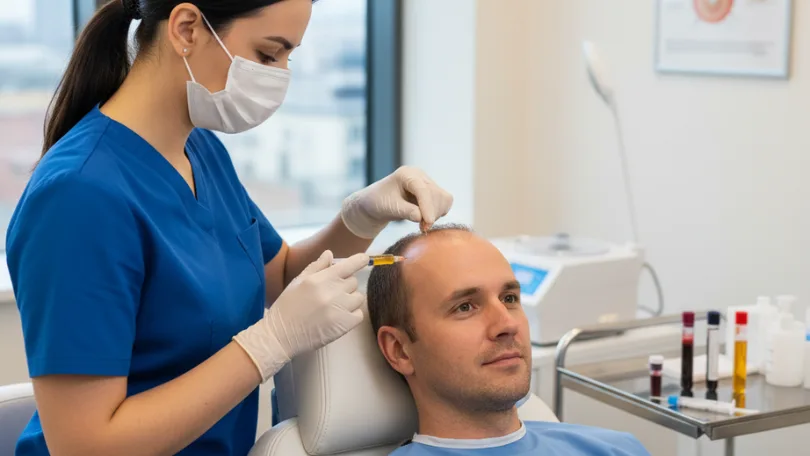
PRP (Platelet-Rich Plasma) therapy uses growth factors derived from your own blood to stimulate hair follicles.
The procedure usually involves:
- Drawing a small blood sample
- Processing it to concentrate platelet-derived growth factors
- Injecting the concentrate into thinning areas of the scalp
These growth factors may help support follicle health and improve scalp circulation.
PRP strengthens existing follicles — it does not create new follicles.
Who May Benefit from PRP Therapy?
PRP therapy may be considered when:
- Hair thinning is recent
- Hair density has reduced but follicles are still present
- Shedding is linked to stress or hormonal changes
- Bald patches have not fully developed
Many individuals explore PRP when they begin noticing widening partitions or early recession.
Early intervention usually improves outcomes.
What Results Can Be Expected?
PRP therapy produces gradual improvement rather than immediate results.
Possible outcomes may include:
- Reduced hair shedding
- Improved hair thickness
- Strengthened follicles
- Better overall scalp coverage appearance
Visible improvement is typically assessed over several months.
What to Know About PRP Therapy in Undri?
PRP (Platelet-Rich Plasma) therapy is commonly used as a non-surgical approach for managing early-stage hair thinning. It works by using growth factors derived from the patient’s own blood to support hair follicle activity.
For individuals in Undri, PRP therapy is typically considered when hair follicles are still active but showing signs of weakening. In some cases, it may help improve hair thickness and reduce ongoing thinning when performed consistently over multiple sessions.
At the same time, PRP may not be equally effective in advanced stages of hair loss where follicle activity has significantly reduced. In such situations, other treatment approaches may be evaluated depending on individual needs.
Because of this, PRP is often part of a broader treatment strategy rather than a standalone solution for all cases.
To better understand where PRP fits, it can be helpful to compare it with GFC therapy and hair transplant procedures available in Undri.
Frequently Asked Questions
Is PRP therapy painful?
Some mild discomfort during injections may occur, but the procedure is generally well tolerated.
How many sessions are needed?
The number of sessions depends on hair loss severity and individual response.
Can PRP permanently stop hair loss?
PRP may slow progression but does not permanently stop genetic hair loss.
Is there downtime after PRP?
Most individuals return to normal activities immediately after treatment.
Medical Disclaimer:
This article is intended for educational purposes. Hair loss treatments and outcomes vary by individual, and a consultation is required to determine suitability.
For a broader understanding of hair loss treatments and options available across different areas, you can explore hair restoration services in Pune.