

Hair Care Dos and Don’ts: What Dermatologists Actually Recommend


Written by HairMD Content Team | Medically Reviewed by Dr. Dhanraj Chavan On August 26, 2026


Excessive sweating can happen due to hot weather, intense physical activity, or spending too much time in the sun. Some people sweat more because of a condition called hyperhidrosis, hormonal changes, or other medical issues. Sweating can lead to hair loss, mainly because certain substances in sweat can damage hair follicles, causing hair to fall out.
Most hair damage is self-inflicted, not from genetics or environment, but from daily habits that gradually compromise the structure and health of the hair shaft and scalp. The problem is that many of these habits are widespread, often recommended on product labels, and accepted as “normal” hair care.
This guide covers the core dos and don’ts that make the most practical difference: what to do, what to stop doing, and why, explained in terms of what is actually happening to your hair and scalp at each step.
What are the most important hair care dos and don’ts?
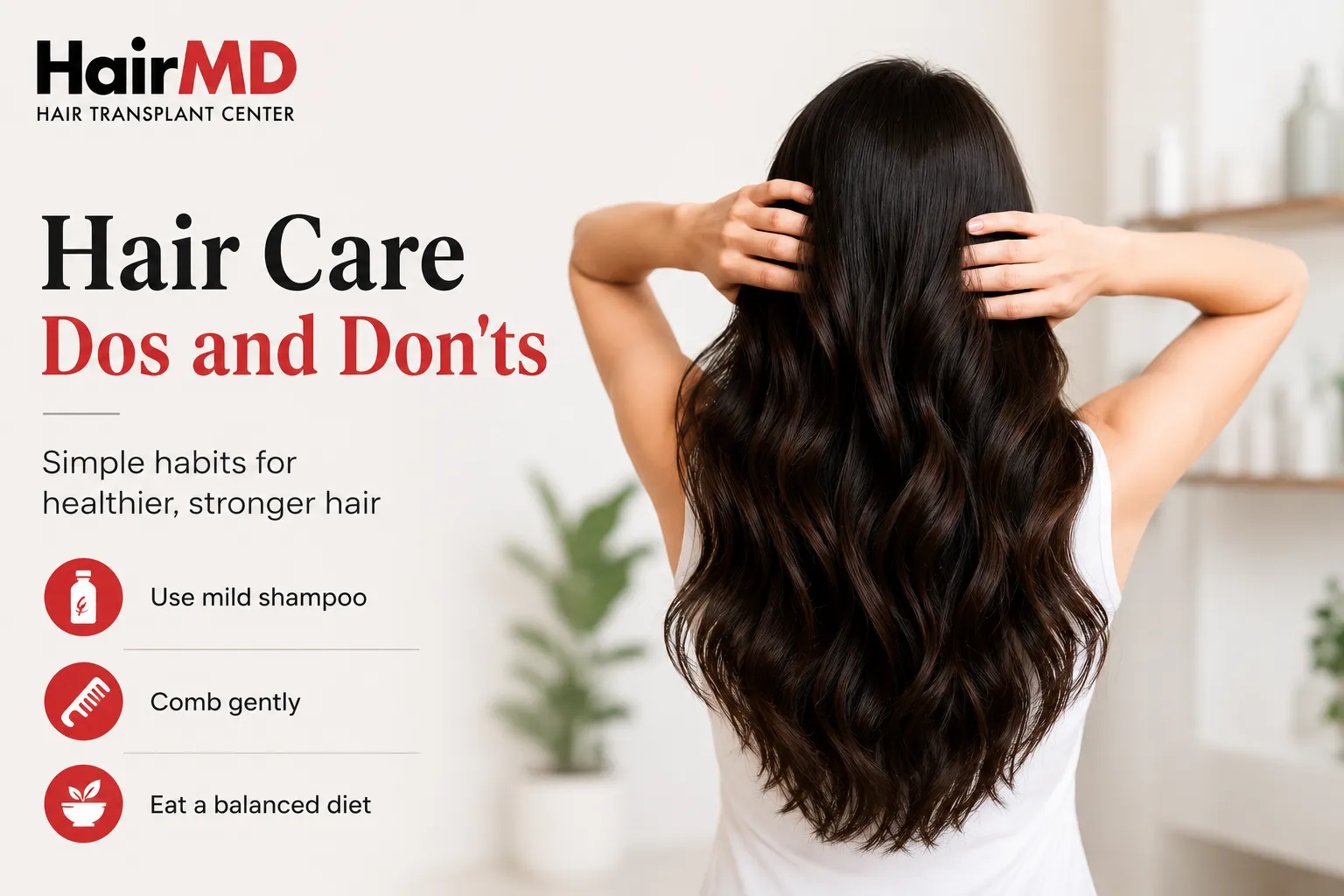
DO: wash your scalp thoroughly but gently (not the lengths), condition mid-length to ends only, use a microfibre towel or cotton T-shirt to dry, detangle from the ends upward, eat adequate protein and ferritin-rich foods, and protect hair from UV and heat with appropriate products. DON’T: wash with very hot water, rub hair dry with a regular towel, brush wet hair aggressively, use high heat without a protectant, apply conditioner to the scalp, or ignore persistent shedding beyond 100 hairs per day. Most hair damage accumulates gradually from repeated small mistakes, not single events.
Summary
- Hair shaft damage is cumulative and mostly irreversible, preventing it is far more effective than trying to repair it after the fact.
- The scalp and the hair shaft have different needs: the scalp needs cleansing and circulation; the hair shaft needs moisture retention and protection from mechanical and thermal stress.
- Wet hair is significantly weaker than dry hair, it stretches more easily and the cuticle is more vulnerable to mechanical damage. Handling wet hair roughly is one of the most common causes of breakage.
- Conditioner on the scalp clogs follicles and increases greasiness without benefiting scalp health, it belongs mid-shaft to ends.
- Water temperature matters: very hot water strips the lipid layer from the hair cuticle and increases sebum production by stimulating scalp glands.
- Nutritional status, particularly protein, ferritin, Vitamin D, and zinc, affects hair quality and growth from the inside. No topical product compensates for nutritional deficiency.
What’s covered in the article?
- Washing: Dos and Don’ts
- Drying: Dos and Don’ts
- Detangling: Dos and Don’ts
- Styling and Heat: Dos and Don’ts
- Scalp Care: Dos and Don’ts
- Nutrition: The Internal Dos and Don’ts
- When Home Care Is Not Enough, And HairMD Can Step In?
- Frequently Asked Questions
- Conclusion
Washing: Dos and Don’ts
DO: Wash Based on Your Scalp Type, Not a Universal Schedule
|
Scalp Type |
Signs |
Wash Frequency |
|
Oily |
Greasy roots within 24–48 hours of washing |
Daily or every other day |
|
Normal |
Roots stay fresh 2–3 days |
Every 2–3 days |
|
Dry |
Scalp feels tight or flaky without dandruff |
Every 3–4 days |
|
Dandruff / seborrheic |
Flaking, itching, inflammation |
Medicated shampoo 2–3x weekly |
|
Sensitive |
Scalp redness or irritation with most products |
Every 3–4 days with fragrance-free shampoo |
There is no universally correct wash frequency. Washing too infrequently allows sebum, dead skin cells, and environmental debris to accumulate around the follicle opening, which can contribute to follicular inflammation. Washing too frequently (particularly with harsh sulfate-heavy shampoos) can strip the scalp’s protective lipid barrier, triggering compensatory sebum overproduction and increasing greasiness faster.
DON’T: Wash with Very Hot Water
Hot water opens the hair cuticle (the outermost protective layer of the hair shaft) and strips the lipid cement between cuticle cells. Over time, this leads to porous, dull, frizz-prone hair that tangles more easily. It also stimulates sebaceous glands to produce more oil faster, counterproductive if you’re trying to manage an oily scalp.
The correct approach: Wash with warm water (comfortable on the inside of your wrist), lather the scalp thoroughly, and rinse with cool or cold water to seal the cuticle before conditioning.
DO: Shampoo the Scalp, Condition the Lengths
Shampoo is a cleanser designed for the scalp. The lengths of the hair only need the shampoo water running over them during rinse, direct shampoo application to the lengths strips their natural oils unnecessarily and causes frizz and breakage, particularly for those with dry or chemically treated hair.
Conditioner is designed for the hair shaft, it fills gaps in the cuticle, adds slip, and reduces friction during detangling. Applied to the scalp, it weighs down the roots, contributes to follicle clogging, and accelerates greasiness.
Rule: Shampoo the scalp and roots. Conditioner from mid-shaft to ends. Never overlap the two on the same zone.
DON’T: Rinse Conditioner Out Immediately
Conditioner needs 2–3 minutes of contact time to work. Applying and immediately rinsing removes most of the benefit. Apply to damp (not soaking wet) hair after shampoo rinse, comb through gently with fingers or a wide-tooth comb, wait 2–3 minutes, then rinse with cool water.
Drying: Dos and Don’ts
DON’T: Rub Hair Dry with a Regular Towel
This is one of the most common causes of cuticle damage and breakage. The rough cotton fibres of a regular towel create friction against the hair cuticle when the hair is at its most vulnerable, wet and swollen. The rubbing motion causes the cuticle to lift, creates micro-tears, and tangles the shaft.
DO: Use a Microfibre Towel or Cotton T-Shirt
Microfibre cloth has a much smoother surface than regular cotton terry towel. Use it to gently squeeze water out of sections of hair, no rubbing. An old cotton T-shirt works equally well. Squeeze, don’t rub. Pat, don’t scrub.
Allow hair to air-dry 70–80% before blow-drying if you use one, this reduces the total heat exposure time and minimises thermal damage.
DO: Use a Blow Dryer on the Correct Setting
Used correctly, a blow dryer is not inherently damaging, it is damaging when used incorrectly (too close to the hair, too high a temperature, too long in one spot). Keep the dryer 15–20 cm from the scalp, use medium heat, keep it moving, and aim the nozzle downward (following the cuticle direction from root to tip). Always use a heat protectant spray on damp hair before blow-drying.
Detangling: Dos and Don’ts
DON’T: Brush Wet Hair Aggressively from Root to Tip
Wet hair is 30–50% weaker than dry hair in tensile strength, it stretches significantly before breaking. Forcing a brush through wet tangles from root to tip creates enormous tension at the tangle point, causing shaft breakage and follicle stress.
DO: Detangle from Ends to Roots with a Wide-Tooth Comb
Start at the ends, work through small sections, hold the hair above the tangle point (to prevent tension reaching the root), and work upward section by section. A wide-tooth comb or a detangling brush with flexible bristles causes significantly less damage than a standard paddle brush on wet hair.
Apply a leave-in conditioner or detangling spray to wet hair before combing to increase slip and reduce friction.
Styling and Heat: Dos and Don’ts
DON’T: Use Heat Tools Without a Protectant
Heat protectants work in two ways: they coat the cuticle to slow the rate of heat penetration into the cortex, and they reduce the surface friction that causes heat damage when the tool drags along the shaft. Without a protectant, styling at 200°C+ causes protein denaturation and permanent structural changes to the hair shaft.
DO: Match Heat Setting to Hair Type
|
Hair Type |
Maximum Safe Temperature |
Recommended Setting |
|
Fine / colour-treated |
150–160°C |
Low heat |
|
Normal |
170–185°C |
Medium heat |
|
Thick / coarse / resistant |
185–200°C |
Medium-high heat |
|
Very coarse / Afro-textured |
Up to 210°C |
High heat, short contact time |
The goal is to use the lowest temperature that achieves your styling result. More time at lower temperature causes less damage than brief contact at maximum temperature.
DON’T: Tie Wet Hair Tightly
Elastic bands or tight scrunchies on wet hair create sustained tension on the shaft at the point of contact, where the elastic edge sits. Over time this causes traction breakage at that point (the “snap” you hear when you remove a tight hair tie from wet hair is the sound of shaft breakage). Let hair dry at least 70% before tying it, and use fabric-covered elastics rather than bare rubber bands.
Scalp Care: Dos and Don’ts
DO: Massage Your Scalp Regularly
Scalp massage increases blood flow to the follicle base, stimulating the dermal papilla cells responsible for hair growth signals. A 2016 study (Koyama et al.) found that 4 minutes of daily standardised scalp massage over 24 weeks increased hair thickness. You don’t need a special tool, fingertip pressure in small circular motions across the entire scalp for 3–5 minutes, 4–5 days per week.
DON’T: Scratch a Flaky Scalp, Treat the Cause
Scratching a dandruff or seborrheic dermatitis scalp removes scale temporarily but damages the scalp skin barrier, creating micro-abrasions that worsen inflammation and allow Malassezia (the yeast associated with dandruff) to proliferate more rapidly. If you have persistent flaking, itching, or scalp inflammation, the appropriate response is a medicated shampoo (zinc pyrithione, selenium sulphide, or ketoconazole), not scratching.
DO: Protect Your Scalp from UV
The scalp receives more UV exposure than almost any other area of skin, particularly at the crown and parting. UV degrades the hair cortex proteins (keratin) and contributes to hair shaft weakening. Cover the parting and crown with SPF-containing products designed for the scalp (spray or powder sunscreens designed for hair), or wear a hat during peak sun exposure (10am–4pm).
Nutrition: The Internal Dos and Don’ts
DO: Eat for Your Hair (It Starts with Protein and Iron)
Hair is approximately 95% keratin protein. The hair follicle is one of the most metabolically active structures in the body, highly sensitive to nutritional deficiency. The minimum protein intake for healthy hair production is approximately 0.8–1g per kg of body weight daily; for those experiencing hair loss, 1–1.5g/kg is a common clinical recommendation.
Iron (ferritin) is the other critical nutrient, serum ferritin below 30 ng/mL is associated with hair shedding even when full-blood-count haemoglobin is normal. Vitamin D deficiency (endemic in urban India) is a common overlooked cause of diffuse hair loss.
|
Nutrient |
Function |
Food Sources |
Blood Test Target |
|
Protein |
Keratin substrate |
Eggs, lentils, paneer, chicken, fish |
N/A (dietary) |
|
Ferritin (iron stores) |
Oxygen delivery to follicle |
Red meat, lentils, spinach + Vitamin C |
Above 50–70 ng/mL |
|
Vitamin D |
Follicle cycling, immune function |
Sunlight, fatty fish, fortified foods |
40–60 ng/mL |
|
Zinc |
Sebum regulation, follicle repair |
Pumpkin seeds, lentils, nuts |
70–120 mcg/dL |
|
Biotin |
Keratin synthesis cofactor |
Eggs, nuts, whole grains |
N/A (rarely deficient) |
|
Omega-3 |
Scalp inflammation reduction |
Fatty fish, flaxseed, walnuts |
N/A (dietary) |
DON’T: Crash Diet
Rapid calorie restriction triggers telogen effluvium, the most common form of nutritional hair loss. The follicle is considered a non-essential structure by the body during caloric deficit; it is one of the first to receive reduced resources. Hair loss from crash dieting typically appears 6–8 weeks after the restriction period, and can persist for months if nutritional status isn’t restored.
When Home Care Is Not Enough, And HairMD Can Step In?
If you are doing everything right, washing correctly, eating well, avoiding mechanical and thermal damage, and still experiencing significant hair shedding (more than 100 hairs per day), visible thinning at the parting or temples, or hairline recession, home care is not the solution.
These are clinical signs of androgenetic alopecia, nutritional deficiency, hormonal hair loss, or alopecia areata, all of which require diagnosis and treatment, not better shampoo.
The most common mistake at this stage: spending months trying every shampoo, serum, and oil, delaying treatment during the critical window when clinical intervention is most effective. Androgenetic alopecia that is caught and treated early (before significant miniaturisation) responds far better than the same condition treated years later.
What HairMD Offers
HairMD’s dermatologists, led by Dr. Dhanraj Chavan and Dr. Sachin Pawar, see over 250 patients every day across 7 clinics in Pune. Every new hair loss patient receives a trichoscopy assessment, identifying the exact cause of shedding and the stage of any progressive condition, before any treatment is recommended.
Depending on your diagnosis, HairMD’s treatment options include:
|
Condition Identified |
HairMD Treatment |
|
Androgenetic alopecia (early) |
Medical management (minoxidil, finasteride/spironolactone) + PRP or GFC therapy |
|
Androgenetic alopecia (established) |
FUE Hair Transplant for permanent restoration |
|
Nutritional deficiency hair loss |
Blood panel, targeted supplementation, dietary guidance |
|
Alopecia areata |
Intralesional steroids, PRP, JAK inhibitors (baricitinib) for severe cases |
|
Seborrheic dermatitis / scalp inflammation |
Medicated scalp therapy, anti-inflammatory treatment |
|
Female hormonal hair loss (PCOS, postpartum) |
Hormonal assessment, anti-androgen therapy, GFC |
Ready to go beyond home care? Book a consultation at HairMD, trichoscopy takes 30 minutes and gives you a diagnosis with a clear treatment plan. With 15+ years of expertise and 4,157+ successful hair transplants, HairMD is Pune’s most trusted hair clinic.
Frequently Asked Questions
What is the number one hair care mistake people make?
The most universally damaging habit is rubbing wet hair with a regular towel. Hair is at its most structurally vulnerable when wet, and friction from rough towel fibres directly damages the cuticle and causes breakage. Switching to a microfibre towel or T-shirt squeeze-dry is the single easiest change with the most immediate impact on breakage.
Should I wash my hair every day?
Only if you have a consistently oily scalp type where daily washing genuinely maintains scalp health. For most people, washing every 2–3 days is optimal, it cleanses effectively without stripping the scalp’s protective lipid layer. The “you should never wash daily” rule is as wrong as “you must wash daily”, the correct frequency is individual.
Is it bad to brush your hair when it’s wet?
Aggressive brushing with a stiff-bristle brush on dripping-wet hair causes breakage. Using a wide-tooth comb with leave-in conditioner to gently detangle wet hair from ends to roots is fine and necessary. The key variables are tool (wide-tooth comb, not paddle brush), direction (ends first), and gentleness (no forcing through knots).
Does not washing hair make it healthier?
No. “Hair training”, the idea that washing less frequently will make the scalp produce less oil over time, has no clinical evidence. Infrequent washing allows sebum and debris to accumulate around the follicle opening, which can cause follicular inflammation over time. Washing at the frequency appropriate for your scalp type is the correct approach.
Can diet really affect hair health?
Yes, significantly. Hair is one of the fastest-growing tissues in the body and one of the first to show nutritional deficits. Protein deficiency, low ferritin, and Vitamin D deficiency are among the most common causes of diffuse hair shedding seen in clinical practice. These are diagnosed with a blood panel and corrected through diet or supplementation.
DO YOU KNOW?
Nearly 250 Patients Visit HairMD
Everyday For Various Hair Concerns
(15+ Years Of Expertise. 4157+ Successful Hair Transplant)
Meet Our Dermatologists

Conclusion
Healthy hair starts with simple, consistent care rather than complicated routines. Washing your hair according to your scalp type, using conditioner correctly, drying and detangling gently, limiting heat styling, and avoiding tight hairstyles can help reduce unnecessary hair damage and breakage.
A balanced diet and good scalp care also support overall hair health. However, persistent hair fall, thinning, excessive shedding, or scalp problems may need more than routine changes. A dermatologist can identify the underlying cause and recommend the right treatment.
Further Reading
Can Hair Loss from Excessive Sweating Be Reversed?
Excessive sweating causes hair loss through lactic acid buildup, scalp pH disruption, and DHT in sweat. HairMD dermatologists explain the mechanism and what to do.
Hair Care for Different Age Groups: What Changes and What To Do About It?
Hair needs change significantly with age. HairMD dermatologists explain what happens to hair in your 20s, 30s, 40s, and 50s+, and what to do at each stage to maintain health and catch problems early.
Can Hair Loss Be Reversed?
Wondering if hair loss can be reversed? Discover effective treatments for regrowing your hair!
Can Creatine Cause Hair Loss?
Does creatine increase hair loss? Discover the evidence, common myths, possible risks, and when to consult a hair specialist at HairMD.
Have thoughts? Please let us know
We are committed not only to treating you, but also educating you.