

Body Hair Transplant (BHT) in 2026: Using Beard and Chest Hair to Fix a Bald Scalp


Written by HairMD Content Team | Medically Reviewed by Dr. Dhanraj Chavan On February 27, 2026


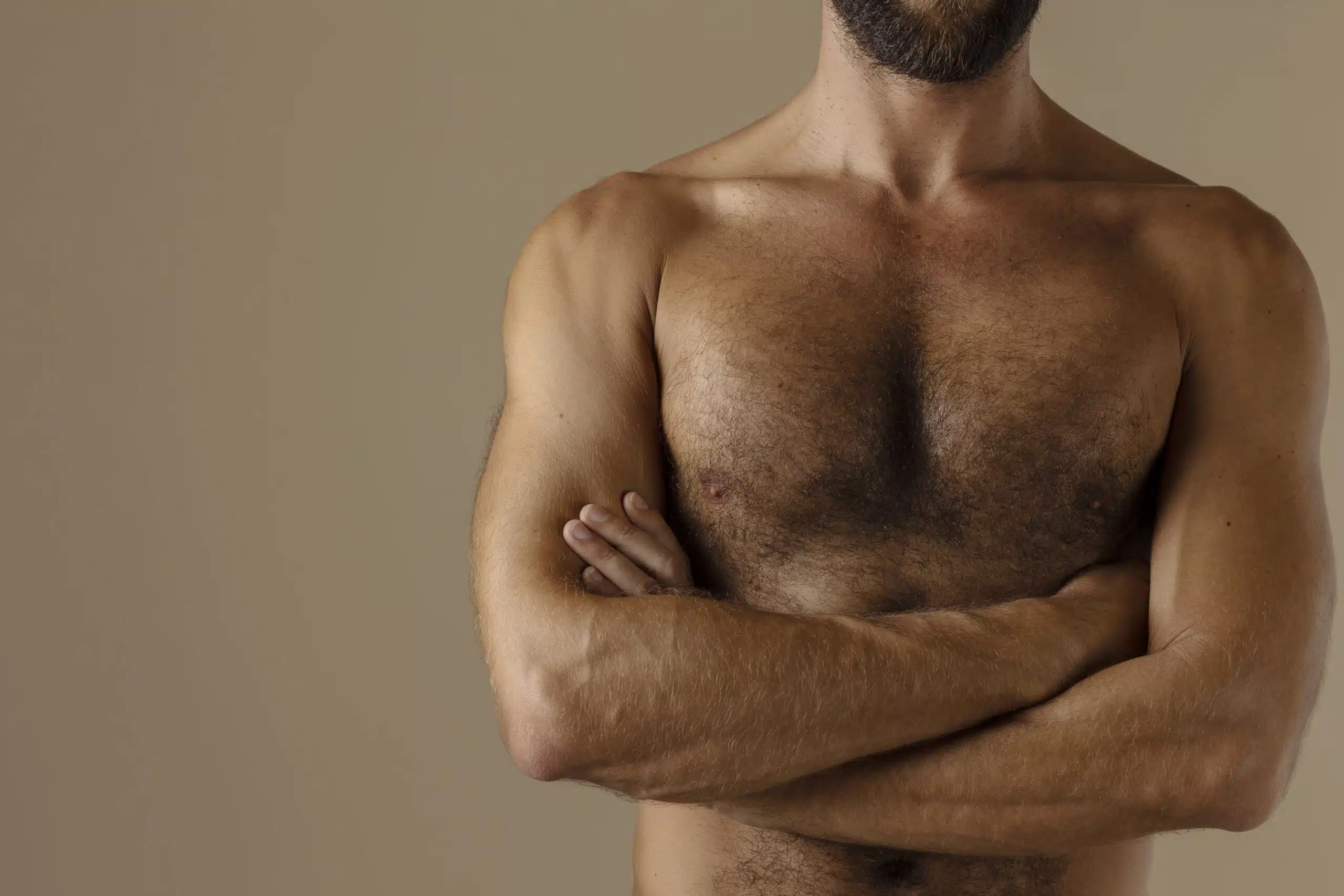
For many men walking into my clinic at HairMD in Pune the fear isn’t just about losing hair—it’s about running out of options.
They have often been told by other clinics, “Sorry, your donor area is too weak. We cannot help you.” This is where Body Hair Transplant (BHT) changes the narrative.
As a surgeon with over 17+ years of experience in hair restoration, I can confidently tell you that a depleted scalp donor is no longer a dead end.
In 2026, we have perfected the science of harvesting robust hair follicles from the beard and chest to restore density to a bald scalp, offering a second chance to those who thought they had none.
What’s covered in the article?
- Quick Summary
- The Crisis of the ‘Depleted Donor’: Why Scalp Hair Isn’t Always Enough
- Why Beard Hair are preferred in Body Hair Transplant?
- How Body Hair Behaves on the Scalp After Transplant?
- Who is the Ideal Candidate for BHT?
- Step-by-Step: The Body Hair Transplant Procedure
- Limitations and Realities: What BHT Can and Cannot Do
- Why Expertise Matters More in BHT Than Standard Transplants
- Why Choose HairMD to Correct a Failed Transplant?
- Frequently Asked Questions
Quick Summary
- What is BHT? body hair transplant involves extracting hair follicles from the beard, chest, or other body parts and implanting them into the scalp to treat extensive baldness. other body hair other than beard can be taken only if it is good quality graft.
- Who Needs It? It is the gold standard for patients with Norwood Grade 6 or 7 baldness, or those with a “depleted donor” due to previous botched surgeries.
- The Best Source: Beard hair is the superior non-scalp donor. It is thick, robust, and grows long, making it excellent for adding volume and density.
- The Science of Survival: Body hair has different growth cycles (longer resting phases) compared to scalp hair. Success relies on precise extraction techniques and understanding these biological differences.
- Not for Everyone: BHT requires a specific quality of body hair. A detailed assessment is needed to determine if your body hair is suitable for transfer.
The Crisis of the ‘Depleted Donor’: Why Scalp Hair Isn’t Always Enough?
In a standard hair transplant, we harvest grafts from the back of the head (the occipital region).
This is the “safe zone” where hair is genetically resistant to balding. However, this resource is finite.
The average human scalp has about 6,000 to 8,000 follicular units available for harvest over a lifetime.
If a patient requires 4,000 grafts for a large area of baldness but only has 3,000 available in the scalp donor area, we face a mathematical deficit.
This deficit is common in two scenarios:
- Advanced Baldness (Norwood 6-7): The bald area is simply too large for the remaining rim of hair to cover.
- Repair Cases: The patient has undergone a previous, poor-quality surgery where the donor area was over-harvested or damaged, leaving it “moth-eaten” and sparse.
This is where Body Hair Transplant becomes a medical necessity.
By expanding our donor pool to the beard and chest, we can access an additional 2,000 to 4,000 grafts, effectively bridging the gap between supply and demand.
Why Beard Hair are preferred in Body Hair Transplant?
Not all body hair is created equal. When I assess a patient for BHT, I follow a strict hierarchy of donor sources based on graft survival rates, thickness, and growth potential.
1. The Beard (The Gold Standard)
Beard hair is the closest ally to scalp hair. In fact, in many ways, it is superior for adding bulk.
- Thickness: The caliber of a beard hair shaft is often double that of a scalp hair ($ \approx 0.1 \text{ mm} $ vs $ 0.06 \text{ mm} $). This means fewer grafts are needed to create the illusion of density.
- Growth Phase: Beard hair spends a significant time in the Anagen (growth) phase, meaning it stays present on the head for long periods.
- Survival Rate: In experienced hands, beard graft survival rates can exceed 85-90%.
2. The Chest (The Secondary Reserve)
Chest hair is a useful backup but comes with caveats.
- Texture: It is thinner, curlier, and grows much shorter than scalp or beard hair (usually maxing out at 3-5 cm).
- Growth Cycle: Chest hair has a long Telogen (resting) phase. This means that at any given time, a higher percentage of transplanted chest hairs might be in a shedding phase compared to scalp hair.
- Usage: We typically use chest hair as “filler” material in the mid-scalp to add background density, never for the hairline.
3. Other Areas (Back, Legs, Arms)
While technically possible, I rarely recommend using hair from legs or arms. The survival rates are unpredictable, the hair is too fine, and the aesthetic contribution is minimal.
How Body Hair Behaves on the Scalp After Transplant?
A common misconception patients ask me about is: “Doctor, will the beard hair change its texture when you put it on my head?”
The answer lies in the principle of Donor Dominance. A hair follicle retains the characteristics of its original home, no matter where it is moved.
- Beard hair will remain beard hair. It will be coarser and may have a slight curl.
- Chest hair will remain chest hair. It will stay short and thin.
However, over years, we have observed a phenomenon called Recipient Site Influence. While the hair doesn’t completely change biological structure, the growth cycles often synchronise slightly with the surrounding scalp hair, and the texture may soften over time. So hardly we can differentiate.
Because of this texture difference, artistry is crucial.
- Never on the Hairline: We never place beard or chest hair in the front 1-2 cm of the hairline. The coarseness looks unnatural.
Strategic Mixing: We mix body hair with scalp hair in a ratio (e.g., 1 beard hair : 3 scalp hairs) in the mid-scalp and crown. This blending ensures the different textures merge seamlessly, providing density without looking artificial.
Who is the Ideal Candidate for BHT?
Not every man with a beard is a candidate for BHT. At HairMD Clinic Pune, we use a specific set of criteria—often referred to as the Torso Donor Index (TDI)—to evaluate suitability.
I look for the following parameters during consultation:
- Hair Density: You need roughly 40 follicular units per square cm on the beard or chest to be a viable donor.
- Similarity: The closer the body hair matches the scalp hair in terms of curl and color, the better the aesthetic result.
- Surface Area: A large surface area of beard (under the chin and neck) allows us to harvest 1,500+ grafts without leaving visible gaps.
- Skin Characteristics: The skin on the neck and chest is different from the scalp. We assess laxity and healing potential to ensure no keloid scarring occurs at the extraction sites
Step-by-Step: The Body Hair Transplant Procedure
Performing a BHT is significantly more challenging than a standard scalp FUE. The skin is softer, more mobile, and the hair angles are sharper.
Step 1: Anesthesia with Special Considerations
The face and chest are more sensitive than the scalp. We use specific nerve blocks and a buffered anesthetic solution to ensure the extraction is painless. For the beard, we often use a “tumescent” technique that firms up the skin, making extraction easier.
Step 2: The Extraction (The Critical Phase)
We use specialised, ultra-fine punches (typically 0.7mm to 0.8mm).
- Depth Control: Body hair follicles sit at different depths compared to scalp hair. The punch must not go too deep (risk of scarring) or too shallow (risk of damaging the root).
- Angle of Attack: Beard hairs exit the skin at acute angles. Navigating this requires high-magnification visuals and a steady, experienced hand.
Step 3: Storage and Processing
Just like scalp grafts, body hair grafts are stored in our advanced Hypothermosol + ATP solution ( 2-8 degree C) to maintain viability.
Step 4: Implantation
We implant the grafts into pre-made slits in the recipient area. The focus here is on Distribution. We carefully intersperse the body hair grafts between scalp grafts to ensure a natural blend.
Limitations and Realities: What BHT Can and Cannot Do?
Transparency is one of my core values. While BHT is a miracle for many, it has limitations.
- Lower Yield: Even in the best hands, the survival rate of body hair is slightly lower than scalp hair. While scalp hair yields 95-98%, body hair may yield 80-90%.
- Slower Growth: Body hair often takes longer to start growing after transplantation. You might need to wait 12-15 months for the full result, rather than 10-12 months.
- Coverage vs. Density: BHT is excellent for providing “coverage” (reducing the contrast between skin and hair), but it may not provide the high-definition “density” of a virgin scalp.
Last year we operated patient who had virtually no scalp donor left after 2 failed surgeries elsewhere.
We harvested 2,500 grafts from his beard and 1,000 from his chest. While he didn’t get a teenage hairline, he went from looking completely bald to having a full frame of hair that allowed him to stop wearing hats. For him, that was a life-changing success.
Why Expertise Matters More in BHT Than Standard Transplants?
Body Hair Transplant is not a procedure for a novice surgeon. It requires a completely different skill set.
- Harvesting Skill: The skin on the neck is mobile. If the surgeon is not skilled, the punch can slip, causing transection (cutting the root) or visible scarring.
- Aesthetic Eye: Knowing exactly where to place coarse beard hair so it adds volume without looking “pluggy” is an artistic decision, not just a surgical one.
Scar Management: The donor area (your neck or chest) must heal invisibly. Over-harvesting the beard can leave white dots on your face. We strictly follow a “1-in-5” harvesting rule to ensure the donor area density remains visually unchanged.
Ready to take the first step towards correcting your hair transplant?
Book a private consultation at HairMD in Pune or Pimpri Chinchwad. Let’s discuss your case and build a strategy to achieve the natural result you always wanted.
Frequently Asked Questions
Q: Will harvesting beard hair leave scars on my face?
A: When performed correctly using micro-punches (0.7-0.8mm) and proper spacing, the extraction sites heal as tiny, invisible micro-dots. You can continue to keep a stubble or a clean-shaven look without any noticeable scarring.
Q: Can I use someone else’s body hair?
A: No. Hair transplantation is an organ transplant. Your body will reject hair from another person unless you are on heavy immunosuppressant drugs, which is not safe or ethical for cosmetic surgery.
Q: Does body hair grow long on the head?
A: Beard hair can grow quite long (several inches), often matching the length of a standard haircut. Chest hair, however, has a shorter maximum length and is best used for density in areas where hair is kept shorter or mixed with longer hairs.
DO YOU KNOW?
Nearly 250 Patients Visit HairMD
Everyday For Various Hair Concerns
(15+ Years Of Expertise. 4157+ Successful Hair Transplant)
Meet Our Dermatologists

Why Choose HairMD for Your Body Hair Transplant?
At HairMD, we are one of the few clinics in India that specialises in high-volume Body Hair Transplants.
- ISHRS Certified Leadership: As a member of the International Society of Hair Restoration Surgery, I adhere to the strictest global protocols for BHT.
- Advanced Instrumentation: We use specific, custom-tip punches designed solely for body hair extraction, minimising trauma to the face and chest.
- Comprehensive Donor Assessment: We don’t guess. We use digital trichoscopy to measure your body hair density and calibre scientifically before promising a result.
- Holistic Approach: We combine BHT with medical management (like finesteride or minoxidil) to preserve your remaining scalp hair, ensuring the transplant is supported by a healthy foundation.
If you have been told you are “out of options,” let us take a second look. Your beard might just be the solution to your baldness.
Ready to find out if BHT is right for you?
Book a specialised consultation at HairMD in Pune or Pimpri Chinchwad. Let’s explore every possibility to restore your hair.
Further Reading
Does Cold Water Really Help Your Hair? Separating Fact From Myth
You’ve heard that rinsing with cold water makes hair shinier and stronger.
What Should I Do About Dandruff and Scalp Issues?
Dandruff, seborrheic dermatitis, scalp psoriasis, and dry scalp, they look similar but need different treatments. HairMD dermatologists explain how to identify each and what actually works.
Does Heat Damage Really Ruin Your Hair? The Science Explained
Yes, heat damage is real, and mostly permanent. HairMD explains exactly how heat ruins hair at the structural level, at what temperatures damage occurs, and how to minimise it without giving up styling.
How to Get Healthier Hair Without Expensive Treatments?
You don’t need expensive salon treatments for healthier hair. HairMD dermatologists explain what actually improves hair health, from diet and scalp care to habits that protect hair from daily damage.
Have thoughts? Please let us know
We are committed not only to treating you, but also educating you.