



Written by HairMD Content Team | Medically Reviewed by Dr. Dhanraj Chavan On June 23, 2025


These filaments do not only protect the head but also add to confidence and self-esteem. Hairs are vulnerable to a lot of conditions including seasonal changes. If you are conscious of your hair health then continue with this blog to know all about hair fall in Monsoon.
What’s covered in the article?
- What is Hair Loss?
- Does Rainwater Cause Hair Loss?
- How to Prevent Monsoon Hair Loss?
- Conclusion
What is Hair Loss?
Hair shedding is a normal part of the hair growth cycle, which includes three stages: growth (anagen), rest (catagen), and shedding (telogen). Disruption of this cycle—such as a shortened growth phase or accelerated shedding—can lead to hair loss. Causes include genetics, stress, nutritional deficiencies, or health issues. Understanding this cycle helps maintain healthy hair and address hair loss concerns.
Does Rainwater Cause Hair Loss?
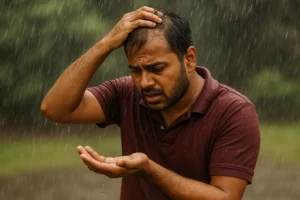
Rainwater is often considered one of the purest and gentlest types of water, making it potentially beneficial for your hair. However, extra caution is needed when it comes to the first rain of the season. With rising air and water pollution, the first showers often carry harmful chemicals and pollutants, commonly referred to as acid rain. It’s best to avoid exposure to this initial rainfall to prevent potential harm to your hair and scalp.
Once the first rain has passed, rainwater is generally safe and soft enough for your hair. That said, keeping your hair dry during the monsoon season is crucial. Excess moisture can lead to scalp infections and contribute to hair fall, so always ensure your hair is clean and dry to maintain a healthy scalp.
How to Prevent Monsoon Hair Loss?
Hair loss can often be reversed if tackled correctly. If you’re facing increased hair fall during the rainy season, here’s how you can care for your tresses and protect against damage.
1. Nurture Your Hair with Effective Oiling and Conditioning
Rainwater can leave your hair dry, frizzy, and prone to breakage. Regular oiling with nutrient-rich oils followed by deep conditioning can provide much-needed hydration, making your hair stronger and more resilient.
2. Keep Your Hair Dry
While rain showers can be tempting, frequent exposure to rainwater can weaken your hair and lead to scalp infections. Make it a habit to dry your hair thoroughly if it gets wet, and ensure your scalp stays clean and healthy.
3. Address Scalp Infections Promptly
Excessive moisture can create the perfect environment for scalp issues like dandruff and fungal infections such as ringworm. If you notice any signs of infection, act quickly by consulting experts to treat the condition and prevent further damage.
Taking these preventive steps can help you maintain healthy hair during the monsoon season. If you’re still struggling with persistent hair fall, it’s always a good idea to seek expert advice. At HairMD, a trusted hair care clinic, we offer tailored solutions to tackle the root cause of your hair loss and restore your confidence.
DO YOU KNOW?
Nearly 250 Patients Visit HairMD
Everyday For Various Hair Concerns
(20+ Years Of Expertise. 4157+ Successful Hair Transplant at HairMD)
Meet Our Dermatologists



Conclusion
Further Reading
Alopecia Areata Treatment Results in Pune
Real HairMD Pune patient regrowth results for alopecia areata – treatments used, what to expect, and before and after outcomes.
Alopecia Barbae: Causes and Effective Treatments for Bald Patches in Your Beard
Discover the causes of alopecia barbae and the best treatments for bald patches in the beard. Get expert advice from HairMD clinics, Pune
Is Rosemary Oil Enough for Hair Regrowth? When to Consider Something Stronger
Six months of rosemary oil and still losing hair? HairMD dermatologists explain when rosemary oil works, when it is not enough, and what to try next.
Redensyl vs Minoxidil vs GFC for Hair Loss: Which One Is Right for You?
Redensyl, minoxidil, or GFC therapy for hair loss? HairMD Pune dermatologists explain how each works, who each is for, and how to choose.
Have thoughts? Please let us know
We are committed not only to treating you, but also educating you.