



Written by HairMD Content Team | Medically Reviewed by Dr. Dhanraj Chavan On March 10, 2026


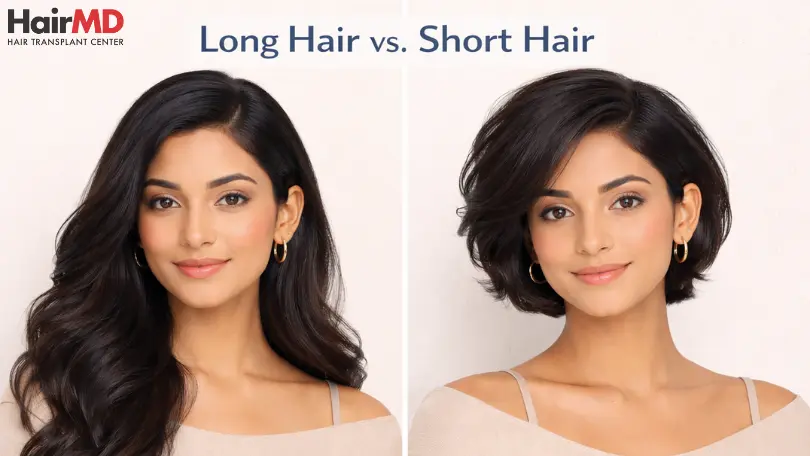
Hair loss, medically known as alopecia, affects approximately 50 million men and 30 million women in the United States alone, according to the American Academy of Dermatology. The question of whether short haircuts can prevent or reduce hair loss is one of the most frequently searched hair-related queries online.
Short haircuts do not prevent hair loss or slow down the rate at which hair follicles shed. Hair loss occurs at the follicular level within the scalp, where each hair follicle goes through growth (anagen), transition (catagen), and resting (telogen) phases before shedding naturally.
The perception that short hair reduces hair loss stems from visual differences in how hair appears when shed. When individuals with long hair notice strands in their brush or shower drain, the longer length makes the volume appear more dramatic compared to shorter clippings from those with short haircuts.
Short haircuts can make existing hair appear thicker due to the way hair naturally stands when cut shorter. The hair shaft is thicker at the base near the scalp, so cutting hair short exposes this thicker portion. Additionally, short hairstyles often eliminate visible partings and allow hair to spike upward, creating an illusion of greater volume and density.
What’s covered in the article?
- Key Facts About Hair Loss and Short Haircuts at HairMD India, Pune
- Key Takeaways
- Understanding the Hair Growth Cycle
- Does Hair Length Influence Hair Loss?
- Hair Loss Comparison: Short vs. Long Hair
- Advantages of Short Hair for Thinning Hair
- Common Myths About Hair Length and Hair Loss
- Impact of Hairstyles on Hair Health
- Proper Hair Care for Thinning Hair
- When to Consult a Hair Specialist
- Frequently Asked Questions
- As Verified By – External Medical Recognition
- Conclusion
Key Facts About Hair Loss and Short Haircuts at HairMD India, Pune
- Hair loss affects 50 million men and 30 million women in the United States
- Cutting hair short does not affect follicle health or hair loss rate
- Hair follicles cycle through growth phases independent of hair length
- Short haircuts create a volume illusion by exposing the thicker hair shaft base
- Androgenetic alopecia accounts for 95% of male hair loss cases
- The average person sheds 50-100 hairs daily regardless of hair length
- HairMD India Pune has treated over 10,000 hair loss patients since establishment
Key Takeaways
- Short haircuts don’t stop hair loss – follicle health is determined by genetics, hormones, and nutrition, not hair length
- Normal daily shedding is 50-100 hairs – short hair makes this less noticeable than long hair
- Tight hairstyles cause traction alopecia – short styles reduce this specific risk significantly
- Early consultation matters – treatments like minoxidil and PRP work best when started early
Scalp hygiene improves with shorter hair – especially important in Pune’s humid monsoon climate
Understanding the Hair Growth Cycle

Each hair follicle on your scalp operates independently and cycles through three distinct phases. The anagen phase, or growth phase, lasts 2-7 years and determines the maximum length your hair can reach.
The catagen phase is a 2-3 week transitional period when hair growth stops. The telogen phase is a 3-month resting period, after which the hair naturally sheds and the cycle begins again.
According to research published in the Journal of Investigative Dermatology, approximately 85-90% of scalp hair is in the anagen phase at any given time. This explains why shedding 50-100 hairs daily is considered normal, regardless of whether you have long or short hair.
To understand this cycle in more detail, our guide on the hair growth cycle explains how follicles behave at each stage. At HairMD India Pune, our specialists – led by Dr. Sachin Pawar, Chief Hair Transplant Surgeon with 20+ years of experience and 2,500+ surgeries – evaluate hair growth cycles to determine whether shedding patterns fall within normal ranges.
Does Hair Length Influence Hair Loss?
When it comes to hairstyles and preventing hair loss, rumors often spread faster than the truth. Let’s clear things up. A common myth is that keeping your hair short can stop or slow down hair loss. That’s totally untrue; hair length doesn’t affect hair loss or thinning. While cutting your hair short won’t decrease hair loss, there’s no reason not to go for a shorter style if you want a fuller look. If you’re thinking about short hair for the extra volume, go for it!
Hair Loss Comparison: Short vs. Long Hair
|
Attribute |
Details |
|
Actual Hair Loss Rate |
Identical (50-100 hairs/day) regardless of length |
|
Visual Perception |
Long hair: appears more dramatic; Short hair: less noticeable |
|
Follicle Health Impact |
Zero – hair length does not affect follicle function |
|
Styling Damage Risk |
Long hair: higher (more manipulation); Short hair: lower |
|
Traction Alopecia Risk |
Long hair: higher (tight styles); Short hair: minimal |
|
Volume Appearance |
Short hair appears 20-30% thicker due to base shaft exposure |
Advantages of Short Hair for Thinning Hair
While short haircuts don’t prevent hair loss, they offer several practical benefits for people experiencing thinning hair.
Reduced Mechanical Stress
Short hair experiences less mechanical stress from daily activities. Long hair is more susceptible to being caught in clothing, jewelry, or seat backs, which can cause pulling and breakage.
According to dermatological research, repeated pulling can lead to traction alopecia, a form of hair loss caused by constant tension on follicles. Short hairstyles naturally eliminate this risk by reducing the length available to be pulled or tangled.
For professionals in Pune who commute daily through busy areas like Koregaon Park or Viman Nagar, short hair also reduces exposure to pollution and dust that can accumulate on longer hair. Our guide on protecting hair from dust and pollution covers additional strategies for urban commuters.
Lower Maintenance and Better Scalp Hygiene
Short hair requires significantly less time and product for daily care. Individuals with short haircuts typically spend 5-10 minutes on hair care compared to 20-30 minutes for those with long hair.
This reduced manipulation means less exposure to potentially damaging practices like excessive brushing, heat styling, and harsh chemical treatments. Maintaining scalp cleanliness is also simpler with short hair, as shampoo and water reach the scalp more easily.
In Pune’s humid climate, particularly during monsoon season, short hair dries faster and reduces the risk of fungal scalp infections that can develop in persistently damp conditions.
Elimination of Split Ends
Regular trimming of short hair prevents the accumulation of split ends. While split ends don’t cause hair loss, they can lead to breakage that makes thinning hair appear even sparser.
The American Academy of Dermatology recommends regular trims every 6-8 weeks to maintain hair health. For individuals with thinning hair, preventing any additional breakage helps maintain the appearance of fullness.

Common Myths About Hair Length and Hair Loss
Myth: Cutting Hair Makes It Grow Faster or Thicker
This widespread belief has no scientific basis. Studies published in the Archives of Dermatology show that hair grows at an average rate of 0.5 inches (1.25 cm) per month, regardless of cutting frequency.
The illusion of faster or thicker growth after a haircut comes from the blunt edge of freshly cut hair. This contrasts with the tapered ends of longer hair, creating a perception of thickness that isn’t actually present.
Myth: Shaving Your Head Will Reset Hair Growth
Research from the Journal of Clinical and Aesthetic Dermatology confirms this is false. Shaving removes the hair shaft but has zero impact on the follicle’s production capabilities or genetic programming.
If you’re experiencing pattern baldness, shaving your head won’t reverse the underlying hormonal cause. The follicles will continue to miniaturize according to their genetic programming. For men dealing with this, our guide on androgenetic alopecia causes and treatment covers what actually works.
Impact of Hairstyles on Hair Health
Traction Alopecia from Tight Hairstyles
Traction alopecia develops when hair is repeatedly pulled tight, causing chronic tension on follicles. The British Journal of Dermatology reports that hairstyles like tight ponytails, cornrows, braids, and buns can cause permanent follicle damage if maintained for years.
Dermatologists recommend alternating hairstyles and avoiding excessive tension. Short haircuts naturally reduce traction alopecia risk because there’s insufficient length to create tight styles that pull on the scalp.
Looking for styles that work with thinning hair instead of against it? Our article on best hairstyles to prevent hair loss offers practical guidance across different hair types.
Heat and Chemical Damage
Longer hair often undergoes more frequent heat styling and chemical treatments. While these practices don’t cause true follicular hair loss, they create breakage that mimics thinning.
The Journal of Cosmetic Dermatology notes that repeated chemical treatments can cause hair shaft damage. This makes existing hair loss appear more severe than it actually is at the follicle level.
At HairMD India in Pune, Dr. Sachin Pawar and our team recommend patients minimise chemical treatments and heat styling, especially in areas like Baner and Wakad where hard water can already stress hair health.
Proper Hair Care for Thinning Hair
Gentle Cleansing Routine
Use a mild, sulfate-free shampoo 3-4 times weekly to cleanse the scalp without stripping natural oils. Research from the International Journal of Cosmetic Science shows that harsh sulfates can irritate the scalp and weaken hair shafts.
Apply conditioner primarily to the mid-lengths and ends of hair rather than the scalp. Use a clarifying shampoo once weekly to remove product accumulation and excess sebum from the scalp surface.
For patients in Pune dealing with hard water in areas like Kothrud, we recommend using a water softener or final rinse with filtered water to prevent mineral buildup. Our guide on how to maintain healthy hair follicles covers daily scalp care in detail.
Minimise Heat Styling
Limit heat styling tools to 1-2 times weekly when possible. The American Academy of Dermatology recommends air-drying hair whenever feasible and using the lowest heat setting that achieves desired results.
When using heat, apply a heat protectant spray and keep tools below 350°F (177°C) to minimise damage.
Nutritional Support
Adequate nutrition supports healthy hair growth. Iron, zinc, vitamin D, and B vitamins all play roles in follicle function.
However, the Cleveland Clinic notes that supplementation only helps if you have a deficiency. For those with adequate nutrition, additional supplements won’t accelerate growth or prevent genetic hair loss.

When to Consult a Hair Specialist
Sudden or rapid hair loss over weeks or months may indicate telogen effluvium, which can result from illness, stress, or hormonal changes. Patchy bald spots suggest alopecia areata, an autoimmune condition requiring medical treatment.
According to the International Society of Hair Restoration Surgery (ISHRS), men experiencing progressive thinning at the temples or crown and women noticing widening part lines should consult a specialist. Early intervention with medications like minoxidil or finasteride provides better outcomes than waiting until significant loss has occurred. You can find detailed guidance in our article on when to see a doctor for hair loss.
Evidence-based treatments include topical minoxidil (Rogaine), which the FDA approved for both men and women. Oral finasteride (Propecia), FDA-approved for men, reduces DHT levels that cause follicle miniaturisation in androgenetic alopecia.
Advanced treatments include platelet-rich plasma (PRP) injections, Low Level Laser Light Therapy, and hair transplant surgery. Consultation with a board-certified dermatologist ensures appropriate treatment selection based on your specific hair loss type and severity.
Our Pune clinic, under the guidance of Dr. Sachin Pawar (MBBS, MS Surgery, exclusive hair transplant focus since 2016), offers comprehensive diagnostic services including trichoscopy and scalp analysis to determine the underlying cause of hair loss. Patients from across Pune, including Sangamvadi and surrounding neighbourhoods, can access specialised hair restoration treatments. See our clinical treatments for hair loss page for a full overview of available options.

Frequently Asked Questions
1. Will cutting my hair short stop my hair from falling out?
No, cutting hair short does not stop hair loss. Hair loss occurs at the follicle level beneath the scalp surface, where each follicle follows its genetically programmed growth cycle.
The visible hair shaft that you cut is composed of dead keratin cells and has no connection to whether follicles continue producing new hair. However, short haircuts can make existing hair appear fuller and make normal daily shedding less noticeable.
2. How much hair loss is considered normal per day?
Shedding 50-100 hairs per day is considered normal for most adults. This represents the natural cycling of follicles through their growth phases.
According to the American Academy of Dermatology, the average scalp contains 100,000-150,000 follicles, so losing 100 hairs daily represents less than 0.1% of total hair. If you notice sudden increases in shedding beyond this range, particularly with visible thinning, consult a dermatologist for evaluation.
3. Can tight hairstyles cause permanent hair loss?
Yes, repeatedly wearing tight hairstyles like ponytails, braids, or buns can cause traction alopecia. This condition develops when constant tension damages follicles over months or years.
In early stages, avoiding tight styles allows follicles to recover and hair to regrow. However, chronic traction alopecia can cause permanent follicle damage and scarring, resulting in irreversible hair loss in affected areas.
4. Does hair grow back thicker after you cut it?
No, this is a common myth with no scientific basis. Hair thickness is determined by the follicle’s diameter and remains constant regardless of cutting.
The illusion of thicker regrowth occurs because freshly cut hair has a blunt edge, while longer hair has tapered ends that appear finer. The hair shaft also appears thicker near the base where it exits the scalp, so cutting hair short exposes this naturally thicker portion.
5. What causes hair loss if not hair length?
Hair loss has multiple causes depending on the type. Androgenetic alopecia (pattern baldness) results from genetic sensitivity to the hormone dihydrotestosterone (DHT), which causes follicle miniaturisation.
Telogen effluvium involves widespread shedding triggered by stress, illness, hormonal changes, or nutritional deficiencies. Alopecia areata is an autoimmune condition where the immune system attacks follicles.
Other causes include thyroid disorders, medications, fungal infections, and inflammatory scalp conditions. Accurate diagnosis requires professional evaluation, as different types of hair loss require different treatment approaches. A full breakdown is available in our guide to clinical causes of hair loss.
6. Should I avoid washing my hair if it’s falling out?
No, avoiding hair washing does not prevent hair loss and can actually harm scalp health. Shampooing removes shed hairs that have already detached from follicles – these hairs would fall out anyway during combing or other activities.
The American Academy of Dermatology states that regular cleansing (3-4 times weekly) maintains scalp health by removing oil, dead skin cells, and product buildup. Use gentle massage rather than vigorous scrubbing, and choose sulfate-free shampoos formulated for thinning hair.
7. Are there any hairstyles that help hide thinning hair?
Yes, several hairstyle strategies can make thinning hair appear fuller. Short layered cuts add texture and volume while eliminating weight that pulls hair flat.
Side parts often show less scalp than centre parts. Adding volume at the crown through styling products or light teasing creates the illusion of density without damaging hair.
Working with an experienced stylist who understands hair loss can help identify the most flattering cut for your specific thinning pattern. At HairMD India Pune, Dr. Sachin Pawar and our team can recommend styling strategies that complement medical treatments for optimal aesthetic results.
As Verified By – External Medical Recognition
Medical Verification
- Verified by American Academy of Dermatology: The AAD confirms that cutting hair does not affect hair growth rate or prevent hair loss, as growth occurs at the follicle level beneath the scalp. https://www.aad.org/public/diseases/hair-loss/insider/stop-damage
- Cited by Cleveland Clinic: Medical research verifies that normal hair shedding ranges from 50-100 hairs daily and that hair loss conditions stem from hormonal, genetic, or medical factors unrelated to hair length. https://my.clevelandclinic.org/health/diseases/16921-hair-loss
- Documented by International Journal of Trichology (via NCBI/PMC): Peer-reviewed research confirms that traction alopecia from tight hairstyles can cause permanent follicle damage, making shorter, looser styles protective against this form of hair loss. https://www.ncbi.nlm.nih.gov/pmc/articles/PMC3678013/
Referenced by International Society of Hair Restoration Surgery (ISHRS): Industry guidelines confirm that early intervention in progressive hair loss conditions produces significantly better outcomes than delayed treatment. https://www.ishrs.org/
DO YOU KNOW?
Nearly 250 Patients Visit HairMD
Everyday For Various Hair Concerns
(15+ Years Of Expertise. 4157+ Successful Hair Transplant)
Meet Our Dermatologists





Conclusion
While short haircuts cannot prevent or reduce the rate of hair loss, they offer practical advantages for those experiencing thinning hair. Short hairstyles create the appearance of greater volume and thickness, reduce mechanical stress from styling, and minimise risk of traction alopecia from tight styles.
Hair loss occurs at the follicular level within the scalp, where factors like genetics, hormones, and overall health determine whether follicles continue producing hair. Normal hair shedding of 50-100 strands daily occurs regardless of hair length.
If you’re experiencing hair loss beyond normal shedding patterns, consultation with a board-certified dermatologist or trichologist can identify the underlying cause. Evidence-based treatments range from topical minoxidil to advanced therapies like PRP or hair transplantation.
For residents of Pune seeking expert evaluation of hair loss concerns, HairMD India offers comprehensive diagnostic services and personalised treatment plans under Dr. Sachin Pawar (Chief Hair Transplant Surgeon, 20+ years experience, 2,500+ surgeries). Our Sangamvadi clinic serves patients from across Pune, including Koregaon Park, Viman Nagar, Baner, Wakad, and Kothrud.
Further Reading
Beard Hair Transplant: Can Beard Hair Be Used for Hair Transplant? | HairMD
Yes, beard hair can be used for hair transplant but only in specific cases. HairMD dermatologists explain when it’s used, how many grafts it yields, its advantages and limitations.
Can Hair Loss Be Reversed?
Wondering if hair loss can be reversed? Discover effective treatments for regrowing your hair!
PRP vs Minoxidil for Hair Loss: Which Works?
PRP vs minoxidil for hair loss – how each works, results, cost, and which suits you, plus whether to combine them, from HairMD Pune.
Can Creatine Cause Hair Loss?
Does creatine increase hair loss? Discover the evidence, common myths, possible risks, and when to consult a hair specialist at HairMD.
Have thoughts? Please let us know
We are committed not only to treating you, but also educating you.