

How Many Grafts or Follicles Do You Really Need for a Full Look?


Written by HairMD Content Team | Medically Reviewed by Dr. Dhanraj Chavan On January 27, 2026


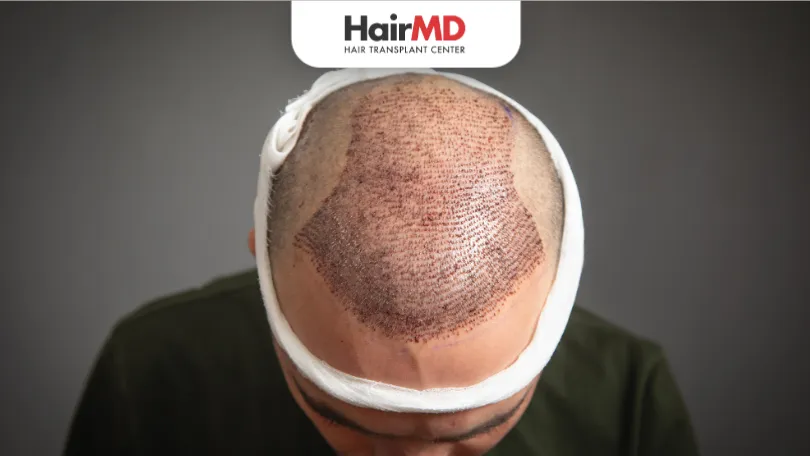
The “3000 or 2000” Graft Myth
“I need 3,000 grafts for full coverage.”
This is a statement I hear almost daily in my OPD. Patients often come to me with a fixed number in their heads, usually influenced by internet forums or marketing packages that sell transplants by the “number of grafts.”
The truth is, there is no magic number.
A 3,000-graft transplant can look thin and sparse on one patient, while a 2,000-graft procedure can look dense and full on another.
Why? Because hair restoration is about coverage value and optical density, not just counting roots.
The “3,000 graft” figure is often a marketing myth rather than a medical necessity.
Quick Summary
- Quality over quantity: The visual density of a hair transplant depends on hair thickness, hair count per graft, and smart placement—not just the raw number of grafts.
- Graft ≠ follicle: One graft can hold 1 to 4 follicles. Clinics quoting “grafts” but splitting them into singles give misleading impressions of density.
- Donor zone limits: Your donor area is finite—over-harvesting for “big numbers” risks permanent thinning or patchiness.
- Norwood stage matters: Actual graft requirements change by pattern and stage of hair loss (Norwood Scale).
- Strategic planning: The best clinics consider your future hair loss, priorities for each scalp zone, and tailor graft counts—there’s no “one size fits all.”
What’s covered in the article?
- What’s a Graft vs. a Follicle? Why Does It Matter?
- Where Did the “3,000 Graft” Number Come From?
- What Decides How Many Grafts You Need?
- How Many Grafts Per Norwood Stage?
- Why Should You Choose Grafts Over Number of Hairs for Your Transplant?
- Section-wise Graft Requirements (Hairline, Temples, Crown)
- How Many Grafts is Safe to Harvest in One Session?
- Common Graft Misconceptions Demystified
- Frequently Asked Questions
- Conclusion
What’s a Graft vs. a Follicle? Why Does It Matter?
Many people use “graft” and “follicle” interchangeably, but in Hair Transplantation Treatment, they are different.
- A graft: A naturally occurring bundle of 1–4 hair follicles, called a follicular unit, which is transplanted as one “so 1 graft may have 1 to 4 hairs.”
- A follicle: The anatomical root from which each hair grows; one graft can have several follicles.
In my practice at HairMD clinics in Pune and Pimpri Chinchwad, I routinely see confusion around these terms.
For example, you may pay for 2,500 grafts at one clinic but get sparse coverage if they have split up the natural units into single follicles.
In contrast, 2,500 true follicular unit grafts (with 2–3 follicles each) might give you 5,000 to 7,000 hairs and excellent density.
Always clarify what you’re being quoted—grafts or hairs.
Where Did the “3,000 Graft” Number Come From?
The number 3,000 is popular because of marketing packages and clinic advertisements.
But this figure ignores variations in bald area size, hair calibre, donor supply, and cosmetic goals. It is not based on science or individual need.
If 3,000 grafts are distributed over a large bald area, the result will look thin and sparse. On a smaller area, the same count may look lush.
Hair restoration is about coverage value:
Coverage Value=Hair Density(hairs/cm2) × Hair Shaft Diameter(mm or microns)
Therefore, one person’s “full look” could come from 2,000 well-chosen grafts, while another might need 3,500.
What Decides How Many Grafts You Need?
Several factors determine your actual graft requirement:
- Hair Thickness (Calibre): The thicker your individual hair shafts (measured in microns), the better they block light and provide coverage.
- Area to Cover: We measure the bald or thin zone in square centimetres. More area means more grafts needed.
- Hairs per Graft: If your natural follicular units are 3-4 hairs each, you need fewer grafts for a dense look.
- Contrast (Hair and Skin Colour): High contrast (light skin, dark hair) demands tighter spacing for good results.
- Curl/Wave: Wavy or curly hair shingling gives the illusion of greater density compared to straight hair.
- Donor Supply: You cannot transplant what you don’t have. The safe donor area has a finite number of grafts you can remove over your lifetime.
How Many Grafts Per Norwood Stage?
The Norwood Scale is the global standard for classifying Male pattern baldness.
Here’s an approximate breakdown for each stage:
| Norwood Stage | Area Covered | Typical Grafts Needed |
|---|---|---|
| 2 | Maturing hairline | 800–1,500 |
| 3 | Temporal recession | 1,500–2,500 |
| 4 |
Frontal + slight crown |
2,200–3,000 |
| 5 | Large top + crown | 3,000–4,000+ |
| 6-7 | Near-total baldness | 4,500+ (often in 2 sessions) |
These are estimates—actual need varies by scalp size, hair characteristics, and donor supply, so an in-person assessment is recommended
Why Should You Choose Grafts Over Number of Hairs for Your Transplant?
When considering a hair transplant, it’s crucial to focus on the number of grafts rather than individual hairs.
A graft refers to a small unit of tissue containing hair follicles, and each graft can contain anywhere from 1 to 4 hairs.
The reasoning behind prioritising grafts is that they maintain the integrity of natural hair groupings, allowing for a more realistic and aesthetically pleasing result.
Additionally, planning based on grafts enables the Hair surgeon to strategically place the follicles to mimic natural growth patterns, ensuring even density across the affected areas.
Focusing solely on the number of hairs can be misleading and might result in an unnatural outcome, as hair density and follicle spacing are key to achieving a balanced and natural-looking hairline.
By choosing an approach centred on grafts, you’re opting for a tailored solution that aligns with your unique hair restoration needs.
Section-Wise Graft Requirements (Hairline, Temples, Crown)
Transplant surgeons create the illusion of density by focusing more grafts on visually critical areas:
- Frontal Hairline: Needs the highest density for a natural look. Typically, 500–1,000 grafts focused within the first 1–2 centimetres.
- Temples: These frame the face and affect aesthetics. Usually 150–300 grafts per side, feathered in.
- Midscalp: Connects hairline to crown. About 1,000–1,500 grafts depending on area.
- Crown (Vertex): Requires a lot of grafts for full coverage (up to 1,500–2,000+), but often lower density is applied here if donor hair is limited.
Section-wise planning maximises the “wow factor” by strategically distributing available grafts.
How Many Grafts is Safe to Harvest in One Session?
Safety of your donor area is the surgeon’s priority. Over-harvesting can leave it patchy or thin for life.
- Typical limit: 2,500–3,500 grafts per session, depending on donor density and scalp laxity.
- Max lifetime yield: Most Indian males have about 6,000–8,000 extractable grafts over a lifetime. Spreading harvesting over two or more sessions may be safer, especially for advanced baldness.
Mega-sessions of 4,000–5,000 grafts are possible but only in patients with exceptionally high donor density. Each case must be personalised after digital analysis.
Common Graft Misconceptions Demystified
Myth 1: “More grafts means denser hair.”
False. Poor technique, improper placing, or breaking up natural grafts into singles can leave poor density even with “big numbers.”
Myth 2: “A dense hairline is always best.”
The natural hairline is feathered with singles in front. Packing multi-hair grafts densely at the front leads to an unnatural “toothbrush” look.
Myth 3: “One session can fix everything.”
Trying to cover Norwood 6–7 in one sitting often results in poor growth or visible thinning at the back. The best results come from phased, well-planned procedures.
Myth 4: “You can harvest unlimited donor hair.”
Once the donor area is depleted or scarred, regrowth isn’t possible. Responsible surgeons always leave enough donor reserves for possible future procedures.
Frequently Asked Questions
Is 3,000 grafts enough for a full hair transplant?
Not always. A “full look” depends on factors like bald area size, hair thickness, follicles per graft, and placement strategy. Some patients achieve good density with fewer grafts, while others may need more.
What is the difference between grafts and hair follicles?
A graft is a natural unit of hair that can contain 1 to 4 follicles. Clinics that quote only hair count instead of true grafts can give a misleading idea of density.
Can fewer grafts still give a dense and natural result?
Yes. Patients with thick hair, good donor density, and multi-hair grafts can achieve excellent coverage with fewer grafts when placed strategically.
How do doctors calculate how many grafts I need?
Graft calculation is based on your Norwood stage, area of hair loss, donor strength, hair calibre, scalp characteristics, and future hair loss planning—not a fixed number.
Is there a safe limit to how many grafts can be harvested?
Yes. The donor area has a finite supply. Over-harvesting can cause permanent thinning, so graft extraction must be carefully planned, sometimes across multiple sessions.
DO YOU KNOW?
Nearly 250 Patients Visit HairMD
Everyday For Various Hair Concerns
(15+ Years Of Expertise. 4157+ Successful Hair Transplant)
Meet Our Dermatologists


Conclusion
There is no universal graft count for a “full” transplant. The 3,000-graft myth ignores individual anatomy, donor supply, hair calibre, and future loss. Your “full look” should be based on sound surgical planning and realistic expectations—not round numbers or package deals.
In my years at HairMD Pune and Pimpri Chinchwad, individualised plans based on digital scalp assessments and personalised goals consistently deliver the best results. You owe it to yourself to get a tailored strategy—one that conserves precious donor hair, maximises density where it matters, and positions you for lifetime satisfaction.
Ready to discover your actual graft needs and get the most natural, long-lasting result?
Book your professional assessment at HairMD clinics today.
let’s plan a hair restoration journey that really suits you.
Further Reading
HairMD Pune Patient Selection Criteria: Who Qualifies for Hair Treatment?
Not everyone is fit for hair treatment. See how HairMD Pune selects patients for safe, effective hair loss solutions and long-term results.
Manual FUE vs Motorized FUE: Which Hair Transplant Method Is Better?
Manual vs motorized FUE explained simply. Compare speed, control, graft safety, and results to choose the right hair transplant method.
Hair Transplant vs PRP vs Mesotherapy: Best Treatment for Early Baldness
Hair transplant vs PRP vs mesotherapy in Pune. Compare results, cost, sessions, and find the right treatment for early hair thinning.
GFC vs Exosome Therapy: Which Hair Treatment Works Better in 2026?
GFC or Exosome therapy—which one actually works for your hair loss? The right choice depends on your stage and scalp condition.
Have thoughts? Please let us know
We are committed not only to treating you, but also educating you.