

Correcting the ‘Corn-Row’ Look: How We Fix Bad Transplants in 2026


Written by HairMD Content Team | Medically Reviewed by Dr. Dhanraj Chavan On February 25, 2026



One of the most distressing outcomes I see in my revision surgery practice is the “corn-row” or “doll’s hair” look.
Patients come to our HairMD clinics in Pune and Pimpri Chinchwad not for a first-time procedure, but to correct a previous one that has left them with an unnatural, pluggy hairline.
This look is a direct result of outdated techniques or untrained hands, where multi-hair grafts are placed in straight lines, creating an appearance far from natural.
As a Hair surgeon with over 18+ years of experience, I want to assure you that while fixing a bad transplant is complex, it is absolutely possible to restore a natural appearance and your confidence.
What’s covered in the article?
- Quick Summary
- Why Do Some Hair Transplants Look Like ‘Corn-Rows’?
- The Medical and Artistic Challenge of Repairing a Bad Transplant
- Our Step-by-Step Process for Correcting a Botched Hairline
- Techniques We Use in Revision and Repair Surgery
- The Importance of Intra-Operative Care: The Difference is in the Details
- Setting Realistic Expectations for Your Revision Transplant
- Why You Must Choose a Clinic Wisely: Quality over Cost
- Why Choose HairMD in Pune to Correct Your Transplant?
- Frequently Asked Questions
Quick Summary
- What is the ‘Corn-Row’ Look? This unnatural hairline is caused by placing large, multi-hair follicular units in straight, evenly-spaced rows, resembling doll’s hair.
- Why Does it Happen? It is typically the result of procedures performed by inexperienced practitioners or “technician-only” clinics that lack the artistic skill and medical knowledge to create a natural hairline.
- Can it be Fixed? Yes. Repairing a bad transplant involves a combination of removing poorly placed grafts, redesigning the hairline, and strategically placing new, single-hair grafts to create a soft, natural look.
- Why is Repair Difficult? A revision surgery is more challenging than a primary one due to scar tissue, a depleted donor area, and the delicate task of extracting old grafts without further damaging the scalp.
- The Key to Success: Correction requires a highly skilled, ISHRS-certified surgeon who specialises in repair work and has a deep understanding of facial aesthetics and long-term hair management.
Why Do Some Hair Transplants Look Like ‘Corn-Rows’?
The ‘corn-row’ effect is a tell-tale sign of a poorly executed hair transplant.
In natural hair, the frontal hairline is not a straight, hard line. It’s an irregular “transition zone” composed of very fine, single-hair follicular units that gradually build density.
This unnatural look occurs for several specific reasons:
- Use of Multi-Hair Grafts: The frontal 1-2 cm of the hairline should exclusively use single-hair grafts. Placing grafts with 2, 3, or even 4 hairs creates a pluggy, dense appearance.
- Linear Planting: Placing grafts in straight, geometric rows instead of a staggered, random pattern immediately signals an artificial hairline. Nature is never perfectly symmetrical.
- Incorrect Angulation: Hair in the hairline grows at a sharp, forward angle (acute angle). If grafts are placed perpendicularly (at 90 degrees), the hair stands straight up, contributing to the doll’s hair look.
- Lack of Gradation: A skilled surgeon creates a soft, feathered look by meticulously blending graft sizes—starting with singles, then moving to doubles, and so on. Inexperienced hands often skip this crucial artistic step.
In my practice, I have observed that this issue is most common in patients who opted for suspiciously cheap procedures, often performed in “technician-only” setups where the surgical and artistic planning is absent.
The Medical and Artistic Challenge of Repairing a Bad Transplant
Correcting a failed transplant is significantly more complex than performing a primary one. It’s not just about adding more hair; it’s about undoing previous damage before creating a new, better result.
The key challenges are:
- Limited Donor Supply: The first surgeon may have over-harvested the donor area, leaving very few healthy grafts for the repair work. This is why a “Donor Management Strategy” is critical from the very first procedure.
- Scar Tissue: The recipient area is often filled with scar tissue from the previous surgery. Placing new grafts into a scarred scalp requires more precision, as blood supply can be compromised.
The formula for graft survival, which relies on scalp vascularity, becomes much more complex:
Survival Rate in Scar Tissue < Survival Rate in Virgin Scalp
- Graft Extraction: Removing the old, improperly placed grafts is a delicate process. We must extract them without damaging the surrounding skin or any viable native hair.
Our Step-by-Step Process for Correcting a Botched Hairline
When a patient comes to HairMD for a revision, we follow a meticulous, multi-stage process.
- Step 1: Comprehensive Assessment: First, I conduct a detailed trichoscopic analysis to evaluate the existing grafts, the extent of scarring, and the remaining density of your donor area. We discuss what you dislike about the current result and what a realistic, improved outcome looks like.
- Step 2: Removal of Bad Grafts (Graft Excision): This is often the most critical step. Using highly precise micro-punches, we carefully remove the thick, multi-hair grafts from the unnatural hairline. These extracted grafts are not discarded; if viable, my technicians will dissect them into single-hair units under a microscope to be used later.
- Step 3: Healing and Recovery: The scalp needs time to heal after the excisions. This waiting period, usually a few months, is crucial for the blood supply to return to normal before we attempt to implant new grafts.
- Step 4: The Definitive Repair Surgery: Once the scalp has healed, we perform a new FUE transplant. This time, we focus on artistry. We create a completely new, soft, and irregular hairline using only the finest single-hair grafts. We then add density behind this new hairline to create a seamless, natural blend.
Techniques We Use in Revision and Repair Surgery
Fixing a bad transplant requires a combination of surgical techniques tailored to the individual’s specific problem.
- FUE Graft Excision: This is our primary method for removing large, misplaced grafts. It allows for targeted removal with minimal additional scarring.
- Camouflaging: If the misplaced grafts are not excessively pluggy but are simply in a straight line, we can sometimes “camouflage” them. This involves placing a new, irregular row of single-hair grafts in front of the old hairline to break up the harsh line and create a softer transition.
- Body Hair Transplant (BHT): In cases where the scalp donor area is severely depleted, we may need to harvest grafts from secondary sources, such as the beard or chest. Beard hair is particularly useful for adding density behind the hairline due to its thickness.
A clinical insight I can share is from a gentleman from Delhi who had a prominent ‘corn-row’ hairline from a procedure done a decade ago. His scalp donor was exhausted. Our strategy involved first removing about 200 of the most visible pluggy grafts. Then, three months later, we used 500 beard grafts combined with 800 scalp grafts to create a new, softer hairline in front of the old one and add density. The result was transformative, not because we added a huge number of grafts, but because we corrected the fundamental artistic errors.
Travelling for corrective hair transplant surgery?
We assist patients from Mumbai, Delhi, Bangalore, and across India with structured planning and long-term follow-up.
Setting Realistic Expectations for a Revision Transplant
It is vital to understand that a repair surgery aims for significant improvement, not perfection.
The goal is to make the transplant look so natural that it is undetectable in public. However, the final density we can achieve depends heavily on the condition of your scalp and the availability of donor grafts.
I am always transparent with my patients at our Pune Hair Transplant clinic about what is surgically possible.
Why You Must Choose a Clinic Wisely: Quality over Cost?
The prevalence of botched transplants is directly linked to the rise of budget clinics promising high graft counts for low prices.
A hair transplant is a medical surgery, not a commodity. The cost reflects the surgeon’s skill, the technology used, the safety protocols in place, and the time dedicated exclusively to you.
Choosing a cheap option often leads to paying double in the long run—once for the bad procedure, and again for the complex repair.
Ready to take the first step towards correcting your hair transplant?
Book a private consultation at HairMD in Pune or Pimpri Chinchwad. Let’s discuss your case and build a strategy to achieve the natural result you always wanted.
Frequently Asked Questions
Q: Can a hair transplant be done a second or third time?
A: Yes, provided you have sufficient donor grafts remaining in your scalp or on your body (like the beard). A thorough donor assessment is the first step in planning any subsequent procedure.
Q: How long do I have to wait to fix a bad hair transplant?
A: You should wait at least 12 months after your initial procedure. This allows for the final results to become fully visible and for your scalp to heal completely before undergoing another surgery.
Q: Is revision surgery more painful?
A: No. Like a primary transplant, the procedure is performed under local anaesthesia, so you will not feel any pain. The post-operative recovery is also very similar.
Q: How much does a hair transplant cost?
A: The cost of a hair transplant varies depending on factors such as the extent of hair loss, the technique used, and the clinic’s location. It is recommended to schedule a consultation to receive a personalised quote based on your specific needs.
Q: Are the results of a hair transplant permanent?
A: Yes, hair transplants are considered a permanent solution for hair loss. The transplanted hair is taken from areas resistant to hair loss, ensuring it continues to grow naturally over time.
Q: How soon can I go back to work after a hair transplant?
A: Most patients return to work within 2-5 days after the procedure. However, this may vary depending on the nature of your job and individual recovery progress.
Q: Will a hair transplant look natural?
A: When performed by a skilled surgeon, a hair transplant can look completely natural. Advanced techniques and careful planning ensure the transplanted hair mimics your natural hairline and growth pattern.
DO YOU KNOW?
Nearly 250 Patients Visit HairMD
Everyday For Various Hair Concerns
(15+ Years Of Expertise. 4157+ Successful Hair Transplant)
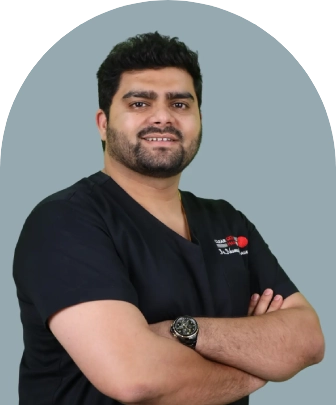
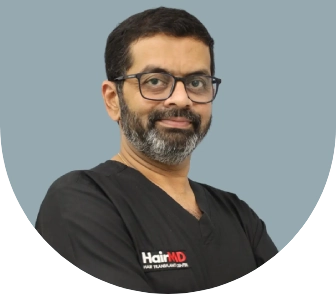
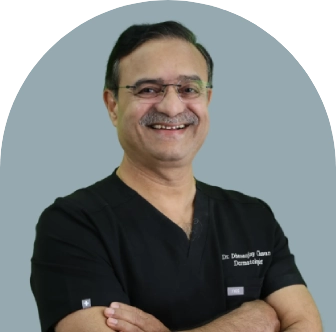
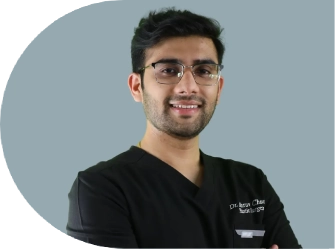
Meet Our Dermatologists

Why Choose HairMD in Pune to Correct Your Transplant?
At HairMD, we consider revision surgery a core specialty. Our approach is built on a foundation of medical ethics and surgical artistry.
- Surgeon-Led Process: I personally conduct the assessment, the graft excisions, and the design and creation of the new hairline. You are in the hands of an experienced, ISHRS-certified surgeon from start to finish.
- Advanced Technology: We use high-magnification microscopy for graft dissection and state-of-the-art FUE technology to minimise trauma to both the donor and recipient areas.
- Honest Consultation: We will give you a transparent assessment of what went wrong and a realistic plan for how to fix it. We will never promise something we cannot deliver.
Your face is not the place for a bargain. If you are living with the regret of a bad hair transplant, know that there is a solution.
Ready to explore how we can correct your previous transplant?
Book a consultation at HairMD in Pune or Pimpri Chinchwad. Let’s create a personalised plan to give you the natural-looking hairline you deserved from the start.
Further Reading
2026 Guide to Fixing a Failed Hair Transplant | Revision Surgery Pune
Expert repair surgery for botched hair transplants in Pune. Correct unnatural hairlines, scarring, and low graft survival safely.
Hair Transplant in Pune for Outstation Patients | 2026 Guide
Coming from Mumbai, Delhi, Bangalore, or abroad? Here’s a step-by-step plan for safe, transparent, surgeon-led hair transplant in Pune.
5 Questions for your Hair Transplant Surgeon & Clinic
Before booking your hair transplant, ask these 5 critical questions to avoid technician-run clinics and protect your donor area for life.
Complete Guide: Medical Criteria for Hair Transplant Candidacy
Comprehensive guide to medical criteria for hair transplant candidacy including age requirements, donor area quality, medical conditions, and evaluation process at HairMD India Pune.
Have thoughts? Please let us know
We are committed not only to treating you, but also educating you.