

Complete Guide: Medical Criteria for Hair Transplant Candidacy


Written by HairMD Content Team | Medically Reviewed by Dr. Dhanraj Chavan On February 21, 2026


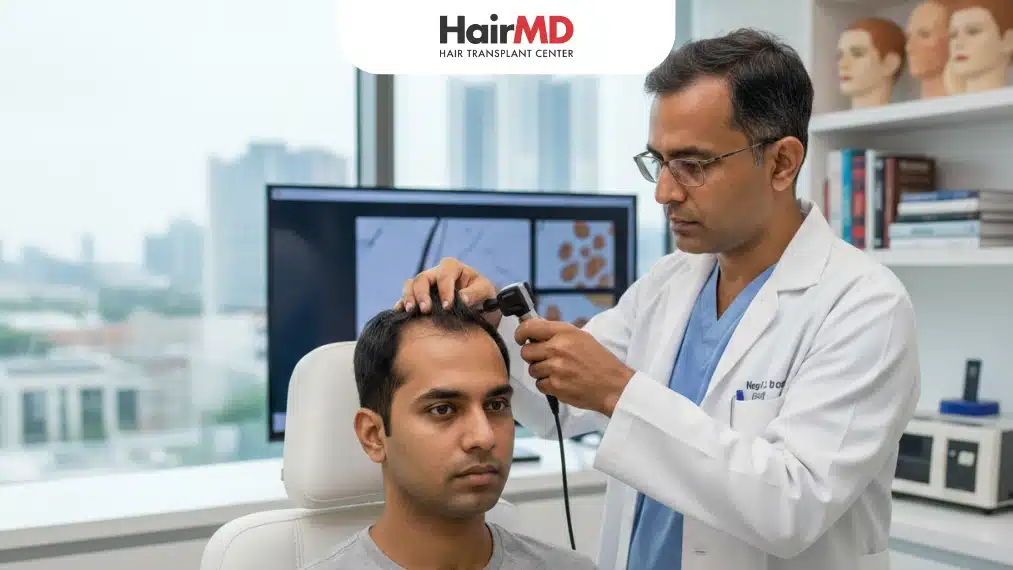
Medical candidacy for hair transplant surgery determines whether a patient is medically fit and anatomically suitable for the procedure. Qualified hair restoration surgeons evaluate candidacy through comprehensive medical history review, blood reports investigation and physical examination.
The evaluation process examines the candidates age, overall health status, donor area quality, and hair loss pattern stability. They need to furnish a physician’s fitness certificate to mitigate any medical risks. These criteria ensure patient safety and optimize FUE hair transplant outcomes.
Key eligibility categories include minimum age requirements, adequate donor hair density, controlled medical conditions, and realistic expectations. Dr. Sachin Pawar at HairMD India Pune evaluates eight primary medical criteria during candidacy assessment.
The International Society of Hair Restoration Surgery establishes ethical guidelines that prioritize patient safety over commercial interests.
What’s covered in the article?
- Key Medical Criteria for Hair Transplant Candidacy at HairMD India Pune
- Key Takeaways
- Understanding Medical Candidacy for Hair Transplant
- Age Requirements for Hair Transplant Candidacy
- Hair Loss Pattern and Stability Requirements
- Donor Area Quality and Requirements
- Medical Conditions That Affect Candidacy
- Medication Compatibility and Requirements
- Psychological and Lifestyle Factors
- Special Candidacy Situations
- Dr. Sachin Pawar’s Candidacy Evaluation at HairMD India
- Frequently Asked Questions
- Medical Criteria Validated by Leading Hair Restoration Authorities
- Conclusion
Key Medical Criteria for Hair Transplant Candidacy at HairMD India Pune
- Minimum age requirement is 18-25 years with stable hair loss pattern verification
- Donor area must contain 65-85 follicular units per square centimeter for optimal results
- Uncontrolled diabetes and active autoimmune conditions require medical stabilization first
- Blood thinning medications must be discontinued 7-10 days before FUE procedure
- Norwood Scale Stage 3-7 patients typically qualify with adequate donor hair density
- Psychological evaluation confirms realistic expectations and absence of body dysmorphic disorder
- Dr. Sachin Pawar evaluates 8 medical criteria during candidacy assessment at HairMD
Key Takeaways
- Understanding medical eligibility prevents surgical complications and ensures optimal FUE hair transplant outcomes for patients in Pune
- Dr. Sachin Pawar’s 20+ years of experience includes evaluating 2,500+ candidates for hair restoration at HairMD India
- Early candidacy evaluation helps identify medical conditions requiring treatment before hair transplant surgery can proceed safely
- HairMD India Pune follows ISHRS guidelines for ethical patient selection and comprehensive safety protocols
Understanding Medical Candidacy for Hair Transplant
Medical candidacy combines medical fitness and hair and scalp suitability required for safe hair transplant surgery. Strict medical criteria protect patient safety by identifying conditions that could compromise healing.
Who Evaluates Candidacy?
Hair transplant candidacy must be evaluated by qualified hair restoration surgeons. Dr. Sachin Pawar, Chief Hair Transplant Surgeon at HairMD India, brings 20+ years of experience and has performed 2,500+ FUE procedures. ISHRS and ABHRS certification indicates surgeons have met rigorous training and ethical standards.
The Evaluation Process at HairMD India
The evaluation at HairMD India Pune includes comprehensive medical history review, physical scalp examination, donor area density measurement using trichoscopy, and pre-operative blood testing for hemoglobin, blood sugar, and thyroid function and physical fitness of the candidate.
Age Requirements for Hair Transplant Candidacy
Age influences candidacy because hair loss patterns stabilize at different rates. Young patients risk depleting donor supply before their eventual pattern becomes clear.
Key Candidacy Criteria
|
Criteria |
Requirement |
Reason |
|
Minimum Age |
25 years (18-25 with caution) |
Ensures stable hair loss pattern |
|
Maximum Age |
No upper limit if healthy |
General health determines eligibility |
|
Donor Density |
65-85 FU/cm² optimal |
Adequate grafts for coverage |
|
Hair Loss Stage |
Norwood 3-7, Ludwig 1-3 |
Sufficient loss to justify surgery |
|
Scalp Health |
No active infections/inflammation |
Safe healing environment required |
|
General Health |
Controlled chronic conditions |
Minimizes surgical risks |
|
Psychological Status |
Realistic expectations |
Ensures patient satisfaction |
|
Medication Status |
Physician Fitness Certificate required |
Reduces medical risk |
Why Age Matters
Patients between 18-25 years often experience rapidly progressive male pattern hair loss that continues for years. Early transplant risks creating isolated patches surrounded by continued balding.
The ideal age range of 25-40 provides stable patterns allowing accurate future prediction. Patients over 40 generally have established patterns. There is no upper age limit as long as health supports surgery.
Hair Loss Pattern and Stability Requirements
Pattern recognition allows surgeons to predict future balding and plan long-term results. Unstable or rapidly progressing hair loss temporarily disqualifies candidates.
Understanding Hair Loss Patterns and Stability
The Norwood-Hamilton Scale classifies male pattern baldness from Stage 1 through Stage 7. The Ludwig Scale for women uses Grades 1-3 to describe female pattern hair loss.
Stable hair loss shows no significant change over 12+ months. Progressive loss requires medical therapy with finasteride or minoxidil until stabilization occurs.
Hair miniaturization over 15% in recipient areas indicates active balding that may continue post-transplant. Dr. Sachin Pawar uses trichoscopy to measure miniaturization percentages.
Norwood Stage 1-2 patients typically lack sufficient loss to justify transplantation. Stage 3-5 represents ideal candidacy with adequate donor area and clear patterns. Stage 6-7 requires exceptional donor quality and realistic expectations about strategic coverage rather than full density.
Donor Area Quality and Requirements
The donor area provides all grafts for transplant, making its quality the most critical candidacy factor.
Donor Requirements
The safe donor zone occupies the mid-occipital region where hair resists androgenic miniaturization. Donor hair retains its genetic resistance after transplantation, explaining permanent results.
Optimal donor density exceeds 80 FU/cm². Acceptable density ranges 65-80 FU/cm². Poor density below 40 FU/cm² severely limits or eliminates candidacy.
Hair caliber impacts coverage—thicker hairs provide more surface coverage per graft. Hair color versus skin contrast affects visual density. Maximum safe extraction should not exceed 25% of follicular units in the permanent donor zone.
Body hair transplant using beard hair grafts can supplement limited scalp donors in advanced balding. In select advanced cases, beard GRAFT may be used as a supplementary donor source.

Medical Conditions That Affect Candidacy
Certain conditions require stabilization before surgery. Some may permanently disqualify candidates if uncontrolled.
Active Alopecia areata requires minimum 2 years remission. Lupus and rheumatoid arthritis need well-controlled disease. Active Psoriasis affecting the scalp requires treatment before transplantation.
Diabetes should be under control. Thyroid disorders require normalization. Anemia should be corrected to optimize graft survival.
Hemophilia and bleeding disorders represent absolute contraindications. Hypertension must be controlled. Blood thinners require discontinuation 7-10 days pre-operatively after physician consultation.
Active scalp infections must resolve before transplant. Seborrheic dermatitis requires control. Keloid tendency requires careful evaluation. Scarring alopecia generally disqualifies patients.
HIV and Hepatitis C don’t automatically disqualify when viral loads are controlled. Cancer patients need 6-12 months remission post-chemotherapy. Smoking must cease 2 weeks before and after surgery.
Medication Compatibility and Requirements
Current medications may need adjustment before surgery to minimize bleeding and optimize healing.
Anticoagulants (warfarin) must stop 7-10 days pre-operatively after physician consultation. Antiplatelet drugs (aspirin, clopidogrel) require discontinuation. NSAIDs (ibuprofen, naproxen) should stop 5-7 days before. Vitamin E and fish oil supplements also thin blood.
Finasteride typically continues through surgery. Minoxidil may be paused 20-25 days before. Blood pressure and thyroid medications continue with monitoring.
Organ transplant patients require coordination between Dr. Sachin Pawar and their transplant team. Immunosuppression may affect healing but doesn’t automatically disqualify candidates.
Psychological and Lifestyle Factors
Psychological readiness and lifestyle modifications are as important as physical health.
Realistic expectations prevent post-operative dissatisfaction. Hair transplant cannot restore teenage density. Body dysmorphic disorder screening identifies patients requiring psychological treatment rather than surgery. Understanding hair transplant results requires accepting visible scalp between transplanted hairs.
Smoking cessation is mandatory for 2 weeks before and after surgery. Alcohol should be minimized for 1 week pre-operatively. Exercise restrictions apply for 2-4 weeks post-surgery.
Multiple sessions may be needed for extensive coverage. The 12-month timeline for full results requires patience. Maintenance medications often continue long-term.
Special Candidacy Situations
Certain populations require modified evaluation criteria.
Female pattern hair loss typically presents as diffuse thinning. Diffuse unpatterned alopecia (DUPA) may disqualify female candidates if donor areas show miniaturization. Hormonal evaluation may reveal treatable causes. Hair transplant success rates in women remain high when appropriate candidates are selected.
Patients under 25 require exceptional justification. Trauma-induced hair loss from accidents justifies early intervention. Medical therapy trials lasting 1-2 years demonstrate responsiveness before surgery.
Advanced balding (Norwood 6-7) requires realistic expectations about strategic coverage. Staged procedures spread distribution over 2-3 sessions. Body hair supplementation expands the donor pool.
Revision candidates require evaluation of previous transplant quality and donor depletion. Scar tissue may compromise new graft survival.
Dr. Sachin Pawar’s Candidacy Evaluation at HairMD India
The evaluation follows systematic protocols ensuring thorough assessment of all candidacy factors.
Dr. Sachin Pawar begins with comprehensive medical history covering previous treatments, family history, current medications, and lifestyle factors including smoking and alcohol use.
Physical examination includes scalp health evaluation, hair loss pattern documentation using Norwood or Ludwig classification, donor density measurement with trichoscopy, and miniaturization assessment.
Diagnostic testing includes complete blood count (CBC), blood sugar testing, thyroid function tests, and scalp trichoscopy. Photography creates permanent records for tracking results.
Treatment planning calculates graft requirements, discusses hairline design, explains staging if needed, and provides complete cost and timeline transparency.
Frequently Asked Questions
What is the minimum age for hair transplant surgery?
The minimum age is typically 25 years, though patients 18-25 may qualify with documented stable hair loss over 2+ years. Dr. Sachin Pawar evaluates young patients carefully to avoid depleting donor supply before the final balding pattern emerges.
Can I get a hair transplant if I have diabetes?
Yes, diabetic patients can undergo hair transplant if blood sugar is well-controlled with HbA1c levels below 7%. Uncontrolled diabetes significantly increases infection risk and impairs wound healing.
HairMD India Pune requires recent blood test results documenting good glycemic control.
How do doctors measure donor area density?
Donor density measurement uses trichoscopy to magnify and count follicular units within a defined area. Digital trichoscopes calculate density automatically.
Dr. Sachin Pawar samples multiple donor zone locations to assess overall availability. Density typically ranges from 65-85 FU/cm² in good candidates.
What medical tests are required before hair transplant?
Standard pre-operative testing includes complete blood count (CBC), blood glucose levels, and thyroid function tests. Also HIV, HBSAG,ECG and CHEST XRAY tests need to be done. Additional tests may include bleeding time or cardiac evaluation based on medical history.
Can I have a hair transplant if I’m on blood pressure medication?
Yes, most blood pressure medications can continue safely. Well-controlled hypertension does not disqualify candidates for FUE hair transplant.
Blood pressure is monitored on surgery day to ensure stability.
What if my hair loss is still progressing?
If hair loss is progressing we can do a hair transplant and then we can stabilise the hair loss and transplanted grafts using appropriate procedures and treatments.
Can women with diffuse thinning get a hair transplant?
Women with diffuse thinning can qualify if a stable, DHT-resistant donor area exists. Diffuse unpatterned alopecia (DUPA) affecting the entire scalp eliminates candidacy.
Hormonal testing may reveal treatable causes that should be addressed first.
The medical criteria outlined in this guide are supported and verified by leading international authorities in hair restoration surgery. These organizations establish evidence-based standards that prioritize patient safety and optimal outcomes.
International Society of Hair Restoration Surgery (ISHRS) – The global authority on hair restoration surgery standards establishes ethical practice guidelines followed by qualified surgeons worldwide. ISHRS published comprehensive FUE clinical practice guidelines defining minimum safety standards. Visit ISHRS.org
American Board of Hair Restoration Surgery (ABHRS) – This certification body establishes minimum competency standards for hair transplant surgeons through rigorous examination and continuing education requirements. ABHRS certification indicates demonstrated expertise in patient evaluation and surgical technique. Visit ABHRS.org
National Center for Biotechnology Information (NCBI) – Peer-reviewed medical research published through NCBI provides evidence-based guidelines for patient candidacy evaluation. The StatPearls Hair Transplantation reference offers comprehensive medical criteria validated through clinical research. Read Hair Transplantation Guidelines
PubMed Central Hair Transplant Practice Guidelines – Evidence-based protocols published in the Journal of Cutaneous and Aesthetic Surgery establish best practices for patient selection, evaluation, and safety protocols in hair restoration surgery. Read Practice Guidelines
Dr. Sachin Pawar, Chief Hair Transplant Surgeon at HairMD India – With 20+ years of experience and 2,500+ successful FUE hair transplants performed, Dr. Pawar follows ISHRS standards and maintains current knowledge through continuous education. His comprehensive candidacy evaluation ensures patient safety and optimal surgical outcomes.
DO YOU KNOW?
Nearly 250 Patients Visit HairMD
Everyday For Various Hair Concerns
(15+ Years Of Expertise. 4157+ Successful Hair Transplant)
Meet Our Dermatologists
Conclusion
Medical criteria for hair transplant candidacy exist to protect patient safety and ensure optimal surgical outcomes. Understanding these requirements helps prospective patients determine whether they currently qualify or need to address specific conditions first.
Early evaluation identifies medical conditions requiring treatment before hair transplant can proceed safely. Dr. Sachin Pawar’s comprehensive assessment at HairMD India Pune evaluates all eight primary candidacy factors using evidence-based protocols.
Not every person experiencing hair loss automatically qualifies as a surgical candidate. Strict eligibility criteria ensure that patients who do proceed have the best possible chance of achieving natural, lasting results that meet their expectations.
HairMD India Pune’s commitment to ethical patient selection means some candidates receive recommendations for medical therapy or lifestyle modifications before proceeding with surgery. This patient-first approach prioritizes long-term satisfaction over short-term commercial interests.
Ready to determine your hair transplant candidacy? Schedule a comprehensive evaluation with Dr. Sachin Pawar at HairMD Pune. Our detailed assessment will identify whether you currently qualify or provide a clear path to future candidacy.
Contact HairMD India: https://www.hairmdindia.com/contact-us
Further Reading
Does Cold Water Really Help Your Hair? Separating Fact From Myth
You’ve heard that rinsing with cold water makes hair shinier and stronger.
What Should I Do About Dandruff and Scalp Issues?
Dandruff, seborrheic dermatitis, scalp psoriasis, and dry scalp, they look similar but need different treatments. HairMD dermatologists explain how to identify each and what actually works.
Does Heat Damage Really Ruin Your Hair? The Science Explained
Yes, heat damage is real, and mostly permanent. HairMD explains exactly how heat ruins hair at the structural level, at what temperatures damage occurs, and how to minimise it without giving up styling.
How to Get Healthier Hair Without Expensive Treatments?
You don’t need expensive salon treatments for healthier hair. HairMD dermatologists explain what actually improves hair health, from diet and scalp care to habits that protect hair from daily damage.
Have thoughts? Please let us know
We are committed not only to treating you, but also educating you.