

5 Questions for your Hair Transplant Surgeon & Clinic


Written by HairMD Content Team | Medically Reviewed by Dr. Dhanraj Chavan On February 22, 2026



The most dangerous assumption a patient can make in 2026 is believing that the doctor they meet in the consultation room is the same person who will perform their surgery.
In the booming hair transplant industry, a silent epidemic has taken root: the rise of “technician-only” clinics.
In these setups, unlicensed assistants perform the entire 8-hour surgery while the doctor is either absent or managing five other patients simultaneously.
As a practicing hair transplant surgeon with experience of 4000+ cases, I see the fallout of this factory model ruined hair transplant daily at our HairMD clinics in Pune and Pimpri Chinchwad. Failed or Botched Patients come to us with:
- over-harvested donor areas,
- unnatural hairlines,
- and necrotic skin tissue.
Your safety depends on asking the right questions before you ever sit in the surgical chair.
What’s covered in the article?
- Quick Summary
- Understanding the Technician-Only Clinic Model
- 5 Critical Questions You Must Ask Your Hair Transplant Surgeon
- Always Choose Board Certified Surgeon-Led Care in Hair Transplant
- How Technicians Compromise Graft Survival and Donor Management?
- Accreditations and the Law: What Trusted Hair Transplant Must Have?
- Frequently Asked Questions
- Conclusion
Quick Summary
- The Bait-and-Switch: Many clinics use a senior doctor for the consultation or YouTube marketing, but hand the actual surgery over to low-cost technicians.
- Medical Risk: Hair transplantation is surgery, not a salon treatment. Technician-led procedures carry higher risks of infection, tissue death, and permanent donor area damage.
- Critical Steps: The most artistic and medically demanding phase—making incisions—is often delegated to inexperienced staff.
- Volume vs. Quality: Surgeon-led clinics focus on 1–2 cases per day with individual attention. Technician-driven clinics prioritise numbers, running multiple surgeries at once in a factory-like manner.
- Donor for Life: A true surgeon has a long-term donor management strategy, while a technician-only approach can rob you of future options.
Understanding the Technician-Only Hair Restoration Clinic Model
In my 17+ years of practice at HairMD Clinic Pune, I have seen patients who are thrilled with hair growth but devastated by the look of that growth.
You can have the best density in the world, but if the hairline looks artificial, the entire procedure fails aesthetically.
The hairline is the first thing people see when they look at you.
It communicates youth, vitality, and health. A natural hairline is “invisible”—meaning no one notices it. An unnatural one screams “surgery.”
I often perform corrective surgeries for patients who went to clinics offering “unlimited grafts” at low costs.
The most common error I see is the “doll’s head” effect—thick, multi-hair grafts placed in a straight line right at the front.
This looks pluggy and unnatural. Correcting this is harder than doing it right the first time.
Always Choose Board-Certified Surgeon-Led Care in Hair Transplant
A qualified, hands-on surgeon is essential for several reasons:
- Expertise in Anatomy & Healing: Only a medical doctor understands the nuances of scalp vascularity, tissue handling, and wound repair.
- Custom Strategy: A surgeon tailors incisions, angles, and graft placement to your unique facial structure for natural results.
- Lifetime Donor Planning: Surgeons think ahead, preserving enough donor hair for possible future procedures.
- Ethical Oversight: Board-certified surgeons adhere to international codes of practice, minimising commercial shortcuts and ensuring a sterile, safe environment.
At HairMD, my direct involvement with each step is central to our high success rates and patient satisfaction.
5 Critical Questions You Must Ask Your Hair Transplant Surgeon
Before you commit to surgery, ask your clinic these five questions. If answers are evasive or unclear, consider this a warning sign.
|
Question |
Why it Matters |
Technician-Only Clinic Red Flag |
|
1. Will you be performing the channel-opening (incisions) personally? |
The angle and direction of incisions determine natural results. |
“Our senior team will handle it under my supervision.” |
|
2. How many surgeries are happening in this clinic today? |
A focused surgeon does 1–2 cases daily; high volume means reduced attention. |
“We are a high-volume centre with several operations at once.” |
|
3. What is your ‘fracture rate’ (graft transection) on my hair type? |
Technical precision matters more than numbers—true surgeons measure; technicians guess. |
“We have zero wastage” or “100% success rate.” |
|
4. Can I see your ISHRS or ABHRS credentials? |
Only certified surgeons can be trusted with critical steps; vague answers indicate risk. |
“We have lots of experience” (without proof), or “Certificates aren’t necessary.” |
|
5. What is your plan for my secondary donor session in 10 years? |
A proper donor management strategy prevents loss of options later in life. |
“We’ll use as many grafts as needed today.” |
How Technicians Compromise Graft Survival and Donor Management?
Some clinics boast about transplanting 4,000 or 5,000 grafts in a go, but technician-only surgery can destroy donor sites and waste viable follicles. They might not have the knowledge of the exact dose of anaesthesia
The math of density:
Safe packing density is 40–50 grafts per cm². Exceeding this, or overharvesting the donor zone, leads to poor blood supply, necrosis, and permanent scarring.
I have corrected cases where patients lost over 60% of transplanted grafts because inexperienced hands crushed the roots or left them out of the body too long.
AI-assisted graft analysis and real-time survival monitoring—hallmarks of an advanced, surgeon-led clinic—are rarely seen in technician-driven setups.
Accreditations and the Law: What Trusted Hair Transplant Must Have?
In India, hair transplant surgery is regulated by strict medical laws:
- NMC (National Medical Commission): Only doctors (MBBS and above) are legally permitted to make incisions and extract grafts.
- NABH (National Accreditation Board for Hospitals): Certification ensures adherence to OT safety, equipment standards, and emergency preparedness.
- International Bodies: ISHRS and ABHRS certification signal global adherence to ethics and skill.
If a clinic cannot show these credentials or the actual operating surgeon’s name is missing from paperwork, it is a technician-driven factory, not a medical centre.
Ready to design your future look?
Book a consultation with our Top Hair Transplant at HairMD India today. We are located conveniently in Pune and Pimpri Chinchwad. Let’s discuss a plan that suits your face, your age, and your expectations.
Frequently Asked Questions
Q: What is the actual role of technicians in surgery?
A: Experienced technicians assist by preparing grafts under a microscope and placing them into channels but should never make incisions or extract grafts without the surgeon in the room.
Q: How can I be sure my surgeon stays for the entire surgery?
A: Request to meet your surgeon on the day, ask for a surgical log, or have a companion in the OT (where possible). At HairMD, we maintain full transparency.
Q: Why do technician-only clinics offer lower prices?
A: Reducing medical costs by using unqualified staff allows for cheaper deals but increases your risk of poor outcomes and future complications that are even costlier to fix.
Q: Do Indian regulations allow technicians to perform surgery?
A: No. NMC guidelines prohibit non-doctors from performing incisions or extractions. NABH-accredited facilities follow these laws strictly.
Q: What’s the long-term impact of a technician-only approach on my donor area?
A: You can lose valuable donor hair forever, limiting future correction and coverage options.
DO YOU KNOW?
Nearly 250 Patients Visit HairMD
Everyday For Various Hair Concerns
(15+ Years Of Expertise. 4157+ Successful Hair Transplant)
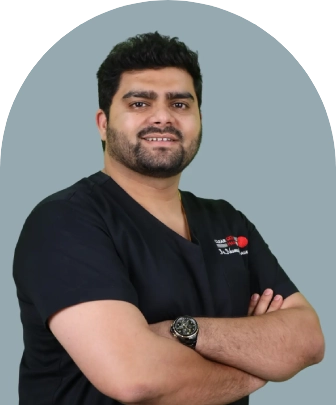
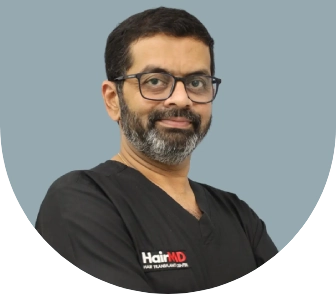
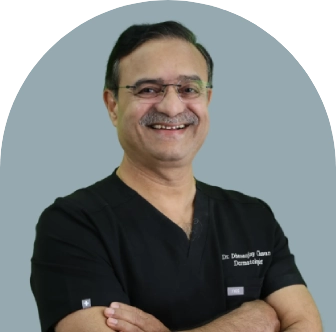
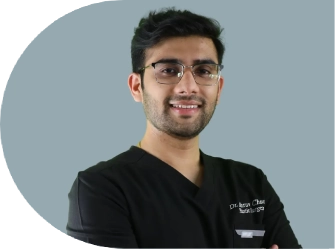
Meet Our Dermatologists

Conclusion
Hair transplantation isn’t commodity shopping—it’s reconstructive surgery that changes your appearance for life.
You deserve to know who is operating on you and how your safety and long-term donor health are protected.
Don’t be afraid to insist on transparency or walk away if anything feels off.
Are you ready for transparent, surgeon-led care from India’s trusted experts?
Reach out for a no-pressure Consultation at HairMD in Pune. I personally oversee each case—because your results and your safety matter.
Further Reading
Does Cold Water Really Help Your Hair? Separating Fact From Myth
You’ve heard that rinsing with cold water makes hair shinier and stronger.
What Should I Do About Dandruff and Scalp Issues?
Dandruff, seborrheic dermatitis, scalp psoriasis, and dry scalp, they look similar but need different treatments. HairMD dermatologists explain how to identify each and what actually works.
Does Heat Damage Really Ruin Your Hair? The Science Explained
Yes, heat damage is real, and mostly permanent. HairMD explains exactly how heat ruins hair at the structural level, at what temperatures damage occurs, and how to minimise it without giving up styling.
How to Get Healthier Hair Without Expensive Treatments?
You don’t need expensive salon treatments for healthier hair. HairMD dermatologists explain what actually improves hair health, from diet and scalp care to habits that protect hair from daily damage.
Have thoughts? Please let us know
We are committed not only to treating you, but also educating you.