

Why Hairline Design is the Most Important Step in Hair Transplant? Guide to Natural Hair Restoration.


Written by HairMD Content Team | Medically Reviewed by Dr. Dhanraj Chavan On February 16, 2026


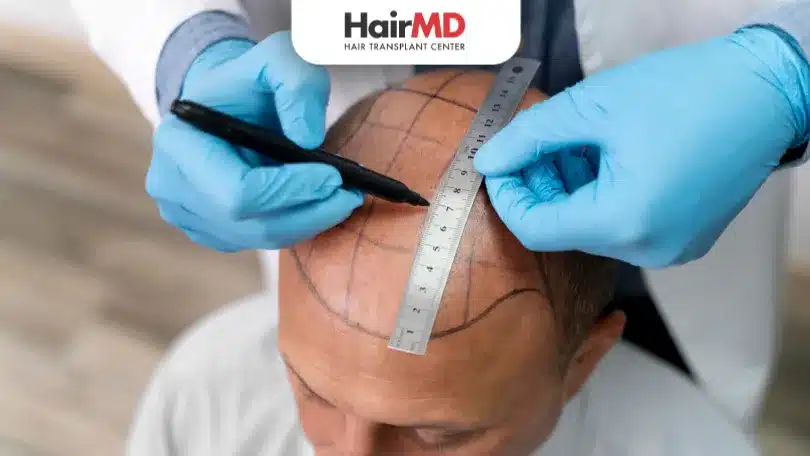
A natural hairline design is the single most critical factor in a successful hair transplant.
It is not just about filling in bald spots; it is about recreating a frame for your face that looks indistinguishable from nature, even upon close inspection.
A poorly designed hairline—one that is too low, too straight, or too dense—is the tell-tale sign of a “bad” transplant, often drawing unwanted attention
At HairMD, we prioritise an aesthetic that respects your facial anatomy, age, and future aging process.
What’s covered in the article?
- Quick Summary
- Why Does Hairline Design Matter Most?Pune
- What Are the 4 Key Principles for Designing a Natural Hairline?
- How Is Hairline Designed for Different Face Shapes in India?
- Male vs Female Hairlines: What’s the Difference?
- Should You Choose a Zig-Zag or Solid Hairline?
- How Your Perfect Hairline Is Decided?
- How Can You Tell If Your Current Hairline Is Normal?
- Frequently Asked Questions
- Conclusion
Quick Summary
- Art meets Science: A natural hairline is never a straight line; it requires “macro-irregularities” to mimic nature.
- Facial Anatomy Matters: The “Rule of Thirds” and the Da Vinci scale guide the placement of the new hairline.
- Single Grafts are Key: Only single hair follicles (1 hair per graft) are placed in the front row for a soft, authentic look.
- Age Appropriateness: A hairline for a 25-year-old should not be the same as one for a 45-year-old; maturity must be factored in.
- Custom Design: There is no “one size fits all.” Your hairline must complement your specific face shape (oval, square, diamond, etc.).
Why Does Hairline Design Matter Most?
In my 17+ years of practice at HairMD Clinic Pune, I have seen patients who are thrilled with hair growth but devastated by the look of that growth.
You can have the best density in the world, but if the hairline looks artificial, the entire procedure fails aesthetically.
The hairline is the first thing people see when they look at you.
It communicates youth, vitality, and health. A natural hairline is “invisible”—meaning no one notices it. An unnatural one screams “surgery.”
I often perform corrective surgeries for patients who went to clinics offering “unlimited grafts” at low costs.
The most common error I see is the “doll’s head” effect—thick, multi-hair grafts placed in a straight line right at the front.
This looks pluggy and unnatural. Correcting this is harder than doing it right the first time.
What Are the 4 Key Principles for Designing a Natural Hairline?
Creating a natural hairline is not random; it follows strict biological and artistic rules. At HairMD, we use the following principles:
1. The Rule of Thirds
Your face is vertically divided into three equal sections:
- Chin to the base of the nose.
- Base of the nose to the glabella (between eyebrows).
- Glabella to the anterior hairline.
Ideally, the distance from your glabella to your hairline should roughly match the distance from your glabella to the base of your nose (typically 7–9 cm).
Placing a hairline lower than this disrupts facial harmony and uses up valuable donor grafts unnecessarily.
2. Macro and Micro Irregularities
Run your fingers through your non-transplanted hair. Is the hairline a perfect ruler-straight line? No. It has tiny zig-zags and bumps.
- Macro-irregularities: Larger waves that follow the natural curve of the forehead.
- Micro-irregularities: Tiny, random variances in follicle placement to avoid a “connect-the-dots” appearance.
3. Soft Hair Gradation
Nature does not start with a thick wall of hair. It starts with fine, single hairs.
- Zone 1 (The Transition Zone): The first 0.5–1 cm contains only single-hair follicular units. These are finer and softer.
- Zone 2 (The Defined Zone): Behind the first zone, we place 2-hair grafts to build definition.
- Zone 3 (The Density Zone): Further back, we use 3-4 hair grafts to create volume.
4. Facial Framing and Temporal Peaks
The “temporal peaks” (the sharp angles at the temples) are crucial for framing the face. If we lower the front hairline but ignore the receding temples, the forehead looks unnaturally wide and disconnected.
If you’re considering hair restoration in Pune or Pimpri Chinchwad, our specialised techniques ensure natural and aesthetically pleasing results.
Book a consultation today to learn more about how we can redefine your hairline and restore confidence.
How Is Hairline Designed for Different Face Shapes in India?
Faces in the Indian subcontinent vary widely, and a standard template does not work.
Oval Face Shape
This is the most balanced face shape. We typically design a gently curved hairline that follows the natural brow ridge. We must ensure the temporal recession is mild to maintain the oval balance.
Square and Rectangular Face Shapes
For men with strong jaws and square faces, a flatter, broader hairline often looks more masculine and appropriate. However, the corners must be rounded slightly to avoid a “boxy” look.
Heart and Diamond Face Shapes
These faces have a narrower chin and wider forehead. A hairline with a distinct “widow’s peak” (a V-shape in the centre) can often look very distinguished and natural for these shapes, breaking up the width of the forehead.
Importance of Good Hairline Design
The design of a hairline plays a significant role in enhancing facial features and overall appearance.
A well-designed hairline can create balance, highlight your best features, and complement the unique shape of your face.
It serves as a crucial frame for the face, and an ill-suited hairline can dramatically alter how the face is perceived.
Considering factors such as symmetry, natural progression, and adaptability to ageing ensures that the hairline remains harmonious and timeless.
Personalised hairline design is essential for achieving a natural and aesthetically pleasing look tailored to individual preferences and needs.
Male vs Female Hairlines: What’s the Difference?
The goals for men and women are fundamentally different.
- Male Hairline: Men naturally have a recession at the temples (fronto-temporal recession), even those without balding. A male hairline usually forms a slight “M” shape. Straightening this out completely creates a feminine appearance.
- Female Hairline: Women typically have a flatter, lower, and more rounded hairline without temporal recession. The goal here is often to lower the hairline to reduce forehead size and frame the face softly.
Should You Choose a Zig-Zag or Solid Hairline?
Patients often ask, “Doctor, should it be a straight line or zig-zag?”
The answer is: Neither, and both.
A “solid” line looks like a wig.
A distinct, uniform “zig-zag” pattern (like a saw blade) looks engineered. The goal is “organised chaos.”
We place the grafts in a randomized, irregular pattern that looks like a line from a distance but reveals natural randomness up close.
We avoid placing grafts in perfect rows.
Instead, we use a technique called “feathering,” where the density gradually increases as you move backward from the forehead.
How Your Perfect Hairline Is Decided?
When you sit in my chair at our Pune or Pimpri Chinchwad Hair Transplant clinics, this is the process we follow:
- Muscle Assessment: I will ask you to raise your eyebrows. We identify the frontalis muscle (forehead muscle). We never transplant hair onto this muscle. If we do, your hairline will move up and down every time you make an expression, which looks unnatural. The hairline must sit just above this muscle movement.
- Age Projection: A low, straight hairline looks great at 25, but it looks odd at 50. Since a transplant is permanent, I design a “mature hairline”—one that will look dignified and appropriate for the rest of your life.
- Donor Calculation: We calculate your available donor supply. If you have limited donor hair but extensive balding, it is wiser to design a slightly higher, conservative hairline to ensure we have enough hair to cover the crown (top of the head).
- Clinical Insight: I often have to tell younger patients (early 20s) to wait or accept a higher hairline. Aggressively lowering a hairline in a young patient who might lose more hair later is a recipe for disaster. We need to save those grafts for the future.
How Can You Tell If Your Current Hairline Is Normal?
Many men panic at the first sign of recession. Here is a quick checklist to understand if your hairline shift is normal maturation or male pattern baldness:
- Maturation: Between ages 17 and 29, most men’s hairlines naturally move back slightly at the corners. This is the transition from a “juvenile” to a “mature” hairline. It usually stops and stabilizes.
- Recession (Alopecia): If the hairline continues to recede, creates a deep “M” shape, or if you notice miniaturisation (hairs becoming thinner and wispy) behind the hairline, this is likely Androgenetic Alopecia.
Actionable Tip: Take photos of your hairline every 3 months in the same lighting. If you see a consistent backward trend over 6-9 months, it is time to consult the best Dermatologist.
Ready to design your future look?
Book a consultation with our Top Hair Transplant at HairMD India today. We are located conveniently in Pune and Pimpri Chinchwad. Let’s discuss a plan that suits your face, your age, and your expectations.
Frequently Asked Questions
Can I lower my hairline back to where it was in high school?
Technically, yes, but aesthetically, it is often a bad idea. A juvenile hairline on an adult face can look unnatural. We recommend a “mature” hairline that frames the face age-appropriately.
Will the transplanted hairline look thin initially?
Yes. Transplanted hair sheds within the first 3 months (shock loss) and regrows slowly. Real density and the final natural look appear between 9 to 12 months.
Does HairMD use lasers for hairline design?
While lasers can help with symmetry, I prefer manual design and callipers. Human faces are rarely perfectly symmetrical, and a “perfect” laser line can sometimes look too artificial. We customize the design to your unique facial asymmetry.
DO YOU KNOW?
Nearly 250 Patients Visit HairMD
Everyday For Various Hair Concerns
(15+ Years Of Expertise. 4157+ Successful Hair Transplant)
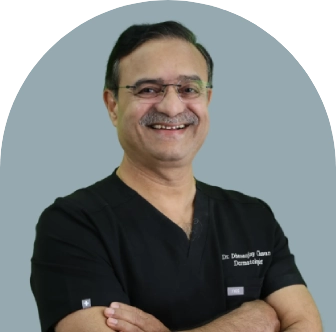
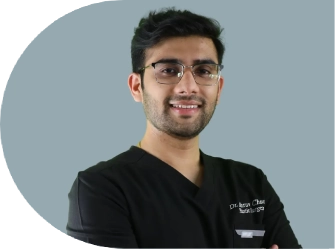
Meet Our Dermatologists

Conclusion
A hair transplant is a blend of medical precision and artistic vision. The technical aspect ensures the hair grows; the artistic aspect ensures it looks like you.
At HairMD, we do not just count grafts; we design faces. We believe that the best hair transplant is the one nobody notices. If you are considering restoring your hair, choose a Hair surgeon who understands the geometry of your face, not just the biology of your follicles.
Trust your look to experience.
Further Reading
Does Cold Water Really Help Your Hair? Separating Fact From Myth
You’ve heard that rinsing with cold water makes hair shinier and stronger.
What Should I Do About Dandruff and Scalp Issues?
Dandruff, seborrheic dermatitis, scalp psoriasis, and dry scalp, they look similar but need different treatments. HairMD dermatologists explain how to identify each and what actually works.
Does Heat Damage Really Ruin Your Hair? The Science Explained
Yes, heat damage is real, and mostly permanent. HairMD explains exactly how heat ruins hair at the structural level, at what temperatures damage occurs, and how to minimise it without giving up styling.
How to Get Healthier Hair Without Expensive Treatments?
You don’t need expensive salon treatments for healthier hair. HairMD dermatologists explain what actually improves hair health, from diet and scalp care to habits that protect hair from daily damage.
Have thoughts? Please let us know
We are committed not only to treating you, but also educating you.