

FUE Hair Transplant: The Most Popular Hair Transplant Method


Written by HairMD Content Team | Medically Reviewed by Dr. Dhanraj Chavan On June 22, 2026


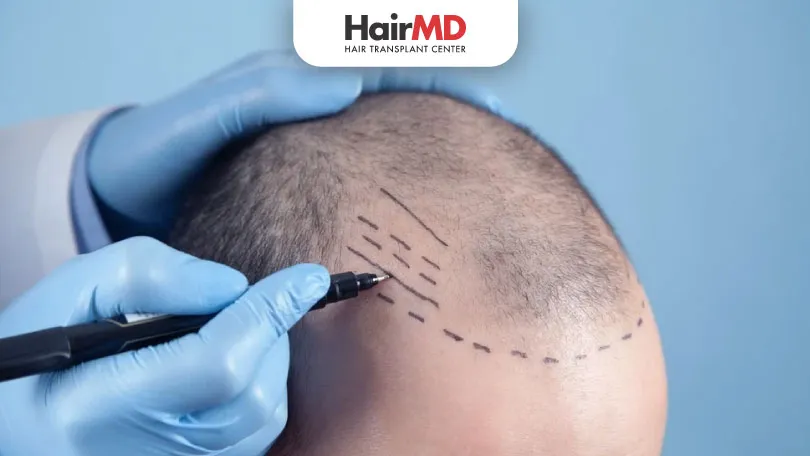
As a Hair Transplant Surgeon, I get a lot of queries from patients who are planning to undergo the procedure. I have penned down this article to address those queries. Often, I meet people for whom hair loss is one of their biggest worries. They feel they lose on the age edge because their hair is not compliant with your youth. They lose out on dates, are referred to as uncle and aunt by society kids, etc. Have all of these aforementioned problems bothered you frequently as well? Well, then I am sure that a hair transplant has crossed your mind.
FUE (Follicular Unit Extraction) is the most widely used hair transplant method today because it removes individual hair follicles one at a time, leaves no linear scar, and lets patients return to normal activity within a week unlike the older strip (FUT) method.
What’s covered in the article?
- What is Hair Transplant?
- The FUE Procedure, Step by Step
- What are the Two Methods of Hair Transplant?
- Why FUE Is the Preferred Method?
- Why FUE vs FUT?
- Am I a Good Candidate for FUE?
- Recovery Timeline: What to Actually Expect?
- What Does FUE Cost in Pune?
- Risks and Limitations (Be Realistic)
- Why Patients Choose HairMD for FUE?
- Conclusion
What is Hair Transplant?
A hair transplant redistributes hair you already have. Follicles are taken from a “donor area” — usually the back or sides of the scalp, occasionally the beard, where hair growth is genetically resistant to balding, and moved to thinning or bald areas on top. Because the donor follicles carry that same resistance to hair-loss hormones (DHT), the transplanted hair continues growing normally in its new location for life.
Before any transplant, your donor area should be evaluated and optimized. your dermatologist may recommend PRP, mesotherapy, LLLT, or medical therapy first to strengthen the donor zone and improve graft yield. → Learn more about hair transplant candidacy
The FUE Procedure, Step by Step
- Consultation & scalp analysis — donor density, degree of balding, and hair characteristics are assessed to plan graft count and design.
- Donor extraction — individual follicular units are removed one at a time using a micro-punch (0.6–1.0mm), under local anesthesia.
- Graft preparation — extracted follicles are sorted and kept in a preserving solution to maximize survival before implantation.
- Recipient site creation — tiny incisions are made in the balding area, with angle and direction planned to match natural hair growth.
- Implantation — grafts are placed individually into the recipient sites.
- Aftercare briefing — patients receive washing instructions, medication if needed, and a follow-up schedule.
The full session typically takes several hours depending on graft count, and most patients go home the same day.
What are the Two Methods of Hair Transplant?
There are two types of Hair Transplants that you can consider. FUE hair transplant is the most recent one and certainly more efficient way of undertaking hair transplant. The main difference lies in the quality of the result produced and the method used in carrying out both the procedures. FUT (Follicular unit transplant) is the traditional hair transplant method in which it involves extracting a linear strip from the back or the side of the scalp. From the strip, individual grafts are then separated. With FUE (Follicular Unit Extraction), individual follicular units containing 1 to 4 hairs are removed under local anesthesia. This micro removal typically uses tiny punches of between 0.6mm and 1.0mm in diameter.
Why FUE Is the Preferred Method?
- No linear scar. Because follicles are removed individually rather than as a strip, there’s no long scar to hide — patients can keep hair very short on the sides without it showing.
- Faster, easier recovery. Most patients are back to non-physical work within 2–5 days.
- Versatile donor sourcing. Beard or body hair can sometimes supplement scalp donor hair when needed.
- Precision placement. Each follicular unit (1–4 hairs) is placed individually, which helps create a natural hairline and growth direction.
- Minimal downtime restrictions. No sutures to remove, lower infection risk at the donor site.
FUE vs FUT?
| FUE (Follicular Unit Extraction) | FUT (Strip Method) | |
|---|---|---|
| How it works | Individual follicles extracted one by one with a 0.6–1.0mm punch | A linear strip of scalp is removed, then dissected into grafts |
| Scarring | Tiny dot scars, virtually invisible | One linear scar across the donor area |
| Recovery time | Donor site visibly heals in 5–7 days | Sutures typically removed at 10–14 days |
| Pain/discomfort | Minimal, local anesthesia | More post-op discomfort at suture line |
| Grafts per session | Typically 2,000–4,000 | Typically 2,000–4,000 (similar per-session limit) |
| Best for | Short hairstyles, faster return to activity | Patients needing maximum grafts in fewer sessions |
| Global usage share | ~80% of hair transplants performed worldwide today | Declining in popularity |
Am I a Good Candidate for FUE?
You’re likely a good candidate if you:
- Have stable hair loss (not rapidly progressing, undiagnosed shedding)
- Have a healthy, dense donor area at the back/sides of the scalp
- Are in good general health with no conditions that impair wound healing
- Have realistic expectations about density and timeline
You may need additional evaluation if you:
- Are very young and still in early, evolving hair loss (pattern may not be stable yet)
- Have diffuse thinning rather than a localized bald area (this needs a different assessment — read about diffuse thinning here)
- Have a limited donor area relative to the area you want covered
A one-on-one scalp analysis is the only reliable way to confirm candidacy — online photos and self-assessment aren’t enough.
Not sure if you’re a good candidate? Get a free in-person or video scalp analysis from HairMD’s surgeons before you decide on anything. 📞 Call +91 95845 84111 | 💬 WhatsApp Us | Book a Free Consultation
Recovery Timeline: What to Actually Expect?
| Timeframe | What happens |
|---|---|
| Days 1–5 | Mild swelling and scabbing around grafts; gentle washing usually starts day 2–3 |
| Week 1–2 | Donor area visibly healed; scabs flake off; most patients resume desk work |
| Weeks 2–4 | “Shock loss” transplanted hairs shed; this is normal, the follicle stays alive beneath the skin |
| Months 2–3 | Dormant phase, minimal visible growth; this is the hardest part for patients to sit through |
| Months 3–4 | New hair growth begins |
| Months 6–12 | Visible thickening and density improvement |
| Months 12–18 | Final results, full density and natural texture |
With proper post-op care, published graft survival rates for FUE typically fall in the 90–95% range. Survival depends heavily on surgeon skill (minimizing the time grafts spend outside the body) and the patient following aftercare instructions closely, particularly avoiding pressure or friction on the scalp in the first two weeks.
What Does FUE Cost in Pune?
FUE pricing isn’t one-size-fits-all — it depends on:
- Number of grafts needed (the biggest cost driver)
- Technique used (standard FUE vs. advanced tools)
- Surgeon experience and clinic reputation
- Number of sessions required
Get a personalized, no-obligation cost estimate based on your graft count and goals. Request Your Free Cost Estimate →
Risks and Limitations (Be Realistic)
No hair transplant is entirely risk-free, and a trustworthy clinic will tell you that upfront:
- Temporary swelling, redness, or mild discomfort in the days following the procedure
- Shock loss of transplanted (and sometimes existing) hair in the first few weeks usually temporary
- Folliculitis (small red bumps around grafts) — uncommon, but should be checked by your surgeon if it occurs
- Graft survival is not 100% — a small percentage of grafts (typically under 10% in skilled hands) may not take
- Results depend on donor supply — FUE cannot create more hair than your donor area can support; it redistributes existing hair, it doesn’t manufacture new follicles
Choosing an experienced surgical team significantly reduces these risks, this is a procedure where technique and experience matter more than the specific tool used.
Why Patients Choose HairMD for FUE?
- 15+ years of dedicated hair restoration experience
- 4,157+ successful hair transplants performed
- Nearly 250 patients visit HairMD every day for hair concerns across specialties
- 7 clinic locations across Pune (Prabhat Road, Baner, Karad, Kharadi, Pimple Saudagar, Pune Station, NIBM)
- Surgeon-led extraction and placement, not technician-only teams
DO YOU KNOW?
Nearly 250 Patients Visit HairMD
Everyday For Various Hair Concerns
(20+ Years Of Expertise. 4157+ Successful Hair Transplant at HairMD)
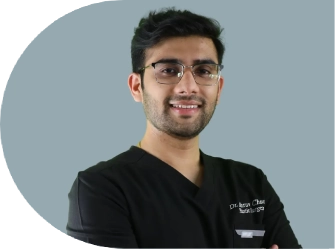
Meet Our Dermatologists

Conclusion
In conclusion, a hair transplant, especially the FUE method, offers a modern and effective solution for those struggling with hair loss. It allows for natural-looking results with minimal scarring and quicker recovery times compared to traditional methods.
If you’re considering this procedure, remember that consulting with experienced specialists can help you make an informed decision. Don’t hesitate to reach out for guidance—you’re not alone on this journey. Thank you for reading, and we hope you found this information helpful!
Further Reading
Dermapen Scalp Microneedling Results in Pune
Real HairMD Pune patient results from Dermapen scalp microneedling for hair – what to expect, sessions, and before and after outcomes.
Fotona & LLLT Laser Hair Cost in Pune 2026
Fotona and LLLT laser hair treatment cost in Pune 2026 – per-session pricing, packages, and what affects the cost at HairMD Pune.
PRP Pre & Post Care Protocol | HairMD Pune
PRP for alopecia areata – what the research says about regrowth, how it compares to other options, and when it may help, from HairMD Pune.
PRP for Alopecia Areata: What Research Says
PRP for alopecia areata – what the research says about regrowth, how it compares to other options, and when it may help, from HairMD Pune.
Have thoughts? Please let us know
We are committed not only to treating you, but also educating you.