



Written by HairMD Content Team | Medically Reviewed by Dr. Dhanraj Chavan On March 25, 2026


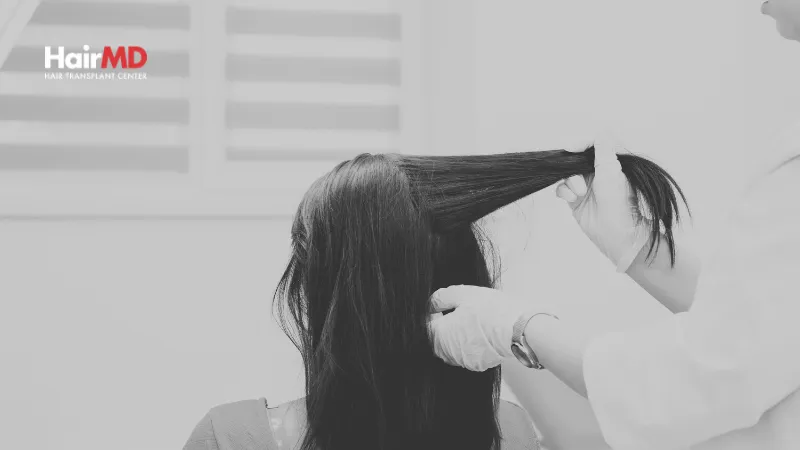
Noticing clumps of hair in your shower drain or on your hairbrush can be a deeply unsettling experience. For many individuals, this sudden increase in shedding sparks immediate concern, leading them to search for answers about whether their hair loss is normal or a sign of an underlying medical condition. When you visit a clinic, one of the first diagnostic tools a specialist will use is the hair pull test for hair loss. This simple yet highly effective clinical assessment helps doctors determine the severity of your shedding and identify potential causes.
In this comprehensive guide, you will learn exactly how this test is performed, what a positive result means, and the various factors that contribute to hair thinning. We will also explore the professional treatments available to help you restore your hair and regain your confidence.
The hair pull test is a quick, non-invasive physical examination where a doctor gently pulls on a small cluster of 50 to 60 hairs. If more than 10% of these hairs (usually 5 to 6 strands) easily come away from the scalp, the test is considered positive, indicating active, abnormal hair shedding.
What’s covered in the article?
- Quick Summary
- What is the Hair Pull Test for Hair Loss?
- Causes and Contributing Factors of Hair Loss
- Common Symptoms and Early Signs of Hair Fall
- How Doctors Diagnose Hair Loss Using the Hair Pull Test?
- Seeking a Dermatologist Hair Loss Test in Pune
- Available Treatment Options in Pune
- Prevention and Management Strategies
- Expected Results and Recovery Timeline
- Frequently Asked Questions
- Conclusion
Quick Summary
- The Procedure: Exactly how specialists conduct the hair pull test during a consultation.
- Root Causes: The genetic, hormonal, and lifestyle factors that trigger excessive hair fall.
- Warning Signs: How to spot the early symptoms of clinical hair loss.
- Diagnostic Steps: How the pull test fits into a broader dermatological evaluation.
- Local Solutions: Where to find a top-tier Hair Specialist in Pune.
- Treatment Options: Proven medical and advanced therapies to halt hair loss.
What is the Hair Pull Test for Hair Loss?
The hair pull test is a fundamental clinical evaluation used by dermatologists to assess the presence and severity of active hair shedding. Despite its straightforward nature, it provides crucial immediate feedback about the state of your hair growth cycle.
During the procedure, the doctor will grasp a small section of hair—typically around 50 to 60 strands—close to the scalp. Using their thumb, index, and middle fingers, they will apply gentle but firm traction, sliding their fingers up the length of the hair shafts from the root to the tip. This process is usually repeated on three or four different areas of the scalp, such as the front, the sides, and the crown.
A healthy scalp will naturally shed a few hairs during this process, as around 10% of your hair is normally in the resting (telogen) phase at any given time. Therefore, extracting one or two hairs per pull is completely normal. However, if the doctor easily pulls away more than five or six hairs (roughly 10% of the grasped bundle), the test is deemed positive. A positive result strongly suggests that an abnormally high number of hair follicles have entered the resting and shedding phases, a condition frequently associated with telogen effluvium, alopecia areata, or early-stage androgenetic alopecia.
Causes and Contributing Factors of Hair Loss
To fully understand why a hair pull test might yield a positive result, it is essential to explore the diverse factors that can disrupt the hair growth cycle. Hair loss is rarely caused by a single issue; it is often a combination of genetic, environmental, and physiological elements.
Genetic Predisposition (Androgenetic Alopecia)
The most common cause of hair loss worldwide is genetics. Also known as male or female pattern baldness, androgenetic alopecia is an inherited sensitivity to dihydrotestosterone (DHT), a byproduct of testosterone. DHT causes hair follicles to shrink over time (miniaturisation), leading to thinner, shorter hairs and eventual follicle dormancy.
Hormonal Fluctuations
Hormones act as the chemical messengers that regulate the hair cycle. Any significant imbalance can trigger shedding. For women, events like pregnancy, childbirth, menopause, or starting and stopping oral contraceptives can cause drastic hormonal shifts. Conditions such as Polycystic Ovary Syndrome (PCOS) also elevate androgen levels, leading to thinning hair.
Stress and Telogen Effluvium
Severe physical or emotional stress pushes a disproportionate number of hair follicles into the telogen (resting) phase prematurely. This condition, called telogen effluvium, usually causes noticeable shedding two to three months after the triggering event. Common triggers include major surgery, severe illness, rapid weight loss, or profound psychological trauma.
Nutritional Deficiencies
Your hair requires a robust supply of nutrients to grow strong and healthy. Diets lacking in essential vitamins and minerals—particularly iron, zinc, vitamin D, vitamin B12, and protein—can severely weaken the hair shaft and disrupt the anagen (growth) phase, resulting in a positive hair pull test.
Medical Conditions and Medications
Certain underlying health issues, such as thyroid disorders (both hyperthyroidism and hypothyroidism) or autoimmune diseases like lupus, frequently present with hair loss as a primary symptom. Furthermore, medications used to treat high blood pressure, depression, arthritis, and cancer can cause hair thinning as a side effect.
Common Symptoms and Early Signs of Hair Fall
Recognising the early signs of abnormal hair loss allows you to seek medical intervention before the condition becomes advanced. While the hair pull test for hair loss is a clinical diagnostic tool, there are several symptoms you can monitor at home.
The most obvious warning sign is a dramatic increase in daily shedding. While losing 50 to 100 hairs a day is standard, finding copious amounts of hair on your pillowcase, clogging the shower drain, or coming out in clumps when you brush your hair is a clear indicator of a problem.
You may also notice changes in the physical appearance of your hair and scalp. For men, this often begins as a receding hairline at the temples or a thinning patch at the crown. For women, the early signs typically manifest as a widening of the hair part or a general decrease in ponytail volume.
Additionally, if individual hair strands feel significantly finer, weaker, or more brittle than before, it indicates that the follicles are struggling to produce healthy hair shafts.
How Doctors Diagnose Hair Loss Using the Hair Pull Test?
When you visit a clinic, the hair-pull test is just one piece of a comprehensive diagnostic puzzle. Dermatologists use a systematic approach to uncover the root cause of your shedding.
The Initial Consultation
Your appointment will begin with a thorough medical history review. The specialist will ask detailed questions about when the shedding started, your family history of baldness, your daily diet, recent stress levels, and any medications you are currently taking. This conversation helps the doctor narrow down potential triggers.
Performing the Hair Pull Test
Next, the doctor will perform the physical examination, starting with the hair pull test. By assessing how easily the hair detaches and examining the roots of the extracted hairs (checking for the small, bulb-like root typical of telogen hairs), the doctor can immediately determine if the shedding is active and aggressive.
Trichoscopy Examination
To look closer, the specialist will use a dermatoscope—a highly magnified, illuminated tool—to examine your scalp. This technique, called trichoscopy, allows the doctor to see the health of individual follicles, measure hair shaft thickness, and check for signs of inflammation, scarring, or miniaturisation.
Additional Diagnostic Testing
Depending on the results of the pull test and trichoscopy, the doctor may order comprehensive blood tests. These tests check for nutritional deficiencies, thyroid function, and hormonal imbalances.
In complex or ambiguous cases, a small scalp biopsy may be performed to rule out rare inflammatory conditions or scarring alopecia.
Seeking a Dermatologist Hair Loss Test in Pune
If you are experiencing troubling symptoms and need an accurate diagnosis, finding a qualified specialist is your most important next step. For residents seeking a reliable dermatologist hair loss test Pune offers world-class medical facilities and highly trained experts.
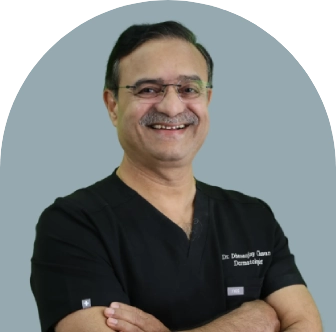
At HairMD Clinic Pune, you have access to cutting-edge diagnostic tools and evidence-based treatments. Under the leadership of Dr. Dhanraj Chavan, a highly respected Hair Specialist in Pune, the clinic provides comprehensive evaluations, including precise hair pull tests and advanced trichoscopy, to accurately diagnose your condition. Dr. Chavan and his dedicated team understand the profound impact hair loss can have on your confidence, and they are committed to providing compassionate, highly personalised care.
Address: 201, 2nd Floor, C Wing, KP-aurum, above Star Bazaar, near Mariplex Mall, Kalyani Nagar, Pune.
Are you ready to stop the shedding and restore your confidence? Book a comprehensive diagnostic consultation with Dr. Dhanraj Chavan at HairMD Clinic Pune today, and take the first step towards a customised hair restoration plan.
Available Treatment Options in Pune
Once your doctor has interpreted the results of your hair pull test and completed their diagnosis, they will recommend a tailored treatment programme. Pune’s leading clinics offer a wide spectrum of solutions, ranging from topical medications to advanced regenerative therapies.
Medical Treatments
For early-stage hair loss and telogen effluvium, medical management is often highly effective.
- Topical Minoxidil: This over-the-counter solution is applied directly to the scalp. It works by increasing blood flow to the follicles, effectively prolonging the growth phase of the hair cycle and delaying the resting phase.
- Oral Medications: For genetic hair loss, doctors may prescribe oral finasteride (for men) or spironolactone (for women) to block the hormones responsible for follicle miniaturisation.
- Nutritional Supplements: If your blood tests reveal deficiencies, your doctor will prescribe medical-grade supplements containing iron, biotin, zinc, and amino acids to fortify your hair from within.
Advanced Non-Surgical Therapies
When medical treatments require an extra boost, advanced clinical therapies provide excellent results.
- Platelet-Rich Plasma (PRP) Therapy: This highly popular treatment involves drawing a small amount of your blood, isolating the growth factors, and injecting them directly into the thinning areas of your scalp. PRP stimulates cellular repair and encourages dormant follicles to enter the active growth phase.
- Low-Level Laser Therapy (LLLT): Using specialised red-light devices, LLLT stimulates cellular metabolism within the hair follicles, reducing inflammation and promoting thicker, healthier hair shafts.
Surgical Hair Restoration
For advanced cases of permanent genetic hair loss where follicles are no longer viable, surgical intervention is the most effective permanent solution. Skilled surgeons in Pune perform advanced Follicular Unit Extraction (FUE) and Follicular Unit Transplantation (FUT) procedures, moving healthy, DHT-resistant follicles to the balding areas for a completely natural-looking result.
Prevention and Management Strategies
While you cannot alter your genetic blueprint, you can adopt a proactive lifestyle to manage shedding and optimise the health of your scalp.
Firstly, focus on a nutrient-dense diet. Your hair is made of a protein called keratin, so ensure you are consuming adequate amounts of lean proteins, alongside leafy greens and healthy fats, to support robust hair growth.
Secondly, practice meticulous stress management. Since stress is a massive trigger for telogen effluvium, incorporating daily relaxation techniques—such as yoga, meditation, or even just regular moderate exercise—can keep your cortisol levels in check and protect your hair cycle.
Finally, treat your hair with care. Avoid tight hairstyles that cause traction alopecia, limit the use of extreme heat styling tools, and use gentle, sulphate-free shampoos that cleanse the scalp without stripping its natural moisture barrier.
Expected Results and Recovery Timeline
Patience is key when recovering from telogen effluvium. The hair growth cycle is slow, and results are not immediate.
Once you have addressed the underlying sleep issue and reduced your stress levels, the excessive shedding should decrease within a few months. New hair growth will begin, but it will take time to become noticeable.
You can typically expect to see fine, baby hairs appearing along your hairline and part line within 3-6 months. It can take 12-18 months for this new hair to grow to a significant length and for your overall hair density to return to its previous state. Sticking to your treatment plan and maintaining a healthy lifestyle are crucial for achieving the best results.
Don’t let hair loss affect your confidence. Take the first step towards recovery by consulting a Hair specialist today.
Ready to take the first step towards correcting your hair transplant?
Book a private consultation at HairMD in Pune or Pimpri Chinchwad. Let’s discuss your case and build a strategy to achieve the natural result you always wanted.
Frequently Asked Questions
- Is hair loss from sleep deprivation permanent?
No, hair loss caused directly by sleep deprivation (telogen effluvium) is almost always temporary. Once you improve your sleep and manage stress, the excessive shedding stops, and the hair typically grows back within 6-12 months. - How much sleep is needed for healthy hair growth?
Most adults need 7 to 9 hours of quality sleep per night. During this time, the body performs critical regenerative functions, including cell repair and hormone regulation, which are essential for a healthy sleep cycle and hair growth. - Can one bad night of sleep cause hair loss?
No, a single night of poor sleep will not cause your hair to fall out. Hair loss from sleep deprivation is the result of chronic, ongoing sleep issues that lead to sustained high levels of stress hormones in the body. - Can taking melatonin supplements help with hair loss?
While melatonin plays a role in hair growth, simply taking a supplement is not a direct cure for hair loss. It may help improve your sleep, which in turn can reduce stress and support hair health. However, you should always consult a doctor before starting any new supplement.
DO YOU KNOW?
Nearly 250 Patients Visit HairMD
Everyday For Various Hair Concerns
(20+ Years Of Expertise. 4157+ Successful Hair Transplant at HairMD)
Meet Our Dermatologists

Conclusion
The connection between sleep deprivation and hair loss is clear: chronic lack of rest elevates stress hormones, disrupts your natural hair growth cycle, and can lead to significant shedding. While this type of hair loss is usually temporary, it can be distressing and may even exacerbate underlying conditions like genetic baldness. Understanding how doctors measure male pattern baldness and differentiate it from stress-induced shedding is vital for getting the right treatment.
The solution begins with prioritising your sleep and managing stress. By adopting healthy sleep hygiene, maintaining a balanced diet, and seeking professional help when needed, you can restore your body’s internal balance and support a healthy environment for hair to grow. If you are concerned about hair loss, a professional diagnosis is the most important step you can take.
Seek Expert Advice in Pune
Do not let sleep-related hair loss go unaddressed. For a comprehensive evaluation and a personalised treatment plan, contact a trusted Hair specialist. At HairMD Clinic in Pune, Dr. Dhanraj Chavan and his expert team are ready to help you understand the root cause of your hair loss and guide you on the path to recovery.
Schedule your consultation today to take the first step towards healthier hair and better sleep.
Further Reading
Is Rosemary Oil Enough for Hair Regrowth? When to Consider Something Stronger
Six months of rosemary oil and still losing hair? HairMD dermatologists explain when rosemary oil works, when it is not enough, and what to try next.
Redensyl vs Minoxidil vs GFC for Hair Loss: Which One Is Right for You?
Redensyl, minoxidil, or GFC therapy for hair loss? HairMD Pune dermatologists explain how each works, who each is for, and how to choose.
Dermapen Scalp Microneedling Results in Pune
Real HairMD Pune patient results from Dermapen scalp microneedling for hair – what to expect, sessions, and before and after outcomes.
Fotona & LLLT Laser Hair Cost in Pune 2026
Fotona and LLLT laser hair treatment cost in Pune 2026 – per-session pricing, packages, and what affects the cost at HairMD Pune.
Have thoughts? Please let us know
We are committed not only to treating you, but also educating you.