

Is Hair Patch better than Hair Transplant? Let’s Find Out.


Written by HairMD Content Team | Medically Reviewed by Dr. Dhanraj Chavan On January 29, 2023


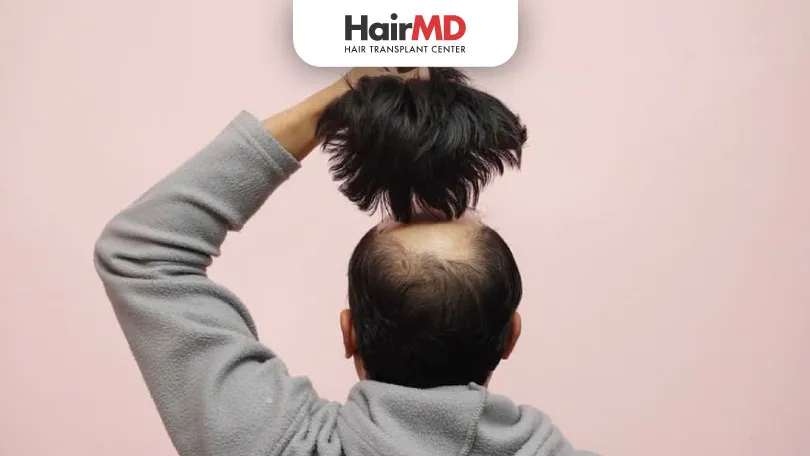
Hair loss can occur due to various reasons such as environmental factors, stress, hormonal imbalance, nutritional deficiencies, alcoholism, and certain underlying health conditions. Hair fall may also be experienced as a side-effect of certain medications or medical treatments. An autoimmune disorder, called alopecia areata, also causes bald patches or total baldness. Hair loss can also be linked with genetics and heredity.
Hair loss does not have major health effects; however, it does hamper one’s confidence. Therefore, people who are balding due to excessive hair fall seek a permanent solution to this issue. Hair transplant and hair patching are two effective treatments; however, which one is better? How to select between the two and what are their pros and cons? Here is a comparative analysis of hair transplant vs hair patching as solutions for baldness.
What’s covered in the article?
- Hair Patching
- Hair Transplant
- Conclusion
Hair Patch: What You Need to Know?
A hair patch is a treatment to restore hair artificially and is mostly used for those who have bald patches and do not wish to undergo a surgical procedure.
In this treatment, artificial hair is placed on the bald area using glue and clips.
The cosmetic glue and the clips used in a hair patch are safe and pose no risk of allergies or infections. A hair patch is smaller than a wig and is designed to cover the bald area on the head.
A good-quality hair patch lasts for about 6-10 months if proper care is taken. If not used properly, it may wear out in just 3 months.
If you are not willing to undergo a surgical procedure, or if you prefer a relatively inexpensive way to treat hair loss, you should go in for hair patching.
If you have partial baldness or bald patches on the head, a hair patch will help conceal them in the best way.
It does not have any side effects, so hair patching is a risk-free solution for baldness. Moreover, it is not painful and is a non-invasive procedure.
It gives faster results and is suitable for all ages and hair types. Hair patching proves to be an affordable solution for baldness.
Hair Transplant Results Before And After | HairMD Pune | (In HINDI)
FUE Hair Transplant: What Is It and Who Is It For?
Hair transplantation is a surgical procedure in which hair follicles from one part of the body are removed and transplanted to the balding area.
In this method, grafts containing hair follicles that are genetically resistant to balding are transplanted onto the bald area. Modern-day hair transplants provide a natural appearance.
Follicular Unit Extraction (FUE) is a minimally invasive & most preferred surgical technique in hair transplant where healthy hair follicles are harvested one by one from the back or sides of your scalp (the donor area) and then transplanted into areas affected by hair loss.
This method leaves tiny, nearly invisible puncture marks instead of a linear scar, allowing for a more natural look and quicker healing.
Hair transplantation is the ideal treatment for male pattern baldness and for hair loss resulting from a scalp or burn injury. The results are long-lasting, and this procedure can be considered a permanent solution for baldness.
Why do patients choose FUE?
- Permanent, natural-looking results with your own hair
- Minimal discomfort or scarring
- Little risk of rejection, since grafts are from your own body
- highly preferred due to its precision, shorter downtime
I advise FUE to patients who have realistic expectations, adequate donor hair, and a commitment to long-term care.
It is ideal for people with androgenetic alopecia (pattern baldness) who still have a decent amount of donor hair available.
With proper post-surgery care, the transplanted hair behaves exactly like the original—growing, shedding, and blending well with your existing hair.
However, a hair specialist should be consulted before deriving any conclusion or deciding between hair patching and hair transplant.
If you are looking for hair loss treatments near Pune, approach the experienced trichologists at HairMD.
They will help assess your hair condition and other factors and administer the treatment that suits you best.
Following comparison of hair transplant vs hair patching may give you a fair idea about which of the two is a better solution for baldness.
Comparing Hair Transplant vs Hair Patching
|
Feature |
Hair Transplant |
Hair Patching (Non-Surgical Hair Replacement) |
|---|---|---|
|
Procedure Type |
Surgical: A medical procedure where hair follicles are extracted from a donor area and implanted into thinning or bald areas. |
Non-Surgical: A cosmetic solution where a hair system (wig or patch) is attached to the scalp using glue, tape, or clips. |
|
Natural Appearance |
High: Uses your own natural hair. It grows, moves, and behaves exactly like the rest of your hair. The hairline is designed to mimic nature. |
Variable: Can look realistic if high-quality, but may be detectable upon close inspection or touch. The hairline often lacks the natural gradation of real hair. |
|
Longevity |
Permanent: The transplanted hair roots are genetically resistant to hair loss and typically last a lifetime. |
Temporary: A single patch usually lasts 6–12 months before needing replacement due to wear and tear. |
|
Maintenance |
Low: Once healed, it requires no special maintenance. You wash, cut, and style it just like normal hair. |
High: Requires regular servicing (cleaning and re-fixing) every 3–4 weeks. The system needs careful handling to avoid damage. |
|
Pain & Recovery |
Minimal: Performed under local anaesthesia. Recovery takes about 7–10 days for scabs to heal. |
None: No pain or recovery time is involved. The result is instant. |
|
Cost |
One-time Investment: Higher upfront cost, but generally more economical in the long run as it is permanent. |
Recurring Expense: Lower initial cost, but cumulative costs for maintenance and replacements make it expensive over time. |
|
Suitability |
Best for individuals with Androgenetic Alopecia (Pattern Baldness) who have sufficient donor hair supply. |
Best for individuals with Total Baldness (Alopecia Totalis), insufficient donor hair, or those who want an instant result without surgery. |
|
Lifestyle Impact |
No restrictions. You can swim, shower, and play sports without worry once healed. |
Some restrictions. Heavy sweating or swimming may weaken the adhesive, requiring caution during physical activities. |
How to Choose Which One Is Better for You?
Selecting between a hair transplant and a hair patch depends on several factors unique to your case:
- Extent and type of hair loss: If your baldness is patchy and you have enough donor hair, FUE hair transplant could offer lasting, natural results. For people who are completely bald or lack enough donor hair, a hair patch may be a more practical choice.
- Desired permanence: If you want a permanent solution and are ready for a minor procedure, a hair transplant is preferable. If you prefer something non-surgical, immediate, and reversible, a hair patch may suit you better.
- Lifestyle and convenience: Transplanted hair is permanent and requires minimal special care after healing, letting you lead a fully active life. Hair patches need regular care, visits for readjustment, and cannot withstand all physical activities.
- Budget and long-term plans: Consider upfront cost versus recurring costs over years. Hair transplants are more expensive at first but are a one-time investment. Hair patches have a lower initial price but become costlier over time due to maintenance and replacement.
A personalised consultation with a hair restoration expert can help you weigh these factors, examine your scalp, and decide the best fit for your goals and lifestyle.
Cost, Life Span & Quality (More Natural) of Results in Both Treatments
Hair Transplant (FUE):
- Cost: Higher initial expense—from ₹60,000 to ₹1,50,000 or more, depending on the number of grafts needed. There are rarely recurring costs aside from basic hair care.
- Life Span: Permanent, since the implanted roots are genetically resistant to typical causes of hair loss.
- Quality: The most natural look and feel, since the hair is your own, growing in the directions and angles selected by your surgeon. Best for those seeking undetectable results.
Hair Patch:
- Cost: Lower initial financial outlay (₹10,000–₹40,000), but regular maintenance and replacement are necessary, leading to higher long-term expenditure.
- Life Span: Temporary. Standard patches last 6–12 months, often requiring replacements as they wear out.
- Quality: Can be realistic, especially with premium products, but is less natural than real, growing hair. The transition between skin and patch may be noticeable, and appearance may change with wear and cleaning.
It’s important to factor in not just how much you pay upfront, but also the cost of ongoing maintenance and the appearance you expect in the long term.
DO YOU KNOW?
Nearly 250 Patients Visit HairMD
Everyday For Various Hair Concerns
(15+ Years Of Expertise. 4157+ Successful Hair Transplant)
Clinical Treatments for Thinning Hair & Baldness
Beyond surgical and cosmetic options, HairMD clinics offer multiple evidence-based therapies to slow hair loss and stabilise thinning, especially in the early or moderate stages:
- Medications: Prescription drugs such as Minoxidil and Finasteride are clinically proven to slow progressive hair loss and stimulate hair regrowth for many patients.
- Growth Factor Concentrate (GFC)/Platelet Rich Plasma (PRP): These are advanced therapies using your own blood’s growth factors to strengthen existing hair and improve scalp health.
- Low Level Laser Therapy (LLLT): Non-invasive light therapy to stimulate hair follicles and reduce shedding.
- Microneedling: A minimally invasive treatment that boosts scalp circulation and can enhance the effect of topical treatments.
- Scalp Micropigmentation: For those not suitable for hair transplantation, this technique uses specialised pigments to create the illusion of denser hair.
Discuss with our expert dermatologists who which mix of non-surgical and surgical treatments aligns with your condition, preferences, and lifestyle.
Early intervention often leads to better outcomes—prevention is always better than correction.
Meet Our Hair Loss Specialists in Pune

Conclusion
Choosing between FUE hair transplantation and a hair patch depends on your type of hair loss, expectations, lifestyle needs, and long-term goals. Both are valid methods with their own pros and cons.
Hair patching is non-invasive, affordable, and ideal for those seeking a temporary solution, while hair transplant provides a more permanent fix with natural-looking results.
Always choose a treatment plan under the guidance of a board-certified hair restoration specialist to ensure safety, the highest chance of success, and natural-looking results.
Consulting a hair specialist is essential to determine which option is best suited for your specific hair loss condition. If you’re in or near Pune, the trichologists at HairMD can guide you toward the most suitable treatment.
Further Reading
Does Heat Damage Really Ruin Your Hair? The Science Explained
Yes, heat damage is real, and mostly permanent. HairMD explains exactly how heat ruins hair at the structural level, at what temperatures damage occurs, and how to minimise it without giving up styling.
How to Get Healthier Hair Without Expensive Treatments?
You don’t need expensive salon treatments for healthier hair. HairMD dermatologists explain what actually improves hair health, from diet and scalp care to habits that protect hair from daily damage.
PRP Safety: Side Effects & Who Should Avoid It
PRP hair treatment safety – common side effects, who should avoid PRP, and how HairMD Pune keeps the procedure safe for suitable patients.
PRP Safety: Side Effects & Who Should Avoid It
PRP hair treatment safety – common side effects, who should avoid PRP, and how HairMD Pune keeps the procedure safe for suitable patients.
Have thoughts? Please let us know
We are committed not only to treating you, but also educating you.