

Itchy Scalp and Hair Loss: Causes, Treatments, and Prevention


Written by HairMD Content Team | Medically Reviewed by Dr. Dhanraj Chavan On November 25, 2026


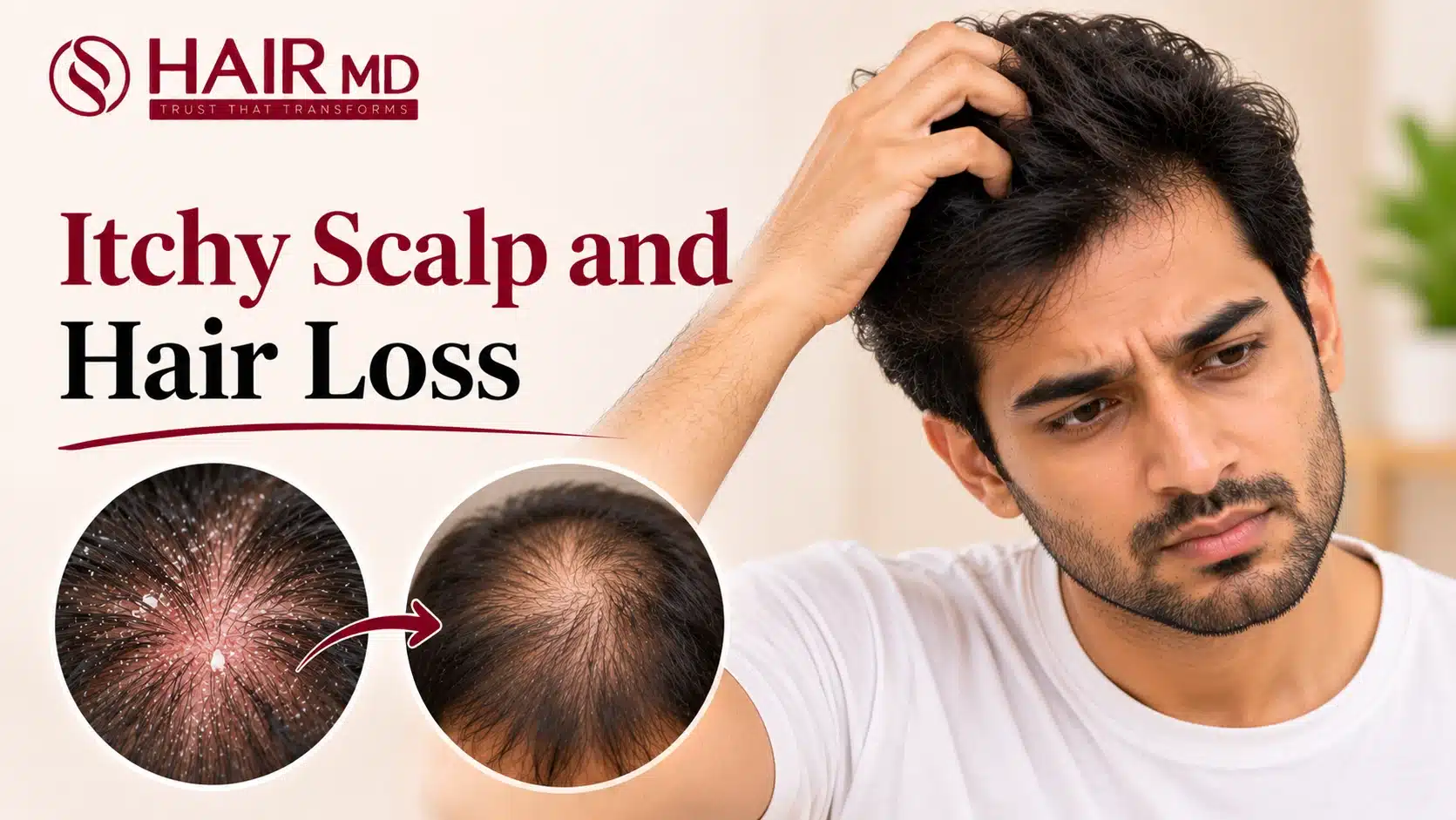
Is your scalp constantly itchy, and are you noticing more hair fall? The combination may point to an underlying scalp condition that needs the right treatment.
An itchy scalp combined with hair loss usually indicates an underlying condition such as seborrheic dermatitis, scalp psoriasis, tinea capitis (fungal infection), or alopecia areata. Treatment depends on identifying the cause , antifungal shampoos for fungal causes, topical corticosteroids for inflammatory causes, and dermatologist evaluation when symptoms persist beyond 4–6 weeks.
At a Glance
|
Factor |
Details |
|
Most common cause |
Seborrheic dermatitis / dandruff |
|
Other common causes |
Scalp psoriasis, dry scalp, fungal infections, alopecia areata |
|
Hair loss mechanism |
Inflammation disrupts hair cycle; scratching damages follicles |
|
Self-care options |
Anti-dandruff shampoos, moisturising scalp treatments |
|
Prescription options |
Antifungals, topical steroids, immunosuppressants |
|
When to consult |
Symptoms lasting >4 weeks, associated visible hair thinning, spreading bald patches |
|
Can hair regrow? |
Yes, in most cases once the underlying condition is treated |
n itchy scalp and hair loss are two of the most common reasons patients visit a dermatologist at HairMD Pune. While each can occur independently, they frequently appear together , and that combination usually signals that something is disrupting the scalp environment.
Itchy scalp alone is rarely alarming. But when itching is accompanied by noticeable hair fall, scalp redness, or visible flaking, the underlying cause needs to be identified and addressed. Without treatment, persistent scalp inflammation can damage hair follicles and convert temporary hair loss into something that is harder to reverse.
“When a patient presents with both scalp itching and hair fall, we do not treat them separately. The first step is always identifying the underlying scalp condition , the hair loss is usually a consequence of that inflammation, not a separate disease,” – Dr. Dhanraj Chavan, MD Dermatology, HairMD Pune.
What’s covered in the article?
- Causes of an Itchy Scalp
- How Itchy Scalp Leads to Hair Loss?
- Effective Treatments for Itchy Scalp and Hair Loss
- Home Care: What You Can Do
- When Does Itchy Scalp and Hair Loss Need a Dermatologist?
- Frequently Asked Questions
- Conclusion
Causes of an Itchy Scalp
1. Seborrheic Dermatitis (Dandruff)
Seborrheic dermatitis is the most frequent cause of a persistent itchy scalp in adults. It is caused by an overgrowth of Malassezia yeast on the scalp, which triggers an immune-mediated inflammatory response. This results in yellow or white flakes, scalp redness, and itching.
The inflammation does not destroy hair follicles permanently but can disrupt the hair growth cycle, pushing more hairs into the shedding (telogen) phase prematurely. Scratching worsens the situation by physically stressing hair roots.
2. Dry Scalp
A dry scalp produces small, white, dry flakes , different from the larger, oily flakes of seborrheic dermatitis. Dryness can result from low-humidity environments, frequent washing with harsh shampoos, or seasonal changes (particularly in Indian winters). The itching from dryness triggers scratching, which can mechanically damage fragile hair.
3. Scalp Psoriasis
Scalp psoriasis is an autoimmune condition that accelerates skin cell turnover on the scalp, producing thick, silvery scales and significant itching. The condition involves chronic inflammation that disrupts follicle function. When psoriasis plaques cover the scalp extensively, the resulting inflammation and mechanical damage from scratching can lead to hair loss.
4. Fungal Infections (Tinea Capitis)
Tinea capitis , scalp ringworm , is a dermatophyte fungal infection more common in children but also seen in adults with weakened immunity. It presents as circular patches of hair loss with scaling, broken hair stubs, and itching. It requires antifungal treatment (oral, as topical treatment alone is insufficient for tinea capitis).
5. Alopecia Areata
Alopecia areata is an autoimmune condition causing sudden, patchy hair loss. Some patients report itching, tingling, or mild pain at affected patches before hair falls out. The condition is not caused by external scalp problems but by the immune system targeting hair follicles. See HairMD’s detailed guide on alopecia areata.
6. Contact Dermatitis
An allergic or irritant reaction to shampoos, conditioners, hair dyes, or styling products can cause scalp itching, redness, and in severe cases, hair loss from the resulting inflammation. Identifying and discontinuing the causative product resolves the condition.

How Itchy Scalp Leads to Hair Loss
The connection between scalp itching and hair loss operates through two distinct pathways:
Pathway 1: Inflammation-driven disruption of the hair cycle. The same inflammatory processes that cause scalp itching , whether from seborrheic dermatitis, psoriasis, or infection , directly affect follicle function. Inflammatory cytokines can shorten the anagen (growth) phase of the hair cycle and push follicles into the telogen (resting/shedding) phase earlier than normal. This manifests as diffuse shedding, often 2–3 months after the inflammatory episode.
Pathway 2: Mechanical damage from scratching. Physical scratching of the scalp causes micro-trauma to hair roots and the surrounding scalp tissue. Repeated mechanical stress weakens hair shafts and can inflame the follicle opening. In severe or prolonged cases, this mechanical injury , combined with bacterial secondary infection of scratched skin , can contribute to follicle damage.
Effective Treatments for Itchy Scalp and Hair Loss
Treatment should target the underlying cause, not just the symptoms.
For Seborrheic Dermatitis (Dandruff-Related Itching)
Medicated antifungal shampoos are the foundation of treatment:
- Ketoconazole 2% , reduces Malassezia, available on prescription; use 2–3×/week during active episodes, then once weekly for maintenance
- Zinc pyrithione , OTC; antifungal and mild anti-inflammatory; suitable for daily or alternate-day use
- Selenium sulfide , antifungal and antimitotic; leave on 3–5 minutes before rinsing
For moderate-to-severe cases, topical corticosteroids (prescribed by a dermatologist) reduce inflammation quickly. These should be used for short courses only under medical supervision , not long-term unsupervised use.
For Dry Scalp
Moisturising shampoos and conditioners containing glycerin or hyaluronic acid help restore moisture balance. Reducing wash frequency and water temperature can prevent further drying.
For Scalp Psoriasis
Treatment may include topical corticosteroids, calcipotriol (a vitamin D analogue), coal tar preparations, or phototherapy. Severe cases may require systemic treatment under a dermatologist’s care.
For Tinea Capitis (Fungal Infection)
Oral antifungal medications (griseofulvin or terbinafine) are needed. Topical antifungals alone are not sufficient for tinea capitis. Family members should also be evaluated.
For Alopecia Areata
Treatment options include intralesional steroid injections, topical immunotherapy, oral JAK inhibitors (in select cases), and Platelet-Rich Plasma (PRP). Treatment is selected based on the extent of involvement and the patient’s clinical profile.
Consult HairMD for diagnosis and a personalised treatment plan →
Home Care: What You Can Do?
For mild, non-persistent scalp itching without significant hair loss, the following measures may help:
- Use a mild, sulphate-free shampoo if your scalp is sensitive
- Wash hair regularly , infrequent washing allows scale and sebum to accumulate, worsening itching
- Avoid hot water , lukewarm water is less drying and less irritating
- Do not scratch with nails , use the pads of your fingers when washing; nails cause more scalp damage
- Do not leave hair wet , a damp scalp environment encourages fungal overgrowth
- Avoid switching hair products frequently, as new ingredients can trigger contact reactions
What to avoid: Applying home remedies (oils, fenugreek paste, raw egg) to an already inflamed scalp can worsen irritation and delay proper treatment.
When Does Itchy Scalp and Hair Loss Need a Dermatologist?
Consult a dermatologist at HairMD if:
- Scalp itching persists for more than 4–6 weeks despite OTC shampoos
- You notice visible hair thinning or bald patches alongside itching
- Scalp redness is spreading beyond the hairline to the face or neck
- You see pustules, crusting, or discharge from the scalp
- Hair fall has increased significantly over the past 2–3 months
Accurate diagnosis often requires trichoscopy , a magnified scalp examination , to distinguish between causes that can look similar clinically (seborrheic dermatitis vs. psoriasis vs. alopecia areata). To understand normal vs. abnormal hair fall ranges before your consultation, read: Hair Fall: How Much Is Too Much?
Frequently Asked Questions
Can itchy scalp alone cause hair loss?
An itchy scalp does not usually cause hair loss directly. However, conditions that trigger itching, such as seborrheic dermatitis, psoriasis, and scalp infections, can cause inflammation that affects hair follicle health. Frequent scratching can also damage hair strands and contribute to hair breakage or shedding.
Will hair grow back after itchy scalp hair loss?
In most cases, hair can grow back once the underlying scalp condition is treated. Hair loss caused by inflammation or excessive scratching is usually temporary. However, severe or long-standing scarring conditions can permanently damage hair follicles. Early diagnosis and treatment can help prevent further damage.
Can stress cause an itchy scalp with hair loss?
Yes, stress can contribute to both scalp problems and hair shedding. It may trigger flare-ups of seborrheic dermatitis and contribute to telogen effluvium, a condition that causes excessive hair shedding. Although stress does not usually cause scalp itching directly, it can worsen existing scalp conditions and affect the hair growth cycle.
Is itchy scalp a sign of lice?
Yes, an itchy scalp can be a sign of head lice. Lice cause itching as they feed on the scalp. You may notice small eggs called nits attached to hair strands or live lice near the scalp. However, itching can also result from dandruff, allergies, or other scalp conditions. A proper scalp examination can help identify the cause and determine whether medicated lice treatment is needed.
Can an itchy scalp cause permanent baldness?
An itchy scalp does not usually cause permanent baldness. Most conditions associated with scalp itching cause temporary hair shedding or breakage. However, rare scarring conditions, known as cicatricial alopecia, can destroy hair follicles and lead to permanent hair loss. Early diagnosis and appropriate treatment are important to protect follicle health.
How often should I wash my hair if I have an itchy scalp?
If you have dandruff or seborrheic dermatitis, washing your hair regularly with a suitable medicated shampoo can help control itching and flakes. The frequency may vary depending on your scalp condition, hair type, and the shampoo prescribed. Your dermatologist can recommend a suitable washing schedule to avoid excessive dryness or product buildup.
Can I use oil for an itchy scalp?
Applying heavy amounts of oil to an itchy, flaky scalp may worsen symptoms in some people, particularly those with seborrheic dermatitis. Certain oils may contribute to scalp buildup and irritation. It is better to identify the cause of itching and use a dermatologist-recommended medicated shampoo before applying scalp oils.
What tests does HairMD recommend for itchy scalp with hair loss?
At HairMD Pune, a dermatologist may recommend a detailed scalp examination using trichoscopy to assess hair follicles and identify signs of inflammation or hair loss. A KOH test may be performed if a fungal infection is suspected. Depending on your symptoms and medical history, blood tests for nutritional deficiencies and thyroid function may also be advised to identify possible causes of hair loss.
DO YOU KNOW?
Nearly 250 Patients Visit HairMD
Everyday For Various Hair Concerns
(20+ Years Of Expertise. 4157+ Successful Hair Transplant at HairMD)
Meet Our Dermatologists




Conclusion
An itchy scalp and hair loss can occur together due to dandruff, seborrheic dermatitis, psoriasis, fungal infections, or other scalp conditions. Treating the underlying cause is important to control itching and reduce further hair shedding.
Avoid scratching your scalp or applying unverified home remedies, especially when you have redness, scaling, or visible hair thinning. If symptoms persist, or you notice bald patches, increased hair fall, or scalp discharge, consult a dermatologist.
At HairMD Pune, dermatologists can examine your scalp using trichoscopy and recommend suitable treatment based on the diagnosis. a scalp and hair evaluation to discuss your symptoms and treatment options.
Medical Disclaimer
This article is for informational purposes only and does not constitute medical advice, diagnosis, or a treatment recommendation. The information presented here does not substitute consultation with a qualified dermatologist. Individual scalp conditions and sensitivities vary. HairMD Pune’s dermatologists are available for in-person evaluation at multiple centres across Pune and Karad.
Further Reading
Hair Fall: How Much Is Too Much?
Losing 50–100 hairs daily is normal. Find out when hair fall becomes a concern, common causes, and when to consult a dermatologist at HairMD Pune.
Redensyl vs Minoxidil vs GFC for Hair Loss: Which One Is Right for You?
Redensyl, minoxidil, or GFC therapy for hair loss? HairMD Pune dermatologists explain how each works, who each is for, and how to choose.
How to Prevent Hair Loss: The Ultimate Guide
Explore the ultimate guide to preventing hair loss and maintaining healthy, strong hair.
Do Dermatologists Recommend Inositol and Choline for Hair Loss?
Discover the potential of inositol and choline for hair loss. Learn how these nutrients may benefit follicle health & prevent thinning.
Have thoughts? Please let us know
We are committed not only to treating you, but also educating you.