



Written by HairMD Content Team | Medically Reviewed by Dr. Dhanraj Chavan On June 19, 2026


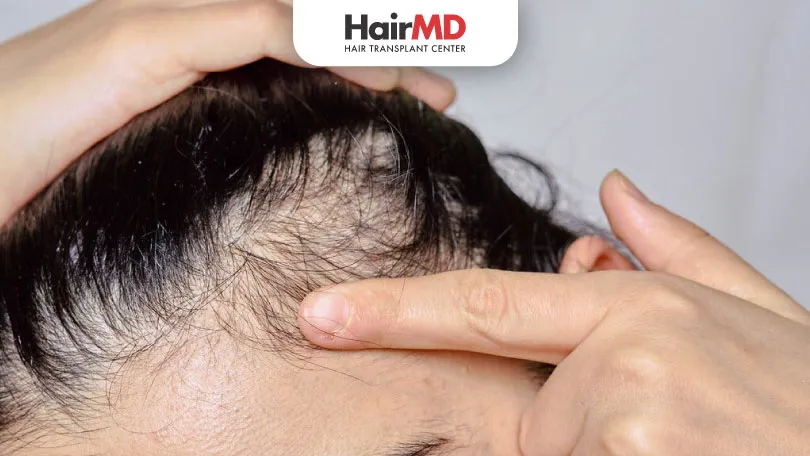
Hair loss is a common concern for many people today. Finding hair on your brush or clothes can be alarming, but not all hair loss is a cause for worry. It’s normal to shed some hair daily, but understanding how much is typical is important.
Losing 150 strands in the three months after a high-stress event is completely expected. Losing 150 strands consistently for 12 months with no obvious trigger is a problem that needs investigation. The same number, completely different implications. This guide gives you what the number alone does not: specific, practical ways to assess whether your hair fall is within normal range for your specific situation.
What’s covered in the article?
- What Causes Hair Fall?
- Hair Loss v/s Hair Shedding: Know the Difference
- How Much Hair Fall is Normal?
- 3 Simple Home Tests Dermatologists Use
- When Higher-Than-Normal Shedding Is Expected and Not a Problem?
- 6 Warning Signs That Require a Dermatologist Evaluation
- Why Choose HairMD?
- Conclusion
What Causes Hair Fall?
Causes Of Teenage Hair Loss & Reason Of Hair Fall | HairMD, Pune
Firstly, we need to understand what constitutes normal hair loss before understanding the external factors that lead to the loss of hair.
Our hair has a life cycle. Typically, a hair strand can last for about 2-5 years. When you shed old hair, new hair follicles replace them. However, you need to understand hair shedding patterns to estimate how much hair loss is normal in a day.
Other causes of hair loss include lack of hygiene, stress, heredity, lousy diet, exposure to pollution, chemical infused cosmetics, and hairstyling. All this leads to weakened strands, dandruff, and hair breakage.
Split ends usually indicate a lack of moisture in your hair. It can also be due to increased hair brushing. It can weaken the hair, prevent nutrition from reaching the tip, and as a result, you lose an inordinate amount of hair.
Certain conditions like alopecia, thyroid disorders, anaemia, lupus, pattern baldness, and scalp allergies can cause hair loss.
Hair Loss v/s Hair Shedding: Know the Difference
Hair Loss vs Hair Shedding (बाल झड़ना और बाल शेडिंग में अंतर क्या है) | HairMD, Pune | (In HINDI)
Hair loss and hair shedding are two separate terms and cannot be used interchangeably. Hair shedding is when you lose hair as a natural process, and the hair follicle is still active. Hair loss is when your hair is abnormally falling off, and there is no sign of new hair.
Hair shedding is not a cause of concern. If you have no anomalies and your hair is just going through a predefined process, it is not alarming. The scalp health and hair lustre indicate your hair health.
However, if you suffer from hair loss, you will have a patchy scalp with no sign of new hair growth. You will have to address the root cause of the problem; else the situation can worsen, leading to baldness.
There are many reasons for hair loss. It can be genetic or due to some ailment. The most common is radiotherapy or chemotherapy. Cancer treatment has intense radiation and prominent side effects. One of them is increased hair loss. They don’t grow back until the treatment is done, and the exposure to chemotherapeutic waves stops. In this case, the loss is unavoidable and even necessary to combat a more significant issue.
How Much Hair Fall is Normal?
It is crucial to understand how much hair loss is normal in a day for us to understand your hair loss pattern. Any healthy person loses about 50 to 100 strands daily under normal conditions. There are different stages in the life cycle of your hair and here is how they are –
- Your hair (80-90% of it) is mostly in the ‘anagen’ phase where it continues to grow. Hair usually grows by a centimetre every month.
- Then comes the ‘catagen’ phase and only a small portion, that is, 1-2% of your hair is in this stage. Hair stops showing further growth at this stage.
- The last phase is the ‘Telogen’ phase. At this point, the hair will start to prepare itself to detach from the scalp, and about 9% of your hair will be in this stage every day.
- When you have scalp and hair fall issues, more than 10% of your hair will enter the telogen phase, increasing hair loss.
According to the American Academy of Dermatologists, it is okay to lose about 50-100 strands of hair per day – in both males and females.
Another major question is how much hair loss is normal for a male when washing hair. When your hair is wet, it is much more vulnerable, and that is why you will find them falling off. This is common in both males and females.
When females have hormonal fluctuations during their menstrual days, they end up losing more hair then.
When men use helmets or rough head scarfs, they tend to say goodbye to more hair strands than the normal 50 – 100 strands per day.
3 Simple Home Tests Dermatologists Use
The Pull Test
Take a clean, dry section of approximately 60 hairs between your thumb and index finger close to the scalp. Run your fingers firmly down the length, applying gentle pulling pressure.
Normal result: 0–3 hairs come out.
Concerning result: 6 or more hairs come out easily , indicates a significant proportion of hairs are in the shedding phase, which can signal active medical hair loss.
Note: Do not perform within 24 hours of washing. Test on day 2 or 3 after washing for accurate results.
The Parting Width Test
Take a photograph of the top of your head with hair parted down the centre in the same location. Compare with a photograph from 12–18 months ago if available.
Normal result: Parting width is similar.
Concerning result: Parting has visibly widened, or more scalp is visible than before. This indicates progressive thinning requiring evaluation.
The Wash Day Count by Frequency
Collect and roughly count hair shed during washing and combing on your next wash day.
- Washing daily: 50–200 strands on a typical day is within range.
- Washing every 3 days: 150–400 strands on wash day is normal (3 days of accumulated shedding).
- Washing once weekly: 350–700 strands on wash day is normal.
When Higher-Than-Normal Shedding Is Expected and Not a Problem?
- Post-monsoon October–November in India: A predictable seasonal telogen effluvium triggered by the monsoon period. Shedding increases and typically returns to normal by January. Self-limiting.
- 2–3 months after major illness, surgery, or severe stress: Telogen effluvium , the hair cycle responds to physical or emotional stress with delayed shedding. Peaks and resolves within 3–6 months of the trigger.
- 3–5 months postpartum: Expected, self-limiting. Normal density returns by 12–18 months.
- After changing wash frequency: Going from daily to every 3 days increases per-wash count, but total weekly loss is unchanged.
6 Warning Signs That Require a Dermatologist Evaluation
- Visible scalp thinning: Scalp visible at the crown, temples, or hairline where it was not visible before. This indicates cumulative follicle miniaturisation, not temporary shedding.
- Consistent heavy shedding for more than 2–3 months with no clear trigger: When the stress or postpartum explanation does not apply, persistent shedding needs investigation.
- A changing hairline: Recession at the temples or a hairline that has moved back over time is a sign of androgenetic alopecia requiring treatment.
- Hair fall with other symptoms: Fatigue plus hair fall = thyroid. Irregular periods plus acne plus facial hair plus hair fall = PCOS. These combinations need prompt investigation.
- Patchy smooth bald spots: A classic presentation of alopecia areata , requires a completely different diagnosis and treatment from pattern hair loss.
- Progressively worsening hair fall over 6+ months: Telogen effluvium peaks and resolves. Hair fall that gets worse month over month is not self-limiting.
Why Choose HairMD?
At HairMD, you will get personalised solutions to all your hair problems. HairMD also offers Advanced Hair Transplant Method Follicular Unit Extraction, a highly feasible and on-point hair transplantation method.
The clinic is equipped with the latest machinery and is handled by experienced staff. They are also trained to deal with hair issues in both males and females. You can expect a success rate of over 98%! The experienced team of doctors will make this journey easier and less stressful for you. After transplantation and expert guidance, you can say goodbye to scalp issues, and your hair will grow back beautifully, shining and bouncy. The distinct before and after results will be visible to everyone to appreciate.
Book an appointment with HairMD today for your hair loss concerns!
DO YOU KNOW?
Nearly 250 Patients Visit HairMD
Everyday For Various Hair Concerns
(20+ Years Of Expertise. 4157+ Successful Hair Transplant at HairMD)
Meet Our Dermatologists





Conclusion
In conclusion, it’s normal to lose some hair every day, but knowing the difference between regular hair shedding and concerning hair loss is important. If you notice excessive hair loss or patches on your scalp, it’s best to consult a specialist. Remember, there are effective treatments available to help you regain your hair health. Don’t hesitate to reach out for professional help to keep your hair looking its best!
Further Reading
Redensyl vs Minoxidil vs GFC for Hair Loss: Which One Is Right for You?
Redensyl, minoxidil, or GFC therapy for hair loss? HairMD Pune dermatologists explain how each works, who each is for, and how to choose.
How to Prevent Hair Loss: The Ultimate Guide
Explore the ultimate guide to preventing hair loss and maintaining healthy, strong hair.
Do Dermatologists Recommend Inositol and Choline for Hair Loss?
Discover the potential of inositol and choline for hair loss. Learn how these nutrients may benefit follicle health & prevent thinning.
Finding the Right Doctor for Hair Loss Solutions
Searching for What Kind of Doctor Treats Hair Loss? Learn how dermatologists at Hairmd diagnose the cause & offer proven treatments for hair thinning.
Have thoughts? Please let us know
We are committed not only to treating you, but also educating you.