

GFC Hair Treatment in Wakad: How It Works, Results & PRP Comparison
Written by HairMD Content Team | Medically Reviewed by Dr. Dhanraj Chavan
Updated on February 04, 2026
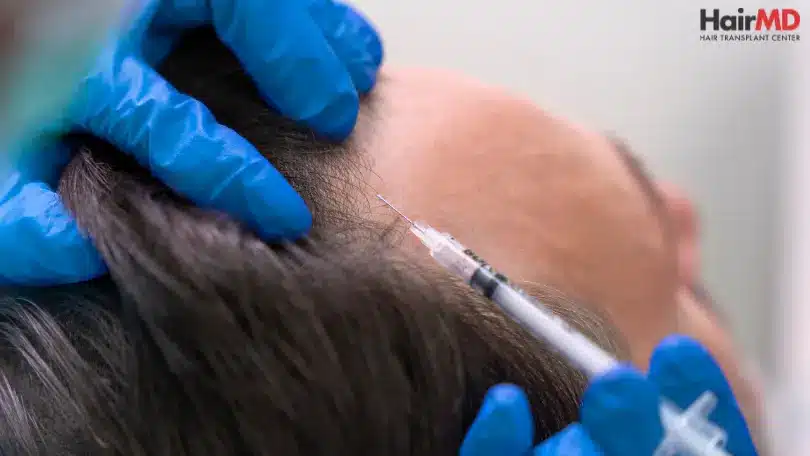
If you live in Wakad and are researching advanced non-surgical options for hair loss, you may have heard about GFC (Growth Factor Concentrate) hair treatment.
This article explains what GFC therapy is, how it differs from PRP, who it is best suited for, and what Wakad residents can realistically expect from this treatment.
GFC Hair Treatment Explained
- GFC uses highly concentrated growth factors
- Designed for early to moderate hair loss
- Helps improve hair thickness and scalp health
- Often chosen when PRP results are limited
-
What’s covered in the article?
- What Is GFC Hair Treatment?
- How GFC Supports Hair Regrowth?
- GFC vs PRP: What’s the Difference?
- GFC Results: What to Expect?
- Who Is a Good Candidate for GFC?
- Local Considerations for Wakad Residents
- Frequently Asked Questions
- What Wakad Residents Should Review Next?
What Is GFC Hair Treatment?
GFC therapy is an advanced regenerative treatment that delivers purified growth factors directly to the scalp.
Unlike PRP, GFC:
- Uses a refined growth factor formulation
- Reduces variability between sessions
- Targets follicle regeneration more precisely
It is commonly recommended when hair thinning is noticeable but follicles are still active.
How GFC Supports Hair Regrowth?
GFC works by:
- Improving follicle nourishment
- Extending the hair growth phase
- Strengthening miniaturized follicles
- Enhancing scalp environment
The goal is to improve hair quality and slow further thinning.
GFC vs PRP: What’s the Difference?
| Feature | PRP | GFC |
| Growth factor concentration | Moderate | High |
| Consistency | Variable | More controlled |
| Best for | Early thinning | Early–moderate thinning |
| Downtime | None | None |
GFC is often chosen by patients who:
- Did not see enough improvement with PRP
- Want a more advanced regenerative option
Learn more about supportive treatments:
- PRP Therapy
- Hair Transplant Treatment
GFC Results: What to Expect?
GFC results develop gradually.
Typical response pattern:
- After 1–2 sessions: Reduced hair fall
- After 3–4 months: Improved thickness
- After 6 months: Visible improvement in density
Maintenance sessions may be recommended depending on response and hair loss progression.
Who Is a Good Candidate for GFC?
-
GFC may be suitable if:
- Hair thinning is progressing despite basic treatments
- You want a non-surgical but advanced option
- Donor hair is limited but follicles are still active
It may not be sufficient alone if:
- Large bald areas are present
- Hair follicles are no longer viable
In such cases, GFC may be used as a supportive treatment alongside other options.
Local Considerations for Wakad Residents
GFC sessions are typically quick and fit easily into a working schedule.
Many Wakad patients prefer GFC because:
-
- No recovery downtime
- Minimal disruption to routine
- Can be combined with other treatments
Frequently Asked Questions
Is GFC better than PRP?
GFC delivers more concentrated growth factors, but suitability depends on individual hair loss patterns.
How many GFC sessions are required?
Most patients need multiple sessions followed by maintenance if required.
Can GFC replace a hair transplant?
No. GFC supports existing hair but does not replace lost follicles.
Are GFC results permanent?
Results depend on hair loss progression and maintenance protocols.
What Wakad Residents Should Review Next?
GFC is usually researched by people who want a more advanced non-surgical option for hair thinning and want to understand how it compares with PRP or longer-term treatment planning. For Wakad residents, the useful next step is to understand where GFC fits in a diagnosis-led treatment sequence rather than treating it as a standalone answer for every case.
Depending on follicle activity and the stage of thinning, GFC may be considered as an early-stage intervention, a supportive treatment, or one part of a broader medical plan.
To continue your research, review the Wakad area page, compare this topic with the PRP article for the same locality, or explore the main GFC treatment page for a broader medical overview.
Medical Disclaimer:
This article is intended for educational purposes. Hair loss treatments and outcomes vary by individual, and a consultation is required to determine suitability.
For a broader understanding of hair loss treatments and options available across different areas, you can explore hair restoration services in Pune.