

FUE Hair Transplant in Pune – What Patients Say After Surgery at HairMD?


Written by HairMD Content Team | Medically Reviewed by Dr. Dhanraj Chavan On July 04, 2026


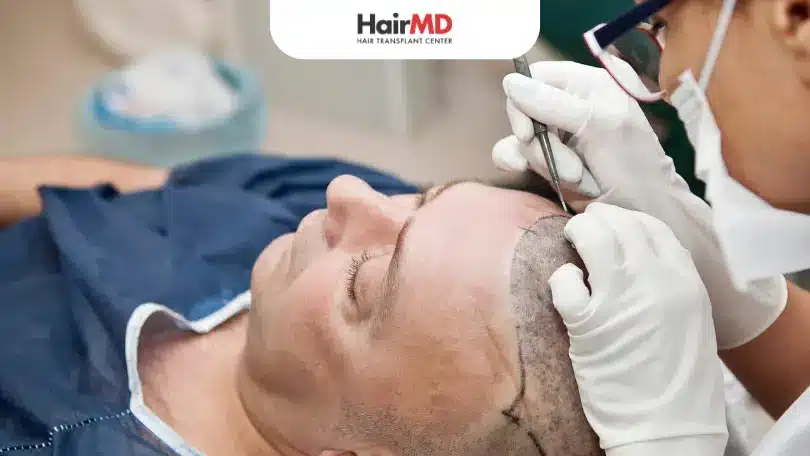
FUE hair transplant is a surgical hair restoration procedure that relocates follicles from a donor area to thinning or bald areas. With an experienced surgeon, a well-planned FUE procedure achieves a graft survival rate of 95 to 98 percent, and most patients see the full result 12 to 15 months after surgery.
At HairMD India, the procedure is performed by Dr. Sachin Pawar, Chief Hair Transplant Surgeon, and the clinic holds a 4.8 out of 5 rating across 190 hair transplant reviews. This article explains what patients experience month by month, and what real HairMD patients report at each stage.
What’s covered in the article?
- Key Takeaways
- What FUE Hair Transplant Is and How Results Are Measured?
- Key Treatment Attributes Table
- Day of Surgery: What Patients Report?
- First Two Weeks: Healing and the Shedding Phase
- What Patients Report Around the Six-Month Mark?
- Months 3 to 4: New Growth Begins
- Months 6 to 12: Density Builds
- What Patients Say After Surgery at HairMD?
- What Drives Patient Satisfaction?
- As Verified By
- Conclusion: Realistic Expectations Make for Happy Patients
- Frequently Asked Questions
Key Takeaways
- FUE hair transplant moves individual follicles from a donor area to thinning zones, with no donor strip removed.
- Graft survival with an experienced surgeon is 95 to 98 percent.
- Transplanted hairs shed during weeks 2 to 4, which is normal shock loss.
- New growth begins around months 3 to 4 after surgery.
- Roughly 50 percent of final density is visible by month 6.
- The full, settled result appears 12 to 15 months after surgery.
- HairMD India holds a 4.8 out of 5 rating across 190 hair transplant reviews, with patients citing natural results.
-
What FUE Hair Transplant Is and How Results Are Measured ?
FUE hair transplant (follicular unit extraction) is a surgical hair restoration method that removes follicles one at a time from the back and sides of the scalp. These follicles resist the hormone that causes male pattern hair loss, so they keep growing after transplant. No strip of scalp is removed, which means no linear scar. The follicles are placed into tiny incisions in the thinning area, following the natural angle of existing hair.
Results are measured two ways: graft survival and final density. Graft survival is the share of transplanted follicles that take hold and grow, and with an experienced surgeon this sits at 95 to 98 percent.
Final density is how full the area looks once every follicle has cycled through its first growth at 12 to 15 months. Dr. Sachin Pawar plans each case around the patient’s Norwood grade and donor supply.
Key Treatment Attributes Table
| Attribute | Detail |
|---|---|
| Procedure | FUE hair transplant (follicular unit extraction) |
| Technique | Individual follicle extraction, no donor strip removed |
| Sessions | Usually 1 session; large cases may span 2 consecutive days |
| Graft Survival Rate | 95 to 98 percent with an experienced surgeon |
| Anaesthesia | Local anaesthesia, patient awake |
| Recovery Time | Back to desk work in 3 to 5 days |
| First New Growth | Months 3 to 4 |
| Density at 6 Months | About 50 percent |
| Full Result Timeline | 12 to 15 months |
| Surgeon | Dr. Sachin Pawar, Chief Hair Transplant Surgeon |
Day of Surgery: What Patients Report?
On the day of an FUE procedure, patients are awake and comfortable under local anaesthesia, and most describe it as long but painless. A session runs four to eight hours depending on graft count, and large cases may continue into a second consecutive day. Dr. Sachin Pawar extracts follicles individually from the donor area, then places them into the recipient area at the correct angle and depth.
By the time they leave, patients have tiny crusts around each graft and mild redness across the recipient area. There are no sutures to remove with FUE, and the donor area heals on its own. Forehead swelling is common in the first few days and settles quickly, and patients receive written aftercare guidance for early healing.
First Two Weeks: Healing and the Shedding Phase
The first two weeks cover early healing and the start of the shedding phase. Crusts around the grafts dry and fall away within 7 to 10 days, helped by gentle washing from around day 3. Many patients return to desk work within 3 to 5 days, since FUE recovery is quick and the donor area needs no stitches. The treated area can look pink or slightly scabbed during this window, which is expected.
Then the transplanted hairs begin to fall out. This is shock loss, and it worries patients more than anything else in the journey. The hair shaft sheds while the follicle stays alive and dormant beneath the scalp.
Around 80 to 90 percent of transplanted hairs shed this way during weeks 2 to 4, and it does not mean the graft has failed. Dr. Sachin Pawar counsels every patient that shedding is the follicle resetting before it pushes out a new, permanent hair.
What Patients Report Around the Six-Month Mark ?
Real HairMD patients describe the same arc this timeline predicts. About six months after his procedure, one patient, Kumar K., reported a 5-star experience: “I had my hair transplant under Dr. Sachin Pawar around six months ago and I am very happy with the results. The outcome is looking natural and improving day by day.”
He also noted the team guided him clearly on post-transplant care and recovery timing. His account matches the standard pattern, where density builds from month 4 and early shedding is not a sign of failure.
Months 3 to 4: New Growth Begins
To recap so far: FUE hair transplant at HairMD India is a follicle-by-follicle technique for patients with male pattern hair loss and healthy donor supply. The core decision factors are graft count, surgeon experience, and a realistic 12 to 15 month timeline.
New growth begins around months 3 to 4 after surgery. The dormant follicles re-enter their growth cycle and push out fine, short hairs across the recipient area. These early hairs are thin and patchy at first, and they thicken with each passing month.
Months 6 to 12: Density Builds
By month 6, most patients have reached about 50 percent of their final density. The new hairs grow longer and coarser, and the area starts to look like a normal head of hair. Between months 6 and 12, the regrowth stages continue as more follicles catch up and shafts mature.
Dr. Sachin Pawar often supports this phase with PRP therapy to encourage follicle activity and scalp health. PRP therapy uses the patient’s own platelet-rich plasma as an adjunct, not a replacement for the transplant. Patients are also guided on whether to continue medical therapy to protect their existing non-transplanted hair.
What Patients Say After Surgery at HairMD ?
Across HairMD India’s nearly 200 hair transplant reviews, the recurring themes are natural-looking results, a painless procedure, and steady support through recovery. The feedback below is from real Google reviews, shown with first name and last initial.
- Pattya T. (5 stars): “I had an excellent experience under the care of Dr. Sachin Pawar. The procedure was smooth, the results are very natural, and the entire team was supportive throughout.”
- Praveen K. (5 stars): “My hair transplant was painless and the overall experience was really good. Dr. Sachin Pawar and the surgical team made me feel comfortable during the two days of surgery.”
- Tanmay D. (5 stars): “From consultation through post-surgery care, everything was handled with professionalism. The PRP sessions are done efficiently by trained technicians.”
- Surendr G. (5 stars): “I have been with HairMD for three to four years and recently had a transplant with Dr. Sachin Pawar. The doctors are very experienced. They are costly, but I think they justify it.”
What Drives Patient Satisfaction ?
The patients who report the highest satisfaction across hair transplant reviews share three habits. They were counselled on the shedding phase before surgery, so shock loss did not alarm them. They had a graft plan matched to their donor supply, so the result looked natural. And they waited the full 12 to 15 months before judging the outcome.
You can see documented patient results for the realistic range, including cases from 2,000 to 6,000 grafts. Women with suitable pattern hair loss are candidates in selected cases, as covered in HairMD’s guidance on female hair transplant in Pune.
As Verified By
The clinical timeline and survival figures in this article align with independent authorities on hair restoration surgery.
- The American Academy of Dermatology confirms a hair transplant takes four to eight hours, is done under scalp-numbing anaesthesia, and gives permanent, natural-looking results when donor hair is adequate.
- Cleveland Clinic notes that transplanted hair may fall out as the area heals before regrowing, and that full results can take up to a year.
- The International Society of Hair Restoration Surgery describes FUE as extraction of individual follicular units with no linear donor scar, with regrowth beginning around three to four months.
- A peer-reviewed review in PMC (Follicular Unit Extraction: Curves Ahead) documents FUE technique and graft handling as primary variables in survival and outcome.
- DermNet states that hair transplantation harvests follicles from a donor area and is used predominantly to treat androgenetic alopecia of the frontal, mid-scalp, and crown regions.
Conclusion: Realistic Expectations Make for Happy Patients
FUE hair transplant at HairMD India is a one-day surgical procedure (depends on the grading of baldness) with a 95 to 98 percent graft survival rate and a 12 to 15 month timeline to the full result. The patients who do best understand the shedding phase, get a graft plan matched to their donor supply, and wait out the growth period. Dr. Sachin Pawar performs the surgery, and Dr. Dhanraj Chavan reviews HairMD’s hair restoration content.
If you are weighing FUE for male pattern hair loss, the next step is a donor and Norwood assessment. You can review the FUE treatment page or book an assessment through the HairMD India contact page. All internal links verified.
Medically reviewed by Dr. Dhanraj Chavan.
Frequently Asked Questions
Is shedding after an FUE hair transplant normal?
Yes. Shedding of the transplanted hairs during weeks 2 to 4 is a normal stage called shock loss. The hair shaft falls out while the follicle stays alive and dormant under the scalp.
Around 80 to 90 percent of transplanted hairs shed this way. Every patient has a variance in shedding depending upon how thor body reacts to the treatment. The follicle then re-enters its growth cycle and pushes out a new, permanent hair from around month 3 to 4.
When will I see the final result after FUE surgery?
The full, settled result of an FUE hair transplant appears 12 to 15 months after surgery. New growth begins around months 3 to 4, and about 50 percent of final density is visible by month 6.
Density keeps building between months 6 and 12 as more follicles mature. It is best to wait the full timeline before judging the outcome rather than forming an opinion early.
What is the graft survival rate for FUE at HairMD India?
FUE hair transplant has a graft survival rate of 95 to 98 percent when performed by an experienced surgeon. This is the share of transplanted follicles that take hold and grow.
Dr. Sachin Pawar plans each case around donor supply and Norwood grade. Surgeon experience and careful graft handling are the main variables that protect survival.
How soon can I return to work after an FUE hair transplant?
Most patients return to desk work within 3 to 5 days of an FUE procedure. Recovery is quick because no donor strip is removed and the donor area needs no stitches.
Crusts around the grafts fall away within 7 to 10 days. Strenuous exercise is usually resumed after about three weeks, on the surgeon’s advice.
Does an FUE hair transplant leave a scar?
FUE does not leave a linear scar because no strip of scalp is removed. The technique extracts follicles one at a time, leaving tiny dot-sized healing points in the donor area.
These small points fade and are hard to see once the area heals. This is a key difference from older strip-harvest methods.
Is FUE hair transplant suitable for women?
FUE can suit women with a stable pattern of hair loss and an adequate donor area. Candidacy depends on the cause and pattern of thinning, which is assessed before surgery.
Not every type of female hair loss responds to transplant, so a proper diagnosis matters first. Dr. Sachin Pawar assesses donor supply and pattern before recommending surgery for any patient.
DO YOU KNOW?
Nearly 250 Patients Visit HairMD
Everyday For Various Hair Concerns
(20+ Years Of Expertise. 4157+ Successful Hair Transplant at HairMD)
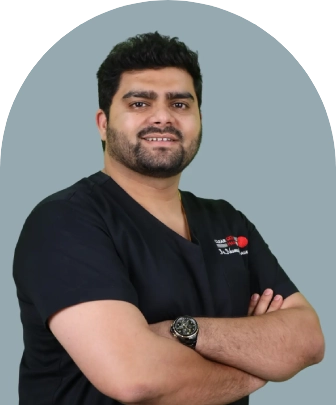
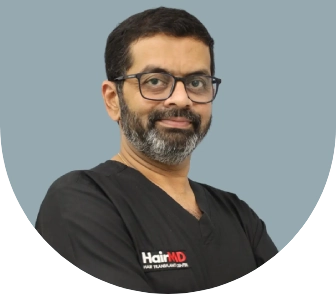
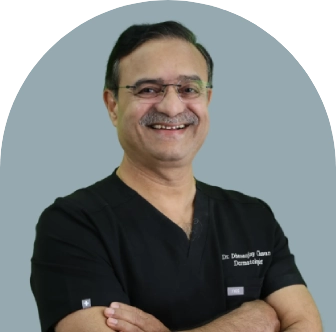
Meet Our Dermatologists

Further Reading
Is Rosemary Oil Enough for Hair Regrowth? When to Consider Something Stronger
Six months of rosemary oil and still losing hair? HairMD dermatologists explain when rosemary oil works, when it is not enough, and what to try next.
Redensyl vs Minoxidil vs GFC for Hair Loss: Which One Is Right for You?
Redensyl, minoxidil, or GFC therapy for hair loss? HairMD Pune dermatologists explain how each works, who each is for, and how to choose.
Dermapen Scalp Microneedling Results in Pune
Real HairMD Pune patient results from Dermapen scalp microneedling for hair – what to expect, sessions, and before and after outcomes.
Fotona & LLLT Laser Hair Cost in Pune 2026
Fotona and LLLT laser hair treatment cost in Pune 2026 – per-session pricing, packages, and what affects the cost at HairMD Pune.
Have thoughts? Please let us know
We are committed not only to treating you, but also educating you.