

Platelet-Rich Fibrin (PRF) Hair Treatment: The Next Evolution After PRP


Written by HairMD Content Team | Medically Reviewed by Dr. Dhanraj Chavan On June 29, 2026


Medical Disclaimer: This article is for informational purposes only. Consult a qualified dermatologist for personalised medical advice.
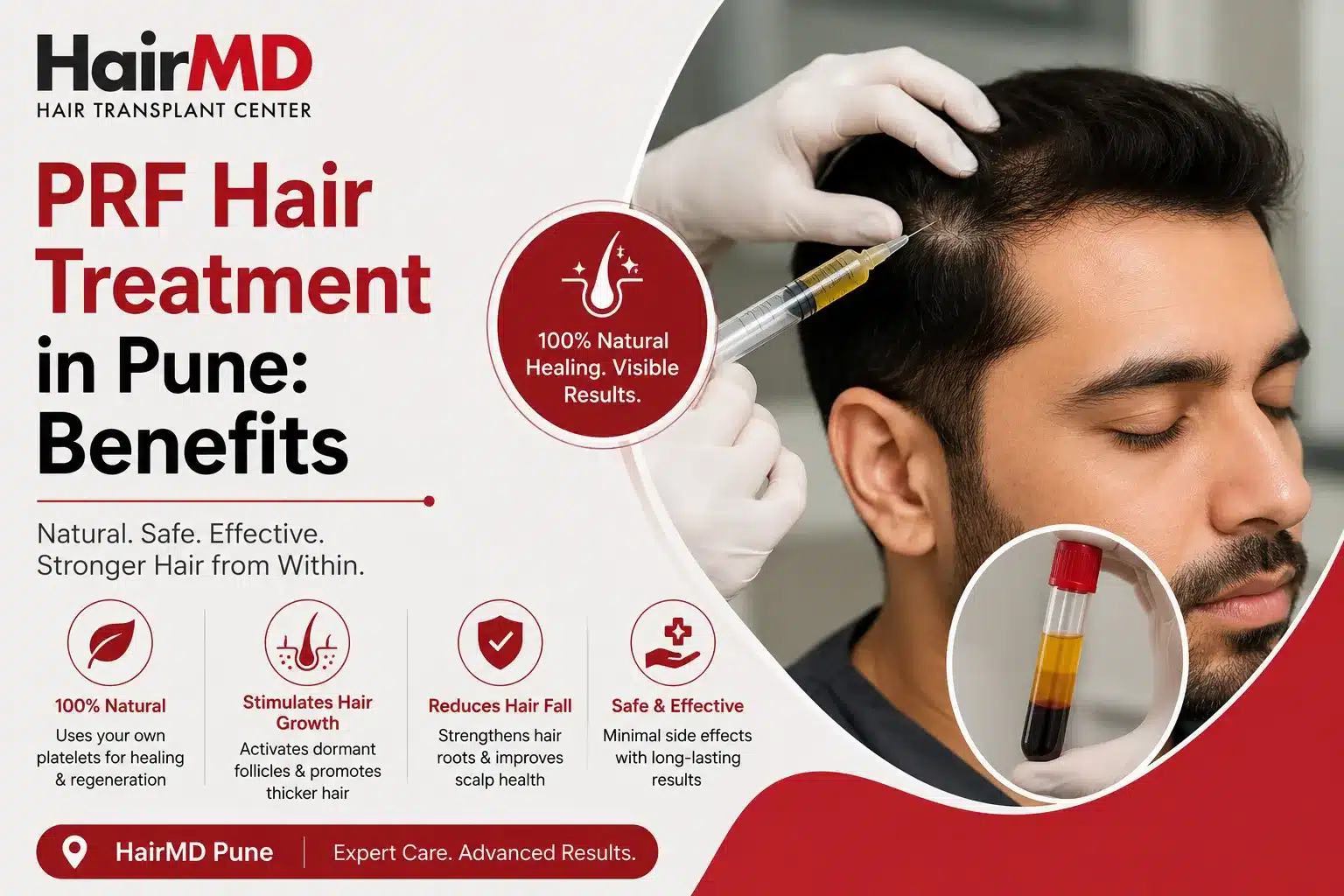
Thinking about PRF hair treatment? Before you choose PRP or PRF, understand how PRF works, who benefits the most, and whether it’s the right treatment for your hair loss.
If you’ve been researching non-surgical hair loss treatments in Pune, you’ve probably come across PRP (Platelet-Rich Plasma). PRP has been a cornerstone of hair loss management for over a decade and it works well for the right patients. But in the last few years, a newer technology called Platelet-Rich Fibrin (PRF) has emerged that builds on PRP’s foundations and addresses some of its key limitations.
This article is for patients who are considering PRF, or who have already tried PRP and want to understand what PRF offers that’s different. We’ll cover how PRF works, who benefits most, what the procedure involves at HairMD Pune, realistic results, costs, and the honest limitations because knowing what a treatment can’t do is just as important as knowing what it can.
What’s covered in the article?
- What Exactly Is PRF, and How Is It Different from PRP?
- How Does PRF Help with Hair Loss?
- Who Is a Good Candidate for PRF Hair Treatment?
- What Happens During a PRF Session at HairMD?
- PRF vs PRP: An Honest Comparison
- What Results Can You Realistically Expect?
- How Many Sessions Do You Need?
- Cost of PRF Hair Treatment in Pune
- Before and After Your PRF Session: What to Do
- Frequently Asked Questions
- Conclusion
What Exactly is PRF, and How is it Different from PRP?
Both PRP and PRF are derived from your own blood. The key difference lies in how the blood is processed.
With PRP, blood is collected in tubes containing anticoagulants (chemicals that prevent clotting) and spun at high speed typically around 3,000 rpm. This separates the blood into clear layers, and the platelet-rich portion is extracted as a liquid. Because the platelets are kept in suspension, PRP can be injected quickly, but the growth factors it releases are delivered in a short, intense burst lasting roughly 24–72 hours.
PRF works differently in two important ways:
- No anticoagulants. Blood is collected in plain tubes no additives at all. This allows the blood to form a natural fibrin matrix (a scaffolding protein your body uses in healing).
- Lower spin speed. PRF is centrifuged at a gentler 1,300–1,500 rpm for 8–12 minutes. This slower spin preserves more platelets, white blood cells (leukocytes), and stem cells within the fibrin network.
The result is a gel-like substance or in the injectable form used for hair loss (i-PRF), a liquid richer in growth factors than standard PRP. Studies measuring growth factor concentration have found PRF releases platelet-derived growth factor (PDGF), vascular endothelial growth factor (VEGF), and transforming growth factor beta (TGF-β1) continuously over 7 to 10 days, compared to PRP’s rapid one-to-three-day release window.
In practice, this sustained-release quality means PRF stays active in your scalp tissue for longer, giving hair follicles a more extended exposure to the signals that promote regrowth.
How Does PRF Help with Hair Loss?
Hair follicles that are miniaturising due to androgenetic alopecia (pattern hair loss) or those recovering from telogen effluvium (stress/illness-related shedding) are in a state of relative dormancy. They haven’t died they’re just underperforming.
PRF works by delivering a concentrated dose of your own growth factors directly into the scalp. These growth factors:
- Stimulate blood vessel formation (VEGF), improving circulation to the follicle
- Signal follicle cells to divide and grow (PDGF, IGF-1)
- Reduce the local inflammatory environment that contributes to follicle shrinkage
- Extend the anagen (active growth) phase of the hair cycle
The fibrin scaffold in PRF also acts as a physical support structure, helping growth factors adhere to tissue rather than dispersing quickly. This is what makes PRF’s effect more sustained compared to PRP.
“PRF represents a meaningful step forward from PRP because it uses the body’s own healing biology more completely without any external additives. For patients with early to moderate thinning, we’re seeing better density outcomes with PRF than we previously achieved with standard PRP, particularly when combined with appropriate medical therapy.”
Dr. Dhanraj Chavan, Dermatologist & Hair Specialist, HairMD Pune
Who is a Good Candidate for PRF Hair Treatment?
PRF is not a universal solution for all types of hair loss. At HairMD, the first consultation involves a detailed scalp assessment and trichoscopy (dermoscopic scalp imaging) to determine whether PRF is appropriate.
PRF tends to work best for:
- Early to moderate androgenetic alopecia (Norwood Grade 1–4 in men; Ludwig Grade I–II in women)
- Telogen effluvium hair loss triggered by stress, illness, nutritional deficiency, or hormonal changes
- Diffuse thinning where follicles are still present and active (not scarred)
- Patients who want to maintain results after a hair transplant
- Those who prefer non-surgical options and have realistic expectations
PRF is generally not recommended for:
- Advanced baldness where follicles are no longer present PRF cannot create new follicles
- Active scalp infections or inflammatory scalp conditions (psoriasis, seborrheic dermatitis that is uncontrolled)
- Patients on anticoagulant medications or with clotting disorders
- Pregnant or breastfeeding women
- Those with very low platelet counts or specific blood disorders
If you’re unsure whether you fall into either category, that’s exactly what the consultation is for. Many patients who come to us asking specifically for PRF turn out to be better suited for a combination approach PRF with topical minoxidil, for instance and we’ll always explain the reasoning.
What Happens During a PRF Session at HairMD?
The procedure itself is straightforward and completed in about 45–60 minutes. Here’s what the process looks like:
- Blood draw A small amount of blood (typically 10–20 ml, about two to four standard vials) is drawn from your arm, exactly like a routine blood test.
- Centrifugation The blood is placed in a specialised centrifuge and spun at the correct PRF protocol speed. No additives are introduced at any point.
- PRF collection The technician extracts the PRF layer a yellow, slightly viscous liquid (injectable PRF) richer in growth factors than standard PRP.
- Scalp preparation A topical numbing cream is applied to the treatment area 20–30 minutes before injections. Most patients describe the injections as mild to moderate discomfort similar to getting a scalp massage with occasional pinch sensations.
- Injections PRF is injected across the thinning areas using fine-gauge needles in a systematic grid pattern. The number of injection points depends on the area being treated.
- Post-procedure care No dressing required. You’ll receive specific aftercare instructions before you leave.
The entire appointment, including preparation time, typically takes under an hour. Most patients return to normal daily activities the same day.
PRF vs PRP: An Honest Comparison
|
Feature |
PRP |
PRF |
|
Anticoagulants used |
Yes |
No |
|
Centrifuge speed |
High (~3,000 rpm) |
Low (~1,300–1,500 rpm) |
|
Growth factor release |
Burst (24–72 hours) |
Sustained (7–10 days) |
|
Platelet concentration |
~2–3× baseline |
~6–8× baseline |
|
Leukocytes preserved |
Partially |
Yes (full preservation) |
|
Fibrin scaffold |
No |
Yes |
|
Pain during procedure |
Moderate |
Similar to PRP |
|
Sessions needed |
3–4 |
3–4 |
A 2021 study published in the Journal of Cosmetic Dermatology (Pavlovic et al.) directly compared PRF and PRP for androgenetic alopecia and found PRF produced statistically significant improvements in hair density and thickness compared to PRP at the 12-week mark. That said, the research base for PRF is still developing PRP has 15+ years of clinical data behind it.
At HairMD, we discuss both options during consultation and recommend based on your specific hair loss pattern, budget, and how you’ve responded to previous treatments if applicable.
What Results Can You Realistically Expect?
PRF does not produce overnight results. Hair follicles operate on a biological cycle that takes months to respond. Here’s a realistic timeline:
- Weeks 1–4: Scalp may feel slightly tender or sensitive. No visible change yet this is normal.
- Month 2–3: Some patients notice a reduction in shedding. Hair may appear slightly thicker at the shaft level.
- Month 3–6: Visible improvement in density begins. New fine hairs (often called “baby hairs”) may emerge along previously thinning areas.
- Month 6–12: Optimal results are typically visible by this point. Improvements in hair count, thickness, and coverage area are most pronounced.
What PRF can realistically do: slow or halt progressive thinning, improve follicle health, increase hair shaft thickness, and stimulate dormant follicles in areas of early thinning.
What PRF cannot do: restore hair in areas that have been completely bald for years, replace the need for medical treatment (minoxidil, finasteride/dutasteride) in androgenetic alopecia, or provide permanent results without maintenance sessions.
Results vary between individuals based on the underlying cause of hair loss, age, health status, and whether complementary treatments are used alongside PRF.
How Many Sessions Do You Need?
For most patients, the initial protocol at HairMD involves 3 to 4 sessions spaced 4 to 6 weeks apart. This induction phase establishes a baseline response in the follicles.
After the initial course, a maintenance session every 6 months is recommended to sustain results particularly for androgenetic alopecia, which is a progressive condition driven by ongoing hormonal factors.
Some patients combine PRF with other treatments: those on oral minoxidil or finasteride typically see better outcomes than PRF alone, and we will discuss this openly rather than prescribing PRF in isolation when we believe a combination approach would serve you better.
Cost of PRF Hair Treatment in Pune
PRF costs slightly more than standard PRP because of the specialised consumables (no-additive blood tubes, specific centrifuge protocol) and the time involved in preparation.
At HairMD Pune, PRF sessions are generally priced between ₹6,000 and ₹12,000 per session, depending on the area being treated and whether it’s combined with additional procedures such as microneedling. A standard 3-session initial course typically ranges from ₹18,000 to ₹30,000 in total.
Exact pricing is confirmed during consultation cost varies based on the extent of hair loss and the treatment plan recommended for your case. We don’t offer one-size pricing because treatment plans are genuinely individualised.
Before and After Your PRF Session: What to Do?
Before your session:
- Stay well-hydrated (helps with blood draw and platelet quality)
- Avoid alcohol 24–48 hours before
- Eat a normal meal don’t come fasting
- Avoid applying any oils, serums, or leave-in products on your scalp on the day of treatment
- Inform your doctor of all current medications, especially blood thinners or anti-inflammatory drugs
After your session:
- Avoid washing your hair for 24 hours
- No vigorous scalp massage for 48 hours
- Avoid direct sun exposure on the scalp for 2–3 days (relevant in Pune’s summer months cap or scarf recommended if stepping out)
- Resume minoxidil or other topical treatments from the following day unless instructed otherwise
- Mild tenderness and small injection-site bumps are normal for 24–48 hours and resolve on their own
FAQs
Can I switch from oral finasteride to the topical combination spray?
Yes, and many patients choose to do this. We typically recommend a direct switch (stopping oral the day you start topical) rather than a gradual overlap. Discuss this with your dermatologist some patients experience a brief period of increased shedding during the transition, which settles within 6–8 weeks.
Do I need a prescription for topical finasteride in India?
Yes. Finasteride in any form is a prescription drug in India. Do not purchase it from unverified online sources formulation quality and concentration accuracy matter significantly with topical finasteride.
Can women use this combination spray?
Post-menopausal women and women with no pregnancy risk can be prescribed topical finasteride under dermatologist supervision. It is not appropriate for women who are or may become pregnant. Your doctor will assess candidacy individually.
How long do I need to use it?
Indefinitely, for continued benefit. Hair loss caused by DHT will resume after stopping treatment. Many patients accept this as a long-term maintenance therapy, similar to using medication for blood pressure or diabetes.
I’m 26 and just starting to thin. Should I start combination therapy now?
Early intervention generally produces better long-term outcomes treating before significant follicle miniaturisation occurs means more follicles to save. However, a proper diagnosis confirming androgenetic alopecia (not nutritional deficiency or another reversible cause) should always come first.
Can I use this after a hair transplant?
Yes in fact, we frequently recommend the combination spray as post-transplant maintenance. The transplanted hair is permanent, but native (non-transplanted) hair in the rest of the scalp continues to be susceptible to DHT. Medical treatment protects that hair.
DO YOU KNOW?
Nearly 250 Patients Visit HairMD
Everyday For Various Hair Concerns
(15+ Years Of Expertise. 4157+ Successful Hair Transplant)
Meet Our Dermatologists


Conclusion
Ready to find out if PRF is right for you?
- Book a consultation at the HairMD clinic nearest to you
- Get your scalp assessed trichoscopy + detailed discussion of your hair loss pattern and history
- Receive a personalised treatment plan PRF alone, or in combination with medical therapy or hair transplant
HairMD clinics are located across Pune at Shivajinagar, Kothrud, Hadapsar, Pimple Saudagar, Wakad, Kalyani Nagar, and Deccan. Consultations are available on weekdays and Saturdays.
To schedule, call or WhatsApp: www.hairmdindia.com
Further Reading
How to Prevent Hair Loss: The Ultimate Guide
Explore the ultimate guide to preventing hair loss and maintaining healthy, strong hair.
PRP Pre & Post Care Protocol | HairMD Pune
PRP for alopecia areata – what the research says about regrowth, how it compares to other options, and when it may help, from HairMD Pune.
PRP for Alopecia Areata: What Research Says
PRP for alopecia areata – what the research says about regrowth, how it compares to other options, and when it may help, from HairMD Pune.
Do Dermatologists Recommend Inositol and Choline for Hair Loss?
Discover the potential of inositol and choline for hair loss. Learn how these nutrients may benefit follicle health & prevent thinning.
Have thoughts? Please let us know
We are committed not only to treating you, but also educating you.