

Redensyl And Minoxidil: Which is the Better For Hair Growth?


Written by HairMD Content Team | Medically Reviewed by Dr. Dhanraj Chavan On December 30, 2025


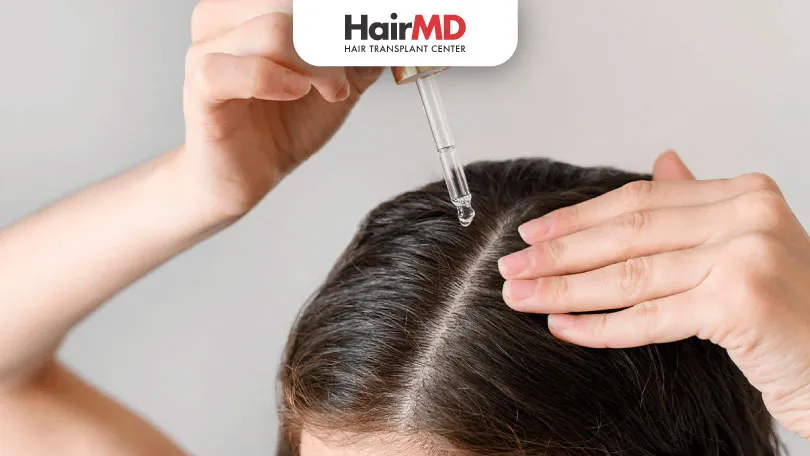
Minoxidil is an FDA-approved topical solution used to treat androgenetic alopecia in both men and women. It was first approved for hair loss treatment in 1988.
Redensyl is a plant-based cosmetic ingredient designed to stimulate hair follicle stem cells and promote hair growth. It contains DHQG and EGCG2 as primary active molecules.
Both treatments target pattern hair loss by affecting hair follicle activity. Minoxidil works by increasing blood flow to follicles and extending the anagen growth phase.
Redensyl targets hair follicle stem cells directly to reactivate dormant follicles. Clinical studies show both can increase hair density when used consistently.
Minoxidil is applied twice daily in 2% or 5% concentrations. Redensyl is typically found in hair serums at 2-3% concentration.
Results typically appear after 3-4 months of consistent use with either treatment. Both require ongoing application to maintain benefits.
Minoxidil costs approximately ₹250-800 per month in India. Redensyl-based serums range from ₹649-1,199 per month.
What’s covered in the article?
- Key Facts About Redensyl vs Minoxidil at HairMD Pune
- Key Takeaways
- Comparison: Minoxidil vs Redensyl
- What is Minoxidil?
- What is Redensyl?
- Effectiveness Comparison
- Side Effects & Safety Profile
- Cost Comparison in India
- Can You Use Both Together?
- Which Should You Choose?
- Frequently Asked Questions
- External Recognition & Clinical Validation
- Conclusion
Key Facts About Redensyl vs Minoxidil at HairMD Pune
- Minoxidil is FDA-approved since 1988 for androgenetic alopecia treatment
- Redensyl is a plant-based cosmetic ingredient with no FDA approval status
- Minoxidil increases blood flow and prolongs anagen phase of hair cycle
- Redensyl activates hair follicle stem cells to reactivate dormant follicles
- Both treatments show visible results within 3-4 months of daily use
- Minoxidil costs ₹250-800/month; Redensyl serums cost ₹649-1,199/month
- Combination therapy with both treatments is possible under medical supervision
Key Takeaways
- Minoxidil has 35+ years of clinical evidence supporting its effectiveness for male and female pattern hair loss
- Redensyl offers a plant-based alternative with recent studies showing promising results and minimal side effects
- Your choice depends on hair loss severity, budget, scalp sensitivity, and preference for FDA-approved vs natural treatments
- Professional consultation at HairMD Pune helps determine which treatment suits your specific condition best
Comparison: Minoxidil vs Redensyl
| Attribute | Minoxidil | Redensyl |
|---|---|---|
| Primary Active Ingredient | Minoxidil sulfate (vasodilator) | DHQG + EGCG2 (plant polyphenols) |
| Mechanism of Action | Increases blood flow, prolongs anagen phase | Activates follicle stem cells, reduces inflammation |
| FDA Approval Status | FDA-approved (1988) | Not FDA-approved (cosmetic ingredient) |
| Application Frequency | Twice daily (2% or 5% solution) | Once or twice daily (in serum form) |
| Results Timeline | 3-4 months for visible improvement | 3-4 months for visible improvement |
| Side Effect Profile | Scalp irritation, unwanted hair growth possible | Minimal side effects reported |
| Average Cost (India) | ₹250-800 per month | ₹649-1,199 per month |
What Is Minoxidil?
FDA Approval & Clinical History
Minoxidil was originally developed in the 1970s as an oral blood pressure medication. Researchers discovered hypertrichosis (excessive hair growth) as a side effect during clinical trials.
This led to reformulation for topical hair loss treatment. The FDA approved topical minoxidil for male pattern baldness in 1988.
Female pattern hair loss received FDA approval for minoxidil treatment in 1991. It remains the only FDA-approved topical medication for androgenetic alopecia.
Over 35 years of clinical research supports minoxidil’s effectiveness. Studies consistently show it increases hair count and thickness in pattern baldness.
How Minoxidil Works
Minoxidil is a prodrug that requires conversion to minoxidil sulfate by follicular sulfotransferase enzymes. The active form works through multiple pathways.
It acts as a vasodilator by opening ATP-sensitive potassium channels in smooth muscle. This increases blood flow to hair follicles.
Minoxidil prolongs the anagen (growth) phase of the hair cycle. It simultaneously shortens the telogen (resting) phase.
The medication also stimulates production of vascular endothelial growth factor (VEGF). This promotes new blood vessel formation around follicles.
Additionally, minoxidil activates the Wnt/β-catenin signaling pathway in dermal papilla cells. This pathway is crucial for hair follicle development.
Available Formulations
Minoxidil is available in 2% and 5% topical solutions for daily application. The 5% concentration is specifically recommended for men.
Women typically use 2% concentration to minimize risk of unwanted facial hair growth. However, 5% once-daily application may be more effective for women.
Minoxidil foam formulation (5%) was approved by FDA in 2006. Foam absorbs faster and causes less scalp irritation than solution.
Generic brands in India cost ₹250-400 per month. Branded formulations range from ₹600-800 per month.
Most formulations require twice-daily application directly to affected scalp areas. Each application uses approximately 1ml of solution.
What Is Redensyl?
Plant-Based Composition
Redensyl is a patented cosmetic ingredient developed through green chemistry processes. It contains no synthetic pharmaceutical compounds.
The formulation uses organic solvent-free glycosylation to create stable molecules. This process reduces environmental impact compared to traditional synthesis.
Redensyl is classified as a cosmetic active ingredient, not a pharmaceutical drug. It does not require FDA approval for use in hair care products.
Mechanism of Action
Redensyl works by targeting outer root sheath cells (ORSc) in hair follicles. These are stem cells responsible for generating new hair.
The ingredient activates division of hair follicle stem cells. This increases the number of cells available for hair production.
It stimulates dermal papilla fibroblasts (HFDPc) which regulate hair growth. Activated fibroblasts send growth signals to follicles.
Redensyl reduces inflammation around hair follicles through EGCG2 components. This creates a healthier environment for hair growth.
The treatment shifts more hair from telogen (resting) phase to anagen (growth) phase. This increases the percentage of actively growing hair.
Active Ingredients
DHQG (dihydroquercetin-glucoside) is derived from larch tree extract. It activates hair follicle stem cells to initiate new hair production.
EGCG2 (epigallocatechin gallate-glucoside) comes from green tea. It provides anti-inflammatory and antioxidant protection to follicles.
Glycine is an amino acid that serves as a building block for hair proteins. It strengthens hair structure from within.
Zinc chloride helps regulate sebum production and supports tissue repair. It maintains healthy scalp conditions for optimal growth.
These four components work synergistically to address multiple hair loss mechanisms. The combination targets both stem cell activation and follicle health.
Effectiveness Comparison
Minoxidil Clinical Evidence
A landmark 48-week randomized controlled trial compared 5% and 2% minoxidil in 393 men. The 5% formulation showed 45% more hair regrowth than 2% at week 48.
In five-year studies, 2% minoxidil exhibited peak hair growth at year one. Effectiveness declined slightly in subsequent years but remained above baseline.
Clinical studies show minoxidil increases non-vellus hair count by significant margins. Patient satisfaction rates consistently exceed 70% in controlled trials.
The treatment works in both frontotemporal and vertex areas of the scalp. Success rates vary based on individual sulfotransferase enzyme activity.
Redensyl Clinical Studies
A double-blind placebo-controlled study with 26 men showed significant improvements with Redensyl. After 84 days, volunteers had up to 17% more hair.
The number of anagen (growing) hairs increased by 9% on average. Falling hair decreased by 17% compared to baseline.
One study reported that 85% of volunteers showed visible hair growth. Some participants gained up to 28,200 new hairs in 84 days.
A 2020 randomized study compared Redensyl blend with placebo in 41 patients. Among active treatment groups, 7.7% showed great improvement and 73.1% showed moderate improvement.
Recent 2024 research on women showed hair density improved by 37.92%. Hair thickness improved by 80.85% and hair fall reduced by 64.89%.
Head-to-Head Results
One comparative study tested Redensyl against minoxidil in 106 men with androgenetic alopecia. The Redensyl group showed 64.7% hair growth recovery.
The minoxidil group showed 25.5% hair growth recovery in the same study. However, Redensyl was tested in combination with other ingredients.
No large-scale head-to-head comparison using pure minoxidil versus pure Redensyl exists. Current evidence makes direct comparison difficult.
Minoxidil has decades of consistent clinical data across thousands of patients. Redensyl research is more recent with smaller sample sizes.
Both treatments show effectiveness for pattern hair loss when used consistently. Individual response varies based on multiple factors.
Side Effects & Safety Profile
Minoxidil Side Effects
Common side effects include scalp irritation, itching, and redness at application sites. These occur in approximately 10-15% of users.
Some patients experience unwanted hair growth on the face or other body areas. This happens when the solution spreads beyond the intended application area.
Allergic reactions to propylene glycol in liquid formulations can cause contact dermatitis. Foam formulations often reduce this issue.
Rare cardiovascular side effects include rapid heartbeat or chest pain. These require immediate medical attention and treatment discontinuation.
Initial shedding of weak hairs occurs in first 2-3 months. This temporary increase in hair fall is normal and indicates treatment is working.
Redensyl Side Effects
Clinical studies report no significant side effects from Redensyl use. The plant-based formulation is generally well-tolerated.
Some users report mild scalp irritation or itching. These effects are typically caused by serum base ingredients, not Redensyl itself.
Allergic reactions to plant-derived ingredients are possible in sensitive individuals. A patch test before full application is recommended.
No systemic side effects have been documented in clinical trials. Redensyl works topically without significant absorption into the bloodstream.
Long-term safety data is still limited compared to minoxidil. More extended studies are needed to confirm ongoing safety.
Safety Considerations
Minoxidil should not be used by people with heart conditions without medical supervision. Blood pressure monitoring may be necessary in some cases.
Pregnant and breastfeeding women should avoid minoxidil due to potential risks. Redensyl has not been studied in these populations either.
Both treatments can cause initial shedding in first 8-12 weeks. This is a normal response indicating follicles are transitioning to growth phase.
Application to broken or irritated scalp should be avoided with both treatments. Wait until scalp heals before resuming use.
HairMD Pune recommends professional consultation before starting either treatment. Medical assessment ensures appropriate selection for your condition.
Cost Comparison in India
Minoxidil Pricing
Generic minoxidil 5% solution (60ml bottle) costs approximately ₹250-400 in India. One bottle typically lasts one month with twice-daily application.
Branded minoxidil formulations range from ₹600-800 per month. Premium formulations with additional ingredients cost up to ₹1,200 monthly.
Minoxidil foam costs slightly more than solution at ₹700-900 per month. The convenience and reduced irritation may justify higher cost.
Long-term costs accumulate significantly as treatment must continue indefinitely. Annual minoxidil expenses range from ₹3,000-9,600.
Redensyl Pricing
Redensyl-based hair serums typically contain 2-3% Redensyl concentration. These products cost ₹649-1,199 per 30-50ml bottle.
Higher-end formulations combining Redensyl with multiple active ingredients cost ₹900-1,500. These often include Anagain, Procapil, and other peptides.
Most Redensyl serums are applied once or twice daily. A single bottle usually lasts 30-45 days depending on application frequency.
Annual costs for Redensyl treatment range from ₹7,800-14,400. This is generally more expensive than basic minoxidil.
Long-Term Cost Analysis
Minoxidil offers the most economical option for long-term hair loss management. Generic formulations provide lowest per-month cost.
Redensyl costs more but may require only once-daily application. This convenience factor may offset higher price for some users.
Combination products containing both ingredients cost ₹1,100-2,000 monthly. These target multiple hair loss pathways simultaneously.
At HairMD Pune, we help you choose cost-effective treatment based on your budget. Professional guidance ensures optimal value for your investment.
Maintenance costs continue indefinitely with either treatment as effects reverse upon discontinuation. Budget for long-term commitment when choosing treatment.
Can You Use Both Together?
Combination Therapy Benefits
Using minoxidil and Redensyl together addresses hair loss through complementary mechanisms. Minoxidil increases blood flow while Redensyl activates stem cells.
This dual approach may produce better results than either treatment alone. Some patients report enhanced density with combination therapy.
The treatments work at different cellular levels without interfering with each other. Minoxidil affects vascular supply; Redensyl targets follicle cells.
Combination therapy may accelerate visible improvements compared to monotherapy. Some patients combine these treatments with PRP therapy for enhanced results.
Application Protocol
Apply minoxidil in morning and evening as prescribed (twice daily). Allow complete drying for 4 hours before applying other products.
Use Redensyl serum at different time of day, typically before bedtime. This reduces potential for interaction or irritation.
Some users apply minoxidil in morning and Redensyl in evening successfully. Pairing topical treatments with dermaroller therapy can enhance absorption and effectiveness.
Wait at least 2 hours between applications if using both products. This prevents dilution and ensures proper absorption.
Professional Supervision
HairMD Pune recommends medical supervision for combination therapy approaches. Professional monitoring ensures safety and effectiveness.
Individual scalp sensitivity varies significantly among patients. A dermatologist can adjust formulations based on your response.
Combination therapy requires careful product selection to avoid ingredient conflicts. Our specialists guide compatible product choices.
Regular follow-up assessments track progress and adjust treatment protocol as needed. Professional oversight optimizes results while minimizing side effects.
HairMD Pune offers comprehensive hair loss solutions including topical treatments, mesotherapy, and advanced procedures. Book consultation at HairMD Pune to discuss personalized combination treatment plans.
Which Should You Choose?
Best for Established Hair Loss
Minoxidil is recommended for confirmed androgenetic alopecia with moderate to severe thinning. Its FDA approval provides confidence in efficacy.
The extensive clinical data supports minoxidil for all stages of pattern baldness. It works well for both vertex and frontal hair loss.
Patients seeking evidence-based treatment with decades of research should choose minoxidil. The proven track record offers predictable results.
Budget-conscious patients benefit from minoxidil’s lower cost and generic availability. It provides effective treatment at accessible price point.
Best for Sensitive Scalp
Redensyl suits patients who experienced irritation with minoxidil previously. The plant-based formulation typically causes minimal side effects.
Those preferring natural ingredients over synthetic medications favor Redensyl. It aligns with preferences for botanical-based treatments.
Patients concerned about unwanted body hair growth may prefer Redensyl. This side effect is not reported with plant-based formulations.
Women seeking hormone-free treatment find Redensyl appealing. It works without affecting hormonal pathways, making it suitable for female pattern hair loss treatment.
Personalized Approach at HairMD Pune
At HairMD Pune, we assess your specific hair loss pattern before recommending treatment. Not all pattern baldness responds equally to each option.
Our dermatologists evaluate scalp condition, hair loss severity, and medical history. This comprehensive assessment guides treatment selection.
We consider your budget, lifestyle, and treatment preferences in recommendations. Successful treatment requires a plan you can maintain long-term.
Some patients benefit most from combination approaches or integration with other hair loss treatments. We design multi-modal strategies for optimal results.
Book your consultation with a Hair Specialist at HairMD Pune for expert guidance on choosing between Redensyl and minoxidil. Our specialists provide honest, evidence-based recommendations.
Frequently Asked Questions
Is Minoxidil better than Redensyl for hair growth?
Minoxidil has significantly more clinical evidence supporting its effectiveness for androgenetic alopecia. It is FDA-approved with 35+ years of research.
Redensyl shows promising results in recent studies but has less long-term data. The choice depends on your preference for established vs newer treatments.
Both can be effective when used consistently. Individual response varies based on hair loss pattern and genetic factors.
What is the success rate of Redensyl vs Minoxidil?
Minoxidil shows 60-70% response rate in clinical studies for pattern hair loss. Results vary based on concentration and application consistency.
Redensyl studies report 73-85% of users experience moderate to significant improvement. However, sample sizes are smaller than minoxidil research.
Both treatments require 3-6 months of consistent use to evaluate effectiveness. Individual results depend on multiple factors.
How long does each treatment take to show results?
Both Minoxidil and Redensyl typically show initial results after 3-4 months of daily use. Some patients notice reduced shedding within 8-12 weeks.
Visible improvement in hair density usually appears at 4-6 month mark. Optimal results often require 8-12 months of consistent application.
Initial shedding may occur in first 2-3 months with either treatment. This temporary increase indicates follicles are transitioning to growth phase.
Can I stop using these treatments once I see results?
No, both treatments require continuous use to maintain results achieved. Hair loss will resume within 3-6 months of discontinuation.
The underlying genetic pattern baldness continues even when hair improves. Treatment suppresses the condition rather than curing it.
Lifelong maintenance is necessary for sustained benefits. Consider this commitment before starting treatment.
Which treatment has fewer side effects?
Redensyl generally has fewer reported side effects than minoxidil. The plant-based formulation is well-tolerated by most users.
Minoxidil side effects include scalp irritation in 10-15% of users. Some experience unwanted facial hair growth.
Both treatments can cause initial shedding in first 2-3 months. This is normal and resolves with continued use.
Is Redensyl FDA-approved like Minoxidil?
No, Redensyl is not FDA-approved for hair loss treatment. It is classified as a cosmetic ingredient rather than pharmaceutical drug.
Minoxidil received FDA approval in 1988 for male pattern baldness. Female pattern hair loss approval followed in 1991.
FDA approval requires extensive clinical trials demonstrating safety and effectiveness. Redensyl has not undergone this regulatory process.
What is the cost difference between both treatments?
Minoxidil costs ₹250-800 per month depending on brand and formulation. Generic options provide most affordable treatment.
Redensyl serums cost ₹649-1,199 per month. Premium formulations with multiple ingredients cost up to ₹1,500 monthly.
Annual costs: Minoxidil ₹3,000-9,600, Redensyl ₹7,800-14,400. Budget considerations are important for lifelong treatment.
Can women use both treatments safely?
Yes, both Minoxidil (2% or 5%) and Redensyl are safe for women with pattern hair loss. Women should avoid 5% minoxidil twice daily due to facial hair risk.
Pregnant and breastfeeding women should avoid both treatments. Safety data in these populations is limited.
Women generally tolerate Redensyl well with minimal side effects. Consultation with dermatologist is recommended before starting treatment.
External Recognition & Clinical Validation
Minoxidil Research & Publications
- Featured in PubMed: Comprehensive review published in 2021 details minoxidil’s mechanisms, effectiveness across 35+ years of clinical use, and safety profile for androgenetic alopecia treatment Link: https://pubmed.ncbi.nlm.nih.gov/34159872/
- NCBI Bookshelf: StatPearls medical encyclopedia documents minoxidil as FDA-approved treatment with detailed pharmacokinetics, mechanism of action, and evidence-based usage guidelines Link: https://www.ncbi.nlm.nih.gov/books/NBK482378/
- ISHRS Professional Organization: International Society of Hair Restoration Surgery provides comprehensive minoxidil formulation guidelines, dosage recommendations, and clinical effectiveness data Link: https://ishrs.org/patients/treatments-for-hair-loss/medications/minoxidil/
Redensyl Clinical Studies
- PubMed Clinical Trial: 2024 study in Journal of Cosmetic Dermatology demonstrates Redensyl-containing products improved hair growth rate by 31.62% in 60 days with excellent safety profile Link: https://pubmed.ncbi.nlm.nih.gov/38050644/
- Randomized Controlled Study: 2020 research published in dermatology journal showed 73.1% of patients experienced moderate improvement with Redensyl-based topical treatment versus placebo Link: https://pubmed.ncbi.nlm.nih.gov/32473084/
DO YOU KNOW?
Nearly 250 Patients Visit HairMD
Everyday For Various Hair Concerns
(20+ Years Of Expertise. 4157+ Successful Hair Transplant at HairMD)
Meet Our Dermatologists





Conclusion
Both Redensyl and Minoxidil offer proven solutions for androgenetic alopecia with distinct advantages. Minoxidil provides FDA-approved treatment backed by 35+ years of clinical evidence at accessible cost.
Redensyl offers plant-based alternative with promising recent studies and minimal side effects. Your choice depends on hair loss severity, scalp sensitivity, budget, and preference for established versus natural treatments.
At HairMD Clinic Pune, our dermatologists provide expert guidance on selecting the most effective treatment for your specific condition.
Further Reading
Fotona & LLLT Laser Hair Cost in Pune 2026
Fotona and LLLT laser hair treatment cost in Pune 2026 – per-session pricing, packages, and what affects the cost at HairMD Pune.
How to Prevent Hair Loss: The Ultimate Guide
Explore the ultimate guide to preventing hair loss and maintaining healthy, strong hair.
PRP Pre & Post Care Protocol | HairMD Pune
PRP for alopecia areata – what the research says about regrowth, how it compares to other options, and when it may help, from HairMD Pune.
PRP for Alopecia Areata: What Research Says
PRP for alopecia areata – what the research says about regrowth, how it compares to other options, and when it may help, from HairMD Pune.
Have thoughts? Please let us know
We are committed not only to treating you, but also educating you.