

How to Treat PCOS Hair Loss: The Complete Clinical Guide for Women?


Written by HairMD Content Team | Medically Reviewed by Dr. Dhanraj Chavan On September 23, 2026


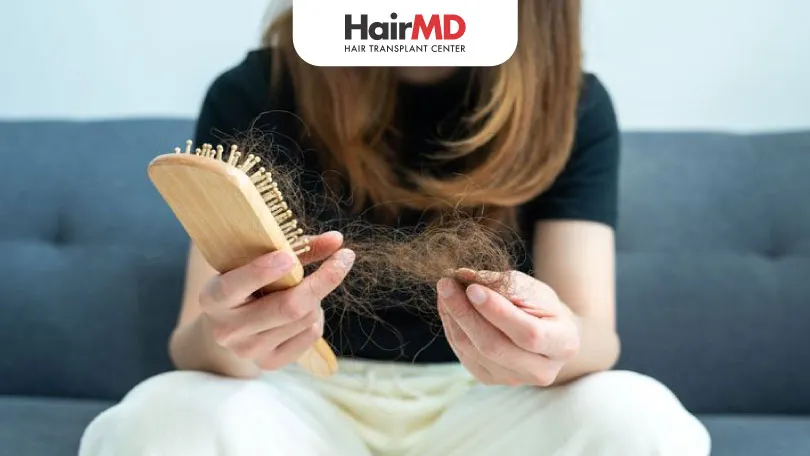
Hair loss can be a distressing symptom of Polycystic Ovary Syndrome (PCOS). This article delves into the intricate details of how to treat PCOS hair loss, offering a blend of natural remedies and medical interventions. If you’re grappling with this concern, you’re not alone. Let’s embark on a journey to unveil solutions that can restore confidence and promote hair regrowth.
PCOS (Polycystic Ovary Syndrome) causes hair loss through androgen excess. Elevated testosterone and DHEA-S from the ovaries convert to DHT via the 5-alpha-reductase enzyme in scalp follicles, progressively miniaturizing hair on the crown and frontal scalp. Insulin resistance, which affects the majority of women with PCOS, worsens this by suppressing SHBG (sex hormone binding globulin), which increases free testosterone available for DHT conversion. Effective treatment requires two parallel tracks: managing the underlying hormonal imbalance (through diet, medications like metformin or spironolactone, and lifestyle changes) and directly treating the affected follicles (through minoxidil, PRP, GFC, mesotherapy, or exosome therapy). Without addressing the hormonal root cause, hair treatments produce limited and temporary results.
Summary
- PCOS hair loss follows a female pattern (Ludwig scale), with thinning at the crown and widening of the central part, while the frontal hairline is usually preserved
- The mechanism is androgen-driven follicle miniaturization, the same as in androgenetic alopecia, but the androgen source is the ovaries rather than adrenal or genetic sensitivity alone
- Insulin resistance (present in 50 to 70% of women with PCOS) worsens hair loss by suppressing SHBG production in the liver, which raises free testosterone
- Blood tests must include free testosterone, SHBG, DHEA-S, LH:FSH ratio, fasting insulin, and AMH to fully map the hormonal picture
- Treating PCOS hair loss without addressing insulin resistance or androgen excess is like mopping the floor without turning off the tap
- Clinical treatments (PRP, GFC, mesotherapy) provide significant follicle support but work best when combined with hormonal management
- Recovery takes 6 to 12 months to be visible; the follicles do not respond overnight to hormonal improvement
What’s covered in the article?
- Why PCOS Causes Hair Loss: The Hormonal Mechanism Explained?
- How PCOS Hair Loss Differs from Other Causes of Hair Loss in Women?
- Recognising PCOS Hair Loss: Patterns and Associated Signs
- Diagnosis: The Blood Tests That Actually Matter
- The Two-Track Treatment Framework
- Track 1: Managing the Hormonal Root Cause
- Track 2: Clinical Treatments for PCOS-Affected Follicles
- HairMD Treatment Recommendations by PCOS Hair Loss Stage
- Lifestyle Strategies That Support Hormonal Balance
- Home Remedies: What Evidence Supports and What Does Not?
- When to See a Dermatologist Without Waiting?
- Expected Timeline for PCOS Hair Loss Recovery
- Frequently Asked Questions
- Conclusion
Why PCOS Causes Hair Loss: The Hormonal Mechanism Explained
Understanding why PCOS causes hair loss requires understanding what PCOS does to your hormones, not in vague terms, but at the biochemical level.
In a normal hormonal cycle, the pituitary gland releases LH (luteinising hormone) and FSH (follicle-stimulating hormone) in a balanced ratio. In PCOS, this ratio shifts. LH secretion increases relative to FSH, signalling the ovaries to produce excess androgens (testosterone and androstenedione) while reducing the production of oestrogen. This is why women with PCOS often have elevated total or free testosterone, elevated DHEA-S, and a disrupted menstrual cycle.
These excess androgens reach the scalp follicles, where the enzyme 5-alpha-reductase converts testosterone into DHT (dihydrotestosterone). DHT binds to androgen receptors in the dermal papilla of the follicle, shortening the anagen (growth) phase of each hair cycle and gradually miniaturizing the follicle. Over successive cycles, the hair produced becomes finer, shorter, and lighter until the follicle eventually stops producing visible hair altogether.
The insulin resistance amplifier: The majority of women with PCOS (research estimates 50 to 70%) have some degree of insulin resistance. When insulin signalling is impaired, the liver reduces its production of SHBG (sex hormone binding globulin). SHBG acts as a transport protein that binds testosterone in the bloodstream and keeps it inactive. When SHBG falls, more free (unbound) testosterone circulates, increasing the amount available for DHT conversion in the scalp. This is why two women with identical total testosterone levels can have dramatically different hair loss severity if one has insulin resistance and low SHBG and the other does not.
This chain explains why treating PCOS hair loss with only topical products or nutritional supplements, without addressing the hormonal root cause, produces limited and often temporary results.
Dr. Rajeshwari Patil, Dermatologist at HairMD: “PCOS hair loss is one of the most underdiagnosed conditions I see in women in their 20s and 30s. Many are told their hair loss is stress or nutritional deficiency without anyone checking their hormones. The treatment pathway changes completely once you understand that this is androgen-driven follicle miniaturization. Managing the hormones and treating the follicles simultaneously is the only approach that works long-term.”
How PCOS Hair Loss Differs from Other Causes of Hair Loss in Women?
Women often experience hair loss from multiple possible causes. Distinguishing PCOS-driven loss from other causes determines which treatments will work.
|
Feature |
PCOS Hair Loss |
Telogen Effluvium (stress/illness) |
Iron Deficiency Hair Loss |
Alopecia Areata |
|
Pattern |
Ludwig pattern (crown, widening part) |
Diffuse, all over scalp |
Diffuse, generalized |
Patchy, round or oval bald spots |
|
Hairline |
Usually preserved |
Diffuse loss including temples |
Diffuse, generalized |
Spares some areas entirely |
|
Onset |
Gradual, progressive over months to years |
Rapid, 2 to 4 months after trigger event |
Gradual |
Sudden |
|
Reversibility |
Partially reversible with hormonal management |
Fully reversible once trigger removed |
Fully reversible with iron repletion |
Variable |
|
Associated symptoms |
Irregular periods, acne, hirsutism, weight changes |
Recent illness, surgery, delivery, crash diet |
Fatigue, pale skin, brittle nails |
None typical; sometimes nail pitting |
|
Blood marker |
Elevated free testosterone, low SHBG, elevated DHEA-S |
Normal androgens; normal SHBG |
Low serum ferritin (below 30 ng/mL) |
Normal hormones; positive for ANA in some cases |
|
Hair pull test |
Positive at crown; negative at sides |
Positive across entire scalp |
Positive, diffuse |
Positive at patch margins |
PCOS hair loss can coexist with any of the above conditions. Iron deficiency is particularly common in women with PCOS who have heavy or irregular periods, meaning both conditions may be contributing simultaneously. Blood work is essential to map the full picture.
Recognising PCOS Hair Loss: Patterns and Associated Signs
PCOS hair loss follows the Ludwig classification for female pattern hair loss:
Ludwig Grade I: Slight thinning at the crown; the central part appears wider than before; may first be noticed when wearing hair up or in bright light.
Ludwig Grade II: Noticeable reduction in volume at the crown; widening of the part line is clearly visible; scalp may be visible through the hair in the crown zone when hair is parted.
Ludwig Grade III: Significant thinning with visible scalp through the crown; substantial reduction in density across the top of the scalp; frontal hairline typically intact.
Signs that suggest PCOS (not just pattern hair loss) is the driver:
- Hair loss accompanied by facial or body hair growth (hirsutism), especially on the upper lip, chin, or jawline
- Acne that appears on the jawline, lower cheeks, or chin (hormonal pattern)
- Irregular menstrual cycles (fewer than 8 periods per year, or periods more than 35 days apart)
- Difficulty losing weight despite diet and exercise
- Scalp is oily, with excess sebum production (androgens stimulate sebaceous glands)
- Hair loss worsened during perimenstrual phases
If you have two or more of these alongside crown hair thinning, PCOS should be investigated before assuming the hair loss is genetic or nutritional.
Diagnosis: The Blood Tests That Actually Matter
A dermatologist evaluating PCOS-related hair loss will typically request, or coordinate with a gynaecologist or endocrinologist for, the following panel:
|
Test |
What It Measures |
What to Look For |
|
Total Testosterone |
Overall androgen load |
Elevated in PCOS (above 0.52 ng/mL in women) |
|
Free Testosterone |
Bioavailable androgen (the fraction causing hair loss) |
Often elevated even when total testosterone is borderline |
|
SHBG (Sex Hormone Binding Globulin) |
Protein that binds and inactivates testosterone |
Low SHBG = more free testosterone available |
|
DHEA-S |
Adrenal androgen marker |
Elevated in PCOS; very high levels suggest adrenal cause |
|
LH : FSH Ratio |
Pituitary signalling balance |
Ratio greater than 2:1 is characteristic of PCOS |
|
AMH (Anti-Mullerian Hormone) |
Ovarian follicle reserve; PCOS marker |
Elevated in PCOS (above 3.5 ng/mL) |
|
Fasting Insulin + Glucose |
Insulin resistance assessment |
Calculate HOMA-IR; HOMA-IR above 2.5 suggests resistance |
|
Prolactin |
Rules out prolactinoma (another cause of hormonal hair loss) |
Should be normal in PCOS |
|
Thyroid (TSH, Free T3, Free T4) |
Rules out thyroid-driven hair loss (common co-condition) |
Hypothyroidism worsens hair loss and mimics PCOS symptoms |
|
Serum Ferritin |
Iron stores (not haemoglobin) |
Below 30 ng/mL worsens any hair loss condition |
|
Vitamin D (25-OH) |
Vitamin D deficiency is very common in PCOS |
Below 30 ng/mL worsens follicle function |
Do not rely on symptoms alone, and do not rely on total testosterone alone. The combination of low SHBG, elevated free testosterone, and poor insulin signalling is often more diagnostically meaningful than total testosterone, which can be within the “normal” range while the hair loss is hormonally active.
The Two-Track Treatment Framework
Effective PCOS hair loss treatment requires working on two parallel tracks simultaneously:
Track 1: Address the underlying hormonal imbalance This means reducing androgen excess and improving insulin sensitivity. Without this, follicles remain under hormonal stress regardless of what topical or clinical treatments are applied.
Track 2: Directly support and treat the affected follicles This means using treatments that increase follicular blood supply, stimulate growth factors, prolong the anagen phase, and prevent further miniaturization. This provides immediate support to follicles while the hormonal picture is being corrected, and accelerates recovery once hormones are brought under control.
Most patients who improve on one track only see modest, often temporary results. Those who address both tracks together see significantly better density restoration over 12 to 18 months.
Track 1: Managing the Hormonal Root Cause
Medical Interventions (Prescription)
Metformin: The most commonly prescribed insulin sensitizer in PCOS. By improving insulin signalling in the liver and peripheral tissues, metformin increases SHBG production, which reduces free testosterone, which reduces DHT available at the scalp follicles. It does not treat hair loss directly, but by correcting the hormonal environment, it removes the primary driver of miniaturization. Effects on hair are seen over 6 to 12 months.
Oral Contraceptives (OCP) with Anti-Androgenic Progestin: Combined oral contraceptive pills containing drospirenone, cyproterone acetate, or dienogest suppress LH, reduce ovarian androgen production, and increase SHBG. The net effect is a significant reduction in free testosterone. This is a common first-line hormonal treatment for PCOS hair loss in women who also want contraception or cycle regulation. Hair improvement is seen over 6 to 9 months. Note: hair loss can temporarily worsen during the first 1 to 2 months of OCP initiation due to shifting hormones.
Spironolactone: Originally a diuretic, spironolactone at doses of 50 to 200 mg/day is a potent androgen receptor blocker. It prevents DHT from binding to the androgen receptor in the follicle, stopping the miniaturization process at the tissue level. Often used when testosterone and free testosterone remain elevated despite other interventions. Requires regular potassium monitoring. Not appropriate during pregnancy.
Anti-androgenic topical agents: Some dermatologists prescribe topical spironolactone or topical finasteride as adjuncts to systemic therapy, applying the anti-androgen effect locally at the scalp without significant systemic exposure.
Nutritional and Supplement-Based Hormonal Support
Myo-inositol and D-chiro-inositol: The combination of myo-inositol (2000 mg) and D-chiro-inositol (50 mg) in a 40:1 ratio has been shown in multiple clinical trials to improve insulin receptor signalling in PCOS, reduce testosterone levels, and restore menstrual regularity. A 2017 study in the European Review for Medical and Pharmacological Sciences showed significant improvements in hormonal parameters after 3 months of inositol supplementation. As insulin sensitivity improves, SHBG rises and free testosterone falls.
Zinc: A competitive inhibitor of 5-alpha-reductase, the enzyme that converts testosterone to DHT. Studies show zinc supplementation reduces 5-alpha-reductase activity by up to 30% in some tissues. Also involved in insulin receptor function and progesterone synthesis. Deficiency is common in women with PCOS.
Vitamin D: Women with PCOS have a significantly higher prevalence of Vitamin D deficiency compared to the general population (estimated 67 to 85% by some studies). Vitamin D receptors are expressed in the hair follicle, and deficiency impairs follicular cycling. Correcting Vitamin D deficiency (typically 2000 to 5000 IU daily, adjusted to serum levels) improves both hormonal and hair outcomes.
Spearmint tea: Two cups of spearmint tea daily have shown anti-androgenic effects in small clinical studies (Grant 2010), reducing free testosterone levels over 30 days. Not a standalone treatment, but a safe adjunct.
Low glycaemic index (GI) diet: Reducing dietary glycaemic load reduces postprandial insulin spikes, which over time improves insulin sensitivity and allows SHBG levels to normalise. This is one of the most evidence-based lifestyle interventions for PCOS hormonal control. Replace refined carbohydrates (white rice, bread, sugary drinks) with whole grains, legumes, and vegetables.
Track 2: Clinical Treatments for PCOS-Affected Follicles
While the hormonal track works on removing the root cause, clinical treatments directly support follicles that have already been miniaturized or are at risk.
Minoxidil (Topical)
Minoxidil 2% or 5% applied to the scalp works by opening KATP (ATP-sensitive potassium) channels in the vascular smooth muscle around follicles, increasing blood flow and oxygen delivery. It also upregulates prostaglandin E2, which promotes anagen prolongation. Minoxidil works independently of the hormonal mechanism, meaning it is effective for PCOS hair loss regardless of whether androgens have been fully controlled. It does not treat the cause; it maintains follicle function during the period that hormonal management takes effect. Needs to be used consistently; cessation causes shedding of hair gained.
PRP (Platelet-Rich Plasma) Therapy
PRP therapy uses the patient’s own blood, processed to concentrate platelets and their growth factors (PDGF, VEGF, IGF-1, EGF, TGF-beta). These are injected directly into the scalp at the level of the hair follicle. In PCOS hair loss, PRP delivers growth signals that counteract the miniaturizing effect of DHT, prolongs the anagen phase, and improves follicle density. Research from multiple randomised controlled trials shows statistically significant improvement in hair count and shaft diameter with PRP versus control. At HairMD, sessions are typically spaced 4 to 6 weeks apart, with 4 to 6 sessions recommended initially, followed by maintenance every 3 to 6 months.
GFC (Growth Factor Concentrate) Therapy
GFC therapy is an advancement on standard PRP. Using a closed-system extraction process, it produces a more concentrated and standardised preparation of growth factors without the red blood cell and white blood cell contamination of conventional PRP. The higher growth factor concentration makes it particularly effective in cases where significant miniaturization has already occurred. Recommended for Ludwig Grade II and III presentations with longer-standing PCOS hair loss.
Mesotherapy
Mesotherapy delivers a customised cocktail of vitamins (biotin, B-vitamins, folic acid), minerals (zinc, copper), amino acids, and DHT-blocking agents directly into the mid-dermis at the level of the follicle bulb. Unlike topical applications, mesotherapy bypasses the epidermal barrier and delivers active ingredients at therapeutic concentrations directly to the follicle environment. For PCOS hair loss, formulations often include DHT blockers alongside nutrient replenishment, addressing both the androgenic driver and the nutritional deficits common in PCOS.
Exosome Hair Therapy
Exosome hair therapy uses extracellular vesicles derived from stem cells, containing signalling molecules (mRNA, microRNA, proteins) that direct cellular behaviour. In hair loss treatment, exosomes carry signals that activate dormant follicular stem cells, modulate the inflammatory environment around the follicle (inflammation contributes to hair loss progression), and promote growth factor expression in the dermal papilla. A newer modality with emerging clinical evidence, recommended at HairMD for patients with significant follicle damage or incomplete response to PRP.
Dermapen Microneedling
Dermapen microneedling creates controlled micro-injuries in the scalp that trigger a wound-healing cascade, stimulating collagen production, increasing scalp blood flow, and activating Wnt/beta-catenin signalling, a key pathway for hair follicle activation. When combined with topical minoxidil or PRP, microneedling increases absorption and penetration of these agents by 4 to 5 times compared to topical application alone (Dhurat et al., 2013, Journal of Cutaneous and Aesthetic Surgery).
HairMD Treatment Recommendations by PCOS Hair Loss Stage
|
PCOS Hair Loss Stage |
What Is Happening |
Recommended at HairMD |
|
Early (Ludwig I, hair loss less than 2 years) |
Mild miniaturization; hormonal imbalance identified |
Hormonal management + Mesotherapy to arrest progression; blood panel review |
|
Moderate (Ludwig I-II, 2 to 5 years) |
Visible thinning; SHBG low; free testosterone elevated |
PRP therapy + hormonal management + minoxidil; dermaroller adjunct |
|
Moderate-Advanced (Ludwig II, significant crown thinning) |
Noticeable density reduction; widening part line visible to others |
GFC therapy + PRP + hormonal management + minoxidil |
|
Advanced (Ludwig II-III) |
Major follicle miniaturization; scalp visible at crown |
GFC + Exosome therapy + hormonal management; FUE hair transplant discussed if donor area suitable and hormones stable |
|
PCOS + confirmed iron deficiency |
Dual drivers worsening loss |
Iron supplementation + PRP + hormonal management; correct ferritin to above 50 ng/mL before assessing hair response |
|
PCOS + thyroid abnormality |
Triple driver scenario |
Thyroid correction first; then assess hair loss independently; PRP or mesotherapy after thyroid stabilised |
Over 250 women visit HairMD daily across 7 centres in Pune for hormonal hair loss evaluation and treatment. Our dermatologists combine trichoscopy with blood panel review to map the exact drivers of your hair loss before recommending treatment, so you receive an approach targeted to your specific hormonal profile, not a generic protocol.
Lifestyle Strategies That Support Hormonal Balance
Lifestyle interventions are not a replacement for medical treatment in moderate to severe PCOS hair loss, but they are a critical component that determines how well other treatments work.
Exercise: 150 minutes per week of moderate-intensity exercise (brisk walking, swimming, cycling) improves insulin sensitivity independently of weight loss. Resistance training twice a week further improves glucose disposal in muscle tissue. This directly reduces fasting insulin, which over time allows SHBG to normalise.
Sleep: Chronic poor sleep raises cortisol and impairs insulin sensitivity. Women with PCOS already have a higher prevalence of sleep apnoea. Targeting 7 to 9 hours of quality sleep supports hormonal regulation through multiple pathways.
Stress management: Chronic psychological stress activates the HPA (hypothalamic-pituitary-adrenal) axis, elevating cortisol, which further impairs insulin signalling and can stimulate adrenal androgen production (DHEA-S). In women where DHEA-S is already elevated (adrenal PCOS subtype), chronic stress is a direct driver of hair loss. Yoga, mindfulness, and structured relaxation practices are clinically supported interventions, not optional extras.
Scalp care: Maintain a clean, non-inflamed scalp. Use a pH-balanced, sulfate-free shampoo (pH 4.5 to 5.5) to prevent scalp inflammation that compounds follicle stress. Women with PCOS often have an oily scalp due to elevated androgens. Washing every 2 to 3 days rather than daily is appropriate for most; daily washing with a gentle shampoo is acceptable if the scalp remains oily.
Home Remedies: What Evidence Supports and What Does Not?
|
Remedy |
Evidence Status |
What It Actually Does |
|
Scalp massage (5 to 10 min daily) |
Moderate support |
Increases scalp blood flow; a 2019 study in ePlasty showed measurable increase in hair thickness with 4 minutes of daily massage over 24 weeks |
|
Rosemary oil (2% concentration) |
Moderate support |
Wnt/beta-catenin pathway activation; comparable to 2% minoxidil in a 2015 Iranian RCT (Panahi et al.) |
|
Spearmint tea (2 cups daily) |
Limited clinical support |
Modest anti-androgenic effect; reduces free testosterone; safe adjunct |
|
Aloe vera (scalp application) |
Indirect support |
Anti-inflammatory effect on the scalp; no direct evidence for follicle stimulation; helps with scalp health |
|
Onion juice |
Very limited evidence |
One small study showed improvement; strong smell, scalp irritation common; practical adherence is low |
|
Biotin supplements |
Only if deficient |
Biotin supplementation only helps hair loss when the patient is genuinely biotin deficient; most people are not |
|
Saw palmetto |
Emerging evidence |
5-alpha-reductase inhibitor properties; a 2020 meta-analysis showed modest improvement in hair density; relevant specifically to DHT-driven hair loss |
|
Oil massage with coconut/castor oil |
Minimal direct evidence |
Benefits the hair shaft but no strong evidence for follicle stimulation; heavy scalp application can worsen Malassezia-related dandruff |
When to See a Dermatologist Without Waiting?
Do not wait until hair loss is advanced to seek clinical evaluation. See a dermatologist if:
You notice hair thinning at the crown or widening of your central part alongside any of the following: irregular periods, facial or body hair growth, acne on the jawline, or unexplained weight gain. Any one of these combinations warrants blood work and evaluation. Earlier intervention preserves more follicles and produces better long-term outcomes.
You have been diagnosed with PCOS but your gynecologist has not specifically evaluated your hair loss. Hair-specific evaluation (trichoscopy, hair pull test, scalp mapping) and a dermatologist-supervised treatment plan are different from general PCOS management.
Hair loss has progressed despite switching to gentler products, improving diet, or taking supplements for more than 3 months. Product changes and nutritional improvements are rarely sufficient on their own for androgen-driven hair loss; clinical intervention is needed.
Explore Female Hair Loss Conditions and Treatments at HairMD
Dr. Dhanraj Chavan, Dermatologist at HairMD: “A key mistake I see is women managing PCOS for years with their gynaecologist and still losing hair, because the hair side has never been addressed directly. The gynaecologist manages the cycle and fertility aspects; the dermatologist manages the follicle and scalp. Both are necessary. Waiting for the PCOS to be fully controlled before treating the hair means losing years of follicle viability.”
Expected Timeline for PCOS Hair Loss Recovery
|
Timeframe |
What to Expect |
|
Weeks 1 to 4 |
Initial shedding may increase after starting minoxidil (telogen release); this is normal and resolves within 4 to 8 weeks |
|
Months 1 to 3 |
Hormonal medications begin improving blood testosterone and SHBG; hair loss rate may slow but new growth not yet visible |
|
Months 3 to 6 |
First signs of new growth (fine vellus hairs) at the crown; PRP/GFC sessions 2 to 4 showing measurable improvement on trichoscopy |
|
Months 6 to 9 |
Visible improvement in density for most patients; existing hairs thickening in diameter; shedding markedly reduced |
|
Months 9 to 12 |
Substantial density restoration for Ludwig Grade I and II; Ludwig Grade III shows improvement but may not fully restore to pre-loss density |
|
Beyond 12 months |
Maintenance phase: maintaining hormonal control + maintenance clinical sessions every 3 to 6 months preserves results achieved |
Frequently Asked Questions
Can PCOS hair loss be reversed completely?
Partial to significant reversal is possible, particularly for women who begin treatment at Ludwig Grade I or early Grade II, meaning before extensive follicle miniaturization has occurred. Follicles that have been miniaturized for less than 3 to 5 years typically respond well to hormonal management plus clinical treatment, with restoration of meaningful density over 12 to 18 months. Follicles that have been miniaturized and completely inactive for many years may not fully recover; in these cases, the goal is halting further loss, restoring what remains, and, in appropriate cases, surgical hair restoration for permanently lost areas. The key factor is how early treatment begins.
Does PCOS hair loss stop with treatment?
Hair loss typically slows significantly within 3 to 6 months of effective hormonal management and stops progressing in most patients once androgen levels are controlled and maintained. Without ongoing hormonal management, PCOS-driven hair loss generally continues or resumes. Treatment is usually long-term, not a short-term course, because PCOS itself is a long-term condition requiring ongoing management.
Should I take biotin for PCOS hair loss?
Biotin is frequently marketed for hair loss but is only clinically relevant for hair loss caused by biotin deficiency, which is not common. PCOS hair loss is androgen-driven, not biotin-related. Supplementing biotin will not address the hormonal mechanism. It is not harmful, but spending resources and attention on biotin rather than addressing the actual hormonal driver delays effective treatment. Use inositol, zinc, and Vitamin D supplementation instead, as these have specific mechanisms relevant to PCOS.
Is minoxidil safe to use with PCOS medication?
Topical minoxidil (2% or 5%) is generally safe and has no significant interactions with metformin, oral contraceptives, or spironolactone. It works through a different mechanism (KATP channel opening, vasodilation) that is complementary to, not competing with, anti-androgen or insulin-sensitizing medications. Always inform your dermatologist of all medications before beginning any new treatment. Oral minoxidil, a newer low-dose systemic form, has additional considerations and requires dermatologist supervision.
Can PCOS hair loss affect the entire scalp, not just the crown?
Pure PCOS-driven androgenetic hair loss follows the Ludwig pattern at the crown, with the frontal hairline preserved. If you are experiencing diffuse thinning across the entire scalp including the sides and back, this suggests an additional contributor, most commonly iron deficiency, thyroid dysfunction, or telogen effluvium from nutritional stress or weight loss. PCOS and iron deficiency frequently coexist in women with heavy or irregular periods. A full blood panel is needed to distinguish the drivers and treat each one appropriately.
How many PRP sessions are needed for PCOS hair loss?
At HairMD, the standard initial protocol for PCOS-related hair loss involves 4 to 6 PRP or GFC sessions spaced 4 to 6 weeks apart, followed by maintenance sessions every 3 to 6 months. The exact number and frequency depends on the severity of loss, how well hormonal management is working alongside treatment, and the individual response seen on trichoscopy at each visit. Results are assessed at 3 months and 6 months; the protocol is adjusted accordingly.
DO YOU KNOW?
Nearly 250 Patients Visit HairMD
Everyday For Various Hair Concerns
(15+ Years Of Expertise. 4157+ Successful Hair Transplant)
Meet Our Dermatologists

Conclusion
PCOS hair loss is not simple hair thinning. It is the visible surface of a complex hormonal imbalance that affects insulin signalling, androgen production, and the follicular environment simultaneously. Managing it effectively requires understanding the mechanism, getting the right blood tests, and treating both the hormonal root cause and the affected follicles in parallel.
The good news is that with the right approach, meaningful recovery is achievable. Women who begin comprehensive treatment at moderate stages (Ludwig I to II) recover significant density over 12 to 18 months. Earlier intervention means better outcomes.
At HairMD Pune, our dermatologists bring together hormonal assessment, trichoscopy, and clinically proven follicle treatments (PRP, GFC, mesotherapy, exosome therapy) in one coordinated plan. We treat 250+ patients daily across 7 centres, with 15+ years of experience managing female hair loss in all its hormonal forms.
Further Reading
Finding the Right Doctor for Hair Loss Solutions
Searching for What Kind of Doctor Treats Hair Loss? Learn how dermatologists at Hairmd diagnose the cause & offer proven treatments for hair thinning.
Stop Hair Thinning: Best Practices for Hair Loss Control
Discover effective tips to stop hair fall and boost hair growth with simple lifestyle changes, proper hair care routines, and proven treatments. Boost hair health with HairMD.
How Certain Hair Products May Contribute to Hair Loss?
Discover hair products that can cause hair loss and learn how to protect your hair effectively.
What is FUE Hair Transplant? Everything You Need to Know
Discover FUE hair transplant: procedure, pain management, costs, and expert insights from HairMD, Pune. Get the facts in one place
Have thoughts? Please let us know
We are committed not only to treating you, but also educating you.