

Out-of-Body Time: How Long Can a Hair Graft Survive?


Written by HairMD Content Team | Medically Reviewed by Dr. Dhanraj Chavan On January 26, 2026


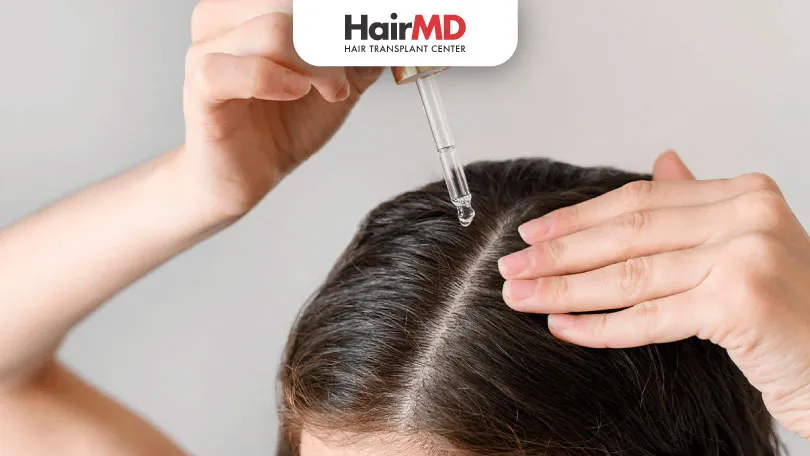
When a patient undergoes a hair transplant, their biggest concern is always the final result.
But the quality of that result is decided by a factor many have never heard of: Out-of-Body Time (OBT).
Simply put, this is the time a hair graft spends outside the body—from the moment it is extracted until it is implanted.
Under ideal conditions (chilled and hydrated), a graft’s survival rate begins to decline significantly after 6 hours.
However, in my 17+ years of surgical experience, the real goal is to keep this time as short as humanly possible, ideally under 2-3 hours, because every minute a graft is outside the body, it is in a state of crisis.
Quick Summary
- What is OBT? Out-of-Body Time is the duration a hair follicle graft survives outside the body between extraction and implantation.
- Time is the Enemy: Graft survival rates drop as OBT increases. Seminal research shows a significant decline after 6 hours, with the goal being to implant much faster.
- Key Survival Factors: Graft survival depends on Temperature (must be chilled), Hydration (must be moist), and Minimal Handling (to prevent physical trauma).
- Technique Matters: The surgical technique used directly impacts OBT. A Direct Hair Transplant (DHT) process minimises this time far more effectively than conventional FUE.
- The Goal: The priority of an elite clinic is to minimize OBT to achieve a graft survival rate of over 95%, ensuring the patient gets the best possible density.
What’s covered in the article?
- What is Out-of-Body Time and Why Does it Matter So Much??
- How Does OBT Affect Your Hair Transplant Result?
- What are the Key Factors for Graft Survival Outside the Body?
- How Long Can a Graft Actually Survive? A Look at the Science
- How Do Different Techniques Impact Out-of-Body Time?
- How Do We Minimise OBT and Maximise Graft Survival at HairMD?
- Frequently Asked Questions
- Conclusion
What is Out-of-Body Time and Why Does it Matter So Much?
When patients visit me at our HairMD clinics in Pune or Pimpri Chinchwad, they often ask about the number of grafts or the design of their new hairline.
But the less visible aspect—how long their grafts remain out of the body—is often the most critical factor for a successful outcome.
Out-of-Body Time (OBT) refers to the duration between when a graft is extracted and when it is implanted back into the scalp.
During this interval, the graft is at risk due to lack of blood supply, oxygen, and nutrients. If OBT is prolonged, grafts experience cell damage, leading to poor growth or even graft failure.
My goal, always, is to shorten this window as much as possible. so the survival rate is higher
Over nearly two decades in practice, I’ve observed that clinics who ignore OBT face far poorer outcomes—even when every other step seems perfect.
How Does OBT Affect Your Hair Transplant Result?
OBT directly determines how many transplanted hairs actually “take” and survive to become visible, healthy hair.
- Shorter OBT (Ideal: <2-3 hours): The majority of grafts remain viable, yielding high density and natural coverage. Patients see fuller growth, often as high as 95% or more of grafts surviving.
- Longer OBT (>4-6 hours): The risk of cell death and delayed or stunted growth rises sharply. Survival rates can plummet to 80% or lower, and patchiness or thin coverage may result.
In my clinical experience, the patients most dissatisfied with previous transplant results at other clinics almost always present with low-density areas tied directly to long OBTs.
At HairMD Clinic Pune, we often see repairs needed for patients who received “mass sessions” with grafts left sitting for hours before implantation.
These patients typically lost hundreds of grafts unnecessarily. With the right protocol, this is almost entirely avoidable.
What are the Key Factors for Graft Survival Outside the Body?
Simply extracting and re-implanting hair isn’t enough. Three foundational pillars safeguard graft survival:
- Hydration
A graft is composed mainly of water. If it dries, even for a short period, it’s likely to die. Best practice is to keep all grafts continuously submerged in an appropriate, chilled solution from extraction to implantation.
- Temperature
Static at room temperature, cellular metabolism continues at a higher rate, quickly exhausting energy stores. Chilling grafts to around 4–8°C slows metabolism, curbing energy loss and toxic metabolite buildup—much like refrigerating food keeps it fresh.
- Minimal Handling
A graft’s bulb (root) is fragile. Excessive force or poor technique can crush or break the regenerative cells that form new hair. Forceps should only touch the upper fatty tissue. Consistent, gentle technique is essential.
In short: Even short OBT won’t help if handling and preservation protocols are substandard. That’s why at HairMD, we obsess over every detail of graft care—not just the clock.
How Long Can a Graft Actually Survive? A Look at the Science
The science is clear and well-documented. Dr. Bobby Limmer’s landmark 1992 study found the following survival rates (for FUT grafts, but the biological principles are the same):
- 2 hours OBT: ~96% survival rate
- 6 hours OBT: ~90%
- 24 hours OBT: ~64%
- 48 hours OBT: just ~49%
This shows that every hour matters. Even under ideal chilling and hydration, survival drops after 6 hours.
Practically, aiming for maximum OBT of 2–3 hours for any graft is the gold standard. At HairMD, we typically keep OBT under 60–90 minutes.
More recent studies (PubMed; ISHRS) confirm that factors like solution used, temperature, and how much the graft is handled can influence outcomes by as much as 10–15%.
Shorter OBT and meticulous handling remain the strongest predictors of successful, natural results.
How Do Different Techniques Impact Out-of-Body Time?
Your surgical choice significantly impacts OBT—even if you’re unaware of it.
Conventional FUE (Follicular Unit Extraction)
In many clinics, all grafts are extracted before any are implanted. This can mean the first graft waits 5, 6, or even 7 hours before being placed. Longest OBT, lowest survival.
DHI (Direct Hair Implantation)
Here, grafts are often loaded one by one into Choi Implanter Pens after bulk extraction. Unless the process is staggered, OBT remains 2–4 hours for many grafts.
DHT (Direct Hair Transplant)
This process, which we champion at HairMD, organises the surgery so that extraction and implantation occur in alternating, small batches. For example, after 300–500 grafts are extracted, a second team immediately begins implantation. Few grafts ever sit for more than 60–90 minutes.
| Technique/Process | Typical Out-of-Body Time | Expected Graft Survival Rate |
|---|---|---|
| Conventional FUE | 4 – 7 hours | 85–90% |
| Well-managed DHI | 2 – 4 hours | 90–95% |
| DHT (HairMD) | <1 – 2 hours | >95% |
How Do We Minimise OBT and Maximise Graft Survival at HairMD?
Our protocol at HairMD, in both Pune and Pimpri Chinchwad, is built to keep OBT—and thus risk—to an absolute minimum:
- DHT Protocol
We schedule extraction and implantation in tight, continuous cycles. Grafts never pile up; most are back in the scalp within an hour of extraction. - Superior Storage Solutions
Grafts are submerged in a pH-balanced, chilled solution (like HypoThermosol), sometimes enhanced with the patient’s PRP. This guards against dehydration and metabolic damage. - Team Coordination & Training
Our Hair surgical and technical teams are trained for speed and care. Each specialist knows their task in the extraction-implantation relay, ensuring nothing is rushed but nothing sits waiting, either. - Meticulous Graft Handling
Only the fatty portion of each graft is touched—never the bulb. Specialised forceps, gentle placement, and routine microscope checks maintain highest integrity of every graft. - Process Transparency
Every patient receives a detailed step-by-step explanation. We are committed to total transparency and patient education—you’ll know exactly how your grafts are treated also how many grafts are transplanted.
Frequently Asked Questions
What is Out-of-Body Time (OBT) in a hair transplant?
Out-of-Body Time (OBT) refers to the duration a hair graft remains outside the body between extraction and implantation. During this time, the graft has no blood supply and relies entirely on proper hydration, temperature control, and gentle handling to survive. The longer the OBT, the higher the risk of graft damage and poor growth.
How long can a hair graft survive outside the body?
Under ideal conditions, hair grafts can survive for several hours outside the body. However, scientific studies show that graft survival starts declining significantly after 6 hours. In real-world clinical practice, the goal is to implant grafts much sooner—ideally within 2–3 hours, or even less—to achieve the highest possible survival rate.
Why does longer Out-of-Body Time reduce graft survival?
When a graft stays outside the body for too long, it suffers from lack of oxygen and nutrients. This leads to cellular stress, dehydration, and gradual cell death. Even if the graft looks intact, prolonged OBT can result in weak growth, delayed results, or complete graft failure after transplantation.
What factors help hair grafts survive outside the body?
Three key factors determine graft survival during OBT:
-
Hydration: Grafts must remain moist at all times
-
Temperature: Chilled storage slows cellular damage
-
Minimal handling: Gentle technique prevents physical trauma
Even short OBT will not help if these factors are poorly managed.
DO YOU KNOW?
Nearly 250 Patients Visit HairMD
Everyday For Various Hair Concerns
(15+ Years Of Expertise. 4157+ Successful Hair Transplant)
Meet Our Dermatologists

Conclusion
The journey from donor area to recipient site is a race against time for every graft.
No matter how skilled the surgical team or advanced the technique, if Out-of-Body Time is not carefully controlled, the results will never reach their potential.
At HairMD, we are relentless in our approach to minimising OBT and maximising graft survival—giving our patients the best possible chance for dense, natural, and permanent hair growth.
Are you planning a hair transplant? Make sure OBT is a top question in your research.
Ready to experience the HairMD difference? Book a consultation at our Pune or Pimpri Chinchwad clinics today.
We’ll walk you through our process, show you how we protect every single graft, and create a roadmap tailored to your goals—so you get results that truly
Further Reading
How to Prevent Hair Loss: The Ultimate Guide
Explore the ultimate guide to preventing hair loss and maintaining healthy, strong hair.
PRP Pre & Post Care Protocol | HairMD Pune
PRP for alopecia areata – what the research says about regrowth, how it compares to other options, and when it may help, from HairMD Pune.
PRP for Alopecia Areata: What Research Says
PRP for alopecia areata – what the research says about regrowth, how it compares to other options, and when it may help, from HairMD Pune.
Do Dermatologists Recommend Inositol and Choline for Hair Loss?
Discover the potential of inositol and choline for hair loss. Learn how these nutrients may benefit follicle health & prevent thinning.
Have thoughts? Please let us know
We are committed not only to treating you, but also educating you.